

Grey Foussana limestone’s density and tightly interlocked calcite matrix are what make it a credible specification choice — not just its appearance. Sourced from quarries in Tunisia, this sedimentary stone carries a consistent warm-grey palette that reads differently from bluestone or concrete alternatives, and its physical consistency from slab to slab is one of the first things you notice when reviewing warehouse samples side by side. Understanding what drives that consistency — and where grey foussana limestone’s real boundaries lie — is what this article is about.
What Grey Foussana Actually Is
Foussana limestone is a dense, fine-grained sedimentary rock quarried from a specific belt in central Tunisia. Its grey coloration comes from mineral inclusions distributed through the calcite matrix — not from surface treatment or pigmentation. That distinction matters when you’re specifying for long-term projects: the color you see in the slab is structural, not applied. According to USGS limestone composition data, dense limestones with low porosity and high calcite content perform reliably across a wide range of construction applications, and Foussana sits firmly in that category.
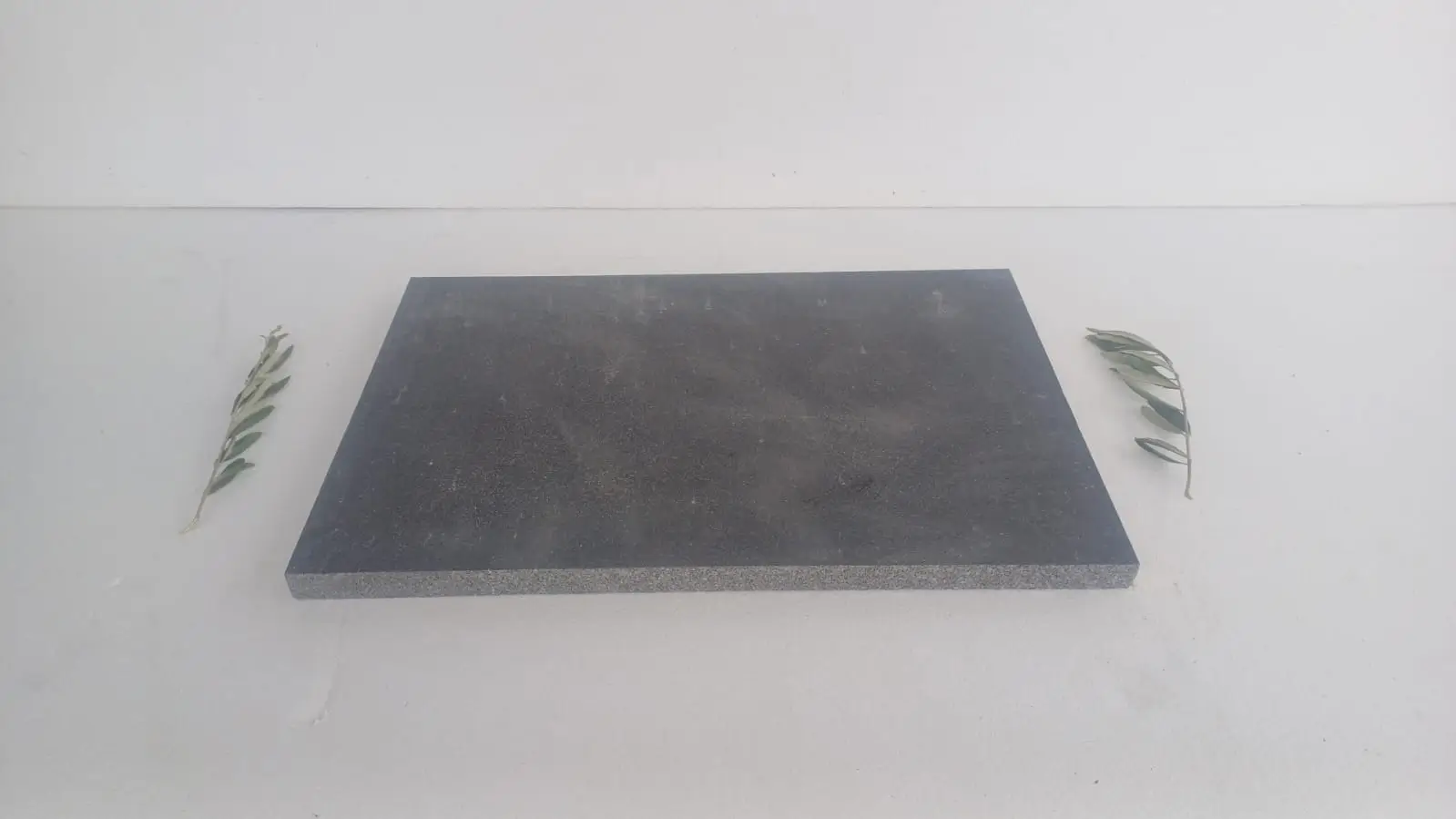
Grey foussana limestone finishes well in both honed and bush-hammered profiles. Honed gives you a smooth, slightly matte surface that works well in interior and covered exterior settings. Bush-hammered adds a texture that improves grip and softens the visual weight — a practical choice for exposed outdoor applications where you need both slip resistance and a refined look.
Reading the Physical Properties
Field performance starts with understanding what the numbers actually mean. Grey Foussana limestone typically exhibits water absorption below 1%, compressive strength in ranges consistent with dense sedimentary limestone, and a surface hardness that handles moderate foot traffic and outdoor exposure without significant wear progression. These aren’t theoretical claims — they’re measurable properties you should request on the lot certificate before committing to a specification.
The Natural Stone Institute provides standardized property benchmarks for limestone selection. Referencing NSI limestone specifications gives you a credible baseline against which to evaluate any lot certificate your supplier provides. At Citadel Stone, we cross-reference lot data against those benchmarks before warehouse acceptance — it’s a step that filters out variability before it reaches your project.
- Request water absorption and compressive strength data per lot — not just material type
- Verify finish consistency across the full delivery quantity, not just sample pieces
- Confirm thickness tolerances are within ±2 mm for modular format applications
- Ask whether the stone was quarried and sorted from a single extraction face for color uniformity
Finish Options and Long-Term UV Performance
Here’s what often gets overlooked in limestone specifications for sun-exposed installations: finish selection isn’t just about aesthetics — it directly affects how the stone weathers under sustained UV and light exposure. Grey Foussana limestone’s mineral composition gives it reasonable color stability, but the finish you choose determines how that stability holds up over years of direct sun.
Polished finishes on any limestone will show UV-related surface changes faster than honed or textured alternatives. The reflective layer that makes polished stone look sharp in showroom conditions is also the first thing to shift under prolonged outdoor UV loading. For grey foussana limestone pavers in exposed exterior applications, a honed or bush-hammered finish is the more practical choice — you’re working with the stone’s natural surface behavior rather than against it.
- Honed finish: consistent matte surface that ages gracefully with minimal UV-related color drift
- Bush-hammered finish: textured surface that improves grip and diffuses light to reduce visual fade contrast
- Polished finish: best reserved for covered or interior applications where UV exposure is limited
- Sawn finish: clean cut face, suitable for wall cladding where surface wear isn’t a primary concern
Sealing schedules matter here too. A penetrating silicone-based sealer applied before installation and refreshed every two to three years provides meaningful protection against UV-accelerated mineral oxidation at the surface. This doesn’t alter the stone’s appearance significantly, but it stabilizes the surface chemistry and reduces the micro-cracking that can develop in unsealed limestone exposed to heavy seasonal sun cycles.
Size Formats and Laying Pattern Decisions
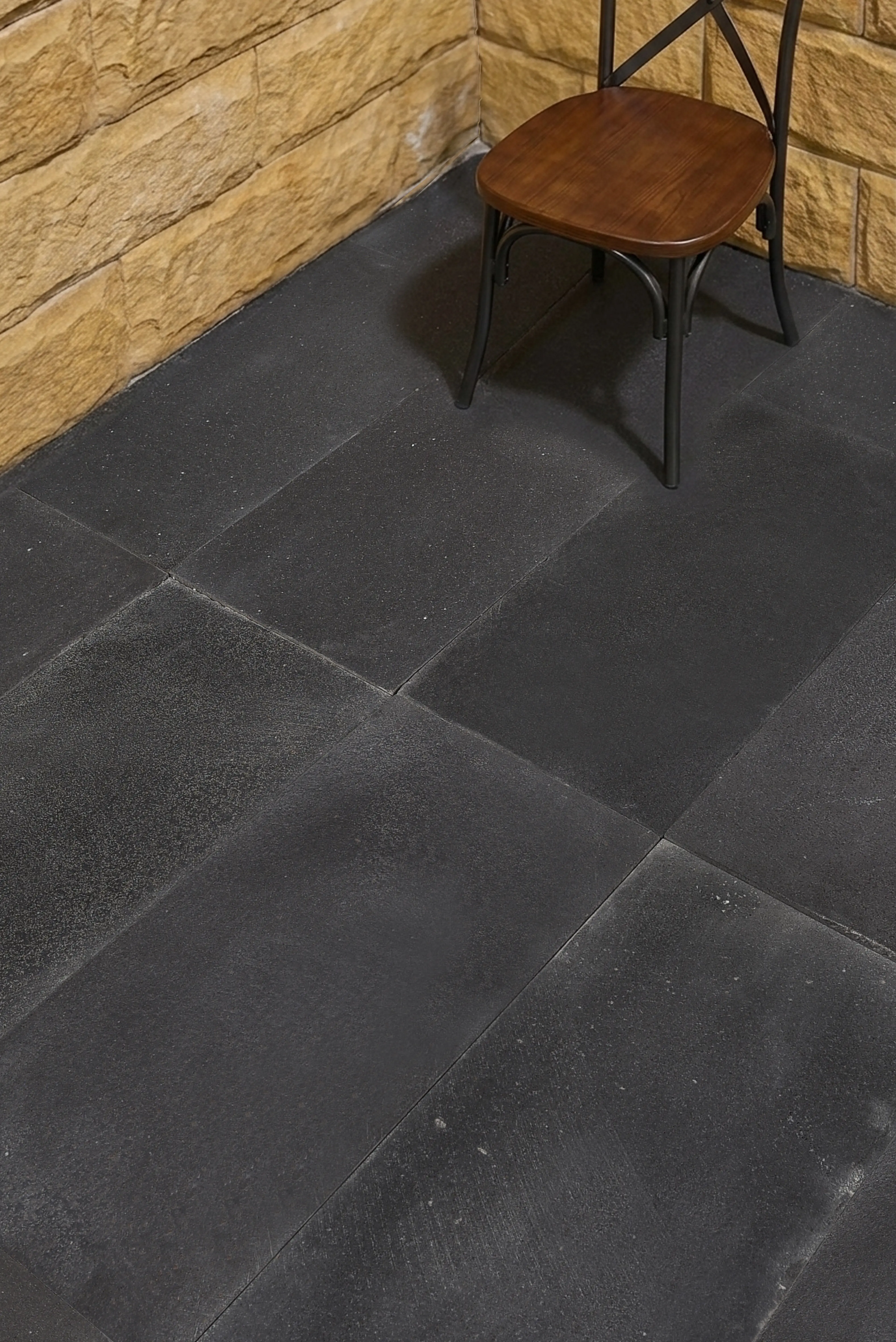
Your laying pattern decision is partly aesthetic and partly structural. Grey Foussana limestone is typically available in modular formats — 400×400 mm, 600×300 mm, and 600×600 mm are the most common — as well as random flagstone cuts for less formal applications. Modular formats give you tight joint control and predictable installation rates. Random flagstone cuts give you design flexibility but require more on-site cutting and careful shade-sorting before laying.
For projects where shade consistency is critical, reviewing limestone formation characteristics helps explain why color variation occurs even within a single quarry face — it’s geological, not a quality issue. You can manage it effectively by sorting slabs on delivery and working through the stack in a deliberate sequence across the installation area rather than pulling randomly from multiple pallets simultaneously.
Thickness selection follows load requirements. For standard residential foot traffic on a prepared aggregate base, 20–30 mm nominal thickness performs reliably. Driveways or areas with occasional vehicle access should move to 30–40 mm. Don’t let visual format preferences drive thickness decisions — the base preparation and load conditions should define that number first.
Base Preparation and Installation Variables
The specification decisions that matter most for grey foussana limestone pavers aren’t made at the stone selection stage — they’re made at the base preparation stage. A properly compacted granular sub-base at 100–150 mm depth for pedestrian applications, with a consistent bedding layer of 25–40 mm sharp sand or dry mortar beneath the stone, gives you the stable platform that determines whether joints stay tight and surfaces remain level over the long term.
Consider how your drainage geometry interacts with the installation plane. Grey Foussana limestone’s low absorption rate means surface water doesn’t penetrate significantly — it runs off. That’s an advantage in wet climates and freeze-thaw regions where water ingress is the primary damage mechanism. But it also means your falls and drainage channels need to be engineered into the base design, not added as an afterthought. A 1:80 to 1:60 fall toward a drainage outlet is the practical working range for exterior paving of this type.
- Compact the sub-base in lifts — never in a single deep layer
- Maintain bedding layer uniformity across the full installation area before any stone is placed
- Specify joint width of 3–5 mm for modular formats; use appropriate mortar or jointing compound rated for exterior use
- Allow for thermal movement in large continuous runs — expansion joints every 4–5 meters in exposed exterior applications
Ordering, Logistics, and Project Planning
Planning your material order around realistic delivery timelines avoids the most common project delay in natural stone work. For projects drawing on warehouse stock, lead times of one to two weeks are typical. For special cuts, non-standard sizes, or larger volumes requiring specific quarry batches, allow six to eight weeks from confirmed order to delivery. Locking that timeline in before your installation crew is scheduled prevents the costly gap between site readiness and material availability.
Site access conditions need to be confirmed before the delivery is booked. Palletized grey foussana limestone — typically 800–1,000 kg per pallet — requires a vehicle that can access within reasonable proximity of the lay area. If site access is restricted, factor in manual unloading distances and adjust your labor allowance accordingly. Citadel Stone ships nationally and can advise on pallet configuration and vehicle type based on your specific site conditions — that conversation is worth having early.
When you’re finalizing quantities, add 10–12% to your calculated coverage area for cuts, waste, and breakage during installation. For irregular or complex laying patterns, move that figure to 15%. Ordering short and waiting for a second delivery is one of the more preventable project delays in natural stone work — the shade batch from a second warehouse pull may not match the original precisely enough for seamless integration.
Maintenance and Long-Term Performance
Dense limestone maintained with a basic annual cleaning schedule and periodic resealing delivers decades of service life without significant surface degradation. For grey foussana limestone pavers in exterior applications, the maintenance protocol is straightforward: rinse with clean water regularly, use a pH-neutral cleaner for any organic staining (avoid acid-based cleaners entirely — they etch calcium carbonate surfaces), and reseal on a two-to-three year schedule depending on UV exposure intensity and traffic volume.
The USGS provides reference data on dimension stone production and field use that confirms dense limestone’s track record across construction applications over extended service periods. That track record is your practical assurance — not a guarantee, but a well-documented performance baseline backed by decades of real installation data.
- Clean with pH-neutral stone cleaner — never acidic or bleach-based products
- Reseal every 2–3 years with a penetrating silicone sealer for exterior applications
- Inspect joints annually and repoint any that show movement or erosion
- Address any drainage blockages promptly — standing water at surface level accelerates mineral leaching at joints
For covered or interior grey foussana limestone pavers, maintenance demands are lighter. A periodic pH-neutral clean and spot resealing around high-traffic paths every three to four years is typically sufficient to maintain surface appearance and integrity.
Getting Grey Foussana Limestone Specifications Right
The specification decisions that define grey foussana limestone performance come down to three things done correctly: accurate lot verification before ordering, finish selection matched to the actual UV and traffic conditions of the installation, and a base preparation standard that doesn’t cut corners on drainage geometry. Get those three right and you’re working with a material that holds its specification for the long term.
You can review our grey foussana limestone slabs for current format availability and lot certificate details. Citadel Stone also supplies complementary dense grey stone options for related project elements — Arctic Grey limestone properties and applications covers another dense grey limestone worth comparing at the specification stage. Stone for nationwide projects ships palletized, so grey foussana limestone from Citadel Stone arrives sorted by size and shade.
Related reading: grey limestone varieties compared · grey limestone color guide · honed grey limestone finish guide.