

Arctic grey limestone’s compressive strength typically sits between 8,000 and 12,000 PSI depending on bed orientation — a range that matters enormously when you’re specifying for foot traffic versus vehicular loads. Most designers encounter this material through finish samples and miss the structural story underneath. Your specification decisions for arctic grey limestone need to account for both its visual consistency and its load-transfer characteristics, which shift noticeably between 20mm and 30mm nominal thicknesses. Getting that thickness call wrong early costs you far more than a material substitution mid-project.
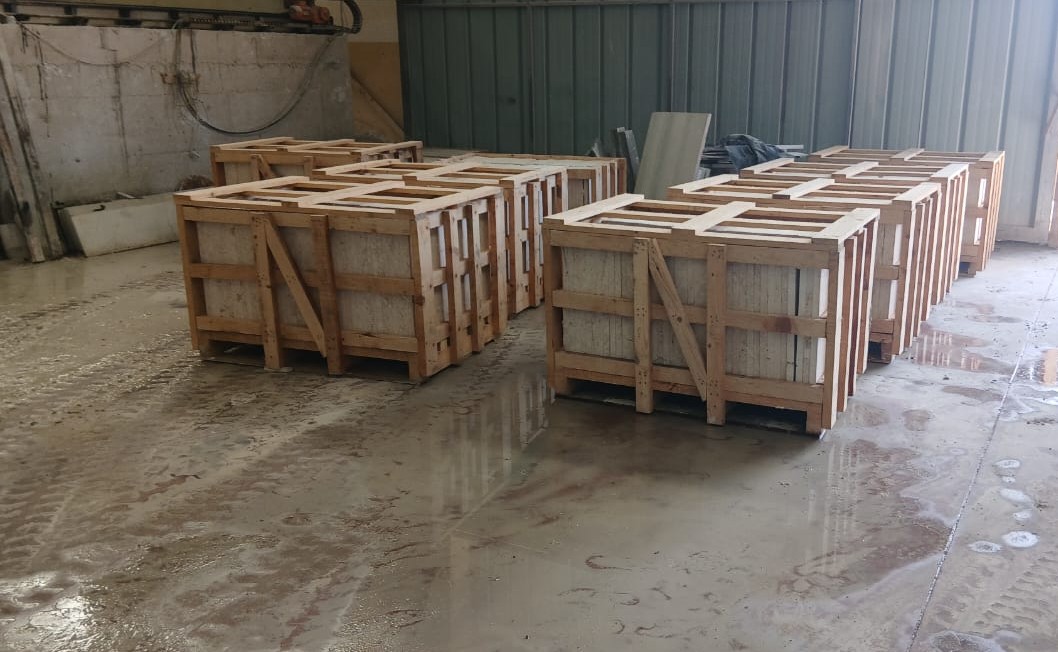
Grey French Limestone Character and Arctic Grey Tone Consistency
The defining visual quality of arctic grey limestone is its cool, mid-range grey — neither the blue-tinged depth of some darker limestones nor the warm cream that pushes material toward beige territory. Tone consistency varies by quarry bed, and stone sourced from Middle East quarries tends to show tighter colour banding than material from certain European beds. You’ll find that the honed finish amplifies the grey’s neutrality, making it exceptionally versatile across contemporary and transitional design languages.
Designers working with grey french limestone as a broader category often discover that arctic grey occupies a precise middle ground — cool enough to pair with white and charcoal palettes, yet warm enough not to read as clinical in residential interiors. The material’s crystalline structure produces a fine, even grain that photographs consistently and holds its design intent across large floor spans without the tonal drift you sometimes get in softer sedimentary options. According to NSI limestone technical properties, dense limestone varieties in this compressive range demonstrate predictable surface behaviour through multiple finish stages, which supports reliable colour outcomes from slab to slab.
Finish Options and Application Fit
Arctic grey limestone performs across three primary finishes — honed, brushed, and sandblasted — each shifting the material’s surface coefficient of friction meaningfully. Honed finishes in the 400–600 grit range are the standard interior specification, delivering a smooth, matte surface that reads sophisticated without being slippery under normal dry conditions. For exterior paving and pool surrounds, arctic grey limestone pavers with a brushed or sandblasted finish increase surface texture and raise the dynamic coefficient of friction to a safer operating range for wet conditions.
- Honed: best for interior floors, feature walls, and bathroom surfaces where controlled reflectivity matters
- Brushed: preferred for covered exterior terraces and transitional zones where moderate texture adds traction without sacrificing aesthetics
- Sandblasted: appropriate for fully exposed exterior applications, pool decks, and high-foot-traffic commercial entries where wet conditions are routine
- Polished: occasionally specified for feature panels and reception counters — requires consistent maintenance sealing to protect the open pore structure
You should match finish selection to the application’s moisture exposure before committing to a purchase order. Reversing a finish decision after fabrication is a costly field problem that proper specification eliminates at the design stage.
Thickness, Load Requirements, and Code Compliance
Building codes across different jurisdictions set minimum structural thresholds that directly influence your arctic grey limestone thickness specification. Residential interior floor applications typically accept 20mm (¾ inch nominal) tiles on a fully supported substrate, but commercial applications subject to concentrated loads — furniture legs, display fixtures, high-heel traffic — generally warrant 30mm material. In freeze-thaw regions, base assembly codes often require deeper compacted aggregate layers beneath exterior stone, which shifts the load path and makes the stone’s own thickness a secondary but still relevant factor in overall structural performance.
Frost line depths vary considerably across climate zones, and your local authority’s frost depth requirement drives the total base assembly specification more than the stone thickness itself. That said, USGS limestone composition data confirms that dense, low-absorption limestones in the arctic grey category demonstrate superior freeze-thaw resilience compared to more porous sedimentary varieties — a meaningful advantage when you’re justifying material selection to an engineer reviewing a rooftop or elevated terrace assembly. Seismic zones add a further layer: lateral movement under seismic loading demands flexible epoxy-modified mortars rather than rigid cement beds, and joint widths of at least 3mm (ideally 4–5mm) to absorb differential movement without surface cracking.
- Interior residential: 20mm minimum on fully cured, stable concrete substrate
- Commercial foot traffic: 30mm recommended, continuous mortar bed, no hollow spots
- Exterior pavers: 30–40mm depending on base assembly and local frost line code requirements
- Elevated terraces and rooftop decks: engineer review required; epoxy mortar and movement joints are non-negotiable
Porosity, Sealing Protocol, and Long-Term Performance
Arctic grey limestone carries an absorption rate that typically ranges from 0.3% to 1.2% by weight depending on the specific bed, placing it in the low-to-moderate absorption category for natural limestone. That range matters for your sealing protocol. Stone at the lower end of the absorption range may need only a single penetrating sealer application at installation and a light maintenance reapplication every three to five years. Material at the higher end of the range benefits from two sealer coats at installation — applied with a 24-hour cure window between coats — followed by annual inspection and reapplication where the water bead test shows breakthrough.
A simple field test before sealing confirms where your batch sits: place a few drops of water on the unfinished surface and time how quickly absorption occurs. If the stone darkens within 60 seconds, you’re dealing with a more absorptive sample that needs the full two-coat protocol. The limestone formation characteristics documented by Britannica explain why absorption rates vary even within a single material designation — micro-variations in calcite crystal density and fossiliferous content across quarry beds produce measurable differences in porosity at the product level. At Citadel Stone, we conduct absorption spot-checks on incoming warehouse batches precisely because this variation exists, so you’re not guessing when you write your sealing specification.
Using Arctic Grey Limestone Pavers Outdoors
Specifying arctic grey limestone pavers for exterior applications requires you to think through the drainage geometry before anything else. Surface water must route away from the field at a minimum 1–2% cross-fall, and the joint system needs to match both the aesthetic and the drainage strategy of the project.
- Closed mortar joints: preferred for elevated decks and formal hard-landscape settings where surface water must be fully directed away from the field
- Permeable polymeric sand joints: appropriate for grade-level terraces where percolation through the field supports storm-water management goals
- Cross-fall minimum: 1–2% gradient across the paved surface to route water clear of the installation in all conditions
You’ll find that our arctic grey limestone tones maintain their cool grey character in direct sun without the thermal gain you encounter with darker basalt or black granite alternatives — a practical advantage for uncovered outdoor spaces in hot, dry climates where surface temperature affects how the space gets used during peak afternoon hours. Base preparation for exterior arctic grey limestone pavers should meet or exceed a 4-inch compacted gravel aggregate layer for pedestrian applications, rising to 6–8 inches for light vehicular access, consistent with most regional paving code minimums for natural stone.
Ordering, Lead Times, and Project Logistics
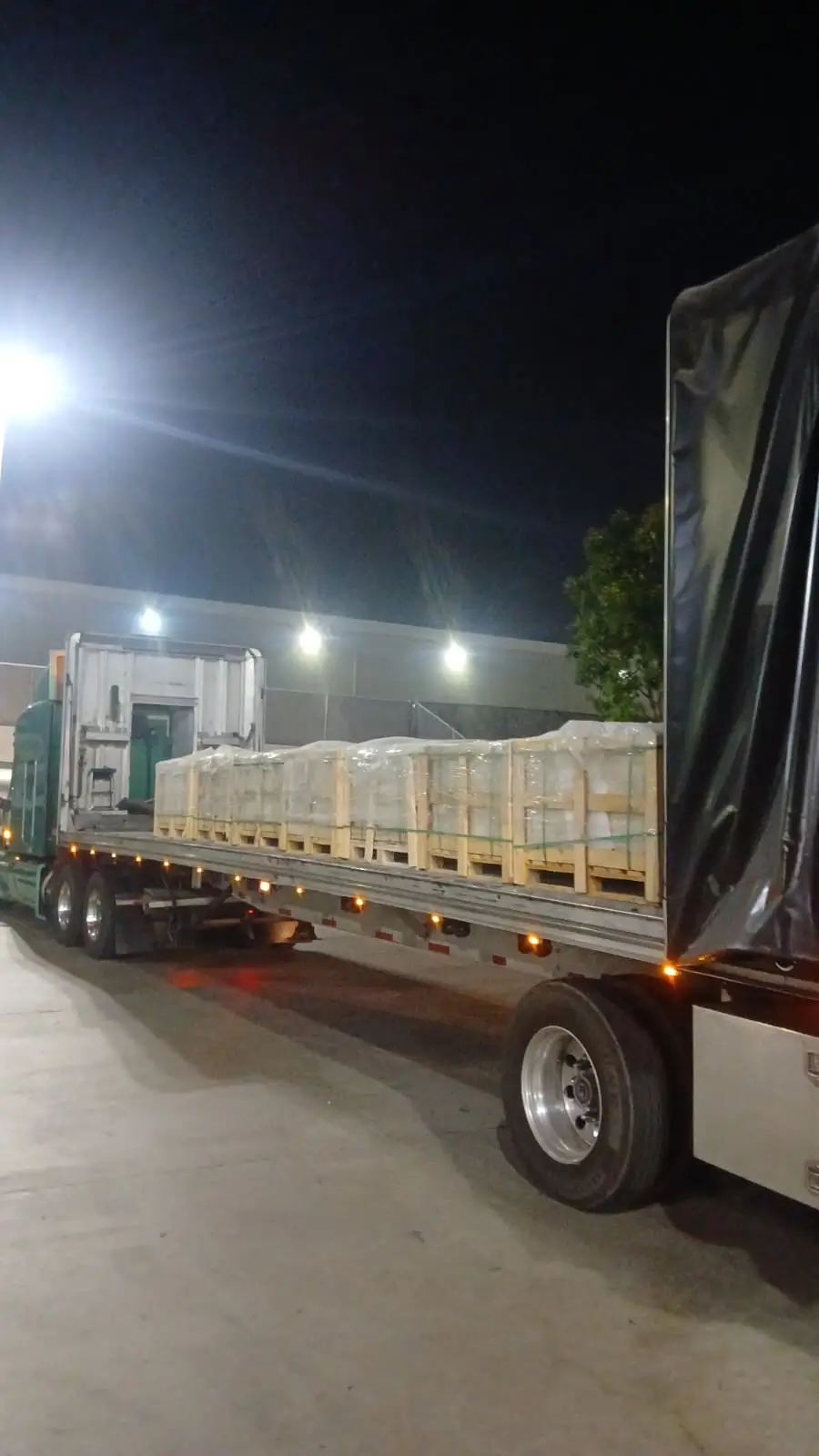
Coordinating arctic grey limestone delivery requires more forward planning than most designers initially allow. Stone sourced from Middle East quarries — where much of the premium arctic grey product originates — carries import lead times of 8–12 weeks from order confirmation to warehouse receipt. Truck delivery scheduling from the warehouse to your site adds another variable, particularly for large-format tiles or thick exterior slabs that require flatbed transport rather than standard pallet freight.
- Place your material order no later than 10–12 weeks before your scheduled installation window to avoid programme delays
- Confirm warehouse stock levels before issuing your purchase order — pre-production orders and in-stock orders carry very different lead times
- Factor truck access constraints at your site into delivery scheduling, especially for urban projects with loading dock restrictions or weight-limited access routes
- Order a minimum 10% overage for pattern cuts and breakage — arctic grey limestone is a natural material and replacement pieces from a later batch may show slight tonal variation
Citadel Stone maintains warehouse inventory of arctic grey limestone in standard calibrated thicknesses, which reduces domestic lead times to 1–2 weeks for in-stock formats — a meaningful advantage when project schedules compress at the construction phase.
Design Pairing and Scale Considerations
Arctic grey limestone works at its best when the design palette is edited rather than busy. Pairing it with warm white walls, brushed brass or matte black fixtures, and minimal grout lines produces the clean, material-led aesthetic that the stone’s natural character supports. Large-format tiles — 600×600mm and above — amplify the material’s visual calm; smaller mosaic formats rarely serve the stone well because the grout network fragments the tone continuity that makes arctic grey compelling.
The same principle applies when specifying grey french limestone across the broader category — the strongest installations let the stone set the palette rather than surrounding it with competing elements. Grout selection deserves more attention than it typically receives in the specification process. A mid-grey unsanded grout, matched closely to the stone’s mid-tone, effectively disappears into the surface and lets the material read as continuous. A white or contrasting grout does the opposite — it imposes a grid on the surface that competes with the stone’s natural banding. Your grout decision is a design decision, not just a technical one, and it belongs in the finish specification document alongside the stone finish and sealing protocol.
Arctic Grey Limestone: Key Specification Decisions
Arctic grey limestone rewards designers who engage with it at the specification level — not just the sample stage. Your finish selection, thickness call, sealing protocol, and joint width all compound into the installation’s 20–30 year performance outcome. Getting the base assembly right for your structural and code requirements, coordinating warehouse stock and truck delivery well ahead of the installation window, and matching grout tone to the stone’s natural palette are the decisions that separate a visually coherent, long-serving installation from one that shows its compromises within the first few years.
For a useful comparison in the grey limestone category, grey limestone alternatives worth comparing explores how related materials perform across similar applications and specification criteria. Product from Citadel Stone ships in calibrated tiles, keeping arctic grey limestone joints tight across wide floor spans.
Related reading: honed grey limestone finish guide · limestone look tile · grey limestone floor.