An island that built itself out of its own ground
Bermuda is made of aeolianite: wind-blown carbonate sand, piled into dunes and slowly lithified into rock. For centuries the island built with it, cutting blocks and roof slate from its own hillsides. The Town Hill Formation is the stone masons have long preferred for its cohesiveness, while the Rocky Bay and Belmont Formations are described in the geological literature as extensively quarried for building stone. Only a few quarries remain in operation today and most new structures go up in concrete, so much of that historic quarrying has wound down and what survives of its fabric is protected. At Khyber Pass in Warwick Parish a disused building-stone quarry still shows those lithified dunes in section, laid down something like 120,000 years ago.
What the local stone does that nothing replaces
The Bermuda roof is the clearest case. Rain lands on white stepped limestone, the porosity of that stone filters it, and the household tank holds what the roof delivers, with capacity regulated against roof area. There are no rivers, streams or freshwater lakes to fall back on. A material that is at once the island’s geology, its architecture and its water supply occupies a position no imported product competes for, and the honest way to write about paving here is to say so plainly before saying anything else at all.
Where imported dimension paving fits
The distinction that matters is category, not quality. The island’s own ground and the plants that work it supply what Bermuda is built on; what an importer adds sits in a different product class:
- Dimension-sawn units cut to a nominated size rather than dressed to fit on site.
- Calibrated thickness across a whole pallet, so a setter lays to a plane instead of packing each unit.
- Repeatable finishes that can be specified now and reordered years later.
- Documented absorption and density figures a designer can put straight into a schedule.
- Volume held in stock, so a later phase is released without waiting on a fresh cut.
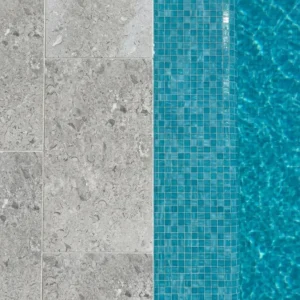
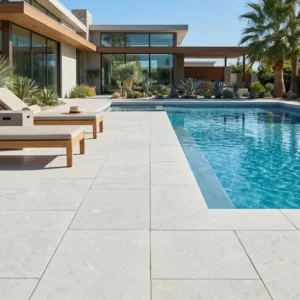
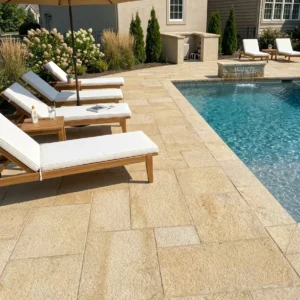
Base course, sub-base and concrete come from the island. The imported piece is the wearing surface laid over them, and our sawn limestone paving for Bermuda is specified with that division kept clear.
Matching new work to what the building actually is
Before tone and texture are fixed, establish what the property in front of you is. The fabric around a new floor may be dressed local stone, block and render, timber, or several periods layered on one another, and the answer changes the specification. A pale sawn unit that sits well against smooth render can look thin against a hand-worked wall, where a textured face carries the junction better. Hold the sample against the wall, in daylight, before the order goes in rather than after the pallets land.
Planning here is strict, and it starts early
Bermuda’s approvals process is among the most demanding anywhere. The Department of Planning and the Development Applications Board work to the Bermuda Plan, and St. George’s together with its related fortifications is a UNESCO World Heritage site carrying the sharpest heritage sensitivity on the island. A few habits save weeks:
- Ask what consent the work needs before the materials schedule hardens.
- Put finish, tone and unit size into the submission, not simply the word limestone.
- Keep a physical sample available for anyone who wants to see the actual face.
- Treat work near protected fabric as a conversation to open early rather than a form to file late.
The cost side: no VAT, and a duty change in 2025
Bermuda raises revenue at the border rather than through a sales tax, so there is no VAT to add and customs duty carries the load. The standard rate has historically sat at 25%, but from 1 July 2025 duty on building materials and supplies was reduced to 10%, a change the government described as covering items previously charged above that level, tile among them. Practical notes follow from that:
- Have your broker confirm the tariff classification of your specific units before you budget.
- The Bermuda dollar runs one to one with the US dollar, so quoted and landed figures compare directly.
- Ask how freight and insurance appear on the invoice, and have the treatment confirmed in advance.
- Request the paperwork trail with the quote rather than chasing it at clearance.
How the two materials meet on site
Where new paving runs up to older fabric, the junction is the whole job. Get it right and the new work looks as though it was always there; get it wrong and no amount of quality in the field will rescue it:
- Set a physical mock-up at the junction before the main lay begins.
- Let joint width and coursing change at the transition rather than forcing one grid across both.
- Keep edge restraint out of sight, so the older material still reads as the older material.
- Match falls and levels first, because tone can be adjusted later and a bad fall cannot.
A supply line that suits the island
Weekly sailings reach Hamilton from the New Jersey ports, and a Florida service calls several times a month, so lead times here can be planned rather than guessed; confirm the sailing at booking, because carrier schedules move. On the island, narrow roads and vehicle size limits mean stone travels on smaller trucks in staged drops, which is a planning question rather than a problem. The wider picture is set out in our notes on stone sourcing for Bermuda sites. Send us photographs of the existing fabric and we will match the imported surface to what is already standing.