The barefoot test on a dry island
Aruba gets strong sun, very little rain and steady wind, and any paving decision made from a screen eventually meets the barefoot test on an open deck in the middle of the afternoon. Four things move the result: how much light the surface reflects, how the face is finished, how much mass sits under your feet, and how much shade and air movement the area gets. None of them is a marketing claim. All four can be planned at the drawing stage, and all four can be checked on site with a sample before a full order is placed.
Color does most of the work
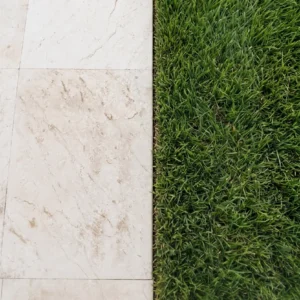
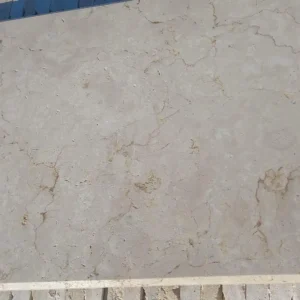
A pale surface reflects a larger share of the sun’s energy back into the air; a dark surface absorbs it and turns it into heat you can feel. That is why light-toned limestone runs cooler than dark stone laid in the same position on the same day. It is worth being honest about the ceiling on this: no paving material in unshaded midday sun is cold, and anyone promising that is selling something. What a pale stone gives you is a real margin, and margins are what make a deck usable an hour earlier in the day. Tone within the pale range matters too, so compare candidates against each other rather than against a memory of a floor seen somewhere else.
Finish changes glare as well as touch
The face you choose does two jobs at once. It sets how the surface feels underfoot and it sets how light leaves the deck. A gloss face throws reflected light straight back at eye level and into whatever glazing sits behind the terrace; an open, matte face scatters it.
- Honed and brushed faces cut glare without going dull
- Bush-hammered and textured faces read softer under strong light
- Gloss surfaces show wind-borne wear unevenly over time
- Texture holds a little more dust, so plan the rinse routine
Thickness, bedding and stored heat
Mass stores energy. A thicker unit bedded in mortar over a concrete slab takes longer to warm up and longer to give that warmth back, so it feels steadier at midday and stays mildly warm into the evening. A thinner unit over an open, free-draining base responds faster in both directions. Neither is right or wrong; they suit different rooms.
- Evening terraces: heavier build, slower to heat and slow to release
- Midday pool surrounds: lighter build that sheds heat once shaded
- Covered thresholds: whatever keeps the joint line running through
- Rooftop and balcony decks: depth governed by the structure below
The bedding decision is usually made by the contractor for structural reasons, so raise the comfort question while it is still open rather than after the falls have been set.
Wind is working in your favor
The trade winds that make salt and dust a specification problem also make heat easier to manage. Constant air movement strips away the layer of hot air sitting on a paved surface and speeds evaporation after a rinse, which is why a quick hose-down before evening use is such an effective habit here.
- Open, exposed decks shed surface heat faster than enclosed courtyards
- Walled patios trap warm air, so plan cross-ventilation into the layout
- A pre-use rinse buys real comfort at low effort
- Shelter belts that block wind for comfort also slow that cooling
Shade is still the strongest lever
The vegetation here is arid country: divi-divi, cactus and low scrub rather than dense canopy, and the shade that exists is thin and moves quickly. Built shade therefore does the heavy lifting on most sites.
- Deep roof overhangs on the west and southwest faces
- Pergolas over the routes people walk barefoot most
- Shaded thresholds between hot deck and cool interior
- Pale paving concentrated where shade cannot reach
Indoors, the same stone reads differently
Out of direct sun, the calculation changes entirely. Interior floors in cut limestone stay cool against the foot because they are sitting in shaded, ventilated space with mass behind them, and larger formats with fewer joints make small rooms read wider. A honed face suits interiors, where glare from a polished floor bouncing afternoon light around a living room is a genuine nuisance rather than a theoretical one. Dutch-language specifications on the island may call these tegels while the outdoor units appear as klinkers, so it is worth agreeing the vocabulary on the drawings early. Pricing conversations often run in both florins and dollars, with the florin pegged at 1.79 to the US dollar, and quotes are clearer when the currency is stated on every line.
Test it on your own site
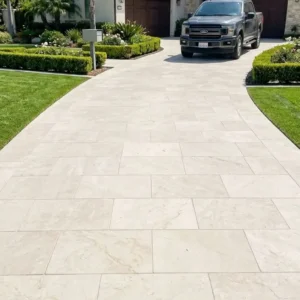
Samples are small, but they settle arguments quickly. Lay one on the actual deck position, leave it through an afternoon, and put a bare foot on it at the hour the space gets used; the difference between two candidate stones stops being theoretical in about ten seconds. Do the same with the alternative tone you are weighing, in the same position on the same day, because a comparison made in one place at one hour is worth far more than two showroom impressions collected weeks apart. The cheapest way to settle a specification is to hold a piece in the Aruba sun before you commit, and the sizes and depths behind cut limestone paving for Aruba decks can then be matched to what you learned. Let the site decide the surface, not the screen.