Wet feet are the design case
Specify a floor for the showroom and you find out how it behaves on the first wet afternoon. Specify it for humid air, open terrace doors and salt water still on someone’s feet, and the easy days need no thought at all. That is the honest starting position for any interior stone floor here, whether it goes into a villa above Cupecoy, an apartment refit near Front Street or a guest room in a hotel reopening for the season. The stone itself is only half of that decision. The other half is the face worked onto it, and that is the half most often chosen on a photograph.
What a finish actually changes
A finish is what happens to the top fraction of an inch of stone after it is cut. It does not change what the stone is. It changes almost everything about how the stone behaves once water is on it.
- Grip: a worked face gives water somewhere to go and skin something to hold.
- Glare: texture scatters light rather than bouncing a sheet of it back at eye level.
- Soiling: the deeper the texture, the more it holds, and the more the mop has to do.
- Wear: a heavily used line will polish itself smooth over years on a soft, flat face.
- Repair: texture hides small chips and scratches that a flat face puts on display.
Honed, brushed, tumbled and flamed
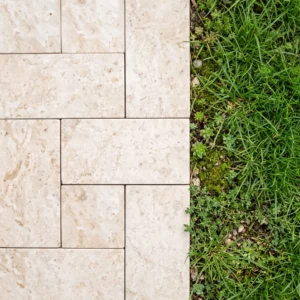
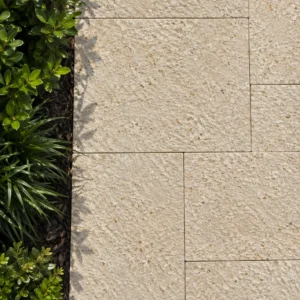
Four descriptions cover most of what is worth considering for interior and covered floors, and the difference between them is depth of texture rather than rank.
- Honed: flat and matte, quick to clean, best where water arrives occasionally rather than constantly.
- Brushed: opened up by abrasive brushes, keeping a soft look with noticeably more bite than honed.
- Tumbled: face and edges knocked back, forgiving underfoot and forgiving of a busy household.
- Flamed or bush-hammered: coarse and open, usually kept for outside or for a shower base.
Ask for samples of tile faces that stay sure underfoot and walk on each one wet before you decide.
Humidity is not the same as rain
Rain arrives and leaves. Humidity stays. With about 1,047 mm falling across a year and the heaviest months running from September to November, surfaces here dry slowly, and a floor can hold moisture for hours after the last person walked in from the pool. Grip that depends on a floor being dry is not grip at all. The same slow drying applies to what sits under the tile, so bedding and grout should be chosen by someone who knows the floor will rarely be bone dry. It is worth thinking about where the moisture goes as well as where it lands. A room open to a terrace on two sides clears far quicker than a closed hallway, and the closed hallway will hold what it takes on for hours longer.
Two thresholds that do the work
Two lines take more punishment than anything else in the floor: the pool door and the shower door. Both are places where a person moves from wet to dry in a single stride, usually carrying water and sometimes carrying sand. At the pool door, the texture should step up rather than down as you go outward, and the drainage detail behind the tile matters as much as the tile itself. At the shower door, the fall of the floor and the width of the joint do the work; a mat is a comfort, not a specification. Get those two lines right and the rest of the floor can be chosen on looks with a clear conscience.
Testing a face before you buy it
- Wet a sample, tilt it, and stand on it barefoot rather than in shoes.
- Try it with soap on the surface if it is going anywhere near a shower.
- Leave a piece in the room for a week and see how it reads in the real light.
- Drag some sand across it and check what the face looks like afterward.
- Clean it with whatever the household actually uses, not with a lab product.
Where a denser stone helps
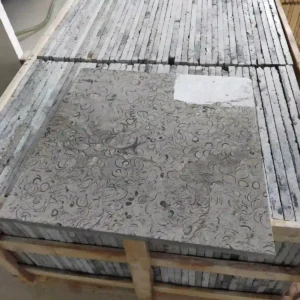
Some positions ask for more than a soft, pale floor should be asked to give. Entry halls that take sand every day, service routes and covered outdoor runs are where a dense, dark stone belongs, and moving it there is a placement decision rather than a ranking. It is worth saying plainly that this island has hard volcanic rock of its own, including basalt in the ground, and a documented history of working it for aggregate. That aggregate and the concrete made from it are the base course and the structure beneath a floor. What arrives in a container is the calibrated, dimension-sawn wearing surface that goes on top, supplied in repeatable sizes with matched finishes so the same face can be reordered later. Those are two different products doing two different jobs in the same build-up.
A short finish checklist
- Name the wettest three positions in the building and specify those first.
- Keep glossy faces away from any door a swimmer uses.
- Match texture depth to the cleaning routine the building can actually keep up.
- Use one finish family across the run and vary the depth only where water demands it.
Set that list beside the finish descriptions we publish and the shortlist gets short quickly. The right face is the one that still feels safe with wet feet on it.