The Barefoot Test
Every discussion about surface temperature ends the same way on this island. Someone steps out of the pool at two in the afternoon, walks four steps, and either keeps walking or hops. No specification sheet settles that argument. A sample laid on site for a week does.
Still, there are reasons some surfaces pass that test and others do not, and knowing them saves you from choosing a whole deck by photograph alone. Anguilla makes the question sharper than most places. The island is flat and open, cloud cover is thin, and the sun has very little to get in its way between mid-morning and late afternoon.
Color Helps, But It Is Not Everything
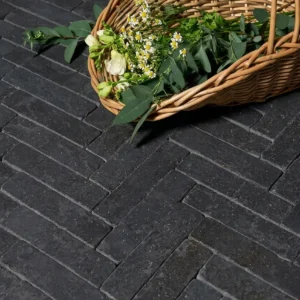
Pale stone reflects more of the sun that lands on it, so it starts from a cooler baseline than a dark surface in the same position. That advantage is real, and it is one reason light limestone is a familiar choice on villa terraces across the Caribbean. It is also only one of five things at work.
- Tone, which sets how much sunlight is thrown back rather than absorbed
- Texture, which changes how much of the surface your skin actually touches
- Mass, which decides how fast a unit heats and how long it stays warm
- What sits under the paving, since a hot base keeps feeding heat upward
- Air movement, which strips heat from any surface the trade wind reaches
Finish Changes What Your Foot Feels
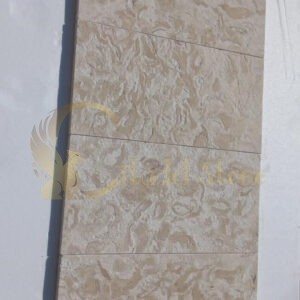
A brushed or lightly textured face breaks the surface into high points and shallow valleys. Skin rests on the high points, so contact area drops and the sensation is milder than the raw temperature suggests. A very smooth face does the opposite: full contact, and every degree delivered at once.
- Textured faces feel gentler underfoot and hold grip when suddenly wetted
- Smooth faces read cooler in shade but harsher in direct afternoon sun
- Deep texture traps salt dust and needs real sweeping, so keep it moderate
- The same stone in two finishes can feel like two different materials
This is why finish is worth deciding before tone. Owners often arrive with a color in mind and no view on texture, then discover that the sample they liked in a showroom behaves quite differently once it is lying in the sun with a wet foot on it.
Where the Heat Really Comes From
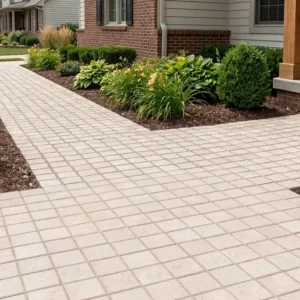
People blame the stone, but much of the heat arrives from below and beside it. A thin unit bedded on a dark base heats through quickly and has nothing left to give at dusk. A thicker pale unit takes longer to warm and releases it slowly into the evening, which is exactly when the terrace gets used. That is one of several reasons our Anguilla limestone paving range is quoted by thickness and finish rather than by tone alone.
- Reflected glare off a white wall can heat a deck as much as direct sun
- Dark bedding and dark joint sand raise the whole build-up temperature
- Wide dark joints between pale units create small hot lines underfoot
- Enclosed courtyards with no cross breeze stay hot long after open decks cool
Glare Is the Other Half
Very white, very smooth paving in full Caribbean sun can be uncomfortable to look at long before it is uncomfortable to stand on. Guests squint, photographs blow out, and the architecture disappears behind a sheet of light. A soft off-white or a lightly warm cream with a broken texture keeps the cooling benefit while scattering reflection instead of throwing it straight back.
Where the brief genuinely calls for a bright deck, break it up. Planting beds, timber inserts, a pergola line, or a change of pattern across circulation routes all cut the mirror effect without losing the pale palette.
Pale Stone at the Water Edge
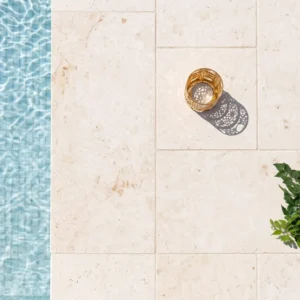
Around a pool the pale palette earns its place twice, once for temperature and once for the way it carries the color of the water. Reflected light off the pool surface is part of the effect, so the paving does not have to be brilliant white to read as bright. Many owners look at the white limestone paver line and then step down half a tone for the wider terrace, keeping the brightest material for coping and the immediate surround.
That split does something else useful. It lets the wettest strip take the most textured face, where grip is worth more than a perfectly smooth line, while the larger deck keeps a calmer surface for furniture and bare feet. One decision, two problems solved.
Test It in Your Own Afternoon
Anguilla is flat and dry, sun exposure runs long, and shade arrives from the building rather than from hills or heavy tree cover. That makes on-site testing unusually informative, because a sample sits in the same light the finished deck will live in.
- Lay samples where the deck will be, not on a table in the shade
- Test between one and three in the afternoon, barefoot, dry and then wet
- Compare at least two finishes of the same stone side by side
- Look at the samples again at sunset for glare and for color shift
Every villa reads its own light differently, and the afternoon is the only honest judge of a surface people will use without shoes. Order small samples early and let one full afternoon settle the decision.