Wet Stone Is a Different Material
Every paving sample looks confident dry, on a table, indoors. The test that matters happens with a film of water on the surface, a barefoot swimmer moving quickly, and sun in everyone’s eyes. On a Virgin Islands property that combination is the normal condition around a pool for most of the year, and it is worth designing for deliberately. Grip is not a single property of the stone either; it comes from the face texture, the way units are laid, the fall of the deck and how quickly water leaves the surface. Change any one of those and the same slab performs differently, which is why a finish that works beautifully on a flat terrace can be the wrong call two steps from the water.
The Finishes Worth Putting Side by Side
Descriptions blur together in a brochure, so line up physical pieces and compare them wet.
- Bush-hammered faces carry a dimpled tooth that keeps working when the surface is soaked.
- Brushed and antiqued surfaces soften the edge of that texture while retaining useful grip.
- Honed stone reads clean and calm but needs testing before it goes anywhere near water.
- Sandblasted faces give an even, matte grain that hides light dust well.
- Flamed treatments suit dense stone and produce an open, coarse surface for hard-worked areas.
Salt Water, Fresh Water and Sunscreen
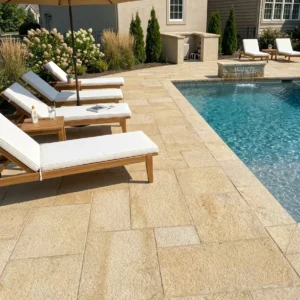
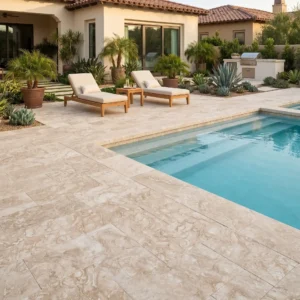
Pool decks in this territory face more than clean water. Sea spray reaches most sites, saltwater pools are not unusual, and sunscreen and body oils build a slick film on a smooth face far faster than anyone expects. A textured surface stays usable in those conditions because the tooth sits above the film, and it also gives cleaning something to bite on. Salt adds a second problem, since the residue left behind as water evaporates is abrasive underfoot and unkind to any stone with an open pore structure, so the material has to be chosen alongside the finish. Where the deck is likely to be crossed by wet feet all day, the coping and first course from our coping and deck limestone options deserve the most textured face on the plot.
Coping, the First Step and the Edge
Most incidents happen at a change of level rather than in the middle of a flat deck, so spend the detailing effort there.
- Give coping a rounded or eased edge that is comfortable to grip and to sit on.
- Keep step treads a consistent depth so nobody has to look down while walking.
- Use a slightly more textured unit on treads than on the surrounding field paving.
- Set positive edge restraint so units cannot creep and open a lip over time.
Rain on Steep Ground
Hillside sites shed water quickly and unevenly, and a heavy squall can turn a gently falling terrace into a sheet of moving water for a few minutes. That is the moment a marginal surface gives up. Set generous falls, break long runs with a channel or a change of level, and make sure water leaving the deck has somewhere sensible to go rather than pooling against a step. Where runoff feeds a cistern, keep the clean collection route separate from anything carrying soil, planting debris or wash water. Rainwater harvesting is the everyday water supply for most households in the Virgin Islands, so a deck detailed carelessly does not merely create a puddle; it contaminates a tank the household depends on for weeks.
Grip and Barefoot Comfort Pull Apart
The two goals fight each other, and the right answer is a compromise made deliberately rather than by accident. Decide who the deck is really for before you settle it.
- An aggressive face grips beautifully and scuffs wet feet after a long afternoon.
- A very smooth face feels lovely dry and becomes unreliable with water and oil on it.
- Mid-textured finishes usually win for a family deck used by children and older guests.
- Reserve the coarsest treatment for steps, ramps and the ring immediately around the water.
Cleaning Without Polishing the Grip Away
Texture wears if it is treated badly, and a well-chosen finish can be flattened by the wrong maintenance routine within a couple of seasons.
- Sweep loose grit off before washing so it is not dragged over the face.
- Avoid harsh acidic cleaners, which attack the surface rather than the dirt on it.
- Skip film-forming sealers on wet decks, since they can turn a good face slick.
- Rinse salt residue off periodically on properties close to open water.
If you are undecided, ask to compare textures that bite when wet in the actual stone you are quoting.
Walk the Sample Wet
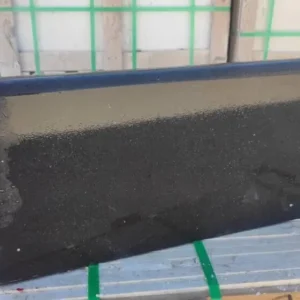
Numbers on a data sheet help, but nothing replaces the physical test. Lay two or three candidate finishes flat, pour water over them, and walk each one barefoot with wet feet, on a slope if the deck will have one. Ask the people who will actually use the pool to do the same, because a child and a grandparent judge a surface very differently. Try it with a little sunscreen on the surface too, since that is the state a working pool deck spends most of the season in. Samples are small and easy to handle, so there is no reason to guess about the one surface on the property where a mistake has consequences. Choose the finish that still feels safe when it is soaked, not the one that photographs best.