Humidity Is the Baseline Here
Plan for a damp floor rather than a dry one. Between rain that arrives hard and briefly, sea air that never really leaves, and a household that moves in and out of the water all day, an interior floor in SVG spends a good share of its life with a film of moisture on it. That is not a defect to design around later; it is the normal operating condition. Once you accept it, the finish stops being a taste question and becomes a safety and maintenance decision that you make first, before tone and format. The households that get this right settle the finish room by room at drawing stage and let everything else follow from there.
What a Finish Does to a Wet Foot
Grip comes from what happens in the last fraction of a second before your weight lands. The finish controls that.
- Texture gives water somewhere to go, so the foot meets stone rather than a film.
- A very smooth face lets that film sit intact and the foot slides on water, not on the tile.
- Too much texture, and the same valleys that shed water start holding grit and cleaning residue.
- Bare wet feet behave differently from shoes, so test with the traffic the room will really see.
Honed, Brushed and Textured Side by Side
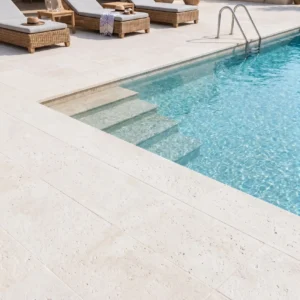
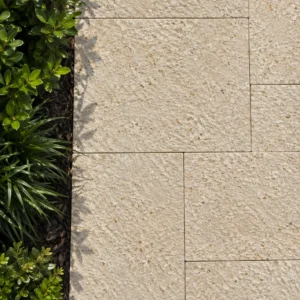
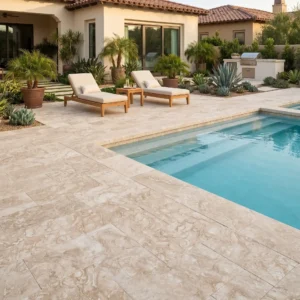
Three surfaces cover almost every interior job on these islands. Honed is flat and matte with no shine, easy to clean and comfortable underfoot, and it suits dry-shod rooms. Brushed carries a soft mechanical texture that you feel more than you see, which lifts grip without turning the floor into a scrubbing job. Heavier textured surfaces belong at the wet end of the house and outdoors. If you want them next to each other rather than in words, our guide to how finishes change underfoot grip runs through what each treatment does to the same stone.
- Honed: living rooms, bedrooms, corridors away from the pool door.
- Brushed: kitchens, entrance halls, bathrooms, anywhere feet arrive damp.
- Textured: shower floors, pool bathrooms, covered terraces, thresholds.
- Any of the three can be cut from the same stone, so the floor still reads as one material.
Where Each Finish Belongs in the House
The useful discipline is to map the house by how wet each room gets, not by how important it is. A guest bedroom that opens onto a terrace may need more grip than a formal dining room that nobody enters barefoot. Draw the route people take from the water back into the house and specify along that line. In a typical Grenadines villa the wet route runs pool, outdoor shower, rear hall, bathroom, and every one of those floors should carry tile texture for barefoot traffic rather than the calmest surface in the range.
Why Polished Floors Misfire Here
A polished floor photographs beautifully and performs badly in this climate. Wet, it is the least forgiving surface in the house. It also shows every water spot and every trace of the salt that dries on it, so it demands more attention than anyone maintains for long. There is a place for a small polished area in a dry room where the drama is worth it, but as a whole-house specification in SVG it is the wrong instinct. Matte and lightly textured surfaces age better, hide the dust that settles between cleans, and never ask the household to walk carefully across their own floor. That last point is the one that decides how a house feels to live in over years rather than over a weekend visit.
Salt Film, Dust and the Grip You Lose
Slip resistance is not a fixed property of a tile; it is what the tile has on it that day. This is why the finish and the cleaning routine have to be chosen together, and why an over-textured floor that never really gets clean can end up more slippery in practice than a brushed one that rinses in a minute.
- Salt haze dries into a thin film that dulls the surface and reduces bite underfoot.
- Fine dust and beach sand settle and act like ball bearings under a wet foot.
- Cleaning products that leave a residue quietly undo the traction you specified and paid for.
- Sealers that form a film on the surface can also lower grip once the floor is wet.
Test It With Your Own Water
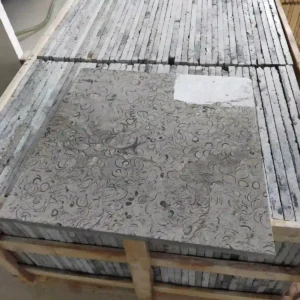
Samples are small, but a small piece answers the question that matters.
- Wet the sample with the water the house actually uses, not bottled water.
- Stand on it barefoot, then with a wet sandal, then with a little sand underfoot.
- Leave it out for a week where sea air can reach it and see what dries on the surface.
- Clean it with the product your household already buys and check whether grip survives.
Agree the Finish With Your Architect
Finish choices touch falls, drainage and threshold details that live in someone else’s drawings, so settle them with the architect or engineer working under your Town and Country Planning permit rather than at delivery. Tell them which rooms are on the wet route, which finish you have tested, and where the change of texture happens. That conversation takes ten minutes and saves the two regrets that are hardest to undo on an island floor, which are a slippery bathroom and a terrace that had to be lifted and relaid. Choose the finish for the wettest day the room will ever have, not the driest.