Wet Feet Are the Normal Condition
On a villa in the Turks and Caicos Islands, somebody is nearly always walking in from water. From the pool, from the beach, from an outdoor shower, from a squall that crossed the island in eight minutes and left everything dripping. The floor does not get a dry season indoors either, because humid air rides in every time a door slides open. Any conversation about stone that starts with looks and ends with looks has skipped the part that decides how the house feels to live in. The finish is that part, and it is the difference between a house that gets used freely and one where everybody edges around the same wet patch by the door for twenty years.
What a Finish Actually Changes
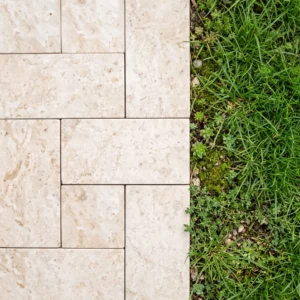
A finish is the treatment applied to the face of the stone after it is cut, and it changes four things at once: how much grip the surface offers when wet, how much light it throws back into the room, how easily dirt is dislodged, and how the material looks after five years of traffic. The stone underneath stays exactly the same. The way you experience it does not. Two tiles from a single block can feel like different products depending on whether the face has been polished flat, honed to a soft matte, brushed into a gentle texture, or worked harder into something openly tactile. That is why a finish should be chosen for the room rather than borrowed from a photograph of a house in a drier climate.
The Finishes Worth Considering
Not every finish belongs in a humid island house. These are the ones that earn their place, and it is worth reading finish grades and their grip side by side before you commit a whole floor to one of them.
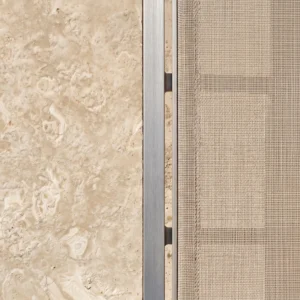
- Honed, a flat matte face that stays easy to clean without the glare of a polish.
- Brushed, where the surface is softened into a light texture that helps damp feet.
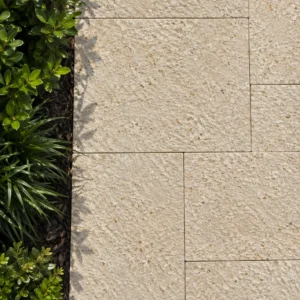
- Textured or bush-hammered, an openly worked face for the wettest outdoor zones.
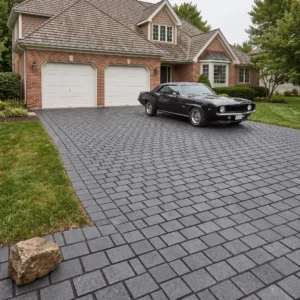
- Tumbled, with softened edges and a worn look that hides small marks well.
- Polished, which is handsome on a dry wall and a poor idea on any wet floor.
Matching Finish to Room
The productive method is to walk the plan and mark every place where water lands, then assign a finish to each zone rather than to the house as a whole. That sounds fussy until you notice that most island houses have only three or four genuinely different wetness conditions, and each one has an obvious answer once you stop trying to solve the whole building with a single product. Reading our island tile specifications alongside the drawing shows which finishes are available in each format, so you can hold one stone family across the whole plan and vary only the face.
- Living rooms and bedrooms, where honed gives calm underfoot without slickness.
- Kitchens, where a honed or lightly brushed face resists grease marks and cleans quickly.
- Covered verandas, where brushed handles the constant wet-to-dry crossing.
- Pool surrounds and outdoor showers, where texture is the priority over smoothness.
Humidity, Salt and Growth
Three forces work on an island floor at the same time. Humidity keeps surfaces damp for longer, which gives dirt and biological growth a chance to establish itself in shaded corners that never get direct sun. Salt travels inland on the breeze and can crystallize inside a porous stone as moisture moves in and out, which is why dense, low-absorption material is the right instinct here rather than a soft, thirsty one. And rain arrives in concentrated bursts, roughly 43 inches spread across a year, so a deeply textured outdoor face has to sit on a surface that actually sheds water rather than holding it in the pattern. Get those three right and the finish looks after itself.
Testing a Finish Before You Commit
Photographs of finishes are close to useless, because the qualities that matter are tactile and no screen conveys them. Get pieces in hand, on the actual site, and put them through a short and honest test rather than admiring them on a table.
- Wet the sample, then stand on it with a bare wet foot and shift your weight sideways.
- Look at it in direct island sun and again in shade, since glare changes everything.
- Drop cooking oil or sunscreen on it, wipe it, and see what the face keeps.
- Run a fingertip across the texture and imagine mopping it every week for a decade.
Specifying It on Paper
Once the decision is made, write it down properly so the pallet that clears South Dock is the one you actually chose. Name the stone, the format, the thickness and the finish on every line of the order, and state the finish separately for each zone rather than assuming a supplier will infer it from the room names. If different faces are going into one house, confirm that the tone matches across finishes, because working a surface harder can lighten it slightly. Approve a sample of each finish, keep one on site, and check the delivery against it before anything is set, since a correction here means another sailing. A finish chosen wet and confirmed on paper is the cheapest insurance in the whole build.