Where the Heat Actually Comes From
A floor in Antigua and Barbuda rarely gets hot because the air is hot. It gets hot because sunlight lands directly on it through a window, a louvered door or an open terrace edge, and the surface absorbs that energy faster than the room can carry it away. Air temperature here sits in a fairly narrow band all year, yet a patch of floor in late afternoon sun can run well above the room around it. That is why two houses on the same road, built from the same drawings, can feel completely different underfoot. The variables you control are surface tone, shading and the mass sitting beneath the tile.
Why Pale Stone Reads Cooler
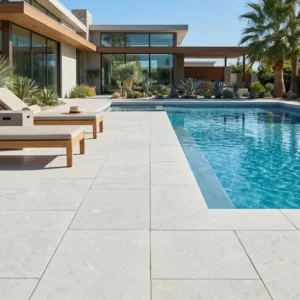
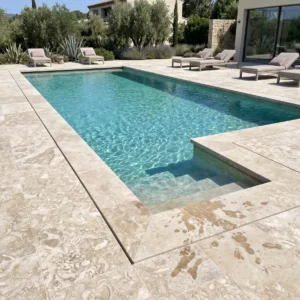
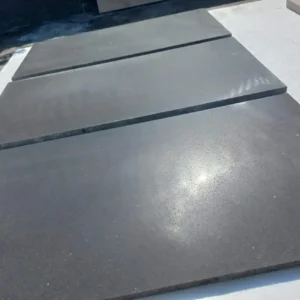
Light-toned limestone reflects a large share of the light that hits it rather than converting it into heat. Dark igneous units do the opposite, which is why basalt earns its place on driveways, shaded courtyards and edging details, and why it punishes an unshaded pool surround. Indoors the gap narrows but it does not disappear, particularly in rooms with wide glazing on the west side. Households on the leeward coast notice it before sunset, when low sun reaches deep into a living room.
Map the Sun Before You Choose
Before you commit a material to a room, spend one clear day watching where the light lands. That record is worth more than any brochure comparison, because it describes your building rather than a generic one.
- Mark the rooms that take direct morning sun and, separately, the ones that take late afternoon sun.
- Note where a roof overhang, a gallery or a mature tree already provides shade for most of the day.
- Watch for reflected light bouncing off a pale wall or a pool surface onto a floor you assumed was shaded.
- Record which rooms are crossed barefoot at midday and which are only ever walked in shoes.
- Check whether ceiling fans and cross ventilation genuinely reach floor level in each space.
Mass, Bedding and the Slow Release
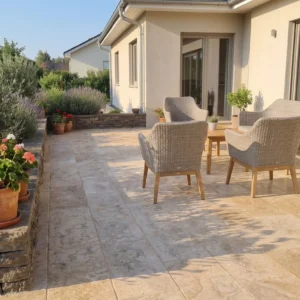
Stone stores heat and gives it back slowly, and that cuts both ways. A thicker unit bedded in mortar over a concrete slab takes longer to warm through and longer to release what it has taken, so a shaded interior floor stays comfortable into the evening while an exposed terrace keeps radiating after dark. For rooms shaded most of the day, extra thickness works in your favor. For a terrace that bakes until four in the afternoon, tone and shade structure matter far more than mass. When you are weighing options for living areas and bedrooms, cool underfoot limestone floor tiles are the sensible starting point, because they settle the tone question before anyone argues about thickness.
Your Base Course, Our Wearing Surface
Antigua and Barbuda quarries stone of its own, and it is worth being precise about what that stone is and what it is for.
- Burma Quarry produces subbase and base materials that go under most slabs, drives and yards in the country.
- Bendals Quarry produces crushed stone for road surfacing, and the same supply chain feeds blockmaking.
- What neither operation is set up to produce is calibrated dimension paving cut to a consistent thickness.
- So the division of work is simple and honest: your base course, our wearing surface.
One sits under the other, and neither is a substitute for the other.
Where Stone Stops Doing the Work
Stone is not the right answer in every room, and pretending otherwise wastes money that would be better spent on shade. A few situations call for a different decision.
- An unshaded west-facing terrace used barefoot in the afternoon needs a shade structure first and a material second.
- Bedrooms with heavy rugs and soft furnishing gain little thermal benefit from what sits under the rug.
- A raised pool platform may still favor timber, where a fall onto hard units is the larger risk.
- Steps and level changes in strong sun need a texture decision as much as a tone decision.
- Rooms air conditioned around the clock make most of the thermal argument irrelevant.
Getting Material to St John’s
Delivery here is more straightforward than most buyers expect. St John’s Deep Water Harbour takes direct sailings from the Port of Palm Beach in Florida, so cargo from the United States is not routed through another island first. That removes a handover, and handovers are where damage and delay usually appear.
- Plan and quote everything delivered to St John’s Deep Water Harbour as your baseline.
- Barbuda is a separate small-vessel leg landing at River Wharf, with no container crane at the far end.
- Duty is assessed on the CARICOM Common External Tariff, and ABST has stood at 17% since 1 January 2024.
- A broker is effectively compulsory, since Customs requires one once a shipment passes EC$5,000 or six lines.
- Beyond duty and ABST there is a Revenue Recovery Charge and levies including a Throughput Levy; confirm current rates with your broker.
For lead times, paperwork and the practical shape of an order, our Antigua and Barbuda stone service sets out how a shipment is put together.
Planning an Order That Lands Right
Order in one shipment wherever the schedule allows. Splitting a house across two containers means two clearances and two chances for tone to drift. Agree the format and the finish early, add a sensible overage for cuts and future repairs, and let the base course be sourced locally as it always has been. Match the stone to the light each room actually receives, and the floor will still feel right long after the specification is forgotten.