Ground That Rarely Sits Flat
Step away from the coast road and Barbados stops being level very quickly. The limestone cap that lifted this island out of the Atlantic came up in terraces, and those terraces are still the shape of the land. A plot in St. Thomas, upper St. James or the ridges above St. Joseph usually arrives with a fall of a foot or more across the width of a yard, sometimes a great deal more. Owners draw a driveway or a courtyard on paper, then find on site that the paper was optimistic. There is no single level to work to, only a run of small ones.
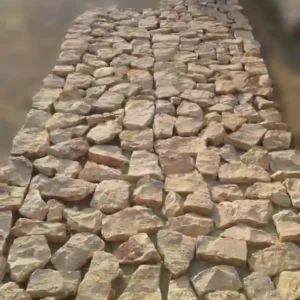
This is exactly the ground small setts were made for. A sett is a hand-sized block rather than a sheet. Where a large-format slab must be either flat or visibly wrong, a field of setts takes a gradient in dozens of tiny increments that the eye reads as one continuous, intentional surface.
Why a Small Unit Wins on a Slope
The advantage is mechanical before it is ever aesthetic.
- Each block is bedded on its own, so a change in fall is shared across many joints instead of forcing an awkward step.
- Joint lines can curve with the contour rather than fight it, which keeps a sloping surface looking deliberate.
- A mason can tighten or open joints locally to correct a run-out without cutting a single block.
- Blocks that lift or settle are reset one by one, which matters on cut-and-fill ground that keeps moving for a season.
- Texture underfoot counts for more on a gradient, and a sett field grips where a smooth slab turns treacherous after rain.
Reading the Fall Before You Order
Measure the ground properly before anyone quotes stone. A simple level run taken across the plot in both directions tells you more than any photograph.
- Record the total fall from the highest point of the paved area to the lowest, and the distance between them.
- Note where the fall changes direction, because those points decide where courses have to break.
- Mark the fixed levels you cannot argue with: the road edge, the garage floor, the veranda step, the gate swing.
- Decide early whether you are terracing with low walls or running one continuous grade, since the two need very different quantities.
Water, the Coral Cap, and On-Lot Storage
Barbados draws its supply through a limestone aquifer, and rainwater harvesting into on-lot storage is normal practice rather than an eccentricity. The General Development Order treats that storage as part of how a house is expected to work. On a slope, everything you pave becomes part of the same path. Water that once soaked quietly into the yard now arrives somewhere, faster, and in one concentrated place.
Plan the discharge before you choose the pattern. Open joints, free-draining bedding and a defined channel at the bottom of the run will spare you the annual ritual of shoveling washed grit back up the drive. It is also why small setts on falling ground tend to outlast big units here: a jointed field lets water pass through rather than damming it into a sheet that hunts for the weakest edge.
Patterns That Cope With Gradient
Not every layout behaves the same way once the ground tilts.
- Curved or segmental courses run across the slope and read as contour lines, which flatters falling ground.
- Running bond laid across the fall gives long horizontal lines that steady the eye on a steep approach.
- Random coursed work hides small level corrections better than any strict geometry can.
- Rigid grids are the least forgiving choice on a gradient, because any drift shows instantly along a straight joint.
Getting Material Up the Hill
Delivery is a real design constraint on hillside plots, not an afterthought for the week before laying.
- Parish roads are narrow, and a full truck may not turn into a private track at all.
- Agree a staging point before ordering, and confirm in advance who moves stone the last stretch.
- Small units can be barrowed or carried in stages, which is precisely why they suit awkward access.
- Allow somewhere to keep bedding material dry when a squall passes through mid-week.
Exposure Changes the Brief
A hillside on the Atlantic side above Bathsheba is a different specification from a slope behind the west coast. The east lives with salt-laden wind and airborne sand all year, so texture, joint durability and easy resetting matter most. Sheltered west and south slopes are far gentler, and comfort, finish and glare become the leading questions instead. The expensive mistake is buying one specification for a house sitting on the ridge between them, where a courtyard on the lee side and a path on the windward side face genuinely different weather. Write the brief for the side of the island you are actually standing on, not for a generic Caribbean yard.
Start With One Terrace
The most successful hillside jobs on this island are rarely finished in one push. Owners pave the arrival level first, live with it through a wet season, watch where the water goes, then continue downhill with the lessons learned. Reading up on how paving patterns are laid before the first course goes down will save more money than any discount. Falling ground rewards patience and punishes assumptions.