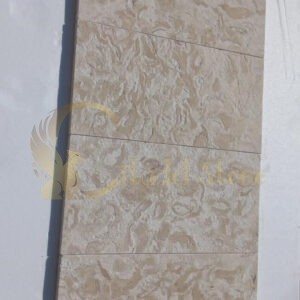
At Guanacaste’s northern corner, the Papagayo peninsula runs a different game from the beach towns down the coast: a master-planned luxury enclave of resort estates, branded residences and villa communities where the procurement culture is institutional, the design review is real, and every material arrives with its documentation or does not arrive at all. It is Costa Rica’s most exacting stone market – and for suppliers and owners who work to standard, its most straightforward, because the standard is written down. This guide walks it clause by clause.
Building Inside a Master Plan
The peninsula’s land runs under master-planned governance – design guidelines, architectural review, infrastructure standards – and the practical consequence for stone work is welcome discipline: palettes pre-agreed, specifications reviewed before ordering, and installations inspected against drawings. Projects here spend their creativity inside the frame rather than arguing with it, and the frame rewards them: the peninsula’s coherence is precisely what its price point buys, and every well-executed surface maintains the asset every owner shares.
The Documentation Culture
Resort-grade procurement runs on paper, and the stone package carries its share:
- Specification sheets with slip ratings, absorption and density figures against recognized standards.
- Origin certificates and batch records – provenance and consistency, provable.
- Maintenance specifications the operator’s contractors can execute without interpretation.
- Samples approved formally, held as the control, and matched at delivery.
hospitality detailed at villa grade shows the same standard at intimate scale; Papagayo runs it with procurement departments and keeps the files forever.
Villas, Residences and the Rental Program
The peninsula’s residential stock spans private estates to branded residences feeding managed rental programs, and the stone brief serves the span with one specification: villa-grade pale limestone, climate-zoned textures, single-batch families per property, and the turnover disciplines – fast-reset surfaces, spares held, staff-simple care – that managed programs demand contractually. Owners building private homes here inherit the standard anyway; the peninsula’s trades are calibrated to it, and building below it costs the same while returning less.
Dry-Forest Luxury
Papagayo’s setting is Guanacaste’s tropical dry forest at its most dramatic – gold hillsides falling to calm bays, the dry season’s heat in full authority – and the landscape register runs dry-luxury: hardscape carrying structure, native planting curated rather than fought, shade engineered generously, and pale stone doing its double duty against heat and glare. Water discipline applies at estate scale – the peninsula manages its supply seriously – and the dry-garden logic reads as design language rather than austerity when the budget executes it properly.
The Marina and the Golf Register
The peninsula’s amenities add their own briefs: the marina village runs the dock-to-door canon – quayside durability, hospitality polish, salt-rated everything – while the golf landscape asks for cart-path pragmatism, comfort-station courts and clubhouse terraces at resort grade. Both registers reward the documentation culture: amenity surfaces serve every owner and guest on the peninsula, their maintenance is contracted and scheduled, and their stone is specified for decades of audited service.
Peninsula Logistics
Access is controlled, roads are excellent, and construction logistics run on appointment: deliveries booked through site management, vehicles compliant with community rules, staging inside project boundaries, and works hours respected absolutely – the guest experience next door outranks every schedule. The freight chain behind the gate is standard Guanacaste – Caldera routing priced first, dry-season windows for heavy phases – with the peninsula’s addition: everything arrives when it said it would, because the appointment system forgives nothing else.
The Operator’s Audit
Resort operations audit their surfaces the way they audit their kitchens – scheduled inspections, maintenance logs, defect procedures – and stone thrives under the regime precisely because it performs predictably: wear patterns forecastable, repairs executable from held spares, finishes renewable on cycle. The audit culture also disciplines the original specification – materials chosen for documented performance rather than showroom charm – which is the quiet reason the peninsula’s decade-old surfaces still pass their inspections.
The Arrival Sequence
Papagayo properties invest in arrival the way the region’s great houses always have: gatehouse courts, sweeping drives, entry plazas where the architecture makes its first statement. The stone craft runs formal here – large formats laid to precise pattern, borders and bands in contrast stone, thresholds at ceremonial scale – and the engineering underneath runs Guanacaste-standard: seismic-code retaining beneath the sweep, drainage sized for the dry season’s violent end. First impressions on the peninsula are permanent installations; they are built accordingly.
The Sample Protocol
Peninsula procurement formalises what casual markets improvise: the sample protocol. Approved samples are physical contracts – logged, labeled and held by the review body and the operator – and deliveries are matched against them piece for batch. The discipline shapes the supply side helpfully: production runs are committed against the approved control, tonal ranges are agreed as ranges rather than argued as surprises, and the batch records that accompany every consignment let a decade-later phase match the original approval without excavating anyone’s memory. Owners building privately on the peninsula inherit the protocol’s benefits at villa scale – the sample board becomes the project’s constitution, and every later decision refers back to it. It is bureaucracy in exactly the way good bureaucracy works: decided once, documented forever, argued never.
The Standard That Documents Itself
Papagayo’s market rewards exactly what institutional hospitality always rewards: specification honesty, documentation completeness and execution that survives audits. The governance parallel one sea east is mapped in committee-governed resort surfaces, and the peninsula runs the same logic at master-plan scale. Bring the paperwork, meet the standard, and Costa Rica’s most exacting address becomes its most predictable – which is precisely what the price point purchased.
The Manager’s Handover
Peninsula projects end twice: at completion, and at the handover to professional management – the file transfer that decides how the next decade of maintenance actually runs.
- The stone dossier transfers complete: specifications, batch records, approved samples, supplier contacts.
- Maintenance procedures translate to the operator’s scheduling system – wash cycles, inspection points, renewal horizons.
- The attic stock inventories formally: location, quantities, batch labels, photographed and logged.
- Warranty and contact chains document so a coping question in year six reaches the right desk in one call.
Management companies grade the handovers they receive, and the graded-well properties enjoy the difference for years: maintenance executed to specification, repairs matched from record, and owner reports that read like the asset the purchase promised. The handover file is the project’s afterlife insurance – cheap to assemble at completion, impossible to reconstruct at year five, and the peninsula’s documentation culture expects it done properly.
A concession where paperwork precedes delivery
Papagayo runs on documentation. A master planned concession approves materials, colors and details before anything is ordered, which reverses the sequence most private projects follow. Instead of choosing a stone and then justifying it, a design team assembles the evidence first: samples, test data, sourcing information and a sample panel built on site. Teams that understand this build the submittal package into the program. Teams that do not lose weeks discovering that an approved drawing is not an approved material.
- Submittal package assembled before any order is placed
- Test data obtained from the supplier at quotation stage
- Sample panel built on site rather than judged from a catalog
- Approval dates written into the procurement program
- One person owning the document trail from sample to delivery
The conservation context is not decorative
The peninsula sits within a region defined by protection. UNESCO lists the Area de Conservacion Guanacaste, inscribed in 1999 and extended in 2004 across 147,000 hectares, 104,000 of it land and 43,000 marine, holding the finest tropical dry forest ecosystems in the region together with roughly 7,000 plant species and more than 900 vertebrates. A resort concession operating in that setting is scrutinized accordingly, and construction method is part of what gets reviewed.
- Silt and runoff control specified as permanent site conditions
- Lighting designed to avoid spill toward open country and water
- Clearance limited strictly to the approved footprint
- Native planting reinstated over every disturbed margin
Resort grade means repeatable, not expensive
At this level consistency matters more than rarity. A villa is one of many, and the ground plane has to match its neighbors on day one and after ten years of weathering. That argues for a single documented source, recorded batches and a surplus held centrally rather than per plot.
- One documented source across the whole concession
- Batch numbers logged so later phases still match
- Central attic stock rather than per-villa surplus
- A finish specified precisely enough to reorder years later
Installation method is what gets audited later
Guidance on detailing natural stone paving for lasting durability is clear that installation method drives long-term performance, and on a managed estate that is exactly what a maintenance team inherits. A build-up that can be opened and closed cleanly keeps a property serviceable; one that cannot turns every repair into a visible patch.
- Build-ups that can be lifted without breaking units
- Movement provision designed in rather than cut in later
- Falls resolved in the substrate, not corrected by the stone
- An as-built record handed to estate management
Choosing papagayo peninsula stone that clears review first time
The projects that run smoothly here are the ones where the evidence arrived before the material did. Assemble the data, build the panel, get the approval, then order once and completely.
- Wet slip data and absorption figures held on file
- Sourcing information ready for the sustainability questions
- Delivery sequenced against the approval calendar
- Spares ordered with the main consignment
Our Costa Rica stone supply guide sets out the formats, finishes and lead times that suit this country. On a concession like this the submittal is part of the material, not paperwork about it.