Guanacaste is Costa Rica’s Riviera: the gold coast running from Tamarindo’s surf-town bustle past Flamingo’s marinas to the Papagayo peninsula’s resort estates, with the driest, sunniest climate in the country and the villa economy that climate built. The northwest gets a genuine dry season – December to April with barely a cloud – plus heat, dust and a water question every project answers before it answers anything else. The building brief that emerged is distinct enough to deserve its own chapter, and this is it.
The Dry Truth
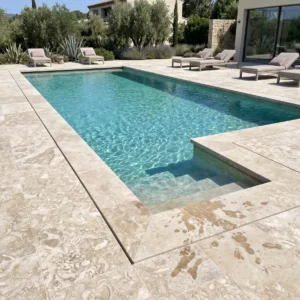
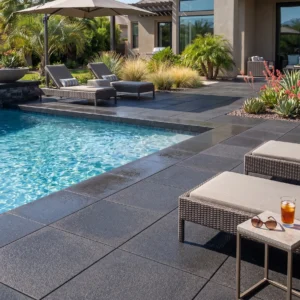
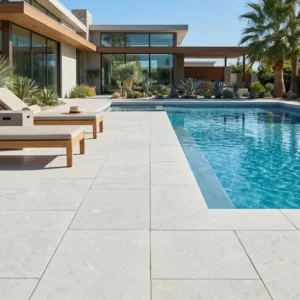
Guanacaste is tropical dry forest country – gold grass and bare guanacaste trees by March, an explosion of green when the rains return – and the landscape brief follows the honesty the dry islands taught: hardscape carries the structure, irrigation is budgeted like the luxury it is, and planting leans native and drought-schooled. Pale stone earns its keep twice – cool underfoot through the fierce dry-season sun, and visually right against both the gold months and the green ones. semi-arid garden structure, proven maps the design logic on an island that lives this climate year-round; Guanacaste applies it for half the year and coasts on the rains for the rest.
The Water Letter
The region’s defining paperwork is the water availability letter – the document confirming a legal supply that gates building permits across the dry northwest:
- The letter comes first: lots are bought and designs are sized against confirmed water, not hoped-for wells.
- Landscape design respects the constraint – the dry-garden register is compliance as much as taste.
- Pools recycle and cover; rinse points and irrigation run on schedules, not habits.
- Storage – tanks and cisterns – backs the supply through the driest months, plumbed under the hard landscape at build time.
Projects that treat water as the first design input sail; the region’s stalled-lot folklore is largely the story of those that did not.
The Villa Engine
The gold coast’s economy is the villa: vacation homes, rental properties and the hybrid most owners actually run – family use in the high season, rental income around it. The stone brief is the regional villa canon at full strength: pool package first, one pale material family across the property, textured surfaces for barefoot-and-wet traffic, and the turnover disciplines – fast-reset surfaces, staff-simple maintenance, same-batch spares – that keep a rental calendar full. turnover-ready villa surfaces writes those disciplines in detail, and Guanacaste’s managers apply them at scale.
The Beach-Town Registers
Each town on the coast sets its own tone, and stone work reads the local register: Tamarindo runs commercial-hospitality intensity – restaurant terraces, retail thresholds, crowd-rated surfaces; Flamingo and the marina towns run polished-residential; Nosara’s wellness economy asks for barefoot calm and yoga-deck serenity; and the Papagayo estates specify at resort grade with documentation to match. One coast, several briefs – and the specification discipline is knowing which town the drawing is standing in.
Dust, Salt and the Double Rinse
The dry season delivers the coast’s particular maintenance pair: dust from the gold-dry landscape and salt from the beach air, settling together on every outdoor surface. The response is design plus rhythm – textured pale stone that hides the film between cleanings, falls that let a quick wash run off completely, rinse points positioned for the daily circuit, and the deep clean scheduled with the first rains rather than against them. It is the lightest maintenance load in the country, but it is a load; the specification that admits it stays handsome all season.
Slopes, Views and the Engineering Underneath
The coast’s best lots climb – ocean views come with gradient – and the national rules follow the slope: retaining engineered to the seismic code, terraces benched on real foundations, drainage designed for the day the dry season ends in an afternoon. The dry months flatter shortcuts; the first serious rain audits them. Gold-coast builders sequence like their southern colleagues – structure proven, then paving – and the properties that respect the order keep their views without keeping engineers on retainer.
The Airport Effect
Liberia’s international airport made the gold coast a direct-flight destination, and the accessibility shapes the market: owners visit often, rentals turn over weekly, and properties work harder than absentee markets elsewhere. For the stone brief the effect is intensity – surfaces host more nights per year, repairs must land between bookings, and upgrade cycles run faster because owners see their properties often enough to invest in them. The coast rewards the durable choice made early; its calendar leaves less room than most for the redo.
The Gold Standard
Guanacaste’s brief reduces to its climate: design for the dry truth, secure the water first, specify pale and textured for sun-and-salt duty, and engineer the slopes for the country the code already understands. Done in one material family from a single batch, the gold-coast villa runs its double life – family home, earning asset – without the surfaces ever breaking character. The dry coast rewards the honest specification the way it rewards the early riser: completely, and season after golden season.
The Rancho Floor
Guanacaste’s signature room has no walls: the rancho – the great roofed outdoor living space, palm-thatched or tiled, where the coast actually lives from breakfast to the last drink. Its floor is the region’s most-used surface and carries a precise brief:
- The rancho floor runs the interior’s stone family at exterior specification – the room is outdoors whatever the roof says.
- Honed-textured surfaces balance bare feet, furniture traffic and the dust the dry season delivers daily.
- Falls stay subtle but real: the rancho takes wind-blown rain at the season’s turn and hosts the hose at cleaning time.
- The kitchen-and-grill corner floors at working grade with its own drainage – the rancho earns its keep at dinner.
Under the big roof, pale limestone does its quiet double duty – cool through the afternoon, warm-toned under the evening lights – and the rancho reads as the house’s heart because its floor was specified like one. Villas are bought at the pool edge and lived in at the rancho; the stone budget should know both facts.
A dry forest that is protected, not empty
The landscape behind this coast is one of the most significant conservation areas in the hemisphere. UNESCO lists the Area de Conservacion Guanacaste, inscribed in 1999 and extended in 2004, covering 147,000 hectares in total with 104,000 on land and 43,000 marine, running across roughly 100 kilometers from the Pacific to Caribbean lowlands and holding the finest remaining tropical dry forest in the region alongside some 7,000 plant species and more than 900 vertebrates. Building on the coast in front of that means the runoff, lighting and clearance decisions on a private plot connect to something much larger.
- Silt control maintained through the whole works, not just the wet months
- External lighting kept low, warm and shielded from open country
- Native dry-forest planting retained wherever the design allows
- Clearance limited to the actual building footprint
- Runoff directed to storage rather than off the plot
Six dry months, then everything at once
The Pacific northwest runs a genuinely seasonal climate: months with effectively no rain, then a wet season that delivers the year in hard afternoon storms. The climatology published by the National Hurricane Center sets the Atlantic season from June through November with a peak on September 10, and while this coast sits outside the main track density, the same months bring the rain that tests every drainage decision made in the dry.
- Drainage sized for the storm, never for the annual average
- Bedding materials that will not shrink away in a long dry spell
- Generous movement provision for wide daily temperature swings
- Groundworks completed before the wet season opens
Choosing guanacaste gold coast stone for heat and glare
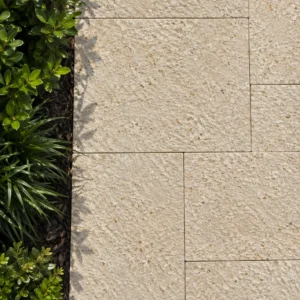
Six months of hard sun makes surface temperature a usability question rather than a comfort one. Light tones, low absorption and a texture that keeps grip without collecting dust are what make a terrace usable at three in the afternoon.
- Light-toned stone anywhere guests cross barefoot
- Matte finishes that avoid glare in open positions
- Low absorption where irrigation water will reach the surface
- Shade designed into the terrace rather than added later
Our Costa Rica stone supply guide sets out the formats, finishes and lead times that suit this country. Design for the dry season underfoot and the wet season underground.