On Bonaire’s windward side, the island makes an exception to its own rough east coast: Lac Bay, a broad, shallow lagoon sheltered behind its reef, waist-deep and turquoise for hundreds of meters, with the steady trade wind combing across it all day. The combination built one of the world’s great windsurf classrooms at Sorobon, a mangrove forest of genuine ecological weight along the shore, and a small, sandy hospitality scene that lives on both. Building beside the lagoon means serving wind sport, protecting mangroves and keeping the place barefoot – a brief with its own particular craft.
The Lagoon’s Logic
Lac works because of its geometry – reef outside, shallows inside, wind above – and everything built beside it defers to that machine. The sandy shore stays sandy; structures sit back and low; the wind corridor stays unbroken because the wind is the product; and the water’s clarity is treated as infrastructure, which it is. The building footprint that thrives here is the lightest on the island: boardwalk-adjacent courts, rinse and rigging yards, shaded gathering floors – stone used precisely, where sand and traffic meet.
The Rigging Yard
Windsurf hospitality runs on the rigging yard, and its floor is the lagoon’s hardest-working surface:
- Textured stone at working grade – boards, booms and bare feet all day, sand arriving with every one of them.
- Open joints and swept-clean detailing; the yard sheds sand to the broom, never hoards it.
- Rig-wash points with their own drainage – fresh water for kit, routed to soakaways, never the lagoon.
- Shade at the yard’s edge where lessons brief and rigs wait – engineered for the very wind the place sells.
the sand-to-stone transition craft details the threshold work this shore relies on – the yard is essentially one long, busy transition zone.
Mangrove Manners
The mangroves at Lac’s margins are the lagoon’s kidneys and nursery – protected, studied and genuinely important – and construction anywhere near them follows manners that are law and logic at once: no clearing, no fill, no drainage discharged toward the forest or the flats, works staged well back from the margin, and runoff settled on site with the same care the dive coast gives its reef. The lagoon’s clarity and the mangroves’ health are the same system; every project beside it is either protecting the product or damaging it, and the island has no patience for the second kind.
The Barefoot Standard
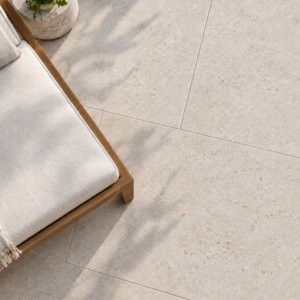
Lac’s hospitality is deliberately barefoot – sandy floors, beach bars, feet up on driftwood – and the stone that serves it succeeds by restraint: pale textured surfaces only where working traffic needs them, edges that sit low and disappear into sand, and nothing that formalises a shore whose informality is the offer. The specification is real even so – salt, sun and sandy abrasion at full strength – and the pieces that are stone must be dense, textured and detailed to sweep clean. The art is knowing where stone stops and sand resumes.
Serving the Windward Side
Lac sits on Bonaire’s windward flank, and its service specification borrows from the wild-coast rulebook: fixings rated for constant salt-laden wind, shade structures with engineered bases, loose elements designed out, and rinse regimes that treat the trade wind’s spray as the daily condition it is. windward detailing at full spec writes the complete windward canon; Lac applies it with the lagoon’s one mercy – the water itself stays flat, whatever the wind does above it.
The Learning Shore
Lac’s specialty is beginners – the waist-deep water forgives everything – and the shore’s design serves the learning economy: gentle, obvious routes from yard to water for students carrying kit for the first time, briefing floors where groups gather at instructor scale, and family territory where the youngest watch from shade. Surfaces read clearly, edges forgive, and nothing between the car park and the water asks balance of people about to spend the day finding theirs. It is hospitality design as pedagogy, and stone underfoot is its quiet teaching assistant.
Lac Cai and the Shell Shore
At the lagoon’s fishing corner, generations of conch harvests left their monument: the shell mounds of Lac Cai, weathered pink and white beside the fishermen’s landing. The mounds are heritage in the working sense – the record of a food economy that fed the island for centuries – and the shore’s manners treat them accordingly: admired, photographed, never mined for landscaping novelty or souvenir trade. For nearby premises the shell shore sets a register worth borrowing honestly – sun-bleached tones, weathered textures, materials that belong to salt light – which pale limestone matches without touching a single shell. The lagoon’s history stays piled where the fishermen left it; the new shore quotes its palette and leaves the monument alone.
Keeping the Exception
Lac Bay is the windward coast’s great exception, and everything built beside it is judged by whether the exception survives: wind unbroken, water clear, mangroves whole, shore barefoot. Build to that test – light footprint, working stone only where work happens, drainage that never touches the lagoon – and the place rewards its neighbors with the steadiest niche economy on the island. The lagoon is the asset, the wind is the product, and stone’s whole job at Lac is to serve both without ever being noticed.
Event Days at the Lagoon
Several times a season the lagoon’s steady rhythm concentrates: competition days, when the windsurf community converges on Sorobon with rigs, campers and an audience, and the shore’s modest infrastructure hosts a festival’s worth of traffic. Premises around the bay plan for the pulse:
- Rigging yards zone into competitor and school territory for the day, the stone floor taking double its usual traffic.
- Parking spills to agreed overflow ground – never onto the shore margin or near the mangrove line.
- Wash points and shade work at event scale; the queues form exactly where the falls and drainage were sized honestly.
- The reset matters most: the shore returns to its barefoot ordinary by the next morning, nothing broken, nothing left.
Event days are the lagoon economy’s shop window – the images travel the windsurf world all winter – and the premises that host them gracefully bank a season’s reputation in a weekend. The stone’s contribution is capacity without ceremony: surfaces that absorb the crowd, drain the chaos and sweep back to Tuesday calm.
A listed wetland behind the launch
The lagoon is protected in its own right. The Lac Baai Ramsar site was designated on 23 May 1980 and covers about 1,550 hectares, the largest inland bay in the Dutch Caribbean, with extensive seagrass beds and mangrove that shelter endangered juvenile green turtles, and a 2021 extension added a 500 meter buffer taking in fringing reef. The listing also names the principal threat plainly: overgrazing by extensively farmed livestock, which loads the system with nutrients and sediment. Anything built at the shore either adds to that pressure or does not.
- Silt and sediment contained through every phase of works
- No clearance of mangrove or seagrass margins without explicit consent
- Runoff intercepted before it reaches the bay
- Livestock excluded from any newly planted or restored margin
- Access routes kept to existing tracks rather than cut new
The board sport sets the ground plan
Windsurfing dictates how the shore is used. Rigs are carried out and back repeatedly, boards are laid down wet, sand travels everywhere, and the walking route between the rigging area and the water is used hundreds of times a day in season. It has to be wide, level, sand-tolerant and gentle on both feet and equipment.
- Wide, level rigging areas clear of the walking line
- Textures that keep grip with wet sand on them
- No sharp arrises where boards and rigs are set down
- Rinse points drained clear of the route to the water
Choosing lac bay stone that leaves the wetland alone
The right approach on a Ramsar shoreline is light, reversible and modest, and the wider framework supports that: the Bonaire National Marine Park management plan places the whole shoreline inside a protected area running from the high water mark to the 60 meter contour, so a small footprint is not caution but compliance. Surfaces laid over existing ground rather than cut into it, granular bedding that can be removed without trace, and a footprint no larger than the activity genuinely needs.
- Routes laid over the ground rather than excavated into it
- Granular bedding that can be lifted cleanly
- Edges restrained but not built as permanent kerbing
- Full reinstatement of every temporary working area
Our Bonaire stone supply guide sets out the formats, finishes and lead times that suit this island. The mangrove behind the launch is the reason the water in front of it is worth sailing on.