Hopkins calls itself the cultural heart of Belize’s Garifuna coast, and the village earns the title nightly – drumming carried down the beach, Settlement Day celebrated every nineteenth of November, a community that has hosted visitors without surrendering itself to them. The build wave arrived gently here: guesthouses grown from family homes, boutique places at the village edges, beach lots taken up by people who chose Hopkins precisely because it is not a resort strip. Stone work on this shore answers to that choice.
Building at Village Scale
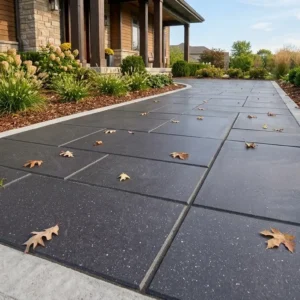
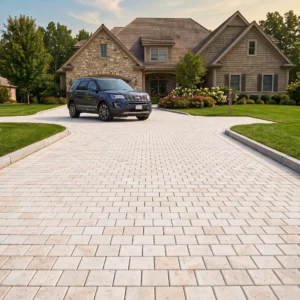
Hopkins runs on one sandy main road and the beach itself. Lots are village-sized, neighbors are permanent, and construction happens in full view. The successful builds share a posture: modest footprints, local crews hired properly, materials staged inside the lot line, and a finished property that reads as part of the village rather than an interruption of it. Stone contributes quietly – an entrance path, a veranda floor, a courtyard – surfaces that raise a property without shouting.
The Guesthouse Arithmetic
The village’s hospitality economy is family-scale, and its upgrade logic is precise:
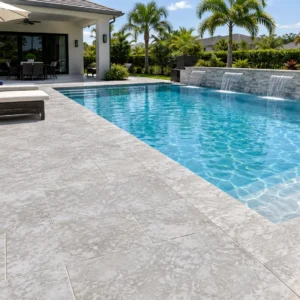
- Guests book Hopkins for culture and beach; photographs of a clean stone courtyard or pool surround move bookings measurably.
- Upgrades happen one surface per low season, funded by the season before.
- Durable surfaces cut the repaint-and-repair cycle that eats small margins.
- One material family across stages keeps a grown-over-years property looking designed.
guesthouse upgrades that pay back runs the same arithmetic in another small-island economy, and it transfers whole.
Beach Lots and the Sand Line
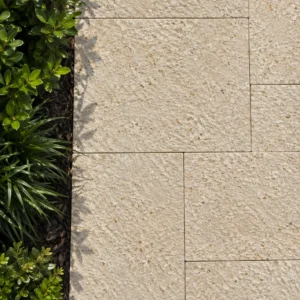
Hopkins beachfront is genuine barefoot sand, and the transition from beach to built lot is where stone earns its place: a path that starts where the sand firms, steps that hold their line as the grade rises, a terrace set back where furniture stands level. Light tones and textured finishes follow the standard shore logic – cool underfoot, grippy after rain – and the detailing keeps sand moving through rather than piling against edges.
Building on a Cultural Shore
The village’s culture is not scenery; it is the neighborhood. Practical respect looks like this: hire village labor where the skills fit and pay properly; keep construction noise inside working hours and outside festival days; leave the beach clear of materials and machines; and let the drumming evenings pass undisturbed by generator racket. Builders who get this right find the village generous with everything a build needs – knowledge, hands, and patience.
The Jaguar Country Door
Hopkins doubles as the gateway to Cockscomb Basin, the jaguar preserve in the mountains behind the coast, and a slice of its guest market comes for the forest as much as the sea. Properties serving that trade borrow from lodge design – shaded courtyards, stone that handles mud season, outdoor showers where trail boots rinse off. The specification runs a shade tougher than pure beach work: more texture, more drainage, more forgiveness.
Freight to the Village
Hopkins sits off the Southern Highway on its own access road, and materials arrive by that road from Belize City clearance – or through Big Creek when the routing favors the south.
- Consolidate the whole job into one consignment; village deliveries reward fewer, better-planned arrivals.
- Stage on dunnage inside the lot; the sandy road margin is shared space.
- Time heavy deliveries outside festival dates – the village calendar matters as much as the freight calendar.
The Shore That Stays Itself
Hopkins will keep growing; the question each build answers is whether the village stays itself as it does. Stone helps when it serves the place – durable, modest, beautiful underfoot – and the barge-and-beach craft described in barge-fed coastal building adapts naturally to this quieter shore. Build like a neighbor on the Garifuna coast and the village builds with you; that is Hopkins’ whole secret.
The Cook-Fire Courtyard
Hopkins hospitality runs through its kitchens – hudut pounded at dusk, fish over coals, cooking classes that have become the village’s signature guest experience. The courtyard that hosts them is a working surface with an audience, and its specification is honest kitchen engineering dressed as hospitality.
- Stone that takes heat spill and dropped coals without scarring – dense limestone shrugs off what softer surfaces record.
- A wash-down finish that hoses clean after service, laid to falls that carry the water away from the cooking line.
- Level, well-lit standing room for a dozen guests around the fire without crowding the cook.
- A prep-to-table route in the same surface, so loaded hands never negotiate a step they cannot see.
A dense textured limestone handles the whole brief and photographs beautifully mid-lesson – which, in a village whose bookings travel by photograph, is part of the specification too. The cook-fire courtyard is where Hopkins’ culture and its hospitality economy meet on one surface; build it as seriously as any dining room and it becomes the property’s signature the way the drumming is the village’s.
The Bicycle Village
Hopkins moves by bicycle – guests on cruiser bikes, kids doubling friends on crossbars, staff riding to shift – and the village’s properties are learning to build for it. The details are small and appreciated daily: a stone apron at the gate where sand gives way to a firm mounting point, a rack area off the path so leaned bikes never block the walk, and path widths that let two bikes pass without either riding the planting. A guesthouse that handles arrival-by-bicycle gracefully has understood the village’s pace – and its guests notice before they have unpacked.
A culture on the UNESCO list, still being lived
This is not heritage kept behind glass. UNESCO records the language, dance and music of the Garifuna as present in Belize, Guatemala, Honduras and Nicaragua, proclaimed in 2001 and inscribed in 2008 on the Representative List of the Intangible Cultural Heritage of Humanity. The listing describes an Arawakan language carrying narrative traditions shared at wakes and gatherings, and texts that preserve practical knowledge of cassava growing, fishing, canoe building and the construction of baked mud houses. It also notes the element is under pressure, with the language now taught in only one village. Anything built here is built next to a living practice, and the ground plane should serve it rather than compete with it.
- Open ground kept genuinely open, because drumming and dancing need it
- Surfaces that take bare feet, chairs, cooking and crowds without complaint
- Materials that read as village fabric rather than as resort finish
- Routes to the water kept clear and public where they always have been
- Local craft and labor used wherever the work allows
The shore is the village front room
Hopkins lives along a single strip between the sea and the lagoon, and the beach is not scenery there but working ground: boats come and go, fish are landed, food is cooked, and the same sand carries visitors, bicycles and children through the day. Surfaces have to survive salt, sand abrasion, sun and constant use, and they have to be repairable in pieces because the village never closes.
- Sand-tolerant textures that keep grip without collecting grit
- Modular units a two-person crew can lift and reset by hand
- Continuous edge restraint where paving meets loose sand
- Non-ferrous fixings, since salt reaches everything on this strip
Choosing hopkins garifuna coast stone for a working village
The detail that lasts here is the one built to be opened. Guidance on detailing natural stone paving for lasting durability puts installation method alongside material choice, and in a village setting that means granular bedding that can be recharged, joints that can be raked and refilled, and a build-up that never requires plant to repair.
- Granular or open bedding rather than large rigid slabs
- Joints detailed to drain and be refilled, not sealed shut
- Spare stock held in the village so repairs happen the same week
- A repair method written in plain language for whoever maintains it
Our Belize stone supply guide sets out the formats, finishes and lead times that suit this country. Build for the drumming and the fishing first, and the guests will get the better village anyway.