Two facts shape every Virgin Islands household budget: electricity here has long been among the most expensive in the United States, and the water in the tap started as rain on the roof. The territory has responded with a self-sufficiency culture that predates the current energy conversation — cisterns are code, solar is everywhere, and the household plant room is ordinary equipment rather than a luxury. Here is the independence guide.
The cistern is not optional
Territory building code requires cisterns sized against roof area, which makes every house a water bank and every roof a catchment surface. The design consequences run through the ground plane: roof and terrace surfaces kept catchment-clean, first-flush protection maintained, overflow routed deliberately to planted ground, and outdoor rinse points detailed so salt-and-sand discipline is easy. The reservoir-house craft this library detailed in Anguilla is directly transferable — with the territory’s code layer making it universal rather than traditional.
Power at real prices
High utility rates changed the arithmetic on solar long before resilience became the headline, and the territory’s rooftops show it. The ground plan serves the plant: equipment courts on engineered pads with acoustic sense, battery and inverter walls sheltered from sun and splash, fuel storage sited and built to code, and service access that works in the rain the outage arrived with. The powered-house chapter from Puerto Rico reads here almost verbatim, with the difference that the economic case was already made by the tariff before the storms made the resilience case for it.
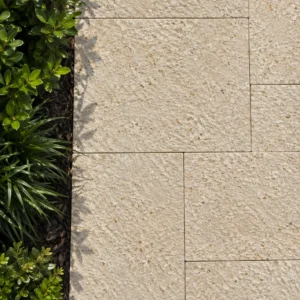
- Light-toned surfaces that reduce reflected heat into the house
- Shaded outdoor rooms that take load off mechanical cooling
- Equipment pads sized and drained before the array is ordered
- Cable and conduit routes left accessible under liftable units
Passive first
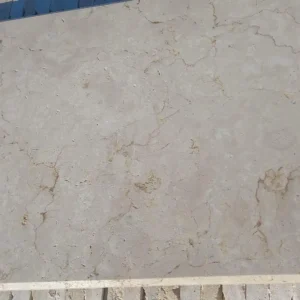
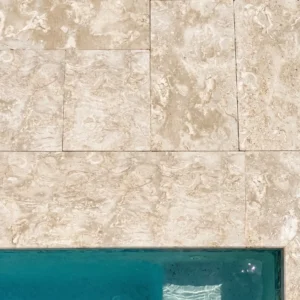
The cheapest kilowatt is the one the building never needs, and the territory’s older architecture knew it: cross-ventilation aligned to the trades, deep galleries shading walls, high ceilings moving heat off the living plane, and thick masonry damping the day’s swing. Stone participates honestly — shaded terraces stay cooler underfoot than lightweight decking, interior stone floors moderate the temperature swing, and mass in shade is comfort while mass in sun is a radiator. Every degree the fabric handles is battery capacity spent elsewhere.
Redundancy without bunkers
Independence here is layered rather than absolute: solar with battery for the daily load, a generator for the long event, cistern capacity with a delivery relationship for the dry months, and enough pantry depth that a supply interruption is an inconvenience. The households that manage this well have not built fortresses; they have simply made each system serviceable, documented and exercised, so the first real test is not also the first operation. Property managers formalize it — the villa file records tank capacity, plant details and supplier contacts as standard.
- Cistern capacity checked against the driest year, not the average one
- Roof and terrace catchment areas calculated together
- First-flush provision so the dirtiest runoff never enters storage
- An accessible overflow route for the week the cistern is already full
What it does to value
The market prices independence openly. A house that ran through the last long outage — lights, water pressure, refrigeration, a circulating pool — carries a premium the listing states plainly, and the buyer arriving from a mainland market where the grid is assumed learns the local vocabulary fast. The relocation market asks about it first, and the rebuild decade explains why.
Specifying for independence
The self-sufficient kit is working stone in service of systems: engineered plant pads, sheltered equipment walls, catchment-clean surfaces, roof-walk footing for array maintenance, and passive design carrying as much of the load as possible — supplied through the territory supply page. On islands where water falls from the sky and power costs what it costs, independence is not a lifestyle statement; it is simply how a competent house works.
Reading the meter: what independence actually costs
Self-sufficiency on these islands is a capital decision with an operating payoff, and it deserves arithmetic rather than enthusiasm. The honest picture: a solar and battery installation sized for a household is a significant capital sum, its payback is driven by a tariff among the highest in the United States, and the resilience value — not being dark for weeks after a storm — is real but hard to put on a spreadsheet. Generators are cheaper to install and expensive to run; cisterns are effectively free water with a maintenance obligation; and the combination is what most established households arrive at.
The mistakes are consistent. Undersizing the battery so the system covers daylight but fails at the hour it matters; skipping the passive-design work that would have shrunk the load before the plant was specified; installing an array on a roof whose waterproofing was due for renewal, guaranteeing an expensive removal later; and neglecting maintenance access, so servicing a component means dismantling something. The ground-plane answers are cheap when made early — engineered pads, sheltered equipment walls, access routes that work on a slope and walkway pads that let a technician cross a roof safely — and expensive when retrofitted.
The comparison that matters is not solar-versus-grid but total-cost-versus-total-benefit over a decade of island living, including the weeks the grid is simply not there. Most households that ran the numbers honestly ended up investing more than they first intended and regretting none of it — and the ones who bought a system without doing the passive work first are the ones still paying for capacity they did not need. Independence rewards planning in exactly the way this library keeps describing: decide once, build properly, and stop thinking about it.
Why independence is the normal setting here
Self-sufficiency in the territory is an economic decision before it is a philosophical one. The Department of Energy records residential electricity at roughly 42 cents per kilowatt hour, well above mainland averages, alongside a grid modernization program supported by more than three billion dollars in federal funding following the 2017 hurricanes. At that price, and with that recent history, most owners plan for generation, storage and water on site rather than treating them as extras.
- Assume an extended outage rather than a brief one
- Site batteries and switchgear above the local flood level
- Keep working clearances around equipment permanently unobstructed
- Record what is buried and where, at handover
Under sixty inches, and much of it at once
Water is the harder half of the problem. The NOAA state climate summary covering the Virgin Islands records annual rainfall below 60 inches across all the islands, which is modest for the region, and much of that total arrives in a small number of heavy events. A cistern-fed house therefore has to catch aggressively when it can and lose nothing to a badly detailed surface.
- Size storage for the dry stretch rather than the annual total
- Catch from every clean surface, including suitable paved areas
- Keep planting, fertilizer and vehicle areas out of the catchment path
- Inspect and clean gutters and channels before each wet season
The ground plane is part of the water system
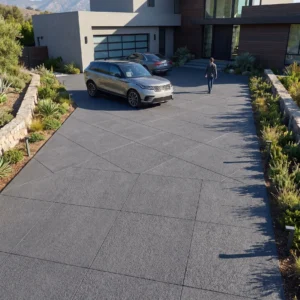
On a cistern island paving is not neutral. It decides what reaches storage, how clean it is, and whether a downpour arrives as a usable resource or as erosion. That makes the choice of finish and joint a water-quality question as much as an appearance one.
- Low-absorption units where runoff is intended for storage
- Joints that do not shed fines into the catchment
- Silt traps upstream of any inlet to the cistern
- Separate drainage for vehicle and equipment areas
Choosing off grid site stone for an independent house
Design the water and power systems first, then choose a surface that serves both and can be lifted when either needs attention. Our US Virgin Islands stone supply guide sets out the formats, finishes and lead times that suit these islands. On these islands the roof and the terrace are infrastructure before they are architecture.