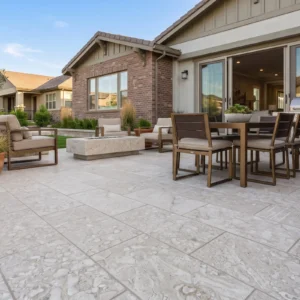
The Virgin Islands compete for mainland capital with a specific instrument: territorial tax incentives, administered through the economic development program, that draw businesses and individuals to relocate and establish genuine presence here. The effect on property is direct and visible — a steady stream of arrivals who need real homes, keep real offices, and bring mainland expectations about how both should be finished. The relocation market is one of the territory’s most consequential building forces. Here is its guide.
Presence is the point
The program rewards actual residence and actual operations rather than a mailbox, which means the buildings involved are genuinely used: full-time family homes, working offices, and the domestic infrastructure of households that have moved rather than visited. That distinguishes this market sharply from the pure rental-villa economy — the relocation-household register this library wrote for Cayman applies almost directly, with schools, daily routines and the long-stay calculus all in play.
Mainland expectations, island reality
Arrivals bring the process instincts of the markets they left: drawings honored, schedules meaningful, documentation complete — the process-culture standard in an American accent. The island supplies its own realities in exchange: freight that crosses water and clears customs, trades booked further ahead than a mainland suburb, gradient, salt and a genuine storm season. The successful projects reconcile both, and the reconciliation is mostly documentation and lead time — specify early, order early, and let the paperwork do the reassuring that proximity would do at home.
- Lead times quoted from the island, not from the mainland warehouse
- One approved sample retained locally for every material on the schedule
- Substitutions agreed in advance, since a like-for-like swap may not exist
- Contingency held in program rather than in specification
The office side
Relocated businesses need premises the mainland would recognize: arrival thresholds at the executive-premises register, durable public-facing ground, and the outdoor working spaces the climate makes possible — a shaded terrace is a meeting room here for most of the year. The capital’s commercial core hosts much of it, alongside newer office space on both main islands, and the specification runs institutional: documented, duty-graded, maintained visibly.
The house that has to work
A relocation home is not a holiday property, and the brief shows it: full-time kitchens, home offices with real connectivity, storage for a household’s actual possessions, and outdoor rooms used daily rather than photographed weekly. The everyday-family logic applies more than the villa-listing one. Water and power independence matter disproportionately — the self-sufficiency chapter is written for exactly these households — and the stone specification follows the same reasoning as every other decision: choose once, maintain in minutes, never think about it again.
- Surfaces specified for daily family use, not for occasional guest weeks
- Service and utility areas finished to the same standard as the terrace
- Storage and working space planned in, because deliveries are infrequent
- Details a local crew can maintain without a specialist visit
Staying, or not
The honest note this market deserves: some arrivals stay for decades and some leave within two years, and the property decisions that survive both outcomes are the durable ones. A house finished to a standard the resale market recognises protects the family that stays and the family that goes, and in a small property market the difference between a well-documented property and an idiosyncratic one is measured in months on the listing. Build for the island rather than for the incentive, and the house works whichever way the decision goes.
Specifying for arrivals
The relocation kit blends everyday durability with mainland-legible documentation: full-time-household ground, executive-grade commercial thresholds, resilience infrastructure and batch records that make future repairs routine — landed through the territory freight sequence and served by the island supply page. The incentives brought the arrivals; the island keeps the ones whose houses actually work.
Schools, healthcare and the questions that decide a move
Incentive programs attract interest; practical life decides who stays. The questions that actually determine whether a relocating household settles are unromantic and consistent: where the children go to school, what happens in a medical emergency, whether the internet supports a working life, and how often the family will realistically travel back. Advisors sell the tax case; the island is bought or abandoned on these four.
The property consequences are concrete. Households prioritize proximity — to a school, to the hospital, to the airport — more than the villa market ever does, which reshapes which neighborhoods the relocation market actually wants; connectivity becomes a genuine specification item, with home offices designed around it; and the guest accommodation question arrives immediately, because families who move receive visitors constantly and the full-time household brief includes hosting as a permanent condition rather than an occasional one. Travel frequency shapes the house too: the family flying monthly wants a property that locks up easily and a management arrangement that works, which is closer to the managed-property standard than to a conventional home.
The honest counsel for arrivals is to rent first and buy second. The island that suits a two-week visit is not always the island that suits a school year, the differences between St. Thomas, St. John and St. Croix are far larger than a map suggests, and the households that spent a year renting before committing are conspicuously the ones still here a decade later. Build the house after the decision, not as part of making it — and specify it, as the territory standard insists, for the island rather than for the brochure.
The two-year test
Island relocations sort themselves out around the second year, and the pattern is consistent enough to plan for. The first year is novelty and logistics – finding the house, the school, the doctor, the reliable builder. The second is when the realities settle: the cost of everything imported, the flight home that takes a full day, the small island where everyone knows your business, and the weather season that arrives whether or not the family feels ready. Households that survive that year usually stay a decade or more; households that do not, leave around month eighteen. The property implications are worth acting on: rent through the first year, buy in the second if the answer is yes, and specify anything you build to a standard the resale market recognises – because the honest odds mean the house should work as well for the next owner as for you. The territory standard is the right target regardless of which way the decision goes.
Mainland expectations, island logistics
Buyers arriving from the states usually expect a domestic supply chain and find something slightly different. The territory is American, but Customs and Border Protection treats it as a United States insular possession, which is why returning travelers carry a 1,600 dollar duty-free exemption rather than the smaller foreign allowance. Goods coming the other way clear locally. Nothing about that is difficult, but it does mean a specification cannot be changed casually once a container is booked.
- Freeze the finishes schedule earlier than a mainland project would
- Order complete, including trims, spares and fixings
- Appoint the broker before placing the order, not after it ships
- Expect approvals and freight to run in sequence, not in parallel
The running costs nobody mentions at closing
Ownership here has a different cost structure. The Department of Energy notes that residential customers pay around 42 cents per kilowatt hour, far above mainland averages, and that the territory is working through a grid modernization effort backed by more than three billion dollars in federal funding after the 2017 storms. That single number reshapes a build: shade, thermal mass, natural ventilation and light-toned surfaces stop being aesthetic choices and become operating decisions.
- Light-toned paving to reduce reflected heat into the house
- Shaded terraces designed as usable rooms rather than as decoration
- Pads and routes left ready for solar, storage and a standby generator
- Rainwater catchment treated as primary supply, not as a backup
Choosing relocation build stone with the schedule in mind
The projects that go well are the ones where the material decisions were made early and then left alone. A short palette, ordered once, delivered complete and installed by a crew that has the drawings in hand will beat a more ambitious scheme that spends its budget on air freight and rework.
- One stone, one finish, one joint width across the property
- Cut to list off island so site work stays simple
- Documented surplus held from the first delivery
- A maintenance method written for the household, not the contractor
Our US Virgin Islands stone supply guide sets out the formats, finishes and lead times that suit these islands. Decide early, order once, and the island will feel a great deal closer to the mainland than it did at the start.