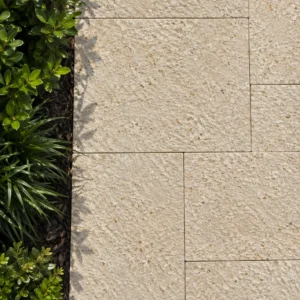
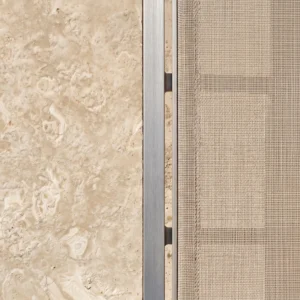
Every stone inquiry from Barbados asks a version of the same eight questions, so here they are with straight answers — the commercial companion to this cluster’s technical guides, and a fair preview of what working with a quarry-direct supplier actually feels like.
“What does stone cost per square foot?”
Honestly: it depends, and any instant number would mislead. Price moves with five variables before freight adds its share:
- Stone type
- Thickness
- Finish
- Format
- Quantity
What quarry-direct means is that the quote you receive is built from those real variables against your actual cutting list, without a distribution stack inflating it.
“Why can’t I just buy from stock on the island?”
You can — and for a few square meters of something standard, local stock has its place. Cut-to-order supply answers different needs: exact formats and profiles (your coping, your treads), single-batch color across a whole project, chosen finishes rather than whatever landed, and per-square-foot economics that improve sharply with quantity. The trade is lead time for control — and Bajan projects that plan a sailing ahead find the control priceless.
“How do samples work from overseas?”
Simply: name the stones and finishes you are considering, and samples are at your Barbados door within 3 working days. Judge them wet and dry, at noon and at dusk, against your render and garden — the whole doorstep ritual this cluster keeps prescribing — and only then talk quantities. No serious order should ever precede physical samples, and no serious supplier minds saying so.
The import side is more open than most people expect. Official commercial guidance states that almost all goods can be imported into Barbados, with licenses required for a defined list that is largely agricultural — the country guidance sets out the exceptions. Dimension stone does not appear on that restricted list.
“What is the real timeline?”
The honest ledger, stage by stage:
- Samples — days
- Quoting against your cutting list — days
- Production, if cut to order — the variable, confirmed with the quote
- Sailing to Bridgetown and clearance — the ocean’s share
- Inland delivery — days
End to end, unhurried projects run weeks rather than days, which is why the recurring advice is to order at design freeze.
“How do I know I can trust an overseas supplier?”
Structurally, not hopefully. Five mechanisms carry the risk instead of your optimism:
- Escrow payment for new clients, with funds releasing only when the order verifies
- Physical samples before any cutting starts
- Itemized quotes your broker can check line by line
- Photographed container loading
- A principal answering directly rather than a sales layer
“What about duties and landed cost?”
Your customs broker is the authority: send them the proforma invoice at quote stage and the landed-cost number arrives before anything sails — the freight guide walks the whole document trail. The supplier’s job is paperwork so clean the broker has no questions; the buyer’s job is the ten-minute conversation that converts unknowns into numbers.
Duty is only half the arithmetic. Value added tax is administered separately by the Barbados Revenue Authority through its TAMIS platform, and it lands on the delivered value rather than the invoice alone — the authority publishes its filing and payment channels. Budget it as a visible line rather than a rounding error.
“What if something arrives damaged?”
The fifteen-minute arrival inspection turns any transit issue into a documented, insured, resolvable event:
- Count the crates against the packing list
- Photograph anything questionable before it moves
- Open one crate per stone type
Breakage margins exist in the order for exactly this. Well-crated stone travels remarkably well, and the procedure exists for the exceptions.
“Where do I start?”
With the free move: samples. Then a sketch, then a quote. The sequence that works:
- Request the sample set and view it on site, wet and dry
- Send dimensions or a rough sketch of the areas
- Take the itemized quote to your broker before committing
The Barbados supplier guide holds the full picture on materials, freight and escrow.
“Can I visit a project or see references?”
A fair ninth question: photographs travel further than visits in island supply, so ask for project imagery of the stones on your shortlist in Caribbean settings, and for the case-study material that shows orders landing and living. References carry most weight when they speak to the thing you actually fear — matching, timelines, damage handling — so name the fear and ask for the story that answers it.
Clearance itself runs through the Customs and Excise Department, which sits under the Ministry of Finance and processes entries electronically — the department is listed in the government directory. Your broker files the entry, but you should still know whose name goes on it and who answers if a query lands.
“What about warranty?”
Natural stone’s honest warranty structure: the supplier stands behind grading, calibration and the match to approved samples (the things production controls); the installer stands behind bedding, falls and joints (the things site controls); and the stone’s own physics — verifiable on your sample week — covers the decades. Distrust any warranty that promises the material cannot stain or chip; trust the structure where each party owns what they actually control.
“Can I order in phases?”
Yes, and most villa projects do. The thing to protect is batch continuity, because stone from a later block run will not match a surface already laid. The workable pattern:
- Decide the whole scheme at the start, even if only phase one is being built
- Order the full quantity in one production run, so every surface comes from the same material
- Take delivery together and store the later phases dry and flat, off the ground
- Keep the packing list, so the second crew knows which crates are theirs
Phasing the payment is a separate conversation and usually easier than phasing the stone. If storage genuinely is not available, say so early: we can hold a reserved batch instead, which achieves the same continuity with a different set of risks.
“What if I need more later?”
This is the question that costs the most money when it is asked too late. Natural stone varies block to block, so a top-up order two years on will be close but not identical, and a patch of close-but-not-identical stone in the middle of a terrace is more visible than an honest repair. The insurance is attic stock: order roughly 3 to 5 percent extra at the outset, keep it dry in a garage or store, and a future breakage, utility trench or extension disappears into the field. It is the cheapest line on the invoice and the one owners thank themselves for a decade later.
“Do I need an architect or designer to order?”
No. Plenty of orders start from an owner with a tape measure and a photograph, and we quote from a dimensioned sketch as readily as from a drawing set. What an architect adds is the coordination work, and if you are ordering without one, you take on those decisions yourself:
- Where finishes change from one zone to the next
- Which pieces need to be cut as specials rather than bought as standard sizes
- How the stone meets thresholds, drains and existing levels
- Who is responsible for setting out before the first unit is bedded
None of it is difficult, but all of it is easier to decide before production than after delivery, and we would rather walk through it on a call than let a crate arrive against an unresolved detail.
What matters most when buying stone in Barbados
“What would you do in my position?” — the question every inquiry eventually asks. The honest answer never changes: samples first, broker early, order once and complete, escrow until trust is earned, and the nine answers above in writing before money moves. Suppliers who welcome that discipline deserve your cutting list; the discipline itself costs a fortnight and protects a decade.