Travertine stone type classification trips up even experienced specifiers — not because the material is complex, but because its formation process places it in a category that doesn’t behave the way most sedimentary stones do. Unlike dense limestones that compress over millions of years into a near-impermeable matrix, travertine forms rapidly around hot spring and geothermal vents, capturing gas bubbles mid-formation and locking them into its structure permanently. That cellular architecture is the defining physical characteristic of this travertine stone type — shaping every performance variable you’ll work with, from absorption rate to thermal response to finish selection.
What Is Travertine Stone, Geologically Speaking?
Travertine belongs to the calcium carbonate family — the same broad group as limestone and marble — but its formation mechanism sets it apart entirely. It’s a terrestrial sedimentary rock, meaning it forms on land rather than on an ocean floor. Mineral-rich groundwater, typically superheated by geothermal activity, rises to the surface and rapidly releases carbon dioxide. That degassing reaction causes dissolved calcium carbonate to precipitate out of solution almost instantly, building up layer by layer around the vent. The speed of that process is what creates the voids: gas escapes, solids crystallize, and the structure sets before those cavities can fill.
Answering what is travertine stone accurately requires distinguishing it from its relatives. Marble is metamorphic travertine or limestone that has been recrystallized under intense heat and pressure — it loses its voids and becomes dense and interlocking. Travertine never undergoes that transformation, which is why it retains its characteristic pore network throughout. Its calcium carbonate composition makes it susceptible to acid etching, but that same composition gives it a workability and warmth that denser igneous materials simply can’t replicate.
Is Travertine a Natural Stone?
The question of whether travertine is natural stone comes up more than you’d expect — usually because buyers have encountered filled travertine tiles where the pores have been grouted or resin-filled, giving the surface a uniform, almost synthetic appearance. Filling doesn’t change the material’s origin or composition. Travertine is unambiguously a natural stone: it forms entirely through geological processes without any manufacturing step, and its cellular structure, banding, and color variation are all products of natural mineral deposition.
According to Natural Stone Institute travertine properties and outdoor suitability, travertine’s open-pore structure and absorption characteristics are inherent to its natural formation and directly influence finish selection, sealing requirements, and long-term performance in outdoor applications. You can fill those pores with grout or epoxy resin, hone the surface smooth, or leave it with its natural textured openings — but in every case, the base material remains a naturally formed calcium carbonate sedimentary rock.
The distinction matters for specification purposes. Natural stone carries site-specific variation in veining, tonal range, and pore distribution that synthetic or engineered materials don’t replicate. When your project requires that authentic character, understanding that is travertine natural stone means understanding that no two slabs will be identical — and accounting for that variation in your layout planning and ordering quantities.
Travertine’s Pore Structure: What It Means for Your Specification
The void content in travertine varies significantly by quarry source and by position within the deposit. Material extracted from the outer, more recently deposited layers tends to carry higher void content and more irregular pore distribution. Older, deeper-layer travertine is typically denser, with tighter banding and more predictable coloration — it’s the grade specification writers should target for structural or heavily trafficked applications.
- Unfilled travertine retains open pores and provides drainage — well suited for pool deck applications where water needs to pass through rather than pool on the surface
- Filled travertine uses cementitious grout or epoxy resin to close pores before honing — produces a smoother surface but requires more rigorous sealing because the filler itself can absorb moisture
- Honed filled travertine is the most common interior specification — provides a flat, consistent surface for flooring installations where texture variation would be a trip hazard
- Brushed or tumbled finishes on unfilled material preserve the natural character while softening sharp edges — the right call for walkway and stepping stone applications where a lived-in aesthetic is the goal
Absorption rate decisions flow directly from this pore classification. Standard travertine absorbs between 1.5% and 3.5% by weight — considerably higher than granite but within a manageable range when you seal properly and maintain joint drainage. Unfilled material at the higher end of that range needs penetrating sealer applied in two coats before installation and annually thereafter in high-use exterior environments.
ASTM Classification and Structural Thickness Requirements
Travertine dimension stone falls under ASTM C1527 travertine dimension stone standard specifications, which establishes minimum flexural strength, absorption limits, and abrasion resistance thresholds for exterior and interior use. Request conformance documentation from your supplier rather than assuming compliance — not all quarry operations test to this standard, and the difference in material quality between tested and untested stock is measurable in the field.
For structural applications, the minimum thickness specification under most residential and light commercial building codes runs 1.25 inches for paving and 0.75 inches for wall cladding applications with adequate mechanical anchorage. Load-bearing paver applications on grade typically require 2-inch nominal material with a compacted aggregate base of at least 4 inches — deeper in freeze-thaw regions where frost line depth demands additional base insulation to prevent heave. Seismic zones introduce additional requirements around bedding layer flexibility and joint design; rigid mortar beds in high-seismic areas are increasingly replaced with semi-flexible epoxy-modified settings that allow micro-movement without cracking the stone.
Building code compliance doesn’t end at base depth. Edge restraint requirements for travertine paver installations vary by jurisdiction, but the consistent requirement is a rigid perimeter — either concrete edging or a mechanically fastened steel restraint — to prevent lateral spreading under cyclic loading. Verify your jurisdiction’s specific requirements before finalizing the installation detail, particularly for driveway or vehicular applications where point load calculations must justify the specified thickness.
Formation Patterns and Color Variation: What You’re Actually Buying
Travertine’s color range — ivory, walnut, gold, silver, noce — derives from trace mineral content present in the water source during formation. Iron oxide produces the warm amber and gold tones. Organic material creates darker, cooler tones in the walnut and noce ranges. Silver and grey travertines typically form where the water source carries higher manganese concentrations. Understanding this gives you predictive power when assessing material from different quarry regions, even when working through a domestic supplier.
The banding pattern — those horizontal striations visible when you look at a cross-section of travertine — represents individual deposition episodes. Each band reflects a period of active mineral precipitation followed by a brief pause. Thicker, more pronounced banding usually indicates slower deposition cycles with higher mineral concentration, which correlates with denser material. Tight, fine banding points to rapid deposition — often lighter material with higher void content. This isn’t a rule, but it’s a useful field heuristic when selecting slabs at the warehouse and making quick comparative judgments about relative density without waiting for absorption test results.
At Citadel Stone, we evaluate travertine lots at the warehouse before they reach project sites, checking for consistency in banding, void distribution, and tonal range within each shipment. That quality step matters because quarry output varies batch to batch, and a project that mixes stock from two different production runs without color-sorting will show seams in the finished installation that no amount of sealing or grouting will conceal.
Travertine vs. Limestone vs. Marble: The Classification Differences That Matter
All three materials share calcium carbonate as their primary mineral, but their formation histories produce fundamentally different physical properties. This table of distinctions is worth keeping in your specification toolkit:
- Limestone forms through marine sediment compression — typically denser, lower void content, higher compressive strength, less color variation than travertine
- The travertine stone type forms through terrestrial hot spring deposition — moderate density, characteristic void network, warm tonal banding, classified as a variety of limestone by many geological references
- Marble is metamorphosed limestone or travertine — recrystallized under heat and pressure, no voids, highest density and compressive strength of the three, most susceptible to thermal shock if installed over radiant heat without proper expansion allowances
- Travertine’s flexural strength (typically 650–1,200 PSI) sits below granite but above many softer limestones — adequate for most residential and light commercial paving applications
- Acid sensitivity is highest in travertine and marble, moderate in dense limestones — pool chemistry, outdoor cleaning products, and even high-tannin organic matter require you to spec acid-resistant sealers
The USGS provides useful comparative data on USGS limestone and travertine natural mineral formation, confirming that travertine’s classification as a limestone subtype is geologically accurate — but that distinction matters less for specification than the practical performance differences outlined above.
Finish Options and Slip Resistance: Getting the Surface Right
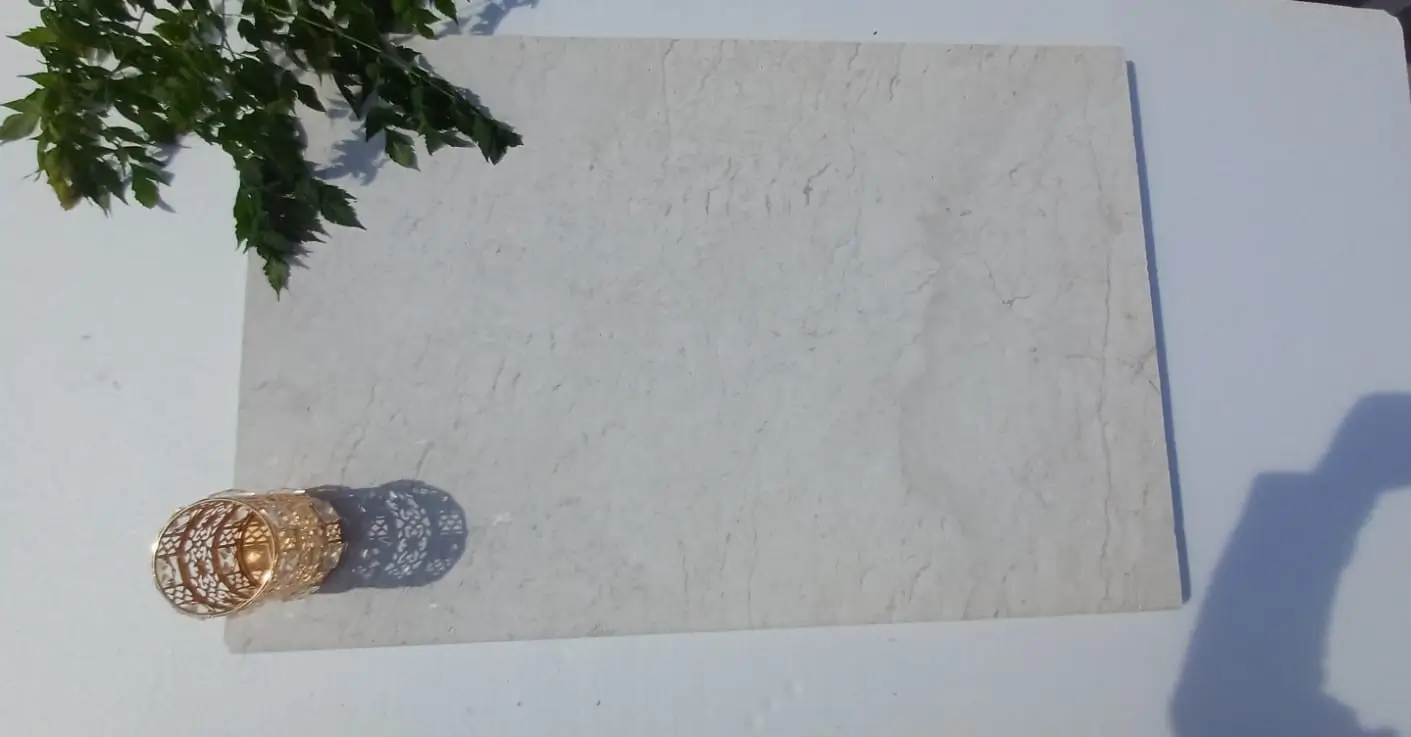
Finish selection determines slip resistance, maintenance frequency, and aesthetic character in roughly equal measure. Travertine’s natural surface — that open, slightly rough texture where the pores are visible and the stone hasn’t been honed — offers the highest coefficient of friction and the lowest maintenance burden for exterior applications. It drains well, doesn’t require aggressive anti-slip treatments, and ages gracefully.
- Natural/tumbled finish: the most surface texture — meets the 0.42 minimum for commercial wet-area applications per ANSI A326.3
- Honed finish (filled): noticeably smoother — marginal for wet-area use; requires non-slip sealer or anti-slip additive in pool and shower applications
- Polished finish: DCOF drops to 0.30–0.40 when wet — exterior polished travertine is an inappropriate specification for any surface where users walk barefoot or in wet conditions
- Brushed finish: DCOF similar to honed but with improved texture — a good compromise for interior-exterior transition zones
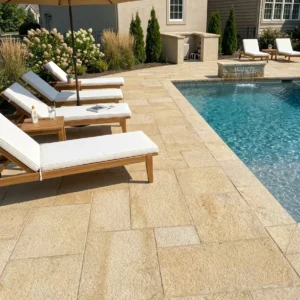
You’ll find that natural travertine from Citadel Stone is available across all major finish categories, which lets you match the surface preparation to the specific application demand rather than accepting a one-size specification. For pool deck work, unfilled tumbled material is the consistent recommendation — the drainage and slip resistance combination is simply better than any sealed honed alternative.
Sealing and Long-Term Maintenance: What the Performance Window Actually Looks Like
Travertine’s calcium carbonate matrix responds to penetrating impregnator sealers predictably — the open pore network draws the sealer in effectively, and a quality fluoropolymer or siloxane impregnator provides 3–5 years of protection before reapplication in exterior settings. Interior applications with lower UV and moisture exposure can stretch that interval to 5–7 years. The critical variable isn’t the sealer brand — it’s surface preparation before application.
Applying sealer to travertine that hasn’t been cleaned of calcium efflorescence, organic staining, or installation residue locks those contaminants under the protective layer. You’ll get an initial cosmetic improvement followed by accelerated deterioration as moisture moves laterally through the stone beneath the sealed surface. The correct sequence: clean, allow 48-hour dry time, apply first coat, allow cure, apply second coat, allow full cure before traffic. Skipping the second coat on exterior applications reduces effective protection depth by roughly 40%, which shows up as premature water penetration within 18–24 months rather than the expected 3–5 year cycle.
Citadel Stone’s technical team can advise on sealer selection based on the specific travertine grade and finish you’re working with — the recommendations differ between filled and unfilled material, and between interior and exterior exposure conditions. That consultation step is worth taking before specifying a sealer that performs differently than anticipated in the field.
Ordering, Warehouse Stock, and Project Lead Times
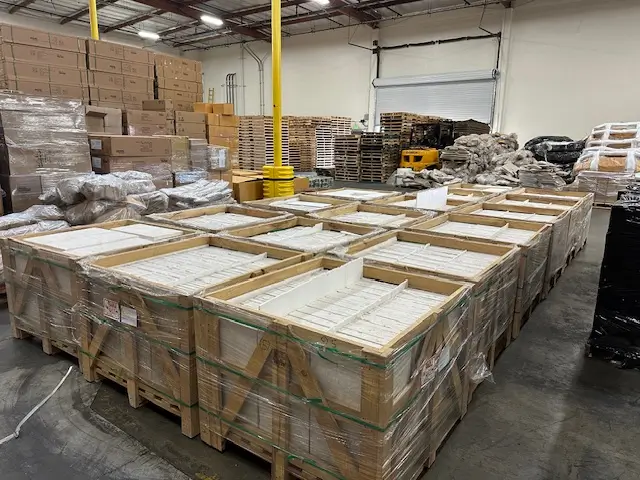
Travertine is one of the more reliably stocked natural stone categories in the domestic supply chain — major finish types and standard thicknesses move through warehouse inventory continuously, which means your lead time for standard specifications is typically shorter than for more exotic materials. For projects requiring a specific lot match across a large square footage, confirm warehouse availability and request a hold on the required quantity before finalizing your installation schedule. Running out mid-project and waiting for a truck delivery from a mismatched production lot is the most common avoidable disruption in travertine installations.
Large-format travertine — anything over 24×24 inches — often carries longer lead times because these sizes are cut to order rather than maintained as continuous warehouse stock. Plan for a 3–4 week lead time minimum for oversized slabs, and coordinate truck delivery access at your site in advance. These pieces are heavy and require appropriate offloading equipment; a site without equipment access can delay an entire project if materials handling hasn’t been pre-staged.
Getting Your Travertine Stone Type Specification Right
The travertine stone type classification ultimately comes down to three things that matter for your specification: it’s a naturally formed calcium carbonate sedimentary stone with a characteristic pore network that influences every performance variable, its formation process is distinct from both dense limestone and metamorphic marble even though all three share the same mineral base, and its finish selection determines whether the material performs as intended over a 20-plus-year service life or requires remedial intervention within the first decade. Getting those three decisions right — natural versus filled, appropriate finish for the application, and ASTM C1527-compliant material from a traceable source — puts you ahead of the specification errors that generate callbacks.
Building code compliance is a layer that often gets addressed late in travertine projects. Base depth, edge restraint, material thickness under load, and seismic detailing are specification decisions that need to be made alongside material selection — not after installation begins. For pathway and stepping stone applications connected to your travertine project scope, laying stepping stones correctly covers the base and leveling details that determine whether adjacent hardscape elements remain stable over time. For projects where authentic material character matters, Citadel Stone offers travertine with the distinct cellular patterning only natural formation produces.