What the Finish Actually Changes
The leathered vs polished granite decision isn’t purely cosmetic — it determines how your countertop or slab will behave over years of daily contact, cleaning routines, and environmental stress. Polished granite achieves its mirror-like surface through a progression of increasingly fine abrasive pads that close the crystal structure down to a near-impermeable plane. Leathered granite, by contrast, is processed with diamond-tipped brushes that follow the stone’s natural contours, leaving a textured surface with a soft, low-sheen appearance. Both finishes start from the same raw slab, but the end result performs differently in virtually every category that matters to a working kitchen or bath surface.
Visual Character and Design Fit
Design intent should drive the finish conversation before anything else. Polished granite delivers maximum color saturation and depth — the crystalline structure reflects light across the full spectrum, making dark minerals pop and veining appear almost three-dimensional. Working with a statement slab where the movement is the design feature, polishing amplifies every detail.
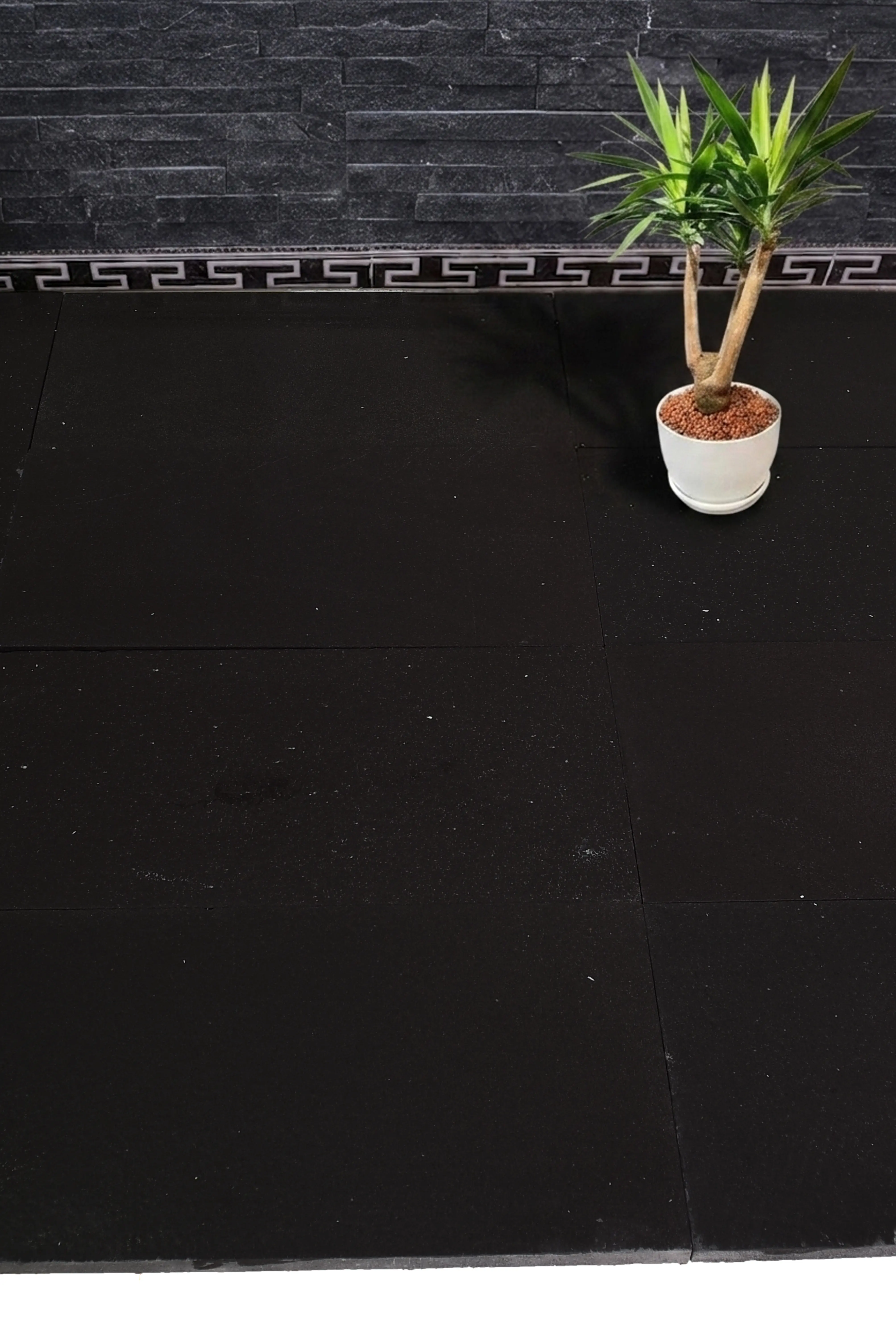
Leathered granite reads differently in a room. The brushed texture diffuses light rather than bouncing it back, which means the surface feels warmer and more tactile even when the underlying stone is identical. Dark granites — think deep charcoals and blacks — tend to be particularly well-suited to the leathered treatment because the finish adds visual complexity without competing with the stone’s natural drama. Lighter granites with heavy veining can go either way, but the leathered surface will mute some of the contrast that polishing would otherwise exaggerate.
Maintenance Reality for Each Finish
Here’s where the two finishes diverge most significantly in day-to-day use. Polished granite is smooth and non-porous at the surface layer, which makes it easy to wipe clean — but every fingerprint, water spot, and smudge reads clearly against that reflective plane. In a high-use kitchen, you’ll find yourself wiping the surface multiple times a day just to maintain the visual effect you paid for.
Leathered granite changes that equation. The micro-texture of the brushed surface breaks up light reflections and physically disperses residues across a slightly larger area, which means oils, fingerprints, and water traces are far less visible. According to Natural Stone Institute granite durability and application specifications, surface texture plays a measurable role in how organic residues accumulate and transfer on natural stone. For households with children, heavy cooking activity, or simply a preference for a surface that doesn’t demand constant attention, leathered granite has a genuine functional advantage.
Sealing requirements differ between the two. Polished surfaces have been compressed by the polishing process and generally require less frequent sealing — annual application is typically sufficient with quality penetrating sealers. Leathered granite retains slightly more surface porosity due to the brushing process, so you’ll want to seal at installation and check absorption annually using the water-bead test. A few extra minutes per year is a reasonable trade-off for reduced daily maintenance.
Porosity and Stain Resistance
The porosity difference between leathered and polished granite is real but often overstated in generic comparisons. Granite is one of the denser natural stones available — compressive strength consistently above 19,000 PSI and absorption rates well below 0.4% for most commercial-grade slabs. The finish affects surface porosity far more than it affects the stone’s bulk absorption characteristics. ASTM C615 granite dimension stone quality standards establish absorption thresholds that quality granite meets regardless of finish — the slab itself isn’t meaningfully more porous because it’s been leathered rather than polished.
What does change is how liquids behave at the immediate surface. On a polished slab, a drop of red wine beads and sits visibly — you have a short window to wipe it before it penetrates an unsealed or under-sealed surface. On a leathered slab, the same drop spreads slightly across the texture and is less immediately alarming, but the window for cleanup is comparable. Neither finish eliminates the need for sealing, and neither finish makes granite immune to staining if proper maintenance is neglected.
Texture and Slip Considerations
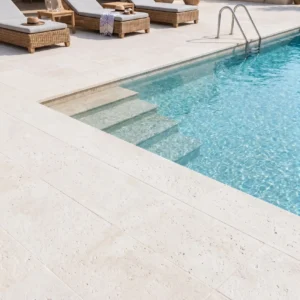
For countertop applications, slip resistance is rarely a specification concern. For leathered granite used as flooring, stair treads, or outdoor horizontal surfaces, the textured finish provides a meaningful coefficient of friction advantage over polished granite. Polished granite floors are notoriously slippery when wet — this is the single biggest reason you don’t see polished granite specified for pool surrounds or commercial restroom floors without anti-slip treatments.
- Leathered granite achieves a static coefficient of friction typically in the 0.6–0.8 range depending on texture depth, where polished surfaces often fall below 0.5 when wet
- For any application where the surface will encounter water regularly, leathered granite is the defensible specification from a liability standpoint
- Outdoor leathered granite surfaces also benefit from the texture’s ability to channel water away from the foot-contact plane, reducing hydroplaning risk
- If you’re specifying granite for a commercial space, ADA surface requirements for walking surfaces make polished granite a problematic choice without secondary treatment
That said, the textured surface of leathered granite can trap fine grit over time in outdoor applications, which means periodic pressure washing or stiff-brush cleaning is necessary to keep the texture functioning as intended rather than becoming a collection point for debris.
Thermal Cycling and Outdoor Performance
Granite’s thermal expansion coefficient runs approximately 4.4 to 7.9 × 10⁻⁶ per °F depending on mineral composition and crystal density. That range matters enormously when specifying outdoor granite — particularly in climates where day-night temperature swings exceed 40°F or where freeze-thaw cycles occur repeatedly across a season. Expansion joint spacing must be calculated based on the actual temperature range the installation will experience, not a generic guideline.
The finish affects thermal performance in one underappreciated way: polished granite absorbs and releases heat differently than leathered granite because the surface geometry changes how radiation interacts with the stone. Polished slabs reflect more solar radiation during peak heat hours, but they also cool more rapidly after sunset, which means the thermal cycling amplitude — the difference between peak daytime and minimum nighttime surface temperature — can actually be greater for polished outdoor granite than for leathered. In freeze-thaw regions, that wider cycling range increases the stress on both the stone and the mortar or adhesive layer beneath it.
Leathered granite’s textured surface absorbs and retains heat more evenly, which moderates the cycling amplitude slightly. For outdoor kitchen counters, patio bars, or exterior flooring in regions with significant temperature variation, leathered granite tends to perform with fewer joint failures over time precisely because the thermal stress concentrations at slab edges are marginally lower. This isn’t a reason to avoid polished granite outdoors entirely, but it’s a detail worth discussing with your installer when specifying joint width and filler material for exposed applications. USGS granite production and construction use statistics document the broad spectrum of granite use in demanding outdoor environments, reinforcing the material’s durability across thermal extremes when properly specified.
Cost and Lead-Time Factors
The leathered finish typically adds cost relative to a standard polished surface. The diamond-brushing process requires additional fabrication time and specialized tooling, and not every fabricator has the equipment or trained staff to execute it well on exotic or heavily veined slabs. Budget an additional 10–20% on fabrication costs when moving from polished to leathered on the same slab.
Lead times deserve attention in your project planning. For leathered granite from Citadel Stone, warehouse stock levels and slab availability vary by color and thickness — confirming inventory before committing your fabricator’s schedule is a step that prevents the most common project delay. At Citadel Stone, we work directly with quarries and maintain warehouse inventory across a range of granite varieties, which allows us to provide accurate lead-time estimates early in the specification process rather than after a purchase order is placed.
- Polished granite slabs are widely stocked and typically ship within standard lead times from warehouse inventory
- Leathered granite may require the slab to be sent to a specialized finishing operation after selection, adding 1–2 weeks to your timeline
- Confirm with your supplier whether the leathered finish will be applied pre-shipment or by your local fabricator, as this affects both cost and scheduling
- Slab thickness matters too — 3cm slabs handle the leathering process more predictably than 2cm, which can show stress marks along the texture if the brushing pressure is miscalibrated
Matching Finish to Application
Your specification should match finish characteristics to the specific demands of each application zone. There’s no universal right answer — leathered and polished granite each win decisively in different contexts.
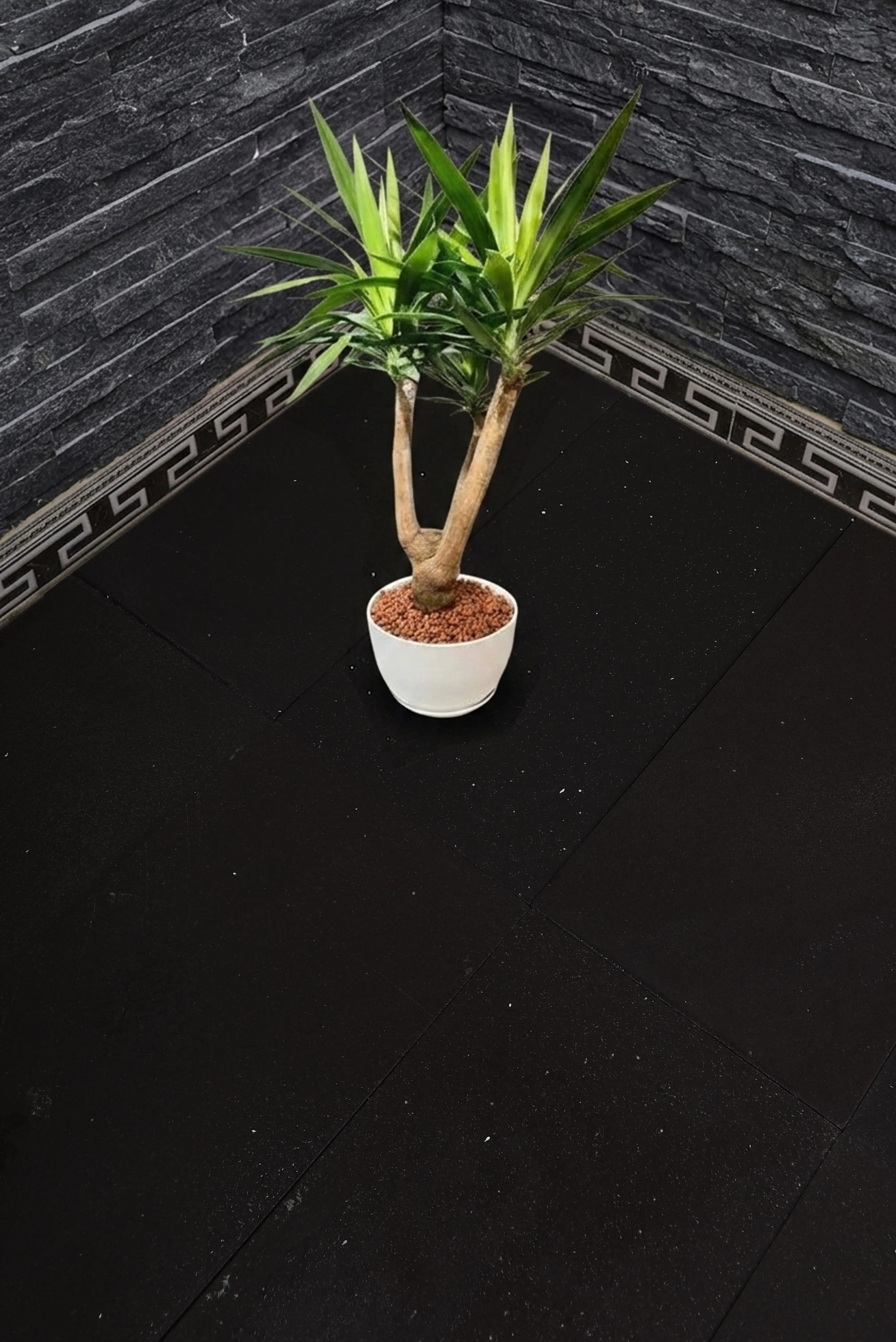
For kitchen countertops in active households, leathered granite consistently outperforms polished for practical maintenance reasons. The surface hides the evidence of daily cooking activity, doesn’t telegraph every water spot from the sink, and holds its appearance without the visual fatigue that polished surfaces develop when cleaning becomes a constant task. For bathroom vanities with lower daily abuse and an emphasis on visual drama, polished granite is the stronger aesthetic choice — the reflective surface amplifies the luxury quality of the material in a space where maintenance demands are lighter.
- Kitchen islands with heavy prep use: leathered granite is the practical specification
- Bathroom vanity tops with decorative slabs: polished granite maximizes visual impact
- Outdoor kitchen counters or bar tops: leathered granite handles thermal cycling and maintenance more gracefully
- Commercial reception desks or hospitality surfaces with daily professional cleaning: polished granite performs well because maintenance is systematic rather than intermittent
- Flooring in wet zones: leathered granite is the defensible safety specification
- Fireplace surrounds: either finish works, but leathered granite’s texture provides tactile warmth that suits the application
What often gets overlooked in this decision is the grout joint or seam behavior. Leathered granite conceals minor lippage and installation imperfections more effectively than polished, because the textured surface draws the eye across the plane rather than reflecting light in ways that emphasize any variation in joint height. In large-format slab applications where perfectly flush installation is difficult to guarantee, leathered granite gives your installer more margin for acceptable execution.
Decision Points
The leathered vs polished granite decision becomes straightforward when you map finish characteristics directly against your application priorities. Polished granite is the right call when visual drama is the primary goal, when professional cleaning protocols are in place, or when the installation context rewards a mirror-like presentation — formal dining rooms, luxury bathrooms, and commercial showrooms all fit this profile. Leathered granite earns its place in applications where daily practicality, safety, or outdoor exposure are the driving factors.
Consider what your daily interaction with the surface will actually look like twelve months after installation, not just on reveal day. A polished slab photographed at installation looks stunning in every image — but in a kitchen where a family cooks three meals a day, that same surface will demand constant attention to maintain the effect. Leathered granite, by contrast, tends to look better at month eighteen than it did at week one, because the finish wears and settles into its texture rather than showing micro-scratches as accumulated dullness. If your project includes a related countertop budget discussion, granite countertop pricing factors breaks down what actually drives cost at the specification level — a useful reference before you finalize material and finish selections together.
At Citadel Stone, we recommend making the finish decision alongside your slab selection rather than after — the two choices interact. Some slabs with particularly dramatic veining lose visual complexity under the leathered treatment, while others with subtle patterning gain character they lack when polished flat. Our technical team reviews finish compatibility as part of the sourcing conversation so you don’t arrive at fabrication with a mismatch between expectation and result. Leathered granite tends to mask smudges more effectively than polished surfaces, a distinction Citadel Stone highlights when helping buyers match finish to their kitchen or bath lifestyle.
Related reading: decomposed granite · decomposed granite suppliers · what type of rock is granite.