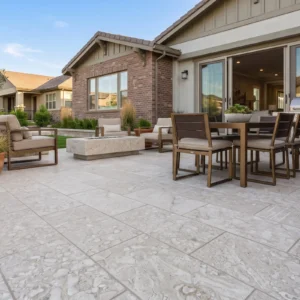
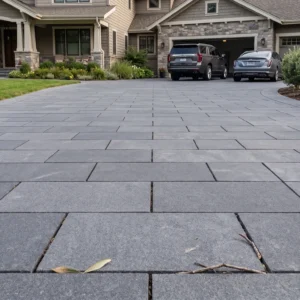
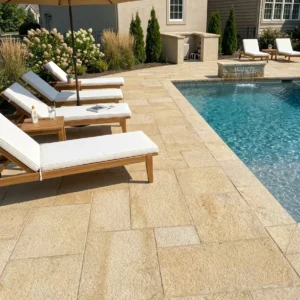
Why Flagstone Works in Real Landscape Design
Landscaping with flagstone rewards projects that treat the material as a structural element first and a decorative one second. The dimensional variability inherent to natural flagstone — thickness ranges from 1″ to 2.5″ across a single pallet — creates installation challenges that generic design guides never address. Your base system has to accommodate that variance while still producing a level, stable finished surface. Get that right, and you’re building something that holds up for decades. Miss it, and you’ll be resetting stones within three seasons.
Flagstone Yard Ideas That Actually Deliver Results
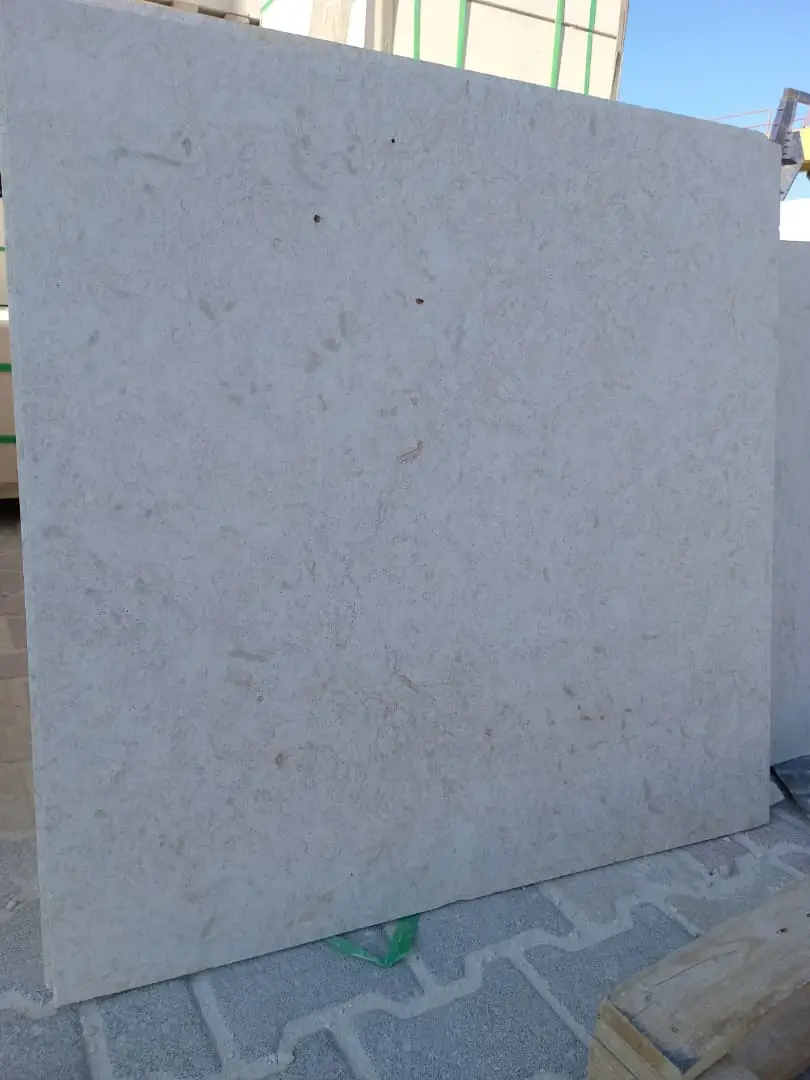
The most effective flagstone yard ideas share a common trait: they use the stone’s natural irregularity as a design feature rather than a problem to work around. Irregular flagstone stepping paths through planted beds, dry-laid patios with creeping thyme in the joints, and mixed-stone borders that blend grey and rust tones — these approaches lean into what makes natural stone different from manufactured paving. You’re not fighting the variation; you’re designing around it.
Consider these proven application concepts for your project:
- Random flagstone patios with compacted decomposed granite joints — durable, drainable, and low maintenance over a 15–20 year cycle
- Flagstone stepping paths set at 24″ on-center for natural walking cadence, with 2–4″ gaps for groundcover planting
- Flagstone-bordered raised planting beds using vertically set pieces as edging — surprisingly stable when set 6″ deep
- Mixed-format flagstone and gravel courtyards where large-format pieces anchor seating zones and gravel fills transition areas
- Flagstone water feature surrounds, where the natural texture provides grip without added anti-slip treatments
The detail that matters most in any of these applications is joint treatment. Flagstone in landscaping performs best when joints are handled decisively — either fully mortared for high-traffic areas or dry-laid with stabilised infill for naturalistic settings. Ambiguous in-between approaches produce the worst long-term outcomes.
Choosing the Right Flagstone for Landscape Applications
Your material selection should be driven by the specific demands of each zone in your project. Flagstone for patio use in high-traffic areas needs a minimum 1.5″ nominal thickness, ideally sourced from harder sedimentary varieties like quartzite or dense limestone. Softer sandstone flags work beautifully in low-traffic garden paths but will show accelerated wear under furniture legs or heavy foot traffic over time.
According to Britannica’s overview of flagstone sedimentary characteristics, the mineral composition and bedding plane orientation of flagstone directly determine its splitting behavior and surface durability — factors that distinguish decorative-grade from structural-grade material. That distinction matters when you’re specifying for a patio versus a planting bed edging.
Key selection criteria for flagstone landscape use:
- Absorption rate: below 3% for freeze-thaw regions; higher-porosity stone requires penetrating sealer to prevent spalling
- Thickness consistency: tighter tolerances (±0.25″) simplify base preparation and reduce leveling time significantly
- Surface texture: split-face finish for grip in wet zones; honed finish only in covered or very low-traffic applications
- Tone range: verify the full pallet variance before committing — natural stone pallets can span 4–5 tonal variations within a single color family
Base Preparation: The Variable Most Projects Get Wrong
Your base preparation is the single biggest determinant of long-term flagstone landscape performance. A 4″ compacted aggregate base suits most residential patio applications, but that number assumes well-draining native soil with less than 15% clay content. Clay-heavy soils need 6″ of compacted aggregate minimum, and in areas with significant freeze-thaw cycling, 8″ is the defensible specification. Skimping here is the most predictable way to create settlement and cracking within five years.
Regional variation in quarried stone extends to how differently sourced flagstone behaves under compressive load. Denser quartzite-based flagstone tolerates point loading better than softer sedimentary varieties, which is relevant when you’re specifying Citadel Stone landscape flagstone for projects that will see outdoor furniture, planters, or vehicle overhang.
For dry-laid applications, the critical detail is a 1″ sand-setting bed on top of your compacted aggregate. Keep the sand layer consistent — inconsistent depth is what creates low spots after the first winter. Tamp each flag individually after placement, and check for rock over the center of each piece before moving on.
Patterns and Layouts for Flagstone in Landscaping
The layout pattern you choose has structural implications beyond aesthetics. Random irregular layouts — often called crazy-pave — distribute load unpredictably, which is actually fine for pedestrian use but requires more care with jointing to prevent individual stones from rocking. Coursed flagstone layouts with consistent joint lines are easier to bed evenly and produce a more stable surface under point loads.
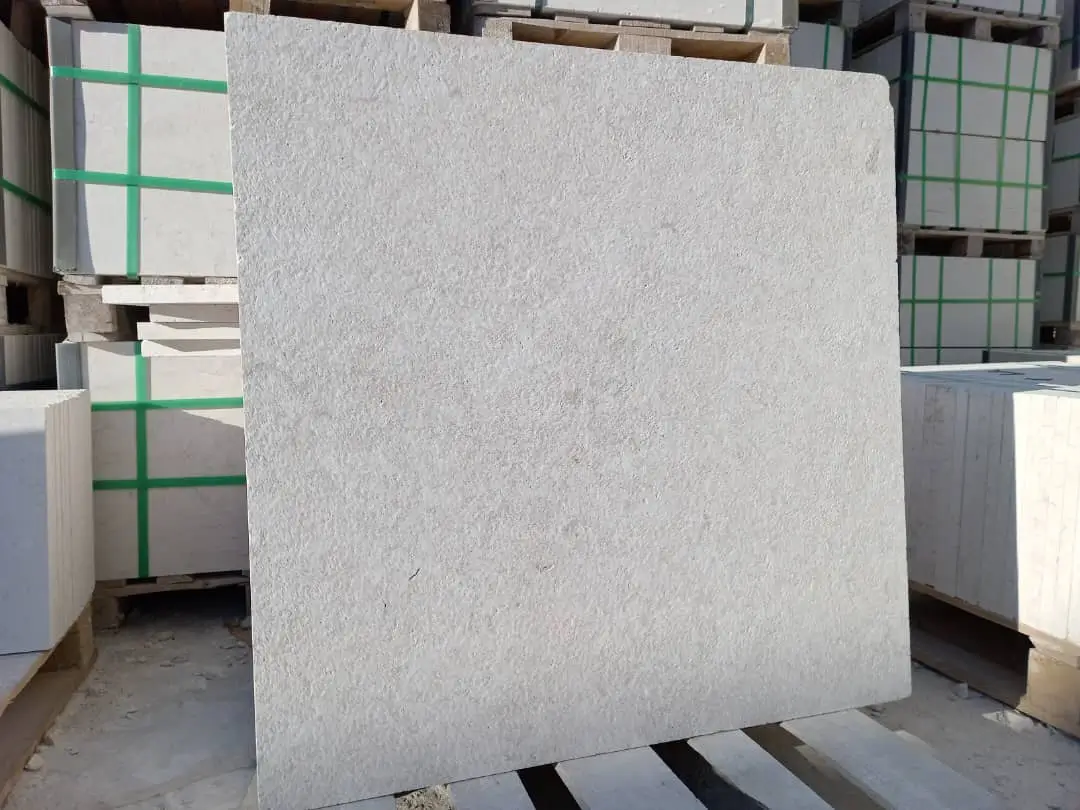
These layout strategies work across residential and commercial landscaping with flagstone projects:
- Ashlar pattern: rectangular pieces in a staggered brick-bond arrangement — combines predictable load distribution with a refined appearance
- Random irregular: traditional flagstone landscape aesthetic, works best when pieces are sorted by size before laying to avoid very small fill pieces at edges
- Opus incertum: intentionally varied piece sizes with tight joints — the most labor-intensive but produces the most naturalistic result
- Coursed rectangular with planted joints: a formal layout softened by groundcover — balances structure with organic character
The ASLA guidance on permeable outdoor paving surfaces reinforces the environmental value of dry-laid flagstone designs — open joints allow stormwater infiltration, reducing runoff significantly compared to impermeable hardscape. For projects where drainage or sustainability is a specification requirement, this is a meaningful differentiator.
Seasonal Installation Timing and Scheduling
Your installation window matters more than most landscapers acknowledge up front. Dry-laid flagstone can be installed across a wider temperature range than mortared work, but base compaction and sand-setting beds behave differently depending on conditions. Mortar applications need ambient temperatures consistently above 40°F for proper cure — and that means planning around a meaningful seasonal window in most parts of the country.
Practical timing considerations for flagstone landscape installations:
- Spring installations benefit from workable soil and moderate temperatures, but saturated ground from snowmelt can undermine base compaction — wait until moisture content stabilizes before excavating
- Early fall is arguably the optimal scheduling window: moderate temperatures allow mortar to cure without thermal stress, and ground moisture is typically at its most stable after summer evaporation
- Summer installations require scheduling mortar work for morning hours — afternoon heat accelerates set time unpredictably, which compresses your working window and affects joint finishing
- Late fall dry-laid work is feasible, but any sand-setting bed placed just before first frost needs to be protected from freeze-heave until it’s fully loaded with stone
Adhesive and mortar products have specific temperature-range requirements printed on their technical data sheets — follow these, not general rules of thumb. A product rated for 40°F–90°F will fail outside that range regardless of how well the rest of your installation was executed. Verify warehouse stock for your specified product before scheduling, since some specialty flagstone mortars have longer lead times than standard materials.
Maintenance and Long-Term Performance
Flagstone in landscaping requires less ongoing maintenance than most clients expect, but the maintenance it does require is non-negotiable for long-term performance. Penetrating sealers applied every 3–5 years protect against staining and reduce absorption in higher-porosity materials. Re-sanding dry-laid joints every 2–3 years prevents weed infiltration and maintains joint stability — once joint material depletes significantly, individual stones begin to shift and the whole surface degrades faster.
The USGS dimension stone production and use data documents how flagstone and dimension stone paving consistently outperforms manufactured alternatives in service life when properly maintained — a relevant point when clients question natural stone’s value relative to concrete pavers. Real-world service life for well-installed flagstone runs 25–40 years, compared to 15–20 years for typical concrete paver systems.
Watch for these specific maintenance indicators:
- Rocking stones: typically a base settlement issue beneath that specific piece, not a system-wide failure — reset individually with additional compaction before it destabilizes adjacent pieces
- Joint erosion: address early with fresh stabilised sand or fine aggregate; delayed repair accelerates adjacent stone movement
- Surface spalling: almost always a sealer failure in high-absorption stone exposed to freeze-thaw cycling — reseal promptly and monitor for further delamination
- Efflorescence: common in mortared flagstone in the first 1–2 years; typically resolves with weathering and diluted acid wash if persistent
Ordering, Quantities, and Project Logistics
Accurate quantity calculation prevents the two most common ordering errors: under-ordering with mismatched dye lots on a second order, and over-ordering with no return path for natural stone. For irregular flagstone, add 15% to your calculated square footage for cuts and breakage. For rectangular formats, 10% is a reasonable buffer. Delivery access needs to be confirmed before finalizing your order — flagstone pallets typically run 2,000–2,500 lbs, and some residential driveways or gate clearances can’t accommodate a standard delivery truck.
At Citadel Stone, we supply flagstone nationally and maintain warehouse inventory that keeps lead times manageable — typically 1–2 weeks for in-stock material versus the 6–8 week cycle for special-order imports. That lead time difference is worth factoring into your project scheduling, particularly for installations planned around the optimal seasonal windows discussed above. Mixed pallet options let you blend tones across a project, which is especially useful for large flagstone yard ideas where visual variety across zones improves the overall result.
What Determines Whether Flagstone Landscaping Holds Up Long Term
The projects that get landscaping with flagstone right share a consistent approach: they invest in base preparation, make decisive joint treatment choices early, and select material thickness appropriate to actual load conditions rather than the cheapest option on the pallet. None of these decisions are complicated, but each one has a measurable impact on how long the installation holds up and how good it looks at year ten versus year two. Your design concept and your material selection will get the most attention during planning — but your base system is what determines whether that concept is still intact a decade from now. As you think through material choices for other hardscape elements on the same property, flagstone patio selection and specification covers the additional decision points specific to patio applications worth reviewing before you finalize your spec. Stone for nationwide projects ships from Citadel Stone in mixed pallets, letting landscapers blend tones across beds and borders.
Related reading: flagstone vs bluestone paving · flagstone patio installation cost · what is flagstone stone.