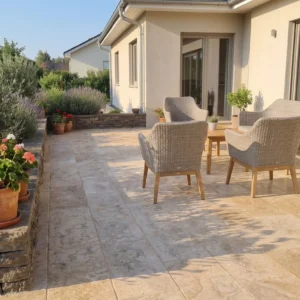
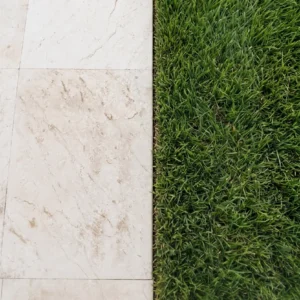
The texture difference between river rock vs volcanic rock tells you almost nothing about which one will actually perform in your project — the real differentiator is how each material responds to the ground conditions beneath it, the installation loads above it, and the long-term moisture dynamics in between. Specifiers who treat this as a simple aesthetic choice tend to revisit their decisions within a few seasons. River rock vs volcanic rock is genuinely a performance conversation first, and a design conversation second.
What Sets These Two Materials Apart
River rock is sedimentary or metamorphic stone that has been naturally tumbled and smoothed by water movement over extended periods. The result is a dense, low-porosity surface with rounded profiles and a compressive strength that typically ranges between 12,000 and 20,000 PSI depending on the parent rock type. Volcanic rock — which includes basalt, lava rock, and scoria — forms through rapid cooling of magma, producing a crystalline or vesicular structure with surface porosity that can range from near-zero in dense basalt to 30–40% in scoria-type formations.
That porosity gap is the single most important physical distinction. Your drainage strategy, sealing protocol, and base preparation all shift depending on which material you select. Understanding that distinction before you commit to a design direction will save you from specification errors that are expensive to correct after installation.
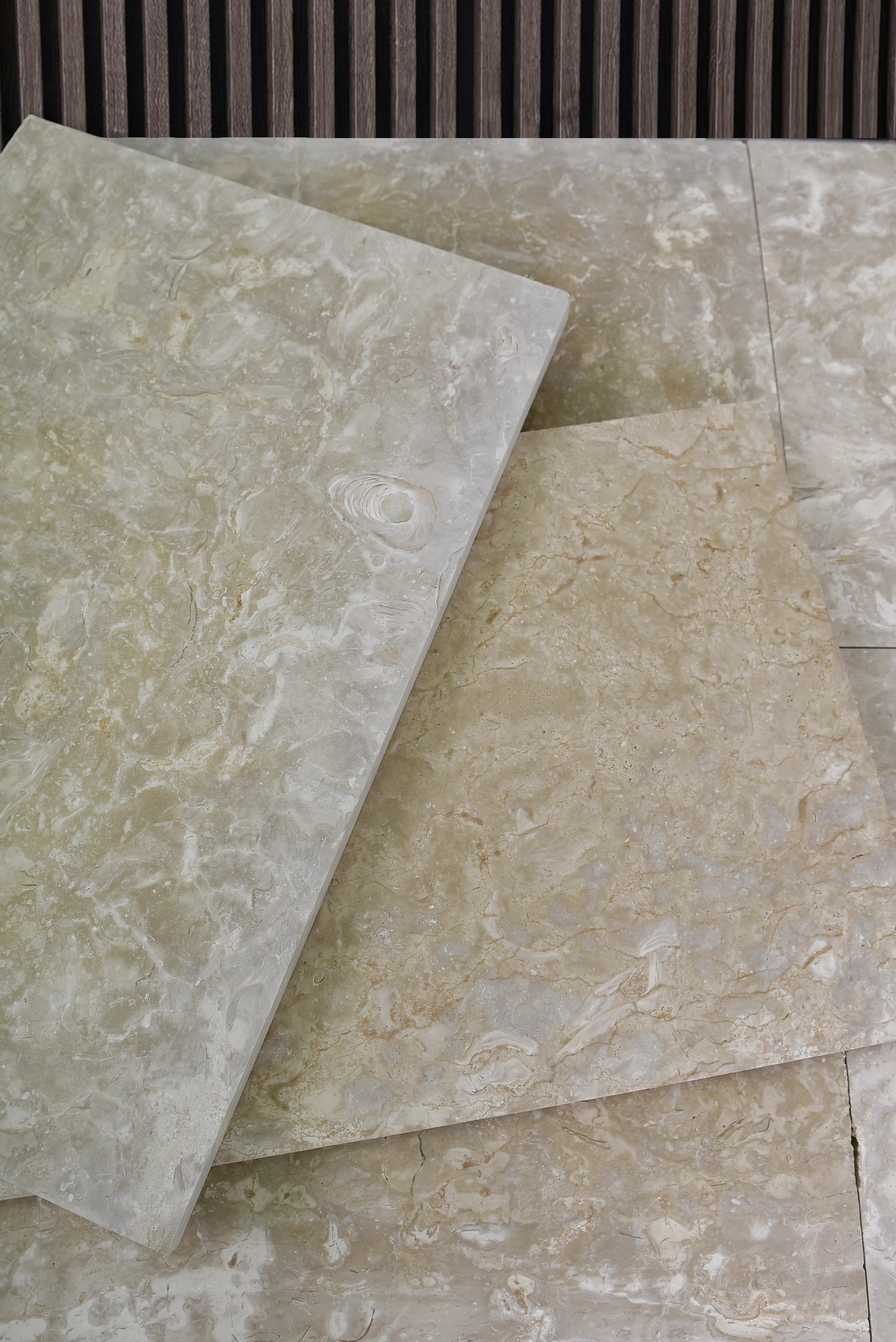
River Rock Landscaping: Performance Profile
River rock landscaping excels in drainage applications, dry creek beds, and mulch replacement zones precisely because the smooth, rounded profiles create natural void space between stones. Water moves through a river rock layer efficiently — percolation rates outperform most gravel alternatives when the stones are sized consistently between 1.5 and 3 inches in diameter. That void structure also resists compaction under foot traffic and light vehicle loads, which makes river rock a durable surface choice for low-maintenance border and pathway applications.
The rounded geometry does create one consistent installation challenge: lateral movement. River rock doesn’t lock together the way angular crushed stone does, so careful planning of your edging system from the outset is essential. The right edge restraint — typically a 6-inch steel or aluminum landscape edging driven at least 4 inches into the subgrade — keeps river rock landscaping applications stable over time. Without it, migration at the perimeter appears within one to two seasonal cycles, especially on any grade above 2%.
- Compressive strength ranges from 12,000 to 20,000 PSI depending on parent rock composition
- Low porosity (typically below 2%) means minimal water absorption and strong freeze-thaw resistance
- Smooth profiles create natural void space — effective drainage without engineered permeability
- Requires robust edge restraint due to rounded geometry and tendency to migrate under load
- Available in sizes from 0.75-inch pea gravel through 6-inch cobble, with performance characteristics shifting significantly across that range
- Alkaline leaching is possible in certain parent rock types — worth testing in ornamental planting zones
Volcanic Rock Landscaping: Performance Profile
Volcanic rock landscaping behaves very differently depending on which formation type you’re working with. Dense basalt performs like a premium igneous stone — high compressive strength (often above 15,000 PSI), extremely low absorption, and excellent resistance to abrasion and weathering. According to USGS volcanic rock properties and composition, basalt’s tight crystalline matrix makes it one of the hardest commonly available volcanic materials, suitable for high-load paving applications as well as decorative landscape uses.
Scoria and lava rock sit at the opposite end of the volcanic spectrum. These vesicular formations — formed when gas bubbles were trapped during rapid magma cooling — carry surface porosity that ranges from 20% to 40%. That porosity is both an asset and a liability. It reduces the material’s thermal mass, keeping surface temperatures noticeably lower in direct sun compared to dense stone. But it also means water retention is higher, which creates two specific risks: freeze-thaw spalling in regions with hard winters, and weed seed germination in the pore channels if organic matter accumulates.
- Dense basalt: compressive strength above 15,000 PSI, absorption below 1%, suitable for structural paving
- Scoria and lava rock: porosity 20–40%, lighter weight, higher surface area — better for mulch replacement and planting bed coverage
- Vesicular volcanic rock insulates root zones more effectively than smooth, dense river rock
- Darker volcanic formations (black basalt, black lava) absorb significantly more solar radiation than river rock — factor this into heat-sensitive planting environments
- Angular profiles of volcanic rock interlock naturally, reducing lateral migration without complex edge containment
- pH neutral in most basalt types; scoria can vary — test before using in sensitive planting zones
Soil Conditions and Subgrade Preparation
Soil composition is the variable that most frequently determines whether a river rock or volcanic rock installation performs as designed or develops problems within the first three to five years. The stone itself is rarely the failure point — the subgrade is. Expansive clay soils present the most common challenge. Clay expands volumetrically as it absorbs moisture, and that movement translates directly into displacement of whatever stone layer sits above it. River rock, with its rounded profiles and minimal interlock, will shift more dramatically over expansive clay than angular volcanic rock, which resists lateral movement through particle geometry.
Sandy or loose subgrades create a different problem: subsidence. Both river rock and volcanic rock can sink unevenly into sandy subgrades without adequate base preparation. A minimum 4-inch compacted aggregate base (¾-inch crushed stone compacted to 95% Proctor density) provides the stable foundation both materials need. In extremely sandy conditions, a non-woven geotextile fabric between the native soil and the aggregate base prevents subgrade fines from migrating upward and contaminating the stone layer over time. Hardpan subgrades — found in arid interior regions — require mechanical scarification before any base installation, as the dense layer prevents drainage and creates ponding beneath the stone surface.
- Expansive clay: install compacted aggregate base minimum 4 inches deep; consider geogrid reinforcement in severe cases
- Sandy subgrades: use non-woven geotextile barrier between native soil and aggregate base to prevent fines migration
- Hardpan subgrades: scarify or drill through the hardpan layer before base installation — failing to do this creates a perched water table directly beneath the stone
- Rocky subgrades: check for uniform bearing — uneven rock protrusions create differential settlement in both river rock and volcanic rock installations
- River rock requires tighter subgrade preparation than volcanic rock because its smooth profiles amplify any movement in the base layer
Drainage and Water Management Differences
The drainage behavior of river rock vs volcanic rock diverges in ways that matter significantly for planting bed and hardscape integration. River rock’s smooth profiles and low absorption mean water moves across and through a river rock layer quickly — almost all precipitation passes directly to the subgrade rather than being retained in the stone layer. This makes river stone for landscaping an excellent choice for dry creek beds, retention basin aprons, and any application where rapid, visible water movement is the priority.
Vesicular volcanic rock, particularly scoria and lava rock, retains a portion of precipitation within its pore structure. That retained moisture releases slowly, which provides a modest but real benefit in planting bed applications — root zones stay slightly more evenly hydrated compared to beds covered with dense, impermeable river rock. The Natural Stone Institute landscape stone variety selection guide confirms that pore structure in volcanic materials actively influences surface microclimate performance, which directly affects planting success around the stone installation.
For hardscape applications specifically, rapid drainage is almost always preferable — it reduces hydraulic pressure buildup beneath the stone layer and prevents the saturation-freeze cycles that degrade base compaction over time. River rock edges ahead of volcanic rock in hardscape drainage contexts for exactly this reason.
Visual and Design Considerations
The aesthetic contrast between these two materials is more significant than it might initially appear in product photos. River rock delivers a smooth, water-worn quality that photographs as calm and naturalistic — it reads as a passive design element, allowing plantings, structures, and hardscape features to take visual precedence. Volcanic rock, particularly black basalt or red scoria, has a textural weight that commands attention. The vesicular surface catches light differently across the day, and the angular profiles create visible shadow lines that add visual depth in low-angle light conditions.
Color consistency is another practical differentiator. River rock typically comes in mixed earth tones — tans, grays, buffs, and occasional red-brown hues — with variation between individual stones. That natural variation reads well in organic landscape designs but can feel visually inconsistent in formal geometric applications. Volcanic rock, particularly processed basalt, offers more consistent coloration within a batch, which makes it better suited for contemporary and structured design schemes where uniformity matters.
- River rock: muted, mixed earth tones — suits naturalistic, cottage, and informal landscape styles
- Black basalt: high contrast, uniform coloration — well-suited to contemporary, minimalist, and Japanese-inspired designs
- Red/brown scoria: warm, textural quality — effective in desert-inspired and xeriscaping applications
- Mixed volcanic rock blends offer color variation while retaining angular profiles and interlock characteristics
- Stone size affects visual scale — 1.5-inch volcanic rock reads as ground cover; 4–6 inch river rock reads as a focal feature
Installation Logistics and Planning
Delivery planning for both materials follows similar logic, but weight per cubic yard differs enough to affect truck requirements. Dense river rock typically runs 2,700–3,000 pounds per cubic yard. Vesicular volcanic rock — particularly scoria — can run as light as 1,500–1,800 pounds per cubic yard due to its pore-filled structure. That weight differential matters when calculating truck load quantities and planning drop locations on-site. A single truck load that covers 6 cubic yards of scoria may only cover 4 cubic yards of dense river rock at the same weight limit.
Verify warehouse stock levels before finalizing your project schedule. Both river rock and volcanic rock are subject to seasonal supply variation, and certain volcanic rock types — particularly red and black scoria in larger sizes — can have lead times of 3–4 weeks from warehouse to delivery when specialty sourcing is required. Citadel Stone maintains nationwide warehouse inventory that typically reduces lead times to 1–2 weeks, which matters considerably when coordinating stone delivery with grading and base preparation crews.
Browse and order volcanic rock at Citadel Stone to compare formation types, sizing options, and availability before committing your project schedule to a specific material selection.
Where Each Material Outperforms the Other
The honest answer to the river rock vs volcanic rock decision is that neither material dominates across all applications — each has specific performance advantages that make it the right choice in defined contexts. Choosing between them based on price or aesthetics alone, without evaluating the application-specific performance factors, is how projects end up underperforming their 15-year maintenance expectations.
River rock outperforms volcanic rock in drainage channel applications, high-moisture environments where freeze-thaw resistance is critical, and any context where smooth, rounded aesthetics are a design priority. Its low absorption and dense structure make it highly resistant to spalling, staining, and biological growth over time. For dry creek beds and retention basin edges, river stone for landscaping remains the most reliable choice across virtually all soil types and climate conditions.
Volcanic rock — particularly dense basalt — outperforms river rock in structural paving, heavy-traffic surfaces, and any application where angular interlock is a practical necessity. Its surface texture also provides better traction on sloped surfaces compared to smooth river rock, which can become slippery when wet. According to Britannica’s profile on basalt volcanic rock formation and properties, basalt’s crystalline structure resists surface weathering and abrasion at a level comparable to granite in many application environments.
- Choose river rock for: drainage channels, dry creek beds, mulch replacement in low-maintenance zones, freeze-thaw regions where low absorption is critical
- Choose dense basalt for: structural paving, heavy-traffic areas, contemporary design schemes, sloped surfaces requiring traction
- Choose scoria or lava rock for: planting bed coverage, xeriscaping, heat-sensitive root zones, lightweight applications requiring low unit weight
- Mixed-material approaches — river rock for drainage, basalt for hardscape edging — often outperform single-material solutions on complex sites
Quantity Estimation and Coverage Calculations
Coverage calculations for river rock vs volcanic rock differ because of their bulk density gap. For river rock applications, a standard 2-inch depth coverage yields approximately 160 square feet per ton. Volcanic rock — particularly lightweight scoria — can cover 200–240 square feet per ton at the same 2-inch depth due to its lower bulk density. That difference compounds at scale: a 2,000 square foot landscape project needs roughly 12.5 tons of river rock versus potentially 8–9 tons of scoria to achieve equivalent visual coverage depth.
The USGS dimension stone production and use data documents the tonnage variations between volcanic and sedimentary stone types in construction applications, which aligns with the field weight differences you’ll encounter when planning truck delivery schedules and on-site staging. Build a 10% materials buffer into your order for both rock types — cut edges, irregular subgrade contours, and compaction settlement all reduce effective coverage compared to theoretical calculations.
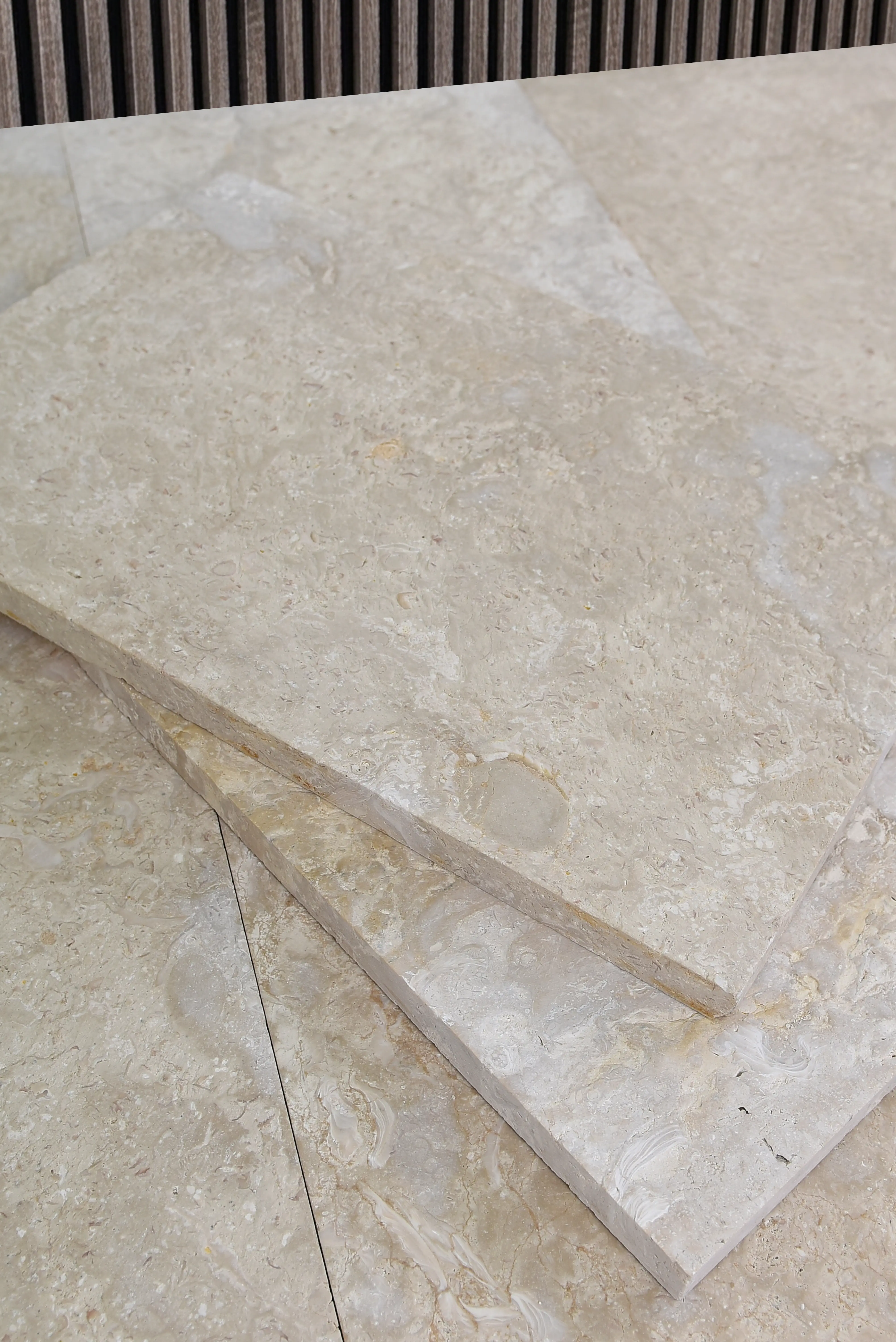
At Citadel Stone, our technical team advises clients to request a sample order before committing to full project quantities — particularly for volcanic rock types where color and texture variation between production batches can be more pronounced than product photos suggest. Confirming material consistency from the warehouse stock that will fulfill your order eliminates the single most common source of post-delivery dissatisfaction.
Your Action Plan
The decision between river rock vs volcanic rock becomes straightforward once you’ve worked through the application-specific variables rather than treating it as a purely aesthetic choice. Start with subgrade conditions — if working over expansive clay, angular volcanic rock gives a structural advantage from the moment of installation. Then assess drainage requirements: if rapid water movement is the priority, river rock’s smooth profiles and low absorption make it the functional choice. Factor in design intent last, not first — the material that performs correctly in the given soil and climate conditions will serve longer than the material that looks perfect in a product photograph.
For river rock landscaping applications, confirm an edge containment strategy before ordering. For volcanic rock landscaping in planting bed contexts, test soil pH compatibility with specific plant species before committing to large quantities — some volcanic formations can affect soil chemistry over time in densely planted environments. Document base preparation depth, compaction specification, and drainage strategy in writing before material delivery arrives; these details are easy to skip in the pressure of an active installation, and they’re the details that determine 15-year performance outcomes. Beyond river rock and volcanic rock, there’s a broader world of natural stone options worth understanding before a final specification — landscaping rock types and how they compare covers additional materials that may complement or replace your current shortlist depending on project conditions. When choosing between smooth river stone and porous volcanic rock, Citadel Stone can supply samples so buyers assess color and texture before committing to bulk quantities.