Most marble supplier evaluation failures happen before a single slab is delivered — they happen the moment a buyer skips the questions that actually separate a reliable supplier from one that will cost you three times the stone price in delays, replacements, and project overruns. The difference between a supplier who knows marble and one who just lists it comes down to a handful of specific, testable criteria that most purchasing checklists never include. This guide walks you through exactly those criteria — the ones that experienced specifiers rely on after learning the hard way.
What Most Buyers Overlook During Supplier Vetting
Your initial supplier conversation should never start with price. Price is the last variable to pin down because it means nothing without knowing what grade, finish tolerance, and thickness consistency you’re actually getting for it. Marble suppliers who lead with price are frequently compensating for inventory gaps, inconsistent grading, or long turnaround times they’d rather you not ask about directly.
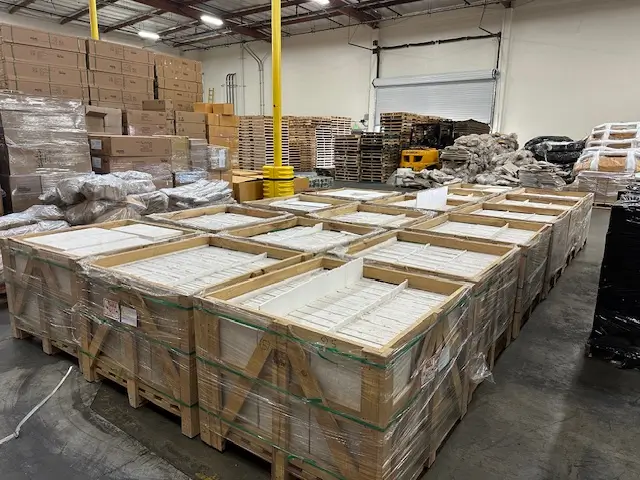
The first question worth asking any supplier is whether they physically hold inventory in a warehouse or operate as a drop-ship intermediary. This distinction matters enormously for your project timeline. A supplier with genuine warehouse stock can confirm exact slab dimensions, color consistency within a batch, and realistic delivery scheduling. An intermediary is quoting lead times based on a third party’s availability — and those timelines can slip by weeks without warning when international shipments are involved.
Here’s what most specifiers miss at this stage: even suppliers who claim to hold warehouse stock sometimes maintain only a thin rotation of top-grade material and quietly substitute lower grades when stock runs short. Ask to verify batch lot numbers across your full order quantity before committing.
Slab Grading Practices: What to Ask Before You Commit
Marble grading is one of the least standardized areas in natural stone supply, which means your supplier’s grading standards are entirely their own unless they reference a recognized framework. Industry grading typically follows classifications from the Natural Stone Institute marble grades and technical specifications, which provide a defensible baseline for evaluating slab quality, veining consistency, and surface defect tolerances across commercial and residential grades.
You need to understand the difference between Grade A, Grade B, and Commercial grade before you accept a quote. Grade A marble carries tighter tolerances for thickness variation (typically within ±1.5mm), consistent veining patterns within a given lot, and surface quality that won’t require significant prep work after delivery. Commercial grade material is suitable for many applications but will include more significant natural fissures, greater color variation across the lot, and occasionally, backfill repairs that aren’t always disclosed upfront.
Ask your supplier specifically:
- What grading classification does this material carry, and is that classification self-assigned or verified by a third party?
- Are thickness tolerances documented, and what is the acceptable variance across a full order?
- Does your grading process include back-checking for hairline fissures that don’t appear on the face surface?
- What is your policy on slabs delivered with undisclosed fill repairs?
A supplier who answers these questions confidently and specifically — without hedging — is operating at a professional level. A supplier who deflects or says “it meets industry standard” without specifying which standard is telling you something important about their quality controls.
Thickness and Dimensional Consistency Across Your Order
Dimensional inconsistency is the hidden cost that buyers who focus only on per-square-foot pricing almost always absorb. Marble slabs and tiles that vary by more than 2–3mm in thickness across a single order require your installer to compensate through mortar bed adjustment — and that adds labor time, material cost, and joint alignment risk that never shows up in the original quote.
Reputable marble suppliers calibrate their material — a process that machines the back face to a consistent thickness across the entire run. Calibrated marble is measurably easier to install and produces tighter finished joints. Non-calibrated material, which is common in lower-cost imports, requires significantly more skill to install at acceptable tolerances and creates visible lippage problems in large-format applications.
Your specification for any marble supplier evaluation should include a direct question about whether the material is calibrated or gauged, and what the documented thickness tolerance range is. For most interior flooring applications, ±0.5mm is the professional standard. For large exterior slabs, ±1mm is acceptable, but anything beyond that should trigger a conversation about installation methodology adjustments.
- Request a calibration certificate or dimensional test report if the supplier claims tight tolerances
- Specify your acceptable tolerance range in writing before finalizing the purchase order
- Ask whether the calibration is done at the quarry, at the processing facility, or at the supplier’s warehouse
- For orders over 500 square feet, request a sample from the specific production batch you’ll be receiving
Supply Chain Transparency and Sourcing Integrity
Knowing where your marble comes from is not just a design preference question — it directly affects performance consistency, long-term replaceability, and your ability to source additional material if the project scope changes. Marble suppliers who can trace material to a specific quarry and production run are offering you something genuinely valuable: the ability to match material for future repairs or extensions without the color drift that happens when you draw from a different quarry or production batch.
Carrara, Calacatta, Emperador, and Statuario are marketing names as much as geological descriptions. Two slabs sold under the same name from different quarries can have substantially different absorption rates, background tone, and vein density. According to ASTM C503 marble building stone specification, dimensional marble must meet minimum compressive and flexural strength requirements — but those standards don’t control for the visual and tonal variation that drives most client dissatisfaction in high-visibility installations.
Ask your supplier for the quarry of origin, the production run date, and whether the lot currently in stock is from a single continuous batch. This information is routine for suppliers who understand the professional market. If a supplier can’t tell you where the material came from, they can’t help you match it later — and that matters more than buyers realize until they’re standing in a finished space trying to patch a damaged area with a visually incompatible slab.
Delivery Logistics and Lead Time Realism
Project timelines built around optimistic supplier lead time estimates create cascading schedule failures that are genuinely difficult to recover from. The logistics gap between a supplier’s quoted lead time and actual delivery performance is one of the most consistent friction points in commercial and high-end residential marble projects — and it’s almost entirely avoidable with the right questions upfront.
Your marble supplier evaluation should include a direct conversation about what “in stock” actually means. Warehouse inventory held domestically has a fundamentally different lead time profile than material that needs to be consolidated and shipped from an overseas processing facility. Domestic warehouse availability typically means truck delivery within five to ten business days for most destinations. Import-dependent supply can add four to eight weeks, and any customs delays, shipping container backlogs, or freight disruptions extend that timeline further.
At Citadel Stone, we source directly from established quarry relationships and hold verified warehouse stock — which allows us to give specifiers accurate lead times rather than optimistic estimates built around best-case shipping scenarios. That operational transparency is something you should expect from any supplier handling a specification-sensitive project.
Key logistics questions to include in your supplier vetting:
- Is this material currently in your domestic warehouse, or is the quoted quantity still in transit?
- What is your maximum truck delivery lead time for my delivery address once a warehouse order is confirmed?
- Do you provide freight tracking and delivery confirmation documentation?
- What is your damage-in-transit policy, and how quickly can replacement material be dispatched if slabs arrive cracked?
How Design Context Shapes Marble Selection
The right marble for a minimalist interior courtyard reads completely differently than the right marble for a colonnade-entry landscape or a layered garden setting. This is where marble supplier evaluation extends beyond material specification into design consulting territory — and the best suppliers understand both dimensions.
Veining scale, background tone, and surface finish interact directly with the surrounding design palette. A heavily veined Calacatta reads beautifully against a restrained xeriscaping scheme where the surrounding planting is minimal and the architectural lines are clean. That same material in a dense, high-contrast garden setting can feel visually busy when competing with layered textural planting. Contemporary minimalist projects typically benefit from tighter, less dramatic veining with a honed finish that doesn’t compete with architectural geometry. Traditional or colonial design contexts often call for warmer cream tones and more movement in the stone — materials that read as aged and organic rather than precise and controlled.
A supplier who can speak to how different marble varieties perform visually across design styles is genuinely useful at the specification stage. This knowledge should come from real project exposure, not just a product catalog. You’re evaluating not just whether the supplier has marble, but whether they have the contextual knowledge to help you make the right selection for your specific design language.
Bring your project’s design references — mood boards, landscape elevation drawings, finish schedules — to the supplier conversation. A capable supplier will use that context to guide you toward material that works within the full visual system, not just the material spec in isolation. According to guidance from marble geological formation and characteristics, the visual properties of marble derive from its metamorphic mineral structure — which means color, veining, and translucency vary predictably by origin, giving knowledgeable suppliers a genuine basis for design-informed recommendations.
Evaluating Customer Service and Technical Support Capability
A marble supplier’s technical support capability is something most buyers only discover when they need it — which is too late to be useful. Your evaluation should include a deliberate assessment of how the supplier handles specification questions, installation support, and post-delivery issue resolution before any material changes hands.
The benchmark question here is simple: can the supplier’s team answer specific technical questions about the material without escalating to a catalog or a manufacturer’s data sheet? If the person you’re talking to can discuss absorption coefficients, appropriate sealer chemistry for the specific marble type, and installation substrate requirements from experience rather than a printed guide, you’re dealing with a supplier whose team actually handles and specifies this material regularly. That operational knowledge — the kind that comes from warehouse receiving, physical inspection, and ongoing specifier relationships — is what separates a genuine marble specialist from a reseller.
Post-delivery support is equally important. A supplier who provides a direct contact, responds within 24 hours to technical queries, and has a documented claims process for damaged or non-conforming material is operating professionally. One who routes all post-sale inquiries through a generic support queue with no technical knowledge behind it will cost you time during the installation phase when questions arise and need fast answers.
Rigorous marble supplier evaluation means applying the same technical standards to how a supplier supports material as to how they source and stock it — because a supplier who isn’t invested in project success beyond the sale isn’t actually a project partner.
Red Flags That Disqualify a Marble Supplier
Certain supplier behaviors are reliable disqualifiers regardless of how competitive the price appears. Recognizing these patterns early saves significant project risk downstream.
- No documentation of grading standards or material origin — if a supplier can’t tell you where the marble came from and how it was graded, you have no basis for managing quality expectations
- Vague or shifting lead time commitments — any supplier who adjusts their quoted lead time more than once before order confirmation is signaling inventory uncertainty they’re not being transparent about
- Resistance to providing physical samples from the specific lot you’ll be purchasing — samples from a different lot are decorative, not representative
- Price quotes that seem unusually low compared to the market — marble supplier pricing reflects material grade, sourcing integrity, and logistics investment; extreme low pricing typically means one of those components is being cut
- No clear claims process for in-transit damage — truck delivery for stone material carries a real breakage risk, and a professional supplier has a documented protocol for this
- Inability to discuss installation substrate requirements or sealer recommendations for the specific material — this indicates the team isn’t technically engaged with the product they’re selling
Verifying Sample Accuracy Before Placing a Full Order
Samples serve a specific and limited purpose: they show you finish quality, general color tone, and veining style. They do not represent lot consistency, thickness tolerance across the full order, or the actual visual range you’ll receive across 500 square feet of material. Professional buyers understand this distinction and build a verification step into their purchasing process.
Before committing to a full order, ask to inspect the actual warehouse lot or request a production batch report that documents the color range and vein density spread within your specific order quantity. For high-visibility applications — feature walls, flooring in entry sequences, countertops in hospitality settings — this step is non-negotiable. The cost of a replacement tile or slab due to color inconsistency discovered during installation is always higher than the cost of thorough pre-order verification.
For marble supplier evaluation purposes, a supplier who supports this process — who will pull a batch report, hold specific lot inventory under your project name, or allow physical inspection at the warehouse — is demonstrating the kind of operational investment that distinguishes professional supply from commodity reselling. Citadel Stone’s quality process includes batch verification and lot traceability as standard steps in the commercial specification workflow, not exceptions to it.
Your installation contractor needs the same material consistency you specified. The gap between what a sample shows and what a full lot delivers is where most natural stone disappointments originate — and where a rigorous marble supplier evaluation process pays for itself directly.
What Your Marble Supplier Evaluation Must Deliver
Marble supplier evaluation is the work that determines whether your finished installation delivers the quality the project demands or becomes an expensive lesson in what you should have asked before you bought. The criteria that matter — grading transparency, lot traceability, dimensional consistency, honest lead times, and genuine technical support — are not difficult to assess, but they require you to ask specific questions and hold out for specific answers. Suppliers who meet this standard are out there, and they’re worth the additional time it takes to find them.
As you finalize your natural stone strategy, related specification disciplines can inform how you approach procurement across your full project scope. If your project involves infrastructure or commercial hardscape elements beyond marble, how ballast stone is specified for procurement covers another dimension of rigorous stone sourcing worth reviewing. Designers vetting marble suppliers should ask about slab grading practices — a benchmark Citadel Stone applies transparently across its natural marble inventory.
Related reading: Stone Road Construction: A Practical Guide · Why Is There Stone on Railway Tracks?.