

Pool coping materials compared side by side reveal something most project specifications miss: the performance gap between natural stone and porcelain isn’t just about aesthetics — it comes down to thermal behavior, edge geometry, and what happens to the material after ten years of pool chemistry exposure. You’re not just picking a finish; you’re picking how that edge performs under load, how it weathers under sustained UV, and how forgiving it is when your installer needs to cut a radius. Those three variables alone eliminate half the options before budget even enters the conversation.
What Pool Coping Actually Does
The coping edge serves three structural roles that don’t get enough attention in spec sheets. It caps the pool shell, provides the gripping surface for swimmers exiting the water, and creates a transition zone between the pool deck and the bond beam. Get any of those wrong and you’re looking at cracking, delamination, or a slip liability issue within a few seasons.
Pool coping materials compared across these functional requirements produce a clear hierarchy. Natural stone — particularly travertine and limestone — excels at all three because the material’s mass and thermal properties work with the pool environment rather than against it. Porcelain performs well structurally but introduces variables around thermal expansion and edge durability that require tighter installation tolerances.
- Edge geometry matters for grip — bullnose profiles in natural stone are shaped from solid material, not applied to a thin pressed body
- Bond beam compatibility affects long-term adhesion — natural stone’s weight and porosity create mechanical bond; porcelain relies entirely on adhesive chemistry
- Drainage slope integration is easier with thicker natural stone units that can be set on mortar beds with variable depth
- Chemical resistance varies — pool water pH cycling affects calcium-based stones differently than it affects fired porcelain bodies
Natural Stone: The Main Pool Coping Types
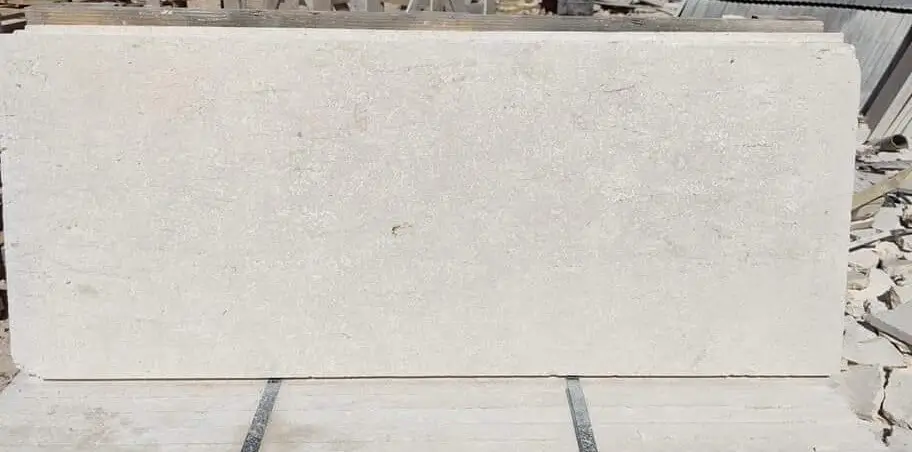
Travertine dominates natural stone pool coping for good reason. Its open-cell structure moderates surface temperature in a way dense materials simply can’t replicate — the voids trap air and interrupt heat conduction, so the surface you step on stays measurably cooler than granite or porcelain under the same sun exposure. That’s a functional advantage, not a marketing claim.
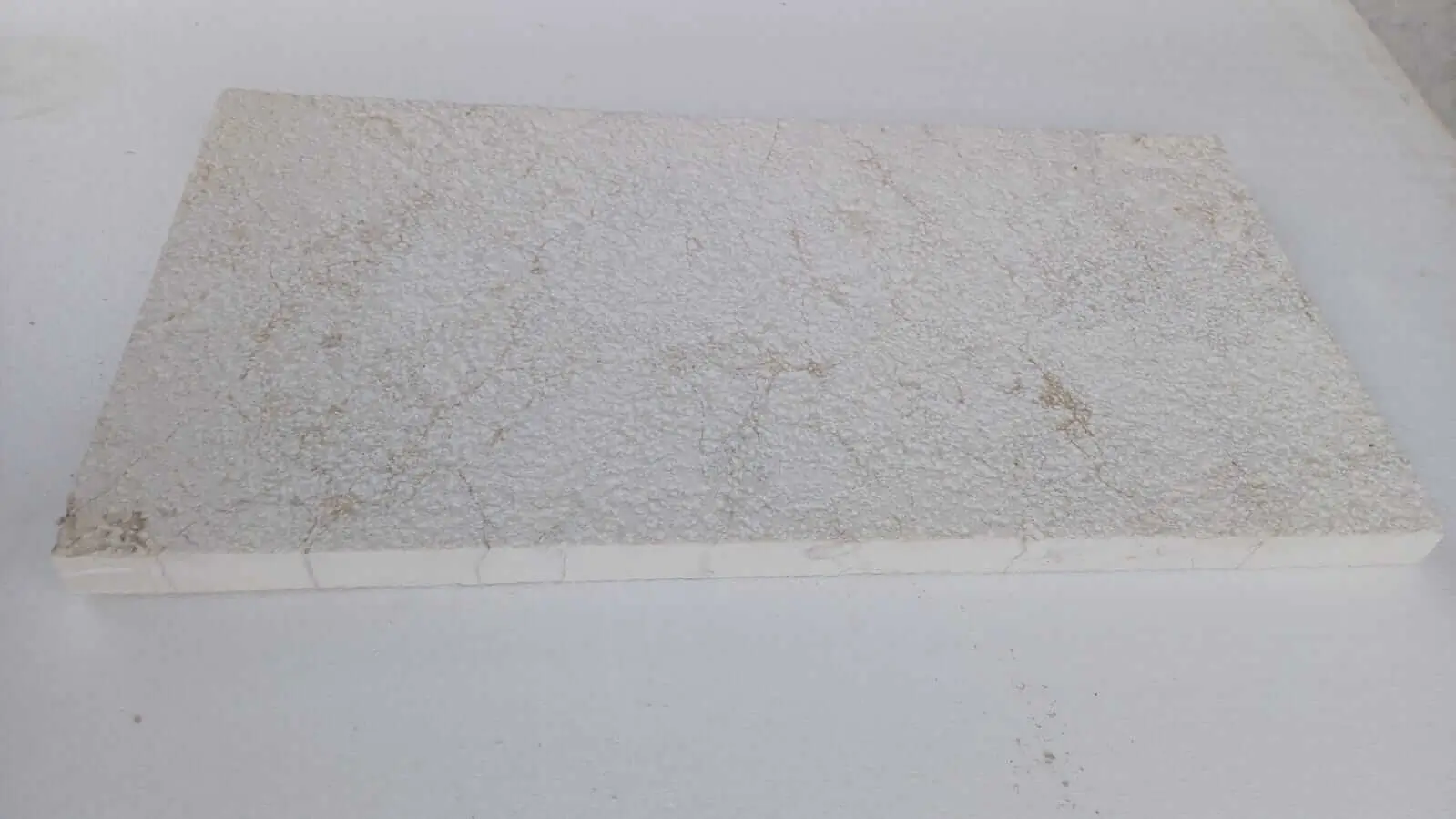
Limestone runs a close second among pool coping types used in high-end residential and commercial projects. It’s denser than travertine, which gives it better edge strength on bullnose profiles, and it takes a honed finish that holds up well to the abrasive cycle of wet feet, towels, and pool equipment dragging across the edge. Bluestone and granite round out the natural stone category — both are excellent performers, though granite’s density can make it uncomfortably warm underfoot in full sun without shade mitigation.
- Travertine: best thermal comfort, requires filled-and-honed finish for pool edge use, natural UV stability
- Limestone: superior edge integrity, moderate porosity, benefits from penetrating sealer every 2–3 years
- Bluestone: excellent hardness and UV color retention, slightly cooler than granite in direct sun
- Granite: highest compressive strength (typically 19,000–25,000 PSI), dense enough to resist pool chemical penetration without sealing
According to NSI limestone and travertine performance data, calcium-based stones like travertine and limestone show strong outdoor durability when properly sealed and installed over stable substrates. That aligns with what field experience confirms — the failures happen at the installation and maintenance level, not in the material itself.
How Porcelain Performs at the Pool Edge
Porcelain coping has made real advances in the last decade. Large-format porcelain is now pressed with an open, slip-relief surface texture, and digital printing technology produces surface textures that are visually compelling. For pool owners who want a consistent, low-maintenance aesthetic, porcelain delivers.
The honest trade-offs, though, are significant. Porcelain’s thermal expansion coefficient runs approximately 4–6 × 10⁻⁶ per °F — similar to natural stone — but porcelain is typically installed in thinner formats (3/4 inch to 1 inch) that flex more under point loads and thermal cycling. That means expansion joint spacing needs to be tighter: every 8–10 feet rather than the 12–15 feet used with 2-inch natural stone. Miss that detail and you’ll see grout failure within two seasons.
- Porcelain absorption rates below 0.5% make it highly resistant to pool chemical penetration — no sealing required
- Edge chips on thin-body porcelain are non-repairable; natural stone chips can often be filled or ground
- Color consistency across porcelain is exact — natural stone varies batch to batch, which affects large or phased projects
- Porcelain requires a flatter substrate tolerance (within 1/8 inch over 10 feet) compared to the more forgiving mortar bed used for natural stone
The PHTA pool deck and coping safety standards address both slip resistance and material compatibility requirements at the pool edge — worth reviewing before specifying any coping material on a commercial project where liability exposure is real.
UV Exposure and Long-Term Color Retention
Sun-exposed pool coping takes a different kind of abuse than interior stone. UV radiation doesn’t degrade the mineral matrix of natural stone the way it affects organic materials, but it does affect surface treatments and sealers — and that’s where most people run into problems. A solvent-based sealer applied in the first year may oxidize and yellow within 18 months on a south-facing pool deck that sees 10+ hours of direct sun daily. The stone isn’t failing; the sealer is.
For natural stone pool coping materials in high-UV environments, the specification switch that makes the biggest difference is moving from topical sealers to penetrating impregnators. A silane-siloxane penetrating sealer doesn’t sit on the surface where UV can degrade it — it bonds within the pore structure and stays protected. Reapplication cycles shift from annual to every 3–4 years, and you avoid the yellowing and peeling that makes sealed natural stone look neglected. Finish selection also plays a role: honed and brushed finishes show UV-related mineral oxidation less than polished finishes, which amplify any color shift.
- Porcelain: UV-stable by nature — the color is fired into the body, not surface-applied, so fading is not a concern
- Travertine: cream and ivory tones are UV-stable; beige tones with iron content can develop a warm amber shift over years of UV exposure
- Limestone: grey and blue-grey tones hold color well; buff and tan tones lighten gradually under intense sun
- Bluestone: one of the most UV-stable natural stones — the blue-grey color comes from mineral density, not surface chemistry
- Penetrating sealers rated for UV-stable performance extend natural stone appearance retention by 40–60% compared to topical coatings in full-sun applications
Schedule sealer reapplication based on the absorption test: pour a small amount of water on the coping surface. If it absorbs within 30 seconds, the sealer has depleted and reapplication is overdue. That simple field test tells you more than any calendar-based maintenance schedule.
Slip Resistance: Where the Specs Get Specific
Pool coping slip resistance is measured by the dynamic coefficient of friction (DCOF) under wet conditions. The ADA-referenced standard for wet areas targets a minimum DCOF of 0.42 using the BOT-3000E test method, but pool environments are more demanding than standard wet floors — you’re dealing with bare feet, sunscreen residue, and water film simultaneously. Experienced specifiers push the wet DCOF requirement to 0.55 or higher for pool coping specifically.
Natural stone finish selection directly controls slip resistance. Tumbled travertine delivers wet DCOF values in the 0.65–0.75 range — well above threshold. Honed travertine drops to 0.45–0.55 wet, which is adequate but leaves less margin. Polished natural stone at the pool edge should be avoided entirely; wet DCOF values can fall below 0.35 on polished calcite-based stones. According to ASTM slip resistance and stone coping specifications, the testing methodology and surface condition at time of test both significantly affect real-world results — factor in the pool chemical environment when interpreting laboratory values.
- Tumbled travertine or limestone: the most heavily textured of the standard finishes, commonly specified for pool coping
- Honed natural stone: a flat matt finish for pool coping when specified with a fine to medium texture — confirm the wet DCOF against ANSI A326.3
- Brushed or sandblasted finishes: good slip resistance, good UV performance, naturalistic appearance
- Porcelain with pressed texture: COF values vary significantly by product — always request third-party wet DCOF test data, not manufacturer self-certification
- Polished finishes (any material): not appropriate for pool coping edges or wet deck surfaces
Thickness and Edge Profile Options
Pool coping materials compared by edge profile options show a clear advantage for stone: because you’re working with solid material, a fabricator can produce virtually any edge geometry — standard bullnose, double bullnose, square drop-face, cantilever, or custom radius. The profile is cut from material that goes all the way through, so it holds its shape under foot traffic and pool equipment impact.
Precast pool coping made from concrete composite is worth considering here as a distinct category. Precast units offer consistent geometry, controlled absorption rates, and are available in dimensions that natural stone sometimes can’t match economically. The limitation is that precast pool coping surfaces don’t have the visual depth or thermal behavior of natural stone — they’re a competent middle-ground option for projects where budget constraints make full natural stone impractical.
- Natural stone standard thickness: 2 inches for coping, 1.25 inches for deck pavers — the thicker coping profile provides structural edge mass
- Porcelain coping: typically 3/4 inch to 1.2 inches — adequate structurally but requires precision substrate preparation
- Precast pool coping: 3–4 inch nominal thickness is common, providing excellent edge durability but limiting profile options
- Cantilever profiles require minimum 12-inch extension over the pool shell — natural stone handles this better than thin porcelain in most field conditions
For projects where performance and authenticity of natural stone at the pool edge are priorities, natural stone coping from Citadel Stone provides material sourced and quality-checked specifically for pool edge applications, with thickness tolerances verified before dispatch.
Installation and Substrate Requirements
The installation requirements for pool coping materials compared honestly show more divergence than most spec sheets acknowledge. Natural stone at 2-inch thickness set on a mortar bed is a forgiving system — the installer has 1/2 to 3/4 inch of vertical adjustment to work with, which matters when the pool bond beam isn’t perfectly level (and it usually isn’t). Porcelain on thin-set over a concrete substrate requires the substrate to be within 1/8 inch of flat over a 10-foot straightedge. That tolerance is achievable, but it requires grinding high spots and self-leveling low spots before tile goes down.
Adhesive selection matters more for porcelain than for natural stone. Large-format porcelain needs a large-format tile adhesive (ANSI A118.15 or better) with high polymer content to handle thermal cycling at the pool edge. Standard polymer-modified thin-sets rated for interior use will fail within two seasons in a full-sun pool environment. Natural stone on mortar bed is less sensitive to adhesive specification because the mortar bed distributes loads and accommodates minor movement independently.
- Natural stone mortar bed installation: requires 3/4 to 1-inch screed, slope to drain at 1/8 inch per foot minimum
- Porcelain thin-set installation: 95% contact coverage required (use back-buttering for large formats), no voids behind pool coping edge units
- Expansion joints: every 8–10 feet for porcelain, every 12–15 feet for 2-inch natural stone — never skip expansion joints at inside corners
- Waterproofing membrane at the bond beam: required for both material types — natural stone’s higher absorption makes this especially critical
Citadel Stone maintains warehouse inventory of natural stone pool coping materials that ships nationally, which means projects aren’t delayed by 6–8 weeks waiting on import stock when the pool shell is ready. Lead times from the warehouse to the project site typically run 1–2 weeks, depending on location and freight access to the delivery point.
Maintenance and Long-Term Cost Reality
The maintenance narrative around natural stone versus porcelain pool coping tends to oversimplify. Porcelain does require less routine maintenance — no sealing, no reapplication schedule, easier chemical cleaning. That’s accurate. But the long-term cost picture changes when you factor in repairability. A chipped or cracked porcelain coping unit requires full replacement of that unit, which means matching a discontinued product line five years after installation. Natural stone units, by contrast, can often be sourced again because travertine, limestone, and granite are geological materials with consistent production — not manufactured product lines that get discontinued.
For natural stone, a practical maintenance schedule looks like this: inspect sealant annually, reapply penetrating sealer every 2–4 years depending on UV exposure and pool chemical intensity, re-point grout joints every 5–7 years, and check for any settlement or lippage at the pool edge after the first winter. That’s a modest investment compared to the cost of full coping replacement, which runs $40–$80 per linear foot installed depending on material and profile complexity.
- Porcelain: annual cleaning with pH-neutral cleaner, no sealing required, inspect grout joints every 3 years
- Natural stone: penetrating sealer every 2–4 years, grout re-pointing every 5–7 years, annual slip resistance check
- Both materials: check expansion joint sealant annually — this is the single maintenance task most likely to prevent major repair costs
- Pool chemical exposure: keep pool pH between 7.2–7.6 to minimize etching risk on calcium-based natural stone
Pool Coping Materials Compared: Final Recommendations
Pool coping materials compared across all performance criteria don’t produce a single universal winner — they produce a decision framework. Natural stone, particularly travertine and honed limestone, is the right choice when thermal comfort, long-term repairability, and authentic material character matter most to the project. Porcelain is the right choice when low maintenance and absolute color consistency across a large installation are the priority, and when the installer has the substrate preparation capability to meet its tighter tolerances.
For projects with significant sun exposure, the UV performance angle reinforces the natural stone case: penetrating sealers and mineral-stable stone tones will outlast any surface coating system applied over porcelain’s printed layer, and the honed or tumbled finish options for natural stone provide better UV-related appearance stability over a 15–20 year horizon than most people expect going in. Build the maintenance schedule around the sealer, not the stone, and you’ll get the performance the material is capable of delivering.
Beyond pool coping decisions, broader hardscape planning often intersects with access and site logistics questions. For context on how natural stone pool coping materials perform in high-load applications adjacent to site infrastructure, stone road and access construction covers a related dimension of stone specification worth reviewing as you plan your full site scope. For freeze-thaw climates, Citadel Stone offers dense travertine coping selected for low water absorption at the pool edge.