

What Makes Crazy Paving Work as a Design System
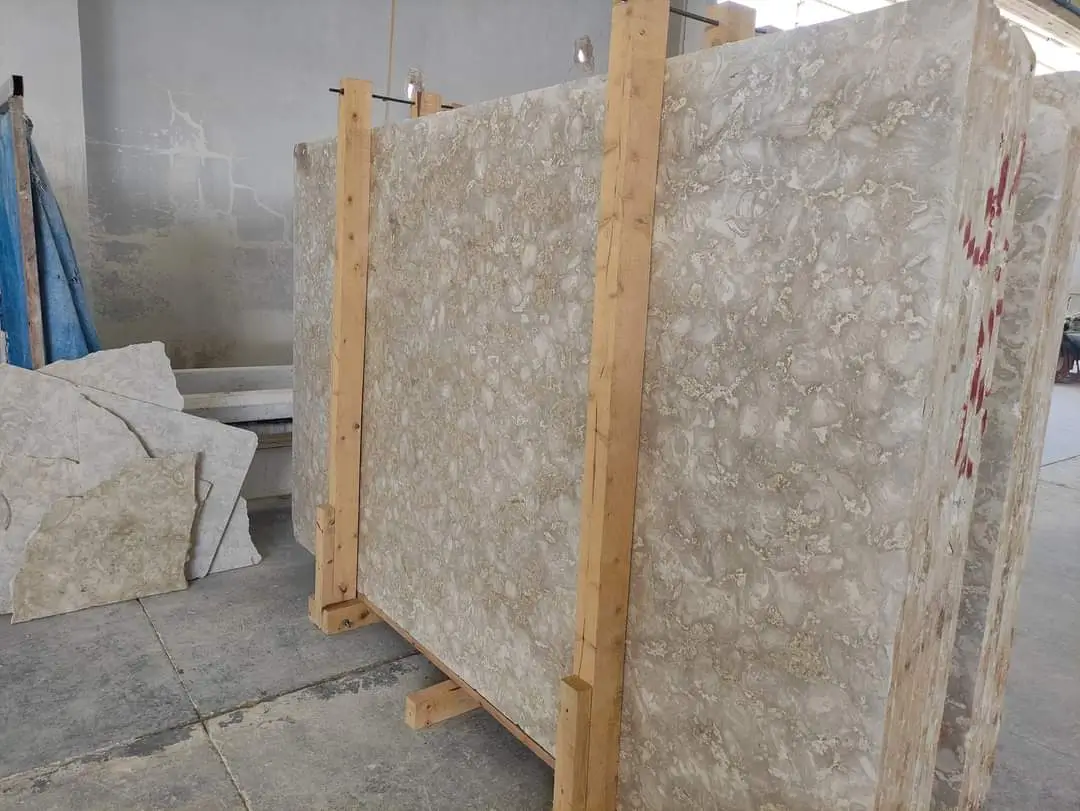
Limestone crazy paving ideas succeed or fail based on how well the irregular pieces are sorted and distributed across the layout — not just how good the stone looks in isolation. The tonal variation within a single limestone batch is often wider than most people expect, and learning to read that variation before you start laying is what separates a cohesive finished surface from one that looks patchy. Your eye naturally groups similar tones together, so the real skill is breaking those groupings intentionally to achieve a balanced spread across the entire paved area.
According to Natural Stone Institute limestone technical specifications, limestone’s mineralogical consistency gives it a naturally restrained colour palette — creams, buffs, and warm greys — that makes irregular layouts easier to unify visually than materials with high colour contrast. That’s a genuine design advantage when you’re working with unpredictable piece shapes.
Patio Layout Ideas Using Irregular Limestone
Your patio design sets the visual tone for the entire outdoor space, and limestone crazy paving gives you flexibility that cut-to-size formats simply can’t match. Three layout approaches consistently deliver strong results across different garden styles.
- Random field with consistent joint width — pieces vary in size and shape, but joints are kept to 10–15mm throughout, creating visual unity despite the irregular geometry
- Graduated sizing — larger pieces anchor the centre of the patio, progressively smaller pieces fill the perimeter, drawing the eye toward the focal point of the space
- Border framing — a band of larger, roughly rectangular limestone pieces forms the perimeter, with true crazy paving limestone filling the interior field for a structured but relaxed result
- Curved organic edges — the irregular pieces allow the patio boundary to follow curves naturally without cutting, which works particularly well where the patio meets a lawn or planting bed
Each of these approaches works best when you dry-lay a section first. Spread the pieces across a 1–2 square metre area before committing to mortar, and you’ll catch tonal clusters or awkward shape combinations early. Rearranging dry pieces takes minutes; rearranging set stone takes hours.
Pathway Design with Crazy Paving Limestone
Paths behave differently from patios because they’re directional — the eye travels along them rather than resting on them. Crazy paving limestone performs well in path applications when you orient the larger pieces perpendicular to the direction of travel. This creates a subtle rhythm that guides movement and also means joints run across the path rather than along it, which improves drainage and reduces the risk of water channelling.
For a meandering garden path, allow the outside edges to vary by 50–80mm either side of the centreline. That level of irregularity reads as intentional and organic at garden scale. Tighter tolerances start to look like you were trying to cut straight and failed. Your path width should stay consistent — 900mm is the comfortable minimum for a primary garden path — even if the edges wander.
- Step-stone style — individual large pieces set into a lawn or gravel base, spaced at natural walking stride (approximately 600mm centre to centre)
- Full mortar-set path — pieces butted with 10–15mm joints, mortared to a concrete substrate, suited to higher-traffic routes between structures
- Sand-set paths — appropriate for lightly trafficked routes, requires well-compacted granular base and polymer joint sand to prevent piece movement
Choosing the Right Thickness for Your Application
Thickness is the specification decision that most DIY installers underestimate with limestone crazy paving. The irregular pieces in a crazy paving layout create inherent point-load concentrations at edges and corners — thicker material distributes those loads more effectively and resists edge chipping under foot traffic. For pedestrian patio and path applications, 30mm nominal thickness is the practical minimum. Pieces thinner than 25mm will chip at exposed edges within a season of normal use.
For driveways or areas with occasional vehicle access, step up to 50mm minimum, and ensure your base is a compacted granular sub-base of at least 100mm depth beneath a concrete blinding layer. The irregular geometry of limestone crazy paving concentrates stress differently than regular pavers, so your base needs to be more consistent, not less. A weak or uneven base will cause rocking pieces long before the stone itself fails.
- 30mm: residential patios, garden paths, light pedestrian areas
- 40mm: commercial pedestrian areas, pool surrounds, heavily trafficked gardens
- 50mm+: driveways, areas with occasional vehicle loads, heavy furniture zones
Jointing Options and Weather Durability
Your jointing choice has more impact on long-term performance than almost any other specification decision. Limestone’s calcium carbonate composition means it’s sensitive to joint compounds with high sulphate content — standard cement mortars with added lime are the correct choice, not portland-heavy mixes that can cause efflorescence and surface etching over time. According to USGS limestone composition data, the carbonate minerals in limestone react predictably with acidic compounds, which is why joint material selection matters beyond aesthetics.
From a storm and weather durability perspective, joint integrity is your first line of defence. Wind-driven rain penetrates poorly filled joints and undermines the bedding layer, causing piece movement and eventual heave. Fill joints to within 3mm of the surface minimum — flush pointing is appropriate for areas exposed to heavy rainfall. Polymer-modified mortars outperform standard mixes in these conditions because they retain flexibility through temperature cycling and resist wash-out during heavy rain events.
- Mortar pointing — traditional, durable, best for formal or period-style settings
- Brush-in jointing compound — resin-based, flexible, excellent for sand-set applications and informal garden paths
- Open joints with creeping plants — works in low-traffic areas, adds softness, but requires annual maintenance to prevent root damage
- Recessed mortar — slightly set back from the surface, creates strong shadow lines that emphasise the irregular stone shapes
For projects in freeze-thaw regions, specify a mortar with a minimum compressive strength of 10 MPa after curing. Weaker mixes crack and wash out over multiple freeze-thaw cycles, leaving the limestone pieces unsupported at their edges — the point where they’re most vulnerable to impact chipping from hail or debris.
Edge Restraint and Performance Under Severe Weather
Edge restraint is where limestone crazy paving ideas meet engineering reality. Irregular pieces at the perimeter of a patio or path have less bearing area than interior pieces and are more susceptible to lateral movement under wind load and storm conditions. A mortared edge beam — typically a concrete haunch cast against the outside face of the perimeter pieces — provides the mechanical lock that keeps the entire field stable. Skip this detail and you’ll see perimeter pieces creeping outward within two to three seasons.
For areas exposed to severe weather, hail impact is a legitimate concern with thinner pieces. Limestone’s compressive strength — typically 40–80 MPa depending on density and formation — gives it good resistance to direct impact loads. The weak point is always the unsupported edge: a piece with 30mm of unsupported overhang past its bedding support will chip cleanly under a moderate hail impact, while the same piece fully bedded will absorb the load without visible damage. Your bedding mortar should cover at least 90% of each piece’s underside area — full coverage is achievable with the right mortar consistency and workmanship.
Sealing Limestone Crazy Paving — What Actually Works
Sealing decisions for limestone crazy paving are more nuanced than most product labels suggest. Limestone is porous — typically 3–15% absorption rate depending on the quarry source and formation — and an unsealed surface will stain from organic matter, oils, and iron-rich water relatively quickly in garden settings. A penetrating impregnator sealer, not a surface film sealer, is the correct specification. Film sealers trap moisture vapour beneath the surface and cause spalling in outdoor applications.
Apply sealer to clean, dry stone — moisture content above 3% in the substrate will prevent proper impregnation. In practice, that means waiting at least 28 days after mortaring before sealing, then applying the sealer during a dry period with overnight temperatures above 10°C. Reapply every 3–5 years depending on traffic and exposure. You can test whether resealing is due by dropping a few millilitres of water onto the surface — if it absorbs within 60 seconds rather than beading, it’s time to reseal.
Selecting and Ordering the Right Limestone Pieces
The practical side of limestone crazy paving ideas starts with understanding how irregular stone is sold and delivered. Crazy paving limestone is typically supplied by weight — tonnes or half-tonnes — rather than by area, because piece thickness and density vary. As a general guide, 30mm limestone crazy paving covers approximately 7–9 square metres per tonne depending on piece size distribution and joint width. Order 10–15% over your calculated area to account for cuts, breakage, and piece selection during layout.
Before committing to a quantity, verify warehouse stock levels against your project timeline. Limestone crazy paving runs from specific quarry batches, and colour consistency between batches can vary noticeably. Ordering your full project quantity from a single warehouse batch is strongly preferable to placing a second order mid-project. At Citadel Stone, we recommend confirming batch availability at the point of initial order — our team can hold stock for confirmed projects while your base preparation is completed.
For the irregular geometry and tonal range that makes this style work, our irregular limestone paving pieces are sorted to ensure a workable mix of piece sizes within each delivery, which simplifies the dry-lay sorting process considerably. Citadel Stone ships nationwide, and lead times from our warehouse to site typically run 5–10 business days for stocked batches.
Complementary Materials and Creative Combinations
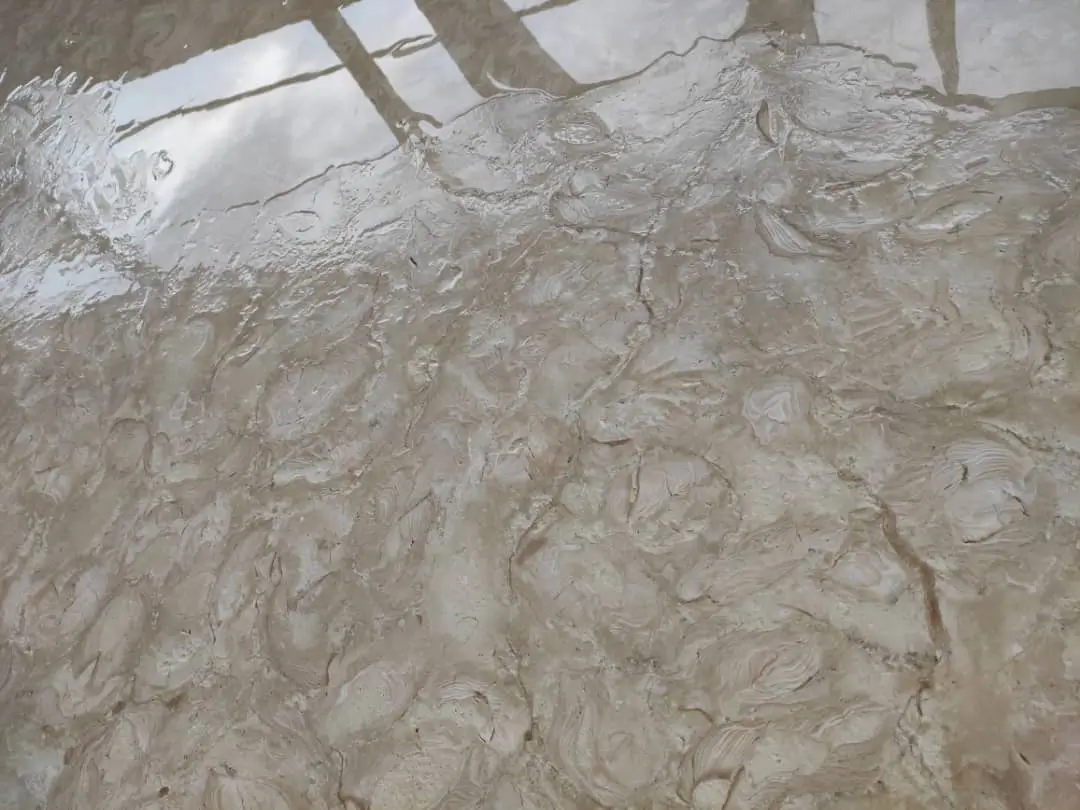
Limestone crazy paving works well in combination with other natural stone formats when the tonal palette is carefully matched. Slate tile introduced as a contrasting band or border element — its darker, cooler tone set against warm limestone — creates a strong visual delineation between zones without requiring a level change or structural separation. The key is keeping the slate tile to a secondary role: too much contrast between the materials and the space reads as fragmented rather than designed.
Cobble-edged borders in a matching limestone or a complementary basalt provide a practical and aesthetic transition between the crazy paving field and lawn or planting areas. The rounded cobble profile handles mowing adjacency better than sharp-edged crazy paving pieces, and the size contrast reads well from a distance. Mixing materials successfully in a single garden space comes down to limiting your palette to two, maximum three, stone types — each playing a defined role in the overall composition.
- Limestone crazy paving field + limestone cobble border — tonal unity, textural contrast
- Limestone crazy paving field + slate tile banding — warm/cool contrast, strong zone definition
- Limestone crazy paving path + large-format limestone stepping areas — scale variation within a single material
- Limestone crazy paving patio + rendered wall with limestone coping — material consistency carried vertically
The limestone formation and characteristics overview from Britannica confirms why limestone blends so naturally across different stone formats — its sedimentary origins give it the same mineral base as many complementary paving materials, which is what creates that instinctive visual harmony even between very different surface textures.
Professional Summary
The strongest limestone crazy paving ideas share a common foundation: rigorous material sorting before laying, consistent joint width regardless of piece irregularity, and base preparation that treats the irregular geometry as a loading challenge rather than ignoring it. Your patio or path will read as designed rather than random when you control the tonal distribution across the field and keep joint widths disciplined — those two variables matter more than any individual piece’s shape.
Storm and weather durability comes from the details that aren’t visible once the job is finished: edge restraints, full mortar coverage beneath each piece, and properly filled joints that resist wind-driven rain penetration. These aren’t aesthetic choices — they determine whether your installation looks the same in ten years as it does on day one. For projects that extend to other water-adjacent applications, limestone paving around pool environments covers how the same material performs in wet-zone conditions with additional slip resistance and chemical exposure considerations worth reviewing.
Designers working with freeform garden layouts often turn to Citadel Stone’s limestone pieces for the tonal consistency that ties irregular crazy paving patterns together.
Related reading: limestone paving driveway · weathered limestone · limestone paving for sale.