

Surface Texture Drives Every Traction Decision in Flamed vs Tumbled Limestone Paving
The real performance gap between flamed vs tumbled limestone paving shows up long before anyone walks across the finished surface — it shows up in how each finish interacts with moisture, foot traffic loading, and substrate movement over time. Flamed limestone goes through a high-heat torch process that causes the calcite crystals at the surface to fracture and lift, creating a coarse, open-grain texture that delivers consistent grip even under wet conditions. Tumbled limestone takes a mechanical approach: pieces are rotated in a drum with abrasive media, softening the edges and imparting a worn, aged character that mimics centuries of natural weathering.
Your choice between these two finishes determines not just aesthetics but structural behaviour, maintenance frequency, and long-term replacement cost. According to Natural Stone Institute limestone technical properties, the finishing process directly influences surface absorption rates and slip resistance characteristics — two variables that drive specification decisions on commercial and residential projects alike. Getting this comparison right before you commit to a material order is the difference between a surface that performs for 25 years and one that needs remediation at year eight.
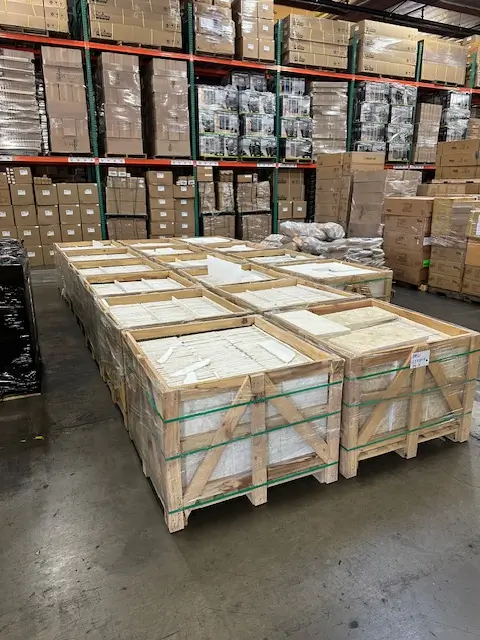
Flamed Limestone Paving: What the Heat Process Actually Delivers
Flamed limestone paving earns its place in high-traffic and wet-area applications through sheer texture density. The thermal shock from the flaming process causes micro-fractures across the surface plane, producing a deep peak-to-valley texture across most limestone varieties. That is enough to carry pronounced texture on exterior wet surfaces; specify against 0.42, the ANSI A326.3 wet DCOF threshold. For pool surrounds, ramps, and sloped entries, that margin matters considerably.
The heat treatment also seals a percentage of the surface pores by fusing calcium carbonate at the microscale. This counterintuitive outcome means flamed limestone often absorbs water slightly more slowly than honed limestone, reducing early-stage staining from tannins, oil, and iron-bearing water. You’ll still need to seal the material — that’s non-negotiable — but your maintenance intervals can typically extend to every 18–24 months rather than the 12-month cycle many honed specifications require.
- Surface roughness: a pronounced peak-to-valley texture across standard limestone varieties
- Wet slip performance depends on the finish and the lot — request the wet DCOF test report and compare it against the 0.42 minimum in ANSI A326.3
- Partial pore sealing from thermal shock reduces initial absorption rate compared to honed finishes
- Colour appears lighter and more uniform post-flaming due to calcite crystal fracture
- Edge chipping is rare because the thermal process doesn’t weaken structural integrity at the slab perimeter
One nuance that catches many specifiers off guard: flamed limestone paving shows tool marks and micro-ridges that create directional drainage channels. On a flat terrace this is a minor detail, but on a sloped installation it means you need to orient the flaming direction to work with — not against — your designed drainage gradient. Getting the laying pattern and orientation specified on the drawing before material delivery saves a frustrating rework conversation on site.
Tumbled Limestone Tile: The Aged Character That Hides Field Imperfections
Tumbled limestone tile carries an inherent installation advantage that polished and honed finishes simply cannot replicate: the mechanical weathering process pre-softens edges and creates micro-relief across the face, which means minor lippage between adjacent pavers reads as intentional character rather than installation error. For projects where the laying crew is working across an uneven base or managing significant joint variations, this is a practical quality-control benefit that shows up in final inspection scores.
The tumbling process doesn’t penetrate below the surface layer — you’re looking at material removal of roughly 0.5–2.0 mm across faces and edges, depending on drum duration and abrasive grade. This means the structural integrity and compressive strength of the parent limestone remain fully intact. Most commercial-grade tumbled limestone paving maintains compressive strength values above 7,500 PSI, which is more than adequate for pedestrian traffic and light vehicular loading in courtyard and driveway applications. What tumbling does affect is edge geometry: you lose the precise 90-degree corners that flamed material retains, so tight-joint installations with 2–3 mm gaps aren’t realistic — plan for 8–15 mm joints filled with polymeric sand or lime-based mortar.
- Edge softening depth: 0.5–2.0 mm — structural core remains fully intact
- Compressive strength typically 7,500–10,000 PSI in commercial-grade material
- Joint width requirement: 8–15 mm minimum to accommodate rounded edge geometry
- Surface micro-relief naturally conceals minor installation lippage
- Aged appearance integrates with period architecture, garden landscapes, and informal courtyard settings
- Less aggressive surface texture than the flamed finish — wet-area applications need the wet DCOF test report for the lot you specify
The smoother, less textured surface of tumbled limestone tile compared to flamed material is the honest trade-off you need to communicate to clients early. Tumbled surfaces in consistently wet zones — pool decks without shade, ramps in open courtyards — should be checked against the test report for the finish you specify; ANSI A326.3 sets a 0.42 wet DCOF minimum for level wet surfaces. A fine-aggregate additive in the sealer, applied on the initial coat, brings COF values back into safe range without altering the visual character of the material.
Slip Resistance in Wet Areas: The Numbers That Govern Your Specification
Specifying either finish for wet-area use without running the slip resistance numbers is an exposure risk — and not just a safety one. Many commercial project specifications require documented COF values as part of the material submittal package. For flamed limestone in wet conditions, expect COF values between 0.65 and 0.78 depending on stone density and surface freshness. For tumbled limestone tile in the same conditions, the range typically falls between 0.52 and 0.65, with the lower end of that range found in heavily weathered or lightly textured pieces.
The CDC NIOSH outdoor surface slip prevention guidance recommends a minimum 0.50 COF for general pedestrian areas and higher thresholds for ramp and wet-zone applications. Flamed finishes clear this benchmark with headroom in most standard installations. Tumbled finishes clear it in dry conditions and in most moderate wet scenarios, but you should specify an anti-slip sealer treatment for pool surrounds and consistently damp areas. Document your sealer treatment and COF values in the project file — it protects you and informs future maintenance contractors.
For residential pool surrounds, both finishes have delivered strong long-term results when specified and sealed correctly. The deciding factor is usually client lifestyle: high-traffic family pool areas with children running from pool to patio benefit from the higher inherent COF of flamed material. Adult-oriented entertaining terraces where aesthetics weigh more heavily can be well served by tumbled limestone tile with a quality anti-slip sealer treatment.
Sloped Sites and Terrain Challenges: How Finish Choice Affects Base Design
Elevation changes and terrain gradient introduce a layer of specification complexity that finish selection alone cannot resolve — but your choice of flamed vs tumbled limestone paving should be made with site geometry clearly in mind. On sloped installations, drainage velocity across the surface increases with gradient, which affects both slip risk and joint erosion rates. Flamed limestone’s rougher texture creates natural flow resistance that slows surface water movement, reducing the hydrostatic pressure that builds at the low end of a run. Tumbled limestone on a steep grade moves water more freely across the rounded surface topography, which is efficient for drainage but increases splash and directed flow that can undermine mortar joints at the toe of the slope.
Base preparation on hillside and graded sites demands more engineering rigour regardless of which finish you choose. A compacted aggregate base of 150–200 mm is standard for level sites, but on gradients exceeding 5% you should be looking at 200–250 mm compacted base with geotextile separation fabric beneath to prevent fines migration. Drainage channels intercepting run-off before it reaches the paving field are worth the additional cost — they protect both the base integrity and the joint material from progressive erosion. For hillside retaining-wall-adjacent terraces, consider a French drain at the back edge of the paved area as part of the base design rather than an afterthought.
- Gradients above 5%: increase compacted aggregate base to 200–250 mm minimum
- Geotextile separation fabric beneath base course prevents fines migration on sloped sites
- Flamed limestone’s higher surface roughness slows drainage velocity, reducing hydrostatic pressure at low-grade ends
- Tumbled limestone on steep gradients requires larger joint mortar specification to resist erosion forces
- Interceptor drains at upslope edge of paved areas protect both base integrity and long-term finish performance
- Ramp applications exceeding 1:12 slope ratio require flamed finish as minimum specification for safe COF values
Your project’s drainage design and base engineering should be resolved before finish selection is finalised — not after. A tumbled limestone terrace that performs beautifully on a level courtyard can develop progressive joint failure on a 7% slope if the base wasn’t engineered for the drainage load. This is a detail worth raising with the project engineer early, particularly on elevated terrace sites where soil movement and hydrostatic pressure interact with the paving system over time.
Installation Variables: Bedding, Jointing, and Setting Tolerances
Field installation of flamed vs tumbled limestone paving follows similar broad principles but diverges on joint tolerances and bedding layer consistency. Flamed limestone, with its consistent geometry and 90-degree cut edges, allows tight jointing and delivers a clean grid pattern that reads well in contemporary architecture. You can specify 3–5 mm joints with confidence, using polymeric jointing sand or narrow-bed epoxy grout for interior applications. Lippage tolerance for flamed material on a well-prepared bed should not exceed 2 mm between adjacent units — and on a properly screeded sand bed or mortar bed, achieving this consistently is realistic.
Tumbled limestone tile introduces wider joint requirements — plan for 10–15 mm as your working range — and the uneven face texture makes lippage measurement less critical as a visual standard, though structural integrity still requires careful bed preparation. The mortar bed for tumbled material benefits from a slightly stiffer consistency than you’d use for flamed pavers: a semi-dry mix at approximately 4:1 sand-to-cement ratio gives you enough working time to adjust each piece while providing a stable platform that doesn’t allow pieces to sink and create joint voids at depth.
For Citadel Stone tumbled limestone tile, our technical team recommends confirming warehouse stock ahead of your scheduled pour date, particularly for larger project quantities, as batch consistency across multiple warehouse picks affects colour matching and edge profile uniformity. At Citadel Stone, we quality-check each consignment against the parent batch before it leaves our facility, which significantly reduces the on-site sorting time crews typically spend managing natural variation.
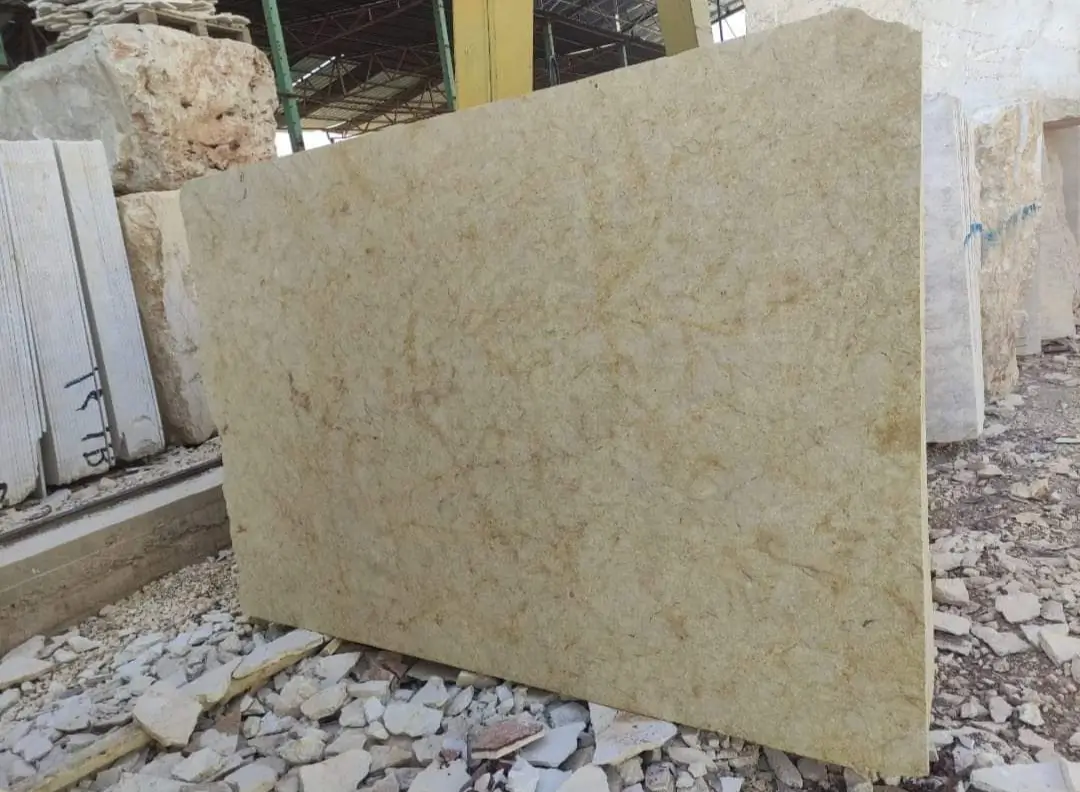
Sealing and Maintenance: What Each Finish Actually Demands Long-Term
Maintenance requirements diverge between these two finishes in ways that affect total project cost over a 10-year ownership cycle. Flamed limestone paving, with its partially sealed surface micro-structure, accepts penetrating sealers readily and holds them longer than open-pore alternatives. A quality silane-siloxane penetrating sealer applied to clean, dry flamed limestone typically delivers 18–24 months of effective protection before reapplication is warranted — measurable by a simple water-drop absorption test. If water absorbs within 90 seconds, reseal.
Tumbled limestone tile’s more open pore structure and rounded surface means sealer penetrates deeply but dissipates slightly faster from high-traffic areas and UV-exposed zones. A 12–18 month resealing cycle is realistic for exposed outdoor tumbled installations. The visual benefit is that tumbled limestone weathers gracefully — the patina that develops between maintenance cycles adds to the aged character rather than detracting from it. Flamed limestone shows wear and staining more visually if maintenance intervals are missed, particularly on lighter stone varieties where mineral deposits become visible against the fractured calcite surface.
- Flamed limestone sealing interval: 18–24 months with quality silane-siloxane penetrating sealer
- Tumbled limestone sealing interval: 12–18 months for exposed outdoor applications
- Water-drop absorption test: absorption within 90 seconds indicates resealing is due
- Tumbled finish weathers and patinas gracefully — missed maintenance cycles less visually damaging
- Flamed finish requires consistent maintenance to prevent mineral deposit build-up on lighter stone
- Both finishes benefit from annual low-pressure washing to remove organic debris from joint material
Joint maintenance is a shared requirement across both finishes, but the joint widths differ. Narrow 3–5 mm polymeric sand joints in flamed installations compact tightly and resist weed ingress effectively for 3–5 years before top-up is needed. The wider 10–15 mm joints typical of tumbled installations require more frequent attention — plan for joint sand inspection and top-up every 2–3 years, particularly after winter seasons in freeze-thaw regions where frost heave can dislodge joint material.
Aesthetic Applications: Matching the Finish to the Project Character
Finish selection is as much a design decision as a technical one, and the two options serve fundamentally different architectural languages. Flamed limestone paving suits contemporary and transitional projects where clean geometry and consistent texture create strong visual order — think minimalist terraces, wide-format exterior flooring in corporate landscapes, and pool surrounds where a refined grid pattern complements modern pool structures. The lighter, slightly chalky tone of flamed limestone also reflects heat effectively, which is a practical benefit in sun-exposed applications where surface temperature management matters for barefoot comfort.
Tumbled limestone tile belongs to a different register entirely. Its softened edges, varied face relief, and naturally aged appearance integrate with Mediterranean-style courtyards, garden terraces, heritage restoration projects, and informal entertaining areas where the material is meant to look as though it has always been there. The colour variation that comes with tumbling — slightly darker centres, lighter abraded edges — creates a depth that no factory-applied finish can replicate. For projects where the landscape architect wants the stone to read as reclaimed or historically consistent, tumbled limestone is the right specification without qualification.
Travertine tile occupies adjacent territory in this conversation — its fill-and-hone or tumbled finish options produce similar aged aesthetics to tumbled limestone, but travertine’s voided structure and softer calcium carbonate matrix give it a distinctly different performance profile. Limestone’s denser structure, confirmed by USGS limestone composition data, typically delivers superior compressive strength and lower absorption rates compared to travertine tile in equivalent finish categories — a distinction worth communicating when clients ask you to compare the two materials.
Logistics, Lead Times, and Pre-Order Planning
Both flamed and tumbled finishes are available in standard inventory through Citadel Stone’s national supply network, but project planning timelines differ depending on format size, thickness, and colour. Standard formats — 400×400 mm, 600×300 mm, and 600×600 mm — in both finishes are typically available from warehouse stock with 1–2 week lead times for most project quantities. Larger format slabs above 800×800 mm in either finish require advance notice; plan for 4–6 weeks from order confirmation to truck delivery for non-standard sizes.
Your material order should confirm colour batch numbers before the first truck leaves the warehouse. Natural limestone exhibits variation across quarry blocks — two pallets from different batches can show enough tonal difference to create visible banding in the finished installation if they’re not managed correctly during laying. Request sample panels from your specific batch and review them in the project’s lighting conditions before sign-off. This is a step that experienced installers build into their workflow automatically; it adds one to two days to pre-construction preparation and eliminates a far more expensive problem at practical completion.
- Standard formats (400×400, 600×300, 600×600 mm): typically 1–2 weeks from warehouse stock
- Large format slabs above 800×800 mm: allow 4–6 weeks for non-standard quantities
- Always confirm colour batch numbers before truck dispatch — tonal variation across batches is a real installation risk
- Request sample panels from your specific batch and review in project lighting conditions before approval
- Order 10–15% overage on cut-heavy projects to account for waste, cuts, and future repair stock
Overage ordering is particularly important for tumbled limestone tile because the irregular edge geometry means more material is lost to cut adjustments at borders and obstacles than with precisely cut flamed material. A 10% overage on straightforward rectangular terraces scales to 12–15% on projects with curves, radius features, or complex geometric patterns. Store surplus in a dry, covered location — both finishes are dimensionally stable in temperature-variable warehouse storage, but prolonged moisture exposure can introduce surface efflorescence before installation.
Choosing the Right Limestone Finish: Flamed vs Tumbled Paving in Practice
The specification decision between flamed and tumbled limestone paving resolves clearly once you’ve mapped your project’s slip-resistance requirements, aesthetic intent, terrain conditions, and maintenance expectations against the concrete performance data for each finish. Flamed limestone is the higher-traction, lower-maintenance option for wet zones, sloped sites, and contemporary architectural contexts. Tumbled limestone delivers superior aesthetic warmth, graceful aging characteristics, and excellent structural performance in dryer, design-forward applications where the wider joint profile and softer edge geometry are assets rather than limitations. As you finalise your specification, it’s worth reviewing how limestone surfaces evolve over extended exposure periods — how limestone surfaces change with age provides useful long-term performance context that informs both finish selection and client expectation management. Both options represent genuine quality when specified, installed, and maintained correctly — the difference lies entirely in matching the right finish to the right project conditions. Specifying the correct surface finish for a wet-area project is straightforward when Citadel Stone’s flamed and tumbled limestone options are assessed side by side.
Related reading: stone pavers · limestone wall blocks · Limestone Driveway Paving: Is It Worth It?.