

What Makes Black Limestone Black
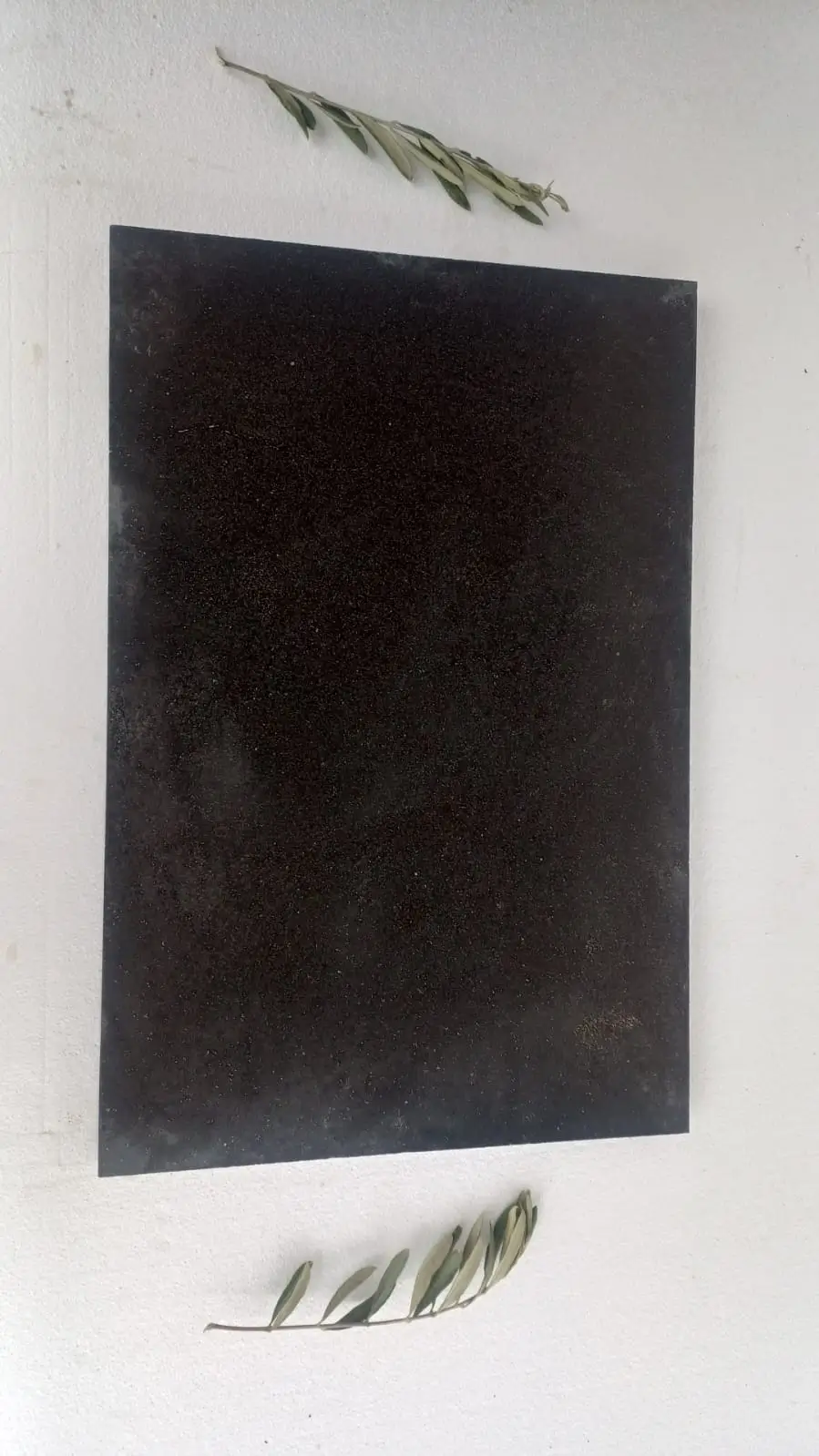
Black limestone rock explained properly starts not with aesthetics but with geochemistry — specifically the role of organic carbon and fine-grained mineral inclusions trapped during sediment compaction millions of years ago. The dark coloration in true black limestone comes primarily from bituminous organic matter and occasionally from iron sulfide minerals like pyrite disseminated through the carbonate matrix. These aren’t surface stains or coatings; they’re locked into the crystalline structure at formation, which is why a freshly cut black limestone slab maintains its depth of color through to the core.
The intensity of black coloration varies considerably between quarry sources. Some deposits yield a near-uniform jet black with almost no visible grain variation, while others produce stone with subtle blue-grey undertones or fine white calcite veining running through the field. Understanding this geological variability before you specify helps avoid surprises when the first pallet arrives on site.
Limestone Formation Fundamentals
Limestone is a sedimentary carbonate rock composed primarily of calcite (calcium carbonate, CaCO₃), with typical calcite content ranging from 50% to over 95% depending on the deposit. Most limestone originates from marine environments — ancient seafloors where the skeletal remains of marine organisms, shell fragments, and carbonate-rich sediments accumulated over geological timescales and underwent lithification under pressure. According to Britannica’s limestone formation reference, the process involves compaction, cementation, and recrystallization that transforms loose carbonate sediment into dense, workable stone.
What distinguishes black limestone from its grey, cream, or buff counterparts is the depositional environment. Black-colored varieties typically formed in low-oxygen, euxinic basin conditions — restricted marine basins where organic matter couldn’t oxidize before burial. The preservation of that organic content is what drives the coloration. This also affects the stone’s fine grain structure: black limestone quarries commonly yield exceptionally dense, tight-grained material with low absorption rates, often in the 0.1% to 0.4% range by weight.
- Calcite content typically 80–95% in high-grade black limestone
- Organic carbon content between 0.5% and 3% drives dark coloration
- Grain size generally fine to very fine — contributing to smooth surface finish potential
- Density ranges from 2.5 to 2.7 g/cm³ depending on quarry and formation depth
- Absorption rates in premium grades typically below 0.5% ASTM C97
Banded Limestone and Color Variation
Banded limestone represents one of the most visually distinctive expressions of the black limestone family. The banding — alternating layers of darker and lighter carbonate material — forms during cyclical changes in depositional conditions, such as seasonal shifts in organic input or fluctuating water chemistry in the original marine basin. These bands can be millimeters to centimeters wide and run consistently through the slab, giving fabricated pieces a structured, almost architectural quality.
For projects where visual consistency matters, banded limestone requires more careful selection than uniform-field black stone. The band orientation relative to the cut face changes how the pattern reads at scale — cross-cut slabs show the bands as parallel stripes, while vein-cut surfaces reveal them as flowing, irregular lines. Confirm with your supplier which cut orientation applies to your stock before committing to a full order. For interior flooring applications, our banded black limestone is available in calibrated thicknesses suited to both residential and commercial specifications.
Physical Properties and Performance Data
The compressive strength of black limestone rock typically falls between 8,000 and 15,000 PSI (55–103 MPa), making it substantially stronger than many sandstones and comparable to medium-density granite in most structural loading scenarios. Flexural strength — the metric that matters for spanning applications like pool coping or stair treads — generally ranges from 1,200 to 2,800 PSI depending on grain uniformity and the presence of natural fissures.
The Natural Stone Institute provides detailed limestone property benchmarks that inform specification decisions across building types, and NSI limestone technical specifications confirm that dense, low-absorption limestone varieties perform at the higher end of the compressive strength range. This matters when specifying for high-traffic commercial floors or exterior paving where point-load performance is a real concern.
- Compressive strength: 8,000–15,000 PSI (ASTM C170)
- Flexural strength: 1,200–2,800 PSI (ASTM C880)
- Water absorption: typically 0.1–0.5% by weight (ASTM C97)
- Modulus of rupture: 1,000–2,500 PSI depending on fissure density
- Thermal expansion coefficient: approximately 4.5–5.5 × 10⁻⁶ per °F
- Mohs hardness: 3–4 (calcite-dominant mineralogy)
The Mohs hardness figure deserves special attention. Black limestone at Mohs 3–4 is softer than granite and harder than most sandstones, but soft enough to scratch under sustained abrasive traffic. Honed finishes on heavily trafficked floor areas will develop a natural patina over time — some specifiers plan for this deliberately, others seal aggressively to slow it. Your finish strategy should account for this from the outset.
Limestone Quarry Sources and Geological Variability
No two black limestone quarries produce identical stone. The term “black limestone” encompasses material from many different formation zones — each with distinct mineralogical profiles, grain structures, and color stability characteristics. USGS geological survey data on limestone composition and construction applications underscores how dramatically carbonate rock properties vary by formation geology and deposit age.
From a practical specification standpoint, this variability means you should always request geological documentation alongside standard test results when specifying black limestone rock for a major project. At Citadel Stone, we review quarry-level data and conduct batch assessments on incoming material to verify that color, absorption, and dimensional consistency meet specification before it ships. That upstream verification step prevents the common problem of late-stage material rejection when batches from the same limestone quarry drift between production runs.
- Belgian Blue Limestone — dense, blue-black with tight grain, high compressive strength
- Indian Kota Black — fine-grained, consistent dark coloration, widely used in flooring
- Chinese Black Limestone — variable quality by tier; requires careful supplier vetting
- Turkish Black Limestone — often exhibits strong veining; good dimensional stability
- Quarry age and geological layer significantly affect color depth and absorption rate
Terrain, Grade, and Drainage Considerations for Exterior Use
Black limestone rock specified for exterior paving introduces site engineering variables that interior applications don’t face. Terrain and elevation changes are among the most consequential — a flat courtyard installation and a hillside terrace project using the same stone will require fundamentally different base designs. On sloped sites, hydrostatic pressure from uphill water movement can destabilize a sand-set base over time, particularly in soils with poor drainage coefficients.
Base preparation on graded terrain needs to account for lateral water migration, not just vertical drainage. A crushed aggregate base with a minimum 6-inch compacted depth handles most residential slopes adequately, but sites with grades exceeding 5% should use mortar-set installation over a concrete sub-base to prevent stone migration under load. Drainage cells or channel drains positioned at grade breaks prevent ponding that would otherwise saturate the setting bed and accelerate joint erosion.
- Slopes under 2%: standard sand-set base with polymeric joint sand performs reliably
- Slopes 2–5%: increase aggregate base depth to 8 inches; add edge restraint at lower boundary
- Slopes over 5%: mortar-set over reinforced concrete sub-base; consult structural engineer
- Low-lying or basin sites: assess seasonal water table depth before specifying base thickness
- Elevation transitions (steps, terraces): each level needs independent drainage planning
The formation geology of black limestone rock also affects how the stone responds to freeze-thaw cycling in sites with poor drainage. Low-absorption black limestone — below 0.3% by weight — handles freeze-thaw regions reliably because it doesn’t hold enough moisture for ice crystallization to create internal stress. Higher-absorption material, or installations where drainage is compromised, are more vulnerable to spalling at thin edges and joint faces.
Finish Options and Surface Behavior
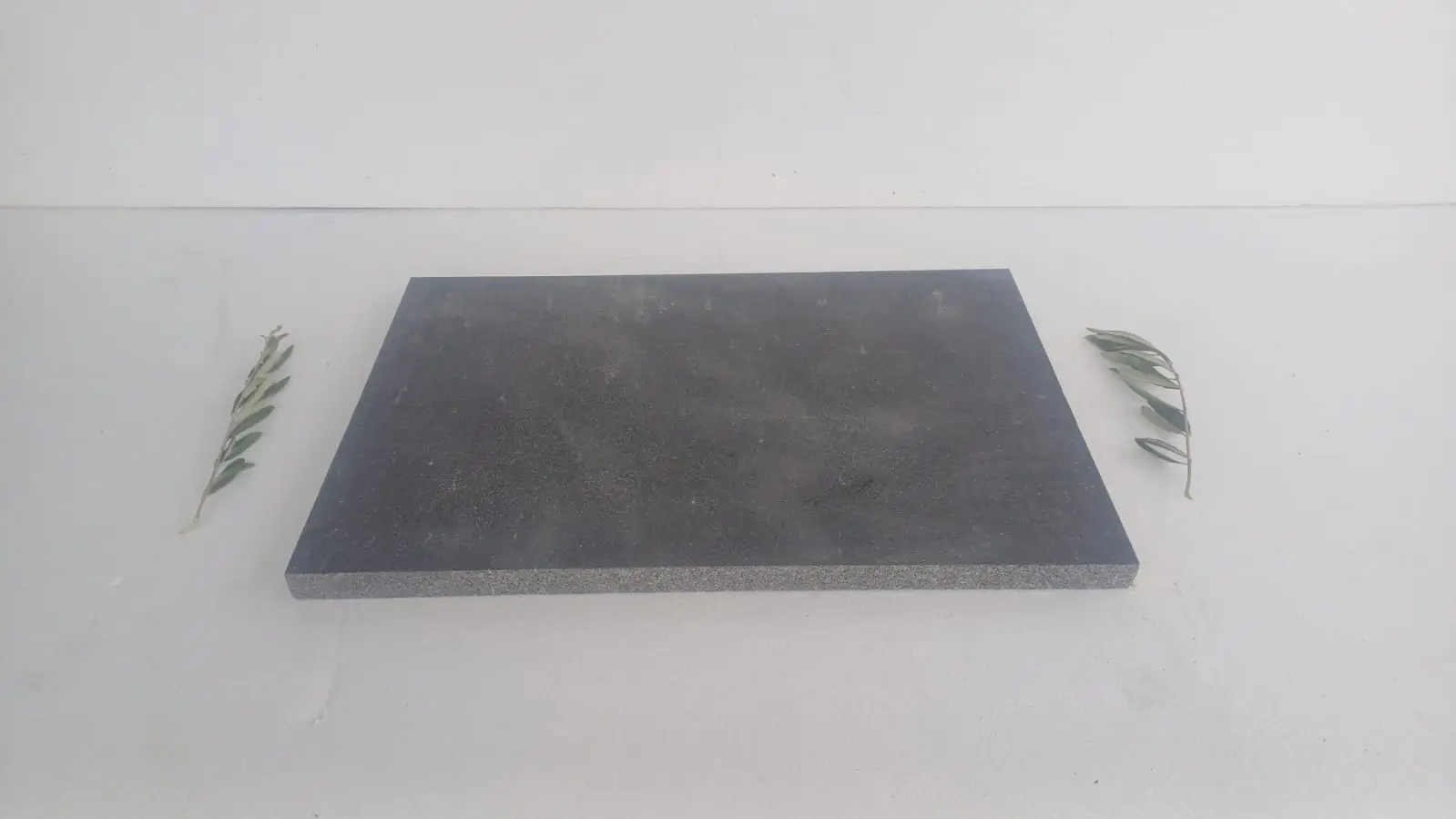
The finish you specify on black limestone determines nearly everything about how the material performs and reads visually in the finished project. Polished black limestone achieves a mirror-like reflectivity that intensifies the color to near-obsidian depth — visually striking for interior flooring, but unsuitable for wet exterior surfaces where slip resistance falls below safe thresholds. A polished surface on black limestone typically registers a Dynamic Coefficient of Friction (DCOF) below 0.42, which falls short of the B101.3 wet-surface standard for commercial pedestrian areas.
Honed finishes are the professional’s default for most applications. A honed surface on black limestone rock produces a matte-to-satin appearance with DCOF values typically in the 0.50–0.65 range on level surfaces — suitable for most interior commercial and residential applications. Brushed or antique finishes introduce surface texture that further improves wet traction, bringing DCOF above 0.65 on most test specimens, making them appropriate for exterior paving, pool surrounds, and step treads.
- Polished: DCOF typically 0.35–0.42 wet — interior use only, textured areas
- Honed: DCOF 0.50–0.65 — interior commercial and residential floors, most exterior patios
- Brushed/antique: DCOF 0.65–0.80 — exterior paving, pool surrounds, step treads
- Sandblasted: highest texture, DCOF above 0.80 — industrial or heavy-traffic exterior only
- Flamed finish: not standard for limestone due to calcite heat sensitivity — avoid specifying
Sealing, Maintenance, and Long-Term Performance
Black limestone rock’s low absorption rate is an advantage in many respects, but it does create a nuance in sealing strategy. Because dense black limestone doesn’t absorb penetrating sealers as readily as more porous stone, standard application rates often leave excess sealer on the surface — which hazes and reduces the visual depth you specified the stone for in the first place. Apply penetrating impregnator sealers in thin coats with a 10-minute absorption window between coats, and wipe all excess before it tacks.
For exterior black limestone installations in high-UV environments, select a sealer with UV stabilizers specifically. Standard silane-siloxane sealers protect against moisture but don’t address the slow oxidation of the organic carbon content that can cause very subtle lightening over years of direct sun exposure. UV-stable fluoropolymer sealers add meaningful protection at modest additional cost — typically $0.30–$0.60 per square foot more than standard penetrating formulations.
- Initial sealing: apply within 7 days of installation after full adhesive cure
- Resealing frequency: every 2–3 years for exterior; every 4–5 years for interior
- Cleaning: pH-neutral stone cleaner only — acidic cleaners etch calcite and dull finish
- Joint maintenance: inspect polymeric joint sand annually; top up where erosion has occurred
- Avoid: bleach, vinegar, citrus-based cleaners, high-pressure washing at angles below 45°
Ordering, Logistics, and Project Planning
Black limestone rock in calibrated tile and paver formats is typically available in the most common sizes — 12×12, 16×16, 24×24, and 12×24 inch formats in 3/8-inch and 3/4-inch thicknesses. Custom sizes, thicker slabs for countertop or coping applications, or less common finishes generally require import sourcing, which extends the delivery timeline depending on port congestion and shipping schedules.
Citadel Stone supplies the core black limestone formats cut to order, with lead times quoted at the time of order. For phased projects where installation happens in multiple stages, confirm batch matching with your supplier before the first truck delivers — color consistency is harder to guarantee across multiple production runs than it is within a single matched batch. Request the lot number documentation and retain it so future replacement material can be sourced from the same production batch where possible.
- Common formats: 12×12, 16×16, 24×24, 12×24 in honed and brushed finishes
- Lead times: quoted with your order rather than assumed
- Custom or imported formats: allow more time than common formats
- Order 10–12% overage for cuts, pattern adjustments, and future repairs
- Request color-match samples from the specific production lot before full order commitment
- Verify truck access dimensions at the delivery site — large-format slabs require flatbed delivery with forklift offload capability
Black Limestone Rock Explained: Specification Summary
Black limestone rock explained at a technical level reveals a material that rewards careful specification more than most natural stones. Its color comes from geological conditions at formation — not surface treatment — which means the depth and consistency you see in a sample is a genuine indicator of what the installed product will deliver, provided you’re working with a supplier who verifies batch-to-batch consistency. The physical properties — low absorption, high density, and compressive strength in the 8,000–15,000 PSI range — make it a genuinely high-performing option across interior flooring, exterior paving, and architectural cladding applications.
Finish selection, sealing protocol, and base engineering for exterior applications matter as much as the stone selection itself. A honed or brushed finish, properly sealed and installed over a drainage-appropriate base, will deliver 20–30 years of reliable performance with routine maintenance. Terrain and grade management at exterior sites deserves early attention — the base design for a sloped hillside terrace differs fundamentally from a flat courtyard, and getting that engineering right at the planning stage prevents costly remediation. If you’re also evaluating why existing limestone surfaces have changed in appearance, limestone darkening causes and mechanisms covers the chemistry of surface color change in detail.
Geological variability between limestone quarries means color consistency differs by source — a factor Citadel Stone accounts for during material selection and batch matching.