

Water absorption is the variable that determines long-term performance in any pool coping material guide — not thickness, edge profile, or compressive strength alone. A coping unit sitting at the waterline absorbs pool water, rainwater, and cleaning chemicals simultaneously, and how it handles that saturation cycle separates materials that hold up for 25 years from those that begin delaminating or crazing within a decade. Understanding absorption coefficients isn’t optional spec trivia; it’s the first decision point that structures every other material choice on a pool project.
What Is Coping on a Pool — and Why Material Choice Drives Everything
The term coping refers to the capstone units that form the finished edge of a pool shell, bridging the structural bond beam and the surrounding deck surface. Answering what is coping on a pool in purely decorative terms misses the point. These units carry real structural and waterproofing responsibilities — they protect the bond beam from direct water penetration, provide the primary edge grip surface for swimmers exiting the water, and create the visual transition between pool and deck. Every one of those functions places distinct demands on your chosen material.
A coping stone pool installation also acts as the first line of defense against hydrostatic and thermal movement. The bond beam expands and contracts with temperature shifts, and your coping units move with it. Materials that lack adequate flexural strength — typically anything below 1,200 PSI — crack at the overhang nose, creating an entry point for water that accelerates deterioration of the bond beam below. Specifying purely on aesthetics is a common project mistake that surfaces 18 to 24 months post-installation.
Natural Stone Coping Materials: What You’re Actually Choosing Between
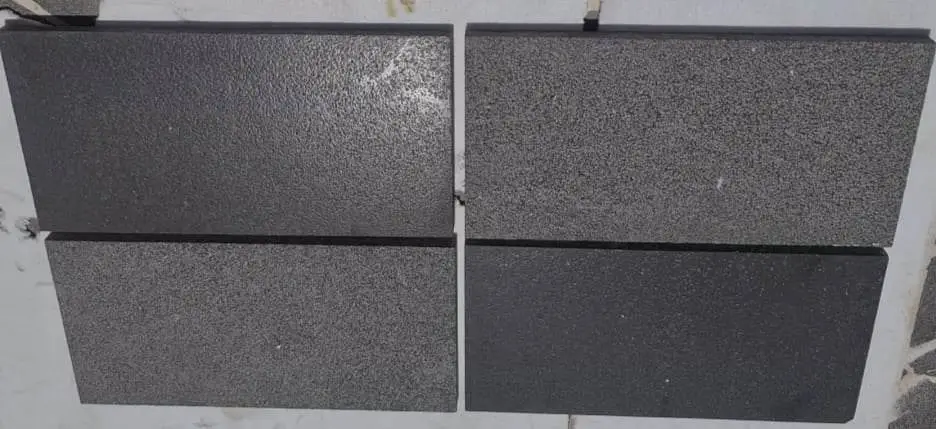
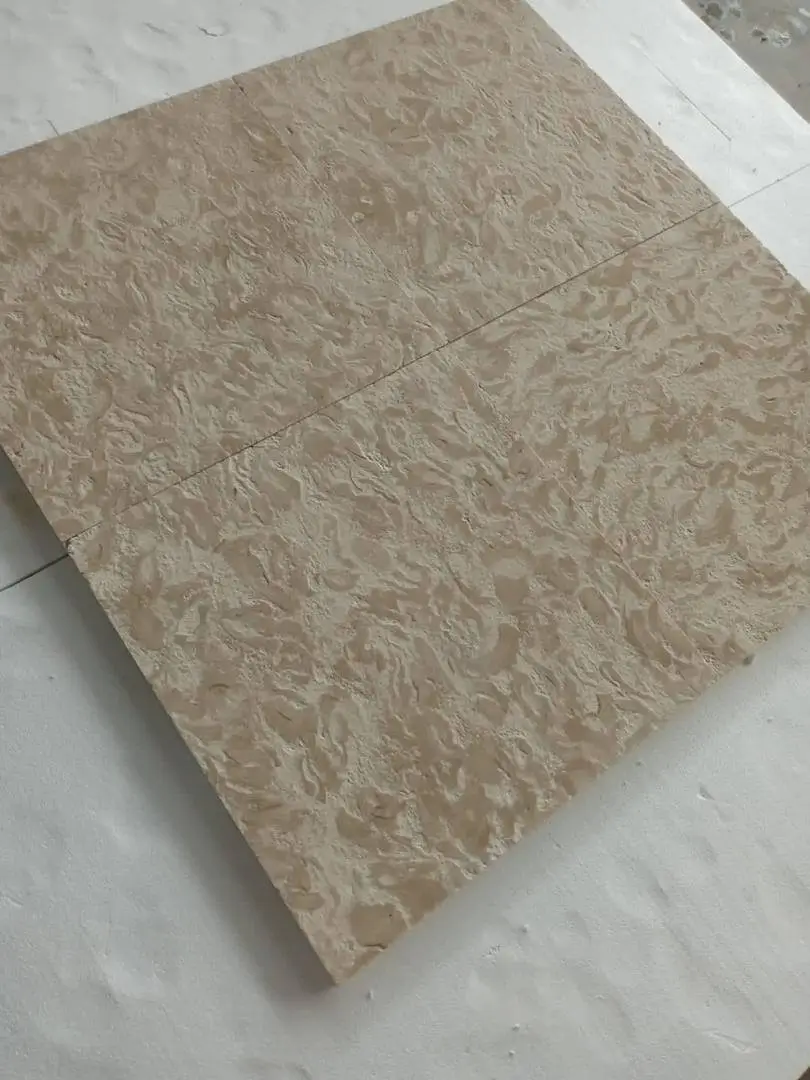
The pool coping material guide conversation typically centers on four natural stone options — travertine, limestone, granite, and bluestone — and each behaves differently under the same installation conditions. Travertine is the most widely specified, and for good reason: its open-pore structure moderates surface temperature, its natural variation hides minor efflorescence, and its tumbled edge profiles eliminate sharp nosing. Absorption rates for travertine typically run between 3% and 6% by weight, which is manageable with biennial sealing but requires attention in freeze-thaw regions where saturated pores become fracture sites.
Limestone sits in a similar porosity range but offers a denser, more uniform surface that holds tooled and bullnose profiles more crisply. Honed limestone at the coping edge delivers a slip coefficient closer to the 0.6 COF benchmark that PHTA pool deck safety standards recommend for wet pool environments. Granite sits at the opposite end of the porosity spectrum — absorption below 0.5% in most commercial grades — making it the structural workhorse for high-traffic installations and commercial pool projects where maintenance cycles are compressed.
Bluestone offers exceptional density and low absorption, typically under 1%, but its heat retention is worth flagging. Dense igneous and metamorphic stones absorb solar radiation and convert it to surface heat more aggressively than open-pore alternatives. On a sun-facing pool deck in full sun, bluestone coping stone pool surface temperatures can run 15–20°F above ambient air temperature, which matters immediately for barefoot comfort and long-term for thermal cycling stress on the mortar joint.
Freeze-Thaw Performance for Coping Stone Pool Installations
Freeze-thaw performance is where your absorption data becomes a direct safety and longevity metric. Water expands approximately 9% when it transitions to ice, and that expansion occurs inside the pore structure of your coping stone. For a coping stone pool installation in regions that experience 30 or more freeze-thaw cycles per year, you’re running that expansion cycle repeatedly across the mortar joint interface, the stone face, and the overhang nose. The compounding effect is spalling — micro-fractures propagate from the surface inward until visible face loss occurs.
The ASTM C666 freeze-thaw durability test gives you a standardized reference point. Stones that complete 300 cycles with less than 0.1% mass loss are appropriate for demanding freeze-thaw exposure. Granite comfortably meets this threshold. Dense limestone with absorption below 3% generally performs well. Standard travertine — particularly the filled varieties where the fill material has different expansion characteristics than the host stone — warrants closer scrutiny. Request test data from your supplier, not verbal assurances, before committing travertine to a high freeze-thaw exposure application.
- Stones with absorption above 6% face elevated spalling risk in regions with 30+ freeze-thaw cycles annually
- Mortar joint width should be specified at 3/8 inch minimum in freeze-thaw zones to accommodate differential movement
- Anti-fracture membrane beneath the coping bed course significantly reduces bond beam stress transmission
- Filled travertine requires matching fill compound expansion coefficients — mismatched fills crack and admit water faster than unfilled voids
- Sealers for freeze-thaw zones should be penetrating silane-siloxane formulas, not topical film coatings that trap moisture
One detail that doesn’t appear in most spec guides: the mortar mix water-to-cement ratio affects freeze-thaw performance at the bed joint as much as the stone itself. A ratio above 0.5 produces a mortar with elevated porosity — it’ll absorb and freeze just like the stone, lifting units from below. Specifying a 0.45 ratio mortar with air entrainment is the field adjustment that separates installations that hold tight for 20 years from those that start rocking within five.
Hot and Dry Climate Coping Performance: Surface Temperature and UV Effects
Hot, dry climate pool coping faces a different failure mode than freeze-thaw exposure. The primary stress mechanism is thermal cycling — not freezing water, but daily expansion and contraction across a 40–60°F diurnal temperature swing. A dark granite coping unit might reach 150°F surface temperature at midday and cool to 80°F by midnight. At a thermal expansion coefficient of roughly 4.7 × 10⁻⁶ per °F for granite, that’s meaningful dimensional change across a 4-foot coping unit — approximately 0.013 inches per cycle, compounded daily across a pool perimeter.
UV exposure becomes a material selection factor that most pool coping guides underweight. UV radiation doesn’t affect the structural integrity of natural stone — but it does affect organic sealers and color stability in ways that alter your maintenance schedule and long-term appearance. Topical acrylic sealers break down under UV exposure in 12–18 months in high-sun installations. The failure appears as whitening, peeling, or a milky haze across the coping surface. Penetrating silane-siloxane formulas resist UV degradation far better and typically deliver 3–5 year intervals between applications in full-sun conditions.
Color stability varies significantly by stone type and finish. Honed travertine in lighter tones — ivory and classic beige — shows minimal UV-driven color shift because there’s limited iron oxide and organic pigment in the matrix. Darker limestones and basalt-adjacent stones can exhibit surface oxidation that lightens or creates a chalky appearance over 3–5 years of UV exposure. This isn’t structural damage, but it affects the aesthetic consistency of your pool surround. Specifying a UV-stable penetrating sealer at installation and maintaining it on schedule keeps color retention measurably better than leaving stone unsealed in high-sun exposures.
- Light-toned travertine and limestone reflect 60–70% of solar radiation, keeping surface temperatures more manageable for barefoot use
- Dark stones in full-sun installations should use UV-stable penetrating sealers with 3–5 year reapplication schedules
- Finish selection matters for UV appearance retention — honed finishes show oxidation less obviously than polished surfaces
- Expansion joints every 8–10 feet along pool coping perimeters are non-negotiable in hot, dry climates where daily thermal cycling is pronounced
- Sealer color enhancement products can restore UV-faded tone in most limestones without surface replacement
Coping Stones Pool Slip Resistance and Finish Selection
Finish selection for pool coping isn’t primarily an aesthetic decision — it’s a safety specification. Pool coping surfaces should meet the ANSI A326.3 wet DCOF threshold (0.42). Polished finishes on limestone or travertine fall below this threshold when wet, retaining very little wet texture. That’s a liability exposure that no project should carry, regardless of how the polished surface looks in the design render.
Tumbled, brushed, and sandblasted finishes reliably carry good wet texture across most natural stone types. Honed finishes land in the middle range, typically 0.5–0.65, depending on stone density and pore structure. For coping stones pool applications where the surface is routinely wet and the user is exiting water while potentially fatigued, honed is acceptable on denser stones like granite and bluestone — but tumbled or brushed is the conservative and defensible specification on travertine and softer limestones. According to ANSI A326.3, finish texture directly affects wet DCOF values, and the delta between finishes is larger than most specifiers anticipate.
The nosing profile is equally important for slip safety. A bullnose that drops away steeply at the overhang edge gives swimmers less surface contact during exit. A cantilevered drop-face or a square-edge with a slightly eased corner provides more grip. Matching the nosing profile to your pool shell edge detail is essential — not all profiles are compatible with every bond beam configuration, and field modifications to pre-fabricated coping nosing create stress concentration points that fail first in thermal cycling.
Climate-Matched Pool Coping Stone: Matching Material to Exposure
A climate-matched pool coping stone specification balances four variables simultaneously: absorption rate, compressive strength, thermal expansion coefficient, and UV/sealer compatibility. No single material is optimal across every climate type, and the most common project mistake is selecting a material that performs well in one category while ignoring its vulnerability in another. The selection matrix below covers the principal exposure types most installations face.
For freeze-thaw regions, granite is the most straightforward specification in this pool coping material guide — low absorption, high compressive strength, and a thermal expansion coefficient that sits comfortably within the range that standard mortar joints can accommodate. Dense limestone with verified absorption below 3% is a viable alternative with more design flexibility in profile and color. Travertine is workable but requires filled voids, penetrating sealer maintenance, and conservative joint detailing. Explore current options for pool coping stone selection at Citadel Stone to compare specific product absorption and compressive strength data across stone types before committing to a specification.
- Freeze-thaw regions: granite or dense limestone (absorption below 3%), anti-fracture membrane, penetrating silane-siloxane sealer
- Hot, dry climates: light-toned travertine or limestone for surface temperature moderation, UV-stable sealer, expansion joints every 8–10 feet
- Humid subtropical zones: higher maintenance frequency for biological growth on porous stones; denser granite and bluestone reduce algae adhesion
- Coastal installations: salt-air environments accelerate sealer degradation — biennial reapplication minimum, avoid calcareous stones prone to acid etching from salt spray
- High-UV zones: penetrating sealers over topical films; light finishes over dark for surface temperature and color retention
Citadel Stone maintains warehouse inventory of pool coping materials with consistent absorption and strength data across product lines, which means you’re not waiting on import lead times when a project timeline requires confirmed material availability. Most in-stock coping profiles are available for truck delivery within 1–2 weeks, compared to the 6–10 week import cycle that custom-profile orders typically require. That lead time difference is worth factoring into your specification schedule, especially on projects where pool shell work moves faster than expected.
Thickness and Edge Profile Specification for Pool Coping
Standard pool coping thickness runs 1.25 inches to 2 inches for residential applications. The 1.25-inch nominal thickness works on lighter-duty residential pools where the bond beam is sound and the overhang is modest — typically 1 to 1.5 inches beyond the pool shell. Move to 2-inch thickness when the overhang exceeds 2 inches, when the project involves a vanishing edge with additional cantilever load, or when the stone is travertine or softer limestone that benefits from additional section depth at the nose.
The Natural Stone Institute provides technical benchmarks on stone dimensional specifications worth cross-referencing when specifying non-standard thicknesses or unusual cantilever profiles. According to NSI limestone and travertine performance data, flexural strength variation between stone types means thickness adjustments aren’t interchangeable across materials — a 1.25-inch granite coping can carry loads that would require 2-inch travertine to match safely. That’s not a small margin, and it affects both the structural specification and your material cost calculation.
Edge profile selection interacts with both safety and the pool shell detail. The most common profiles are:
- Bullnose: rounded top and drop face, smooth swimmer exit, compatible with most bond beam configurations
- Drop-face (cantilevered): squared top surface with a vertical or slightly angled drop, maximizes deck surface usability
- Square-edge with eased corner: simplest fabrication, most compatible with large-format coping units over 24 inches in length
- Double-bullnose: rounded on both top and bottom edge — used where both sides of the coping are visible, typically on raised spa edges
- Pencil-edge: minimal profile, used primarily on thinner contemporary installations where a flush deck-to-pool transition is specified
Installation Detailing: Mortar and Joint Specification
Pool coping installation failures trace back to mortar selection and joint detailing more often than to stone choice. The mortar bed for pool coping must accommodate both the weight of the unit and the differential movement between the pool shell structure and the coping unit above it. Standard Type S mortar is the minimum specification — ASTM C270 Type S provides adequate compressive strength at 1,800 PSI minimum and adequate flexibility for the movement demands of a pool environment.
The bed joint should be full-coverage — no back-buttering shortcuts. Voids in the mortar bed create stress concentration points and water collection zones that accelerate deterioration. For coping units longer than 24 inches, a 95% contact coverage minimum is the professional standard. Below 80% contact, you’re creating a fatigue failure scenario that will manifest as cracking at the overhang within 3–5 years of installation. These numbers aren’t conservative estimates — they’re the practical threshold drawn from watching installations fail and working back to the root cause.
- Expansion joints at pool corners and every 8–12 feet along straight runs — never grout across expansion joint locations
- Sealant color-matched to grout joints for visual continuity, but physically separated so expansion joints can move independently
- Back joint between coping and pool shell should be silicone or polyurethane sealant, never rigid mortar
- Allow 28-day mortar cure before applying sealer — premature sealing traps moisture in the bed course
- Do not allow pool water contact with fresh mortar for a minimum of 72 hours after installation
Sealing and Long-Term Maintenance Schedules
Sealing specification is where the pool coping material guide intersects directly with ownership cost over the life of the installation. The sealer type, application frequency, and timing relative to pool chemistry all affect how well your stone performs over time. Penetrating silane-siloxane sealers are the standard recommendation for outdoor pool coping — they don’t create a surface film that can peel or trap moisture, and they perform significantly better under the UV exposure that pool coping units receive over a full day in direct sun.
Application timing matters more than most installers acknowledge. Pool water chemistry — particularly chlorine and pH levels — interacts with fresh sealer differently than aged sealer. Apply initial sealer after the 28-day mortar cure period, allow 48–72 hours before pool water contact, and test pool chemistry before and after sealing to catch any pH disruption. Reapplication intervals vary by stone porosity: granite needs sealing every 4–6 years in most conditions; travertine benefits from biennial sealing; limestone falls in between at 3–4 years depending on UV exposure intensity and maintenance cleaning frequency.
UV exposure from sun-facing pool installations degrades organic sealer components on a predictable schedule. In high-UV conditions — south-facing pools without significant shade coverage — sealer performance drops noticeably around the 18-month mark on topical products. Penetrating formulas last longer but still need inspection annually. A simple water bead test — pour a small amount of water on the coping surface and observe whether it beads or absorbs — tells you immediately whether reapplication is due. Don’t wait for visible color change or a dull surface, because by that point moisture has already been entering the stone for months.
Pool Coping Material Selection: Your Action Plan
The decisions that define a complete pool coping material guide specification come down to a sequenced checklist: confirm your climate exposure type first, then select material based on verified absorption and compressive strength data, then specify finish and profile based on safety requirements, and finally build your sealing and maintenance schedule into the project documentation before installation begins. Skipping the sequence — jumping straight to aesthetics and working backward — is how projects end up with beautiful coping that requires replacement in eight years.
Your material data sheet should include ASTM absorption test results, compressive strength, and flexural strength for the specific lot you’re ordering — not generic stone type averages. Stone properties vary between quarry beds and between production batches, and the variance is significant enough to affect performance specifications. Confirm warehouse stock availability before scheduling installation, because the difference between a confirmed warehouse inventory and a backordered import is often 6–8 weeks of project delay. When you’re ready to compare coping stones pool options across the absorption spectrum, check truck delivery lead times alongside specification data — both affect your project timeline equally. Beyond your pool perimeter, as you consider the full hardscape picture around the water feature, river rock vs. crushed gravel comparisons covers how loose stone materials perform in complementary landscape zones around pool installations. The porosity ratings of coping stones stocked by Citadel Stone vary meaningfully, making absorption data a practical starting point for climate-based selection.
Related reading: What Is Pool Coping and Why Does It Matter? · pool coping material comparison.