

Why Granite Curbing Supply Failures Happen
Granite curbing suppliers who look reliable on paper can still leave your project short — and the failure point is almost never the stone itself. The real pressure point is the gap between confirmed stock and available stock: units that show as inventory in a supplier’s system but are already committed to another order, sitting on a truck bound for a different job site, or held in a warehouse queue that won’t clear for six weeks. Understanding where those gaps occur is what separates a smooth granite curbing procurement from a costly schedule disruption.
Lead Times and Stock Reality for Curbing Projects
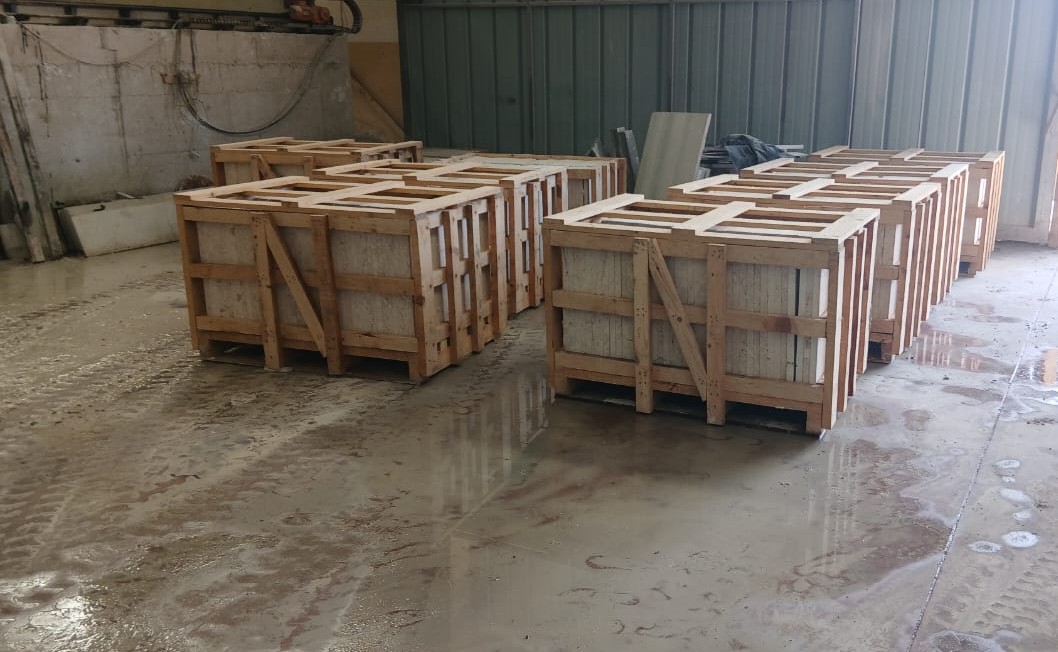
Your curbing timeline is only as reliable as the supplier’s actual inventory position — not what’s listed on a product page. Genuine stock availability means units are physically palletized in a warehouse, not in production or in transit from an overseas quarry. Lead times for granite curbing suppliers sourcing directly from domestic stock typically run one to two weeks; suppliers routing through import channels routinely quote six to eight weeks, and that window stretches further when port logistics tighten.
The practical implication for your project is straightforward: confirm physical stock before you finalize your installation schedule, not after. Ask your supplier directly whether units are warehoused domestically or staged at a port facility. That single question can expose a four-week discrepancy in your timeline before it becomes a problem on site.
- Request a written stock confirmation with a pallet count, not just a verbal availability check
- Ask whether units are staged at a domestic warehouse or in transit from an overseas facility
- Confirm whether your order quantity triggers a custom production run versus pulling from existing stock
- Build a two-week buffer into your installation schedule regardless of the quoted lead time
Specification Precision: Getting Curbing Dimensions Right
Dimensional inconsistency is one of the most common field problems with granite curbing, and it rarely surfaces until units are being set. Curbing specified at 6 × 8 × 36 inches needs to arrive within tight tolerances — typically ±1/8 inch on face dimensions and ±1/4 inch on length — or your line will wander and your mortar bed adjustments will compound across a long run. According to ASTM C615 granite dimension stone quality standards, granite curbing and dimension stone products are evaluated against specific tolerances for finish, dimensional accuracy, and absorption — specifications worth referencing directly when writing your procurement requirements.
Your specification document should call out finish type explicitly. Thermal-finish granite curbing provides better traction at the gutter edge and hides surface wear longer than polished faces — a practical advantage in high-traffic applications. Sawn faces on the back and bottom are standard for mortar-set applications, but confirm this with your supplier rather than assuming it. Suppliers pulling from mixed stock occasionally ship units with inconsistent back finishes, which complicates your mason’s setting work.
What Separates Reliable Granite Curbing Suppliers
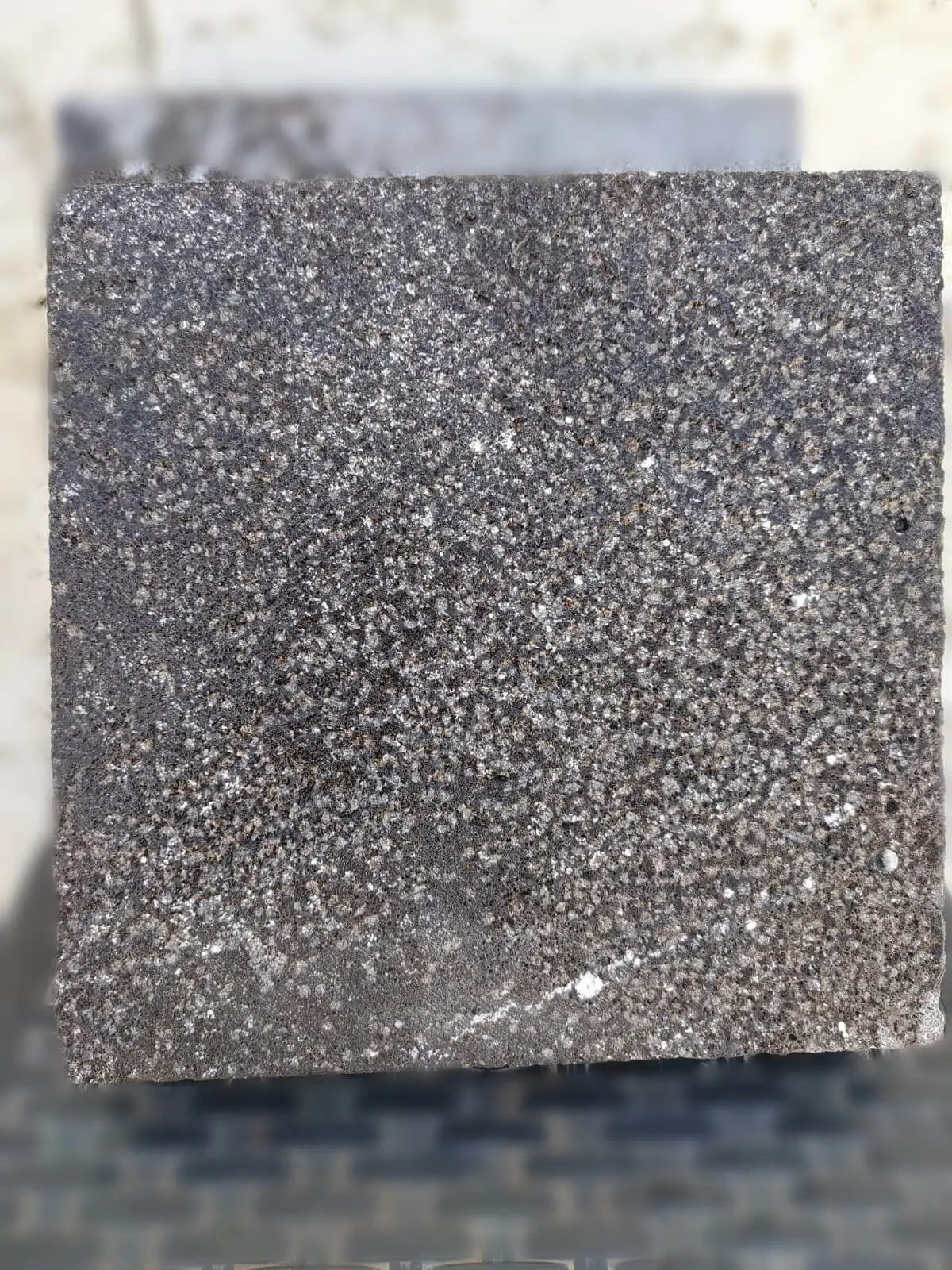
Supplier reliability comes down to three things that rarely appear in a product listing: sourcing consistency, palletization quality, and responsiveness when something goes wrong. Sourcing consistency means the supplier pulls from the same quarry program batch-to-batch, so color tone and grain character don’t shift noticeably between your first delivery and your second. Color drift in granite curbing is subtle but visible once it’s set — particularly with grey granites that can range from warm silver to blue-grey depending on quarry zone.
Palletization quality matters more than most specifiers realize until they’ve dealt with a truck arrival where half the units show chipped arrises from load shift in transit. Well-palletized curbing uses corner boards, horizontal banding at multiple heights, and foam or rubber interleaving between courses. Ask your supplier how units are packed before you commit to an order, especially for longer curbing sections that are more vulnerable to contact damage during transport.
- Confirm the supplier draws from a consistent quarry program — not spot-purchased mixed lots
- Request photos of pallet configuration before shipment for large orders
- Verify that the supplier has handled the specific curbing profile you need, not just generic granite supply
- Check whether the supplier can provide matching replacement units if damaged pieces arrive — color match matters for visible streetscape applications
Cost Factors and Budgeting for Granite Curbing
Freight distance has an outsized effect on granite curbing project budgets because curbing is heavy, dense material that ships by the pallet — often multiple pallets for even a modest linear footage. Your total delivered cost per linear foot will vary significantly depending on whether the supplier’s warehouse is within a reasonable truck radius of your project or whether you’re absorbing a long-haul freight premium. For large municipal or commercial projects, that freight delta can represent 15 to 25 percent of the material line item, which makes sourcing geography a genuine budgeting variable rather than a secondary consideration.
Labor-to-material cost ratios also shift across markets. In areas where skilled masonry labor is at a premium, value engineering the specification toward a slightly higher material grade that installs faster and requires fewer corrections is often the smarter budget call. Granite curbing that arrives dimensionally consistent and properly palletized reduces your mason’s setup time and minimizes the mortar-bed correction work that burns labor hours on site. As the USGS granite curbing and dimension stone data confirms, granite remains among the most durable curbing materials available — a specification decision that reduces long-term replacement and maintenance costs across the project’s service life.
For projects where budget pressure is real, consider whether stock curbing profiles match your design intent closely enough to avoid custom fabrication charges. Custom lengths and profiles typically add four to six weeks to lead time and carry a meaningful per-unit premium. Standard profiles in the 36-inch length range are almost always the most cost-effective path when the design can accommodate them.
Ordering Logistics and Delivery Planning
Your truck access conditions at the delivery site should be confirmed before the order ships — not on delivery day. Granite curbing pallets are heavy, and the driver needs to know whether a flatbed with a forklift is required, whether the site has a loading dock, or whether curbside drop with a pallet jack is the plan. Miscommunication on this point causes delivery refusals, redelivery charges, and schedule delays that are entirely avoidable with a five-minute conversation at order placement.
For projects with phased installation schedules, clarify with your supplier whether they can hold inventory and stage multiple deliveries against a single purchase order. Some granite curbing suppliers require full delivery on order completion; others can accommodate staged releases from warehouse stock. If your installation runs in phases, staged delivery matters for site logistics — you don’t want 200 linear feet of curbing staged on a site that’s only ready for the first 60.
Citadel Stone maintains domestic warehouse inventory for granite curbing programs, which typically supports one-to-two-week lead times and allows staged delivery coordination for phased commercial projects. For projects comparing edging and curbing options across material types, Citadel Stone edging inventory covers related granite and stone edging profiles worth reviewing alongside curbing specifications.
Quality Checks Before Your Crew Sets a Single Unit
Receiving inspection for granite curbing is a step that gets skipped under schedule pressure, and it’s the step that causes the most downstream pain. Your crew should verify three things before units go to the mason: dimensional conformance on a sample pull from multiple pallets, finish consistency across the delivery, and arris condition on the exposed face edge. A quick check of 10 to 15 percent of units across different pallets will catch a dimensional or finish issue before it’s embedded in mortar.
The Natural Stone Institute granite durability and application specifications outline the absorption and strength benchmarks that quality granite curbing should meet — values worth referencing as a baseline when evaluating supplier material documentation. Suppliers who can provide material test reports for their curbing stock are generally sourcing from quarry programs with established quality controls, which reduces your receiving inspection burden on large orders.
- Pull units from at least three different pallets for your dimensional check — don’t sample from one pallet only
- Check arris sharpness on the top exposed edge — chips here are visible after installation and difficult to remediate
- Compare color tone across multiple units in natural light before installation begins
- Document any damaged units with photos before moving them — you’ll need this for freight claim purposes
Avoiding the Most Common Procurement Mistakes
The procurement mistakes that consistently cause field problems with granite curbing suppliers fall into predictable patterns. Ordering to exact linear footage without a waste and breakage allowance is the most common — a five to seven percent overage on curbing is standard practice, and ordering short means waiting for a second delivery while your crew is standing by. Specifying without confirming availability is a close second: a supplier may carry a granite curbing profile in their catalog but have zero units in stock, with a 10-week production lead time they’ll mention only when you ask directly.
Skipping the supplier’s delivery terms review is another routine mistake. Some suppliers quote material pricing freight-on-board from their warehouse, meaning freight cost and risk transfer to you at the loading dock. Others quote delivered pricing but with conditions around site accessibility and unloading equipment that aren’t obvious until the truck arrives. Reading the delivery terms before order placement — not after — protects your budget and your schedule.
- Add a five to seven percent overage to your linear footage calculation for breakage and trim
- Confirm stock availability with a physical pallet count, not a catalog listing
- Read the supplier’s freight terms carefully — FOB warehouse pricing transfers risk to you at pickup
- Ask about the supplier’s replacement policy for damaged units before you need to use it
Final Recommendations for Granite Curbing Procurement
Getting granite curbing procurement right is fundamentally about asking the right questions early — before the order is placed, before the schedule is set, and before your crew is on site expecting a delivery. Identify granite curbing suppliers who can confirm physical stock, provide material documentation, and give you honest lead times rather than optimistic ones. The projects that run smoothly are the ones where the procurement conversation is as detailed as the installation specification.
Beyond curbing, if your project includes other granite elements, the decision between cut-to-size fabrication and stock profiles affects lead time and budget in ways worth understanding before you commit. For a closer look at how those sourcing approaches compare, granite cut-to-size vs. stock options covers the trade-offs across project types in practical detail. Chipped edges during transit remain a common complaint, which is why Citadel Stone pays close attention to how curbing units are palletized.
Related reading: Choosing Granite Cobblestone Suppliers: A Buyer’s Guide · granite wholesalers.