

Granite wholesalers price by the pallet, not the piece — and that distinction explains why a $4.50-per-square-foot wholesale quote and a $9.75 retail quote for the same slab can both be accurate simultaneously. Most buyers never ask how the minimum order quantity was calculated, and that’s the detail separating genuine savings from a logistics headache. This isn’t a simple ‘skip the middleman’ equation — the math shifts with project size, delivery radius, and the handling flexibility your job actually requires. Getting the comparison right means understanding both sides of the counter, not just the sticker price.
How Granite Wholesalers Actually Operate
Granite wholesalers typically operate a business model built around volume, not walk-in traffic — most don’t maintain a retail showroom at all. Your quote reflects direct relationships with quarry operations, consolidated container shipments, and warehouse turnover measured in pallets rather than individual slabs. Sourcing data across the industry confirms this scale advantage: bulk buyers who commit to container-level volumes routinely secure per-square-foot pricing well below single-slab retail rates.
Here’s an industry quirk that surprises a lot of specifiers: the word “granite” shows up in some corporate names that have nothing to do with dimension stone. The United States Steel Corporation Granite City Works, for instance, took its name from a regional stone-crushing heritage rather than any connection to dimension-stone quarrying — a reminder that “granite” has drifted into industrial vocabulary well beyond countertops and pavers.
A working granite wholesaler operation generally includes:
- Direct or brokered relationships with quarry sources rather than a retail distribution layer
- Palletized inventory sold in full or partial container quantities
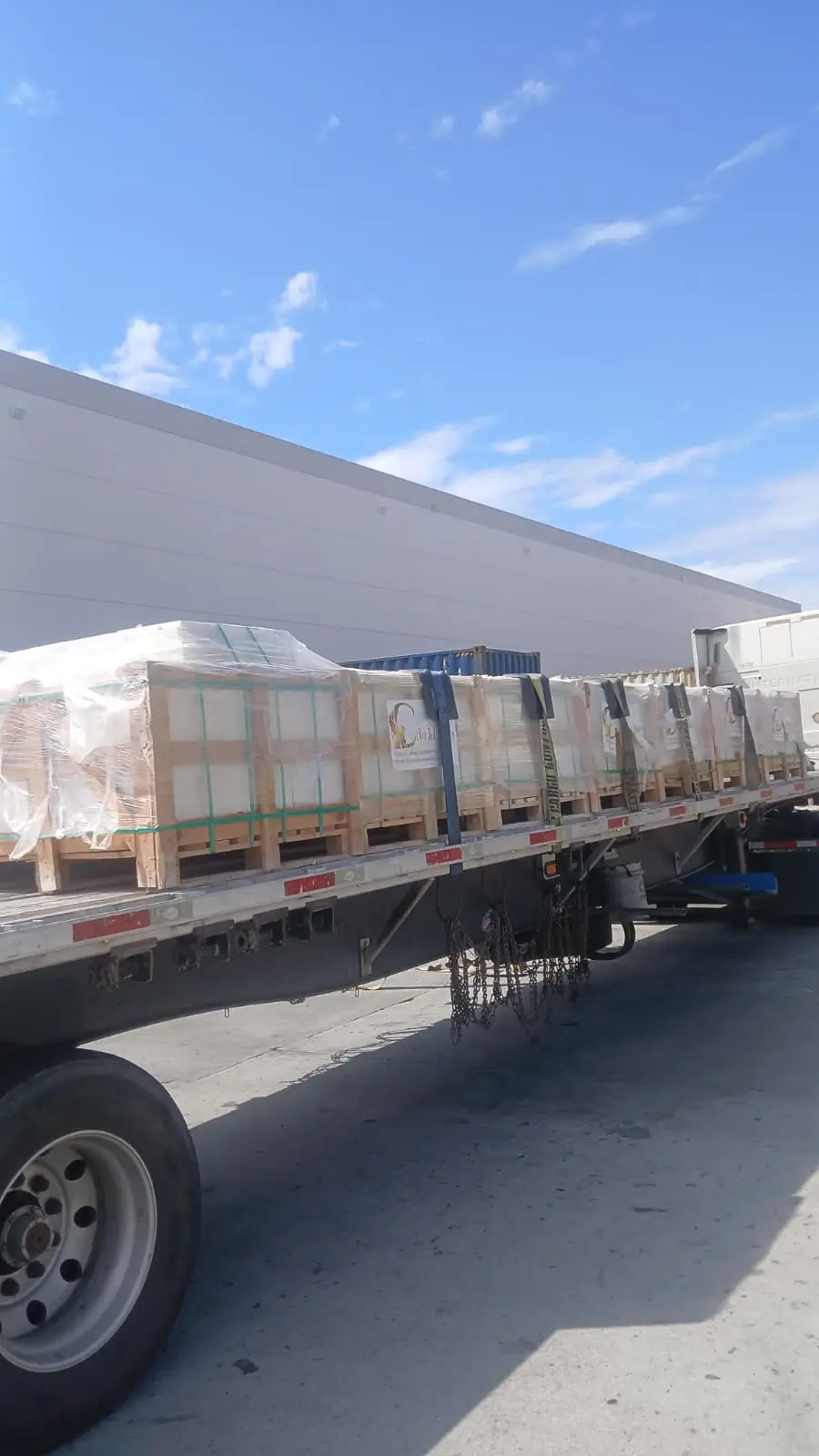
- Freight coordination handled in-house, including truck scheduling and delivery windows
- Net-30 or net-60 credit terms for repeat contractor accounts
- Minimal or no showroom, with material selection made from photos, slab yard visits, or sample chips
Your project timeline should account for the fact that wholesale pricing assumes you’re handling your own logistics coordination — advantages that disappear quickly on small jobs.
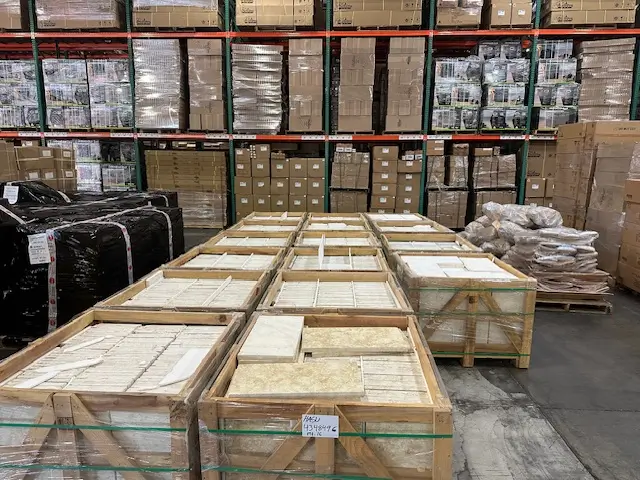
Granite Wholesalers vs Retail Stone Yards
The core difference isn’t just price — it’s who absorbs the risk of unsold inventory and slow-moving stock. Retail yards carry curated selections, display slabs on A-frames, and price in enough margin to cover showroom overhead, staff consultations, and single-piece handling. Granite wholesalers shift that overhead onto the buyer by requiring larger commitments and less individual attention per order.
Field experience with both channels highlights a few consistent contrasts:
- Pricing structure: retail sells by the slab or square foot with markup built in; wholesale prices by pallet or container with volume discounts
- Inventory depth: retail yards stock fewer slabs but let you inspect veining and color in person; wholesalers often sell from photos or limited sample chips
- Lead time: retail typically ships from existing stock within days; wholesale orders may queue behind container schedules
- Support: retail includes design consultation and fabrication referrals; wholesale assumes you already have a fabricator lined up
- Returns: retail generally accepts exchanges on unused stock; wholesale sales are frequently final once the truck leaves the yard
Granite’s density and low porosity make it suitable for both interior and exterior use regardless of purchase channel — according to NSI granite durability specifications, that performance profile holds true whether the material comes from a retail slab or a wholesale pallet. Neither model is inherently better — they’re built for different buyers. A homeowner replacing one kitchen island needs retail’s flexibility, while a contractor specifying granite across six units in a development needs wholesale pricing to keep the job’s material-to-labor cost ratio in check.
Buyers moving between the two channels should also confirm consistent grading language — terms like “premium select” or “commercial grade” can mean different things from yard to yard, and wholesalers pricing by pallet don’t always sort inventory into the same tier system a retail showroom uses for merchandising.
When Retail Makes More Sense Than Wholesale
Small, single-location projects rarely benefit from wholesale pricing once you factor in minimum order thresholds. You’ll often pay more per square foot buying wholesale below the minimum than you would simply buying retail stock that’s already on the ground.
Retail becomes the smarter path when:
- Your total material need falls under one pallet or a few dozen square feet
- You need to see and select the exact slab or paver batch in person before committing
- Your timeline can’t absorb container lead times of several weeks
- You lack loading dock or truck access for full pallet delivery
- You want a single point of contact for design, fabrication referral, and warranty support
Homeowners and small remodeling contractors fall into this category most often. The retail markup buys convenience, immediate availability, and the ability to walk the yard and touch actual material rather than trusting a photo.
Retail pricing also absorbs a layer of risk transfer that’s easy to overlook: if a slab arrives chipped or a batch doesn’t match the sample, the yard typically handles the exchange without triggering a freight claim process. That single point of accountability is worth real money on a one-off project, even when the per-square-foot number looks higher on the estimate.
When Direct Wholesale Buying Wins
Volume changes the equation entirely. Contractors managing multi-phase developments, municipal paving contracts, or repeat commercial installs typically see the clearest savings from direct wholesale sourcing, because the fixed costs of container freight and quality inspection get spread across far more square footage.
Regional aggregate and paving firms illustrate this at scale — operations like Granite Construction Bakersfield run vertically integrated quarry-to-jobsite logistics for public infrastructure work, bypassing third-party wholesalers entirely on their largest contracts. That model only pencils out once volume crosses a certain threshold. Most independent contractors won’t reach that scale, but the underlying principle still applies: the more consistent and sizable your granite demand, the more wholesale terms favor you.
Buying direct through granite wholesalers tends to make sense when your project includes:
- Multiple buildings or phases specified with the same material and finish
- A fabricator already under contract who can receive and process bulk slab deliveries
- Enough lead time to accommodate a multi-week import or quarry-to-warehouse cycle
- Truck and staging access on-site for full pallet or container drops
Contractors weighing the decision should run a simple breakeven calculation: divide the wholesale savings per square foot by the added freight and storage cost per pallet, then compare that figure against the project’s total square footage. Once the numbers cross into positive territory, wholesale sourcing typically stays the better choice for every subsequent phase, not just the current one.
Freight, Regional Pricing, and What Drives Your Total Cost
Material price per square foot is only one line in the budget — freight distance from the quarry or warehouse to your site often swings total delivered cost more than the stone selection does. A granite variety quarried domestically but warehoused near your region can land cheaper delivered than an imported stone with a lower base price but a long truck haul tacked on. Firms that vertically integrate — the way Granite Construction’s Bakersfield operations manage their own quarry-to-jobsite freight — illustrate just how much of total delivered cost is really freight and handling rather than raw material.
Regional labor market conditions compound this. In areas with tight skilled-labor supply, fabrication and installation costs climb, which shifts the smart value-engineering move toward sourcing pre-cut, pre-finished granite wholesale to reduce on-site labor hours. Where labor is more available and less expensive, buyers sometimes accept rougher-finish wholesale stock and absorb more finishing work locally — the material-to-labor cost ratio simply tips a different direction.
Consider these regional cost factors before finalizing a wholesale order:
- Freight distance from quarry or regional warehouse to jobsite, which can represent a significant share of delivered cost on heavier granite orders
- Local material availability — domestically quarried stone often reduces both freight and lead time compared to imported alternatives
- Regional labor rates, which affect whether pre-finished wholesale stock or raw slab stock delivers better total project value
- Seasonal demand swings that push wholesale pricing up during peak construction months in a given region
Buyers evaluating options at scale often work through the Citadel Stone bulk supply program specifically to model freight and volume pricing before committing to a full container order. Running those numbers early avoids the common mistake of locking in a wholesale price that looks attractive on paper but loses its advantage once regional freight gets added.
Material Grades, Finishes, and Specification Details
Granite wholesalers typically sell to a specification, not a showroom sample, so you need paperwork that retail buyers rarely ask for. According to ASTM C615 dimension stone standards, absorption, compressive strength, and flexural strength all fall within defined ranges depending on classification. Request the mill certification, not just a color name, before finalizing any bulk order.
Finish selection affects both performance and price at wholesale volumes:
- Polished finish: highest slip risk when wet, best for interior or covered applications
- Flamed (thermal) finish: textured surface with strong slip resistance, standard for exterior paving and driveways
- Honed finish: matte surface with moderate slip resistance, common for pool surrounds
- Bush-hammered finish: heavily textured, typically specified for high-traffic commercial exteriors
Slip resistance testing, typically reported as a coefficient of friction or dynamic coefficient of friction value, should accompany any finish selection intended for wet or exterior conditions. Wholesalers working with commercial specifiers are generally accustomed to supplying this data on request, even though retail yards rarely stock it for casual buyers.
Compressive strength for quality granite typically exceeds 19,000 PSI, well above what most paving or flooring applications structurally require — the real specification variable is finish and thickness, not raw strength. Nominal thickness for exterior paving generally runs 1.25 to 2 inches depending on vehicular versus pedestrian load, and wholesalers should be able to supply that data per pallet, not per estimate.
Minimum Order Quantities and Lead Time Realities
Minimum order quantities vary more than most buyers expect, and they’re rarely posted publicly. Some granite wholesalers set thresholds at a single pallet, while others require a full container before wholesale pricing applies at all.
Lead time is where the real planning risk sits. Imported granite typically runs a six-to-eight-week cycle from quarry order to domestic delivery, while material already sitting in a US warehouse can often ship within one to two weeks. Citadel Stone maintains warehouse inventory positioned nationwide specifically to compress that gap for contractors working against tight schedules, since waiting on an import cycle can stall an entire phase of a project.
Before committing to a wholesale order, verify:
- Current warehouse stock levels versus what requires a fresh quarry order
- Truck delivery scheduling windows and whether partial shipments are available
- Whether the quoted lead time includes fabrication or only raw material delivery
- Cancellation or delay policies if your project timeline shifts mid-order
Staggered or split deliveries are worth negotiating upfront, particularly on multi-phase projects where storing a full container’s worth of material on-site isn’t practical. Some wholesalers will release partial quantities against a single purchase order, which reduces the on-site storage burden without forfeiting the volume discount tied to the total order.
Vetting a Granite Wholesaler Before You Commit
Not every wholesaler operates with the same quality control rigor, and the savings evaporate fast if a pallet arrives with inconsistent color lots or undocumented sourcing. National production data from the USGS dimension stone report shows domestic granite output remains a modest fraction of total US stone consumption, which means much of the wholesale supply chain runs through import brokers of varying reliability. That naming confusion isn’t just trivia — the same lack of transparency that let U.S. Steel’s Granite City Works borrow the word “granite” for an unrelated industrial operation is exactly why buyers should verify actual quarry documentation rather than assuming a stone name or company name guarantees sourcing accuracy.
Ask these questions before signing a purchase order:
- Can they document the quarry of origin and provide test data for the specific lot?
- What percentage of pallets typically arrive with breakage or color-lot variation?
- Is freight quoted as delivered pricing, or does truck cost get added after the fact?
- What’s the actual warehouse turnaround if a reorder becomes necessary mid-project?
- Do they support partial-pallet orders, or is the minimum strictly enforced?
At Citadel Stone, warehouse quality checks happen before material ever reaches the loading dock — every incoming pallet gets inspected against the documented spec sheet rather than assumed compliant. That inspection step is the difference between a wholesale relationship that holds up over multiple orders and one that creates change orders on-site.
Getting Your Granite Wholesalers Decision Right
Choosing between granite wholesalers and retail stone yards comes down to an honest read of your project’s scale, timeline, and truck access — not simply chasing the lowest advertised per-square-foot number. Run the full delivered cost, including freight and any fabrication gap, before assuming wholesale automatically wins. Whichever path fits the project, insist on documentation — mill certifications, freight terms, and delivery windows in writing — before the first pallet ships.
As you plan related stone projects, sourcing decisions extend beyond flat wholesale material. For a closer look at supplier vetting in a related application, vetting granite cobblestone suppliers covers criteria specific to unit paver programs, which overlaps closely with the questions raised here. Getting the sourcing decision right upfront protects both budget and schedule for the rest of the build. Sourced from our selected premium quarries across multiple continents, Citadel Stone granite reaches contractors nationwide with flexible pallet volumes.