

Granite cut to size suppliers offer something stock programs structurally cannot — dimensional precision that eliminates field cutting errors before they ever reach the job site. The gap between a 2mm overcut and a 2mm undercut sounds trivial until you’re holding twelve running feet of misaligned coping on a $180,000 renovation. That’s where the cut-to-size versus stock debate stops being academic and starts costing real money.
What the Comparison Actually Means
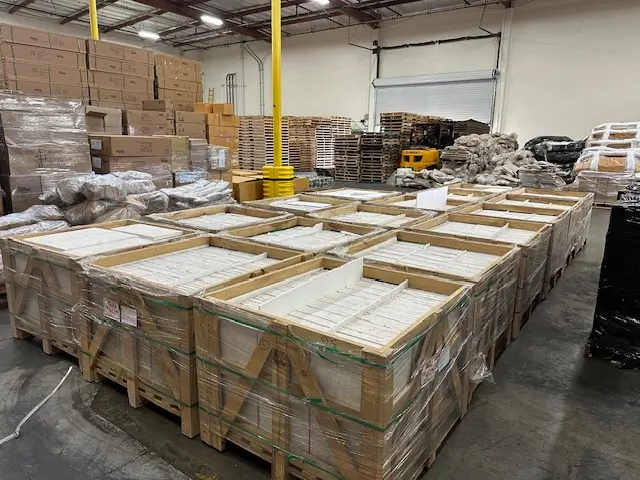
The stock-versus-custom framing gets oversimplified in most buying conversations. Stock granite means warehouse-held inventory in predetermined dimensions — typically 12×12, 16×16, 24×24, and some 12×24 formats — available for immediate truck delivery. Cut-to-size means the stone is fabricated to your exact project dimensions before it ships. Both supply models serve legitimate project types, and understanding which one fits yours is where the real specification work begins.
Your material budget, schedule, and project geometry will each pull in different directions. A straightforward grid-pattern patio with standard dimensions will almost always favor stock. A curved pool surround, a custom stair tread run, or an architectural feature wall with non-standard reveal dimensions? That’s the territory where granite cut to size suppliers earn their premium over sw pavers or standard stock alternatives.
Dimensional Precision and Where It Matters
Granite pavers suppliers working from stock programs hold tolerances of roughly ±3mm on face dimensions — acceptable for most residential field installations where grout joints can absorb minor variation. Cut-to-size programs typically hold ±1mm or tighter, depending on the fabrication equipment and the supplier’s QC protocol. That 2mm difference sounds minor until you’re running 40 linear feet of stone along a pool edge where joint consistency is visible from every angle.
Here’s what separates a professional specification from a wishful one: field cutting granite on site to correct stock dimension variance is expensive, inconsistent, and slows installation by a significant margin. Diamond blade wet-cutting on site introduces micro-fractures at cut edges if blade speed and feed rate aren’t controlled precisely. You’ll also generate fine silica dust that requires respiratory protection compliance on the job.
- Cut-to-size fabrication eliminates on-site cutting for standard runs, reducing silica exposure risk
- Pre-cut material arrives sequenced for installation, reducing handling time per piece
- Precise dimensions allow tighter dry-lay verification before setting begins
- Reduced field waste means your material order quantity is more predictable
According to ASTM C615 granite dimension stone quality standards, dimensional tolerances for fabricated granite must be specified contractually — and the standard makes clear that tolerances tighter than the baseline require explicit supplier agreement. That’s your contractual leverage when sourcing cut-to-size material.
Stock Granite: The Real Supply Chain Advantages
Stock inventory isn’t a compromise — it’s an engineered supply model for the right project type. Warehouse-held granite delivers on two critical variables that custom fabrication can’t match: availability certainty and lead time compression. Your project timeline is often the deciding variable before anything else.
Standard residential projects with grid-pattern layouts, phased installations, or budget constraints that don’t permit fabrication premiums are well-served by stock. Most granite pavers suppliers maintain core stock dimensions in proven grades, meaning you can confirm availability, arrange truck delivery, and begin setting within days rather than weeks.
- Stock programs typically deliver in 3–7 business days from warehouse to job site
- Price per square foot is 15–35% lower than equivalent cut-to-size fabrication
- Replacement material for damaged pieces is available without minimum order quantities in most cases
- Multiple thickness options (3cm, 2cm, 3/4 inch nominal) are usually held in core SKUs
The limitation that catches specifiers off-guard isn’t the dimension constraint — it’s the batch matching problem. Granite is a natural material, and different warehouse batches from the same quarry source can show visible color and veining variation. For large continuous installations, you’ll want to confirm that your full material quantity comes from a single warehouse lot. At Citadel Stone, we pull lot numbers at order confirmation specifically to flag this risk before it becomes a field problem.
Cut-to-Size Lead Times and Project Scheduling
The honest conversation about granite cut to size suppliers always circles back to lead time, and it should. Fabrication lead times typically run 3–6 weeks from approved shop drawings to truck delivery, depending on the supplier’s production queue and the complexity of your profiles. That window can compress or expand significantly based on factors you can verify before you commit.
Shop drawing approval is often the hidden schedule killer. Your fabricator cannot begin cutting until you’ve signed off on dimensioned drawings — and that approval cycle frequently takes longer than the fabrication itself when stakeholder communication is slow. Build a 5–7 business day approval buffer into any schedule that includes cut-to-size granite components.
- Complex profiles (bullnose, eased, ogee edge) add 3–5 days to standard fabrication timelines
- Material sourcing delays — particularly for premium grades — can extend lead times by 2–4 weeks
- Rush fabrication premiums typically run 20–40% above standard pricing
- Confirm whether your supplier’s lead time includes or excludes transit time from the fabrication facility
The Natural Stone Institute granite durability and application specifications documentation provides fabrication quality benchmarks worth referencing in your purchase agreement — particularly for edge profile consistency and surface finish standards across a full cut-to-size order.
Thermal Cycling and Dimensional Specification
This is where cut-to-size precision creates compounding value that stock programs can’t replicate. Granite’s coefficient of thermal expansion sits around 4.4–8.5 × 10⁻⁶/°F depending on mineral composition and density. For a 24-inch granite paver cycling through a 60°F temperature range between night and day, that translates to roughly 0.006–0.012 inches of dimensional movement per piece per cycle.
Across 20 linear feet of continuous installation, those individual movements accumulate. Joint spacing designed to accommodate thermal expansion needs to be calibrated to your specific material — and that calculation only works correctly when you know the exact as-cut dimensions of every piece. Stock material’s ±3mm tolerance introduces dimensional variance that can either compress joints beyond design intent or leave them oversized, both of which compromise long-term performance in regions with significant day-night temperature swings.
Freeze-thaw regions add another layer of specification complexity. Water that infiltrates joints and freezes expands at approximately 9% by volume. If joint width is inconsistent due to stock dimension variance, water infiltration is uneven — and freeze-thaw damage concentrates at the tightest joints where water pressure has least room to dissipate. Cut-to-size consistency gives you uniform joint geometry, which means uniform drainage behavior and predictable freeze-thaw performance year over year.
- Specify joint width based on your region’s expected annual temperature range, not just seasonal averages
- In freeze-thaw environments, minimum joint width of 3mm with polymeric sand fill is a defensible baseline
- Thermal expansion calculations should reference actual installed piece dimensions — not nominal stock dimensions
- Day-night cycling in arid climates can exceed seasonal ranges in temperate zones — never assume freeze-thaw is the only thermal stress driver
Evaluating Granite Suppliers Before You Commit
The supplier evaluation process for cut-to-size versus stock isn’t the same checklist. Stock programs require you to verify inventory depth, lot consistency, and warehouse distribution reach. Cut-to-size programs require you to evaluate fabrication capability, QC documentation, and shop drawing turnaround. Conflating the two leads to supplier relationships that underperform on the variables that matter most for your specific project.
For stock programs, request a written confirmation of available lot quantity before you finalize your order — not just a verbal confirmation that the SKU is in stock. Warehouse inventory systems sometimes show available quantity that includes material already allocated to other orders but not yet picked. That discrepancy has derailed more than a few projects mid-installation.
- Request fabrication tolerance documentation — not just a verbal commitment to precision
- Ask for references from similar-scale projects completed in the past 18 months
- Confirm whether the supplier handles freight coordination or whether you’re managing truck logistics independently
- Verify whether sample pieces are cut from the same quarry batch as your production order
Our technical team at Citadel Stone reviews quarry source documentation for every cut-to-size order we process, cross-referencing material grade against the project’s performance requirements before fabrication begins. That step catches specification mismatches that would otherwise surface as field problems after installation.
You can find additional context on sourcing and sizing options through the Citadel Stone sizing program, which outlines how different fabrication approaches apply across granite product families.
Cost Analysis: Cut-to-Size Versus Stock
The price differential between cut-to-size and stock granite is real, but the full cost comparison rarely favors stock by the margin the material unit prices suggest. Field cutting labor, blade consumption, waste material disposal, and the schedule extension that on-site cutting creates all load onto the stock option’s true project cost.
A realistic cost model for a mid-scale commercial installation — say, 2,000 square feet of granite paving with mixed standard and non-standard dimensions — typically shows cut-to-size material at 20–30% premium over stock unit pricing. But when you factor in reduced installation labor hours, eliminated field cutting equipment cost, and lower waste percentages, the net differential often closes to 8–15%. For precision-critical installations, that spread disappears entirely once rework risk is priced in.
- Stock granite waste factor for non-standard layouts typically runs 12–18% above cut-to-size
- Field cutting labor adds $4–$9 per linear foot of cut depending on profile complexity
- Rework for dimension errors on stock installations averages 2–4% of total installed value on complex projects
- Cut-to-size programs allow you to order closer to exact quantity — reducing over-order buffer from 10–15% down to 3–5%
Application Types and Which Supply Model Wins
The head-to-head evaluation between granite cut to size suppliers and stock programs produces a clear winner only when you define the application first. There’s no universal answer — there’s only the right answer for the specific geometry, schedule, and performance requirements in front of you. Whether you’re comparing fabricated stone against sw pavers or evaluating warehouse stock across multiple formats, the application drives the decision.
Applications Where Stock Granite Wins
Grid-pattern patios, standard walkways, and interior flooring installations in common dimensions are the natural home of stock supply. Your schedule is tight, your layout is simple, and your geometry doesn’t require custom profiles. Stock delivers faster, at lower unit cost, with immediate warehouse availability that keeps your project moving.
- Residential patio installations under 500 square feet with standard grid layouts
- Interior flooring replacement projects where standard tile dimensions match existing conditions
- Phased installations where material will be added in stages over 12–24 months
- Budget-constrained projects where fabrication premium isn’t recoverable in the project economics
Applications Where Cut-to-Size Wins
Custom geometry, architectural precision, and performance-critical installations tilt the equation decisively toward cut-to-size. The fabrication premium pays for itself in reduced field labor, consistent joint geometry, and the elimination of field cutting risk.
- Pool surrounds and coping runs where dimensional consistency is visible and structurally required
- Stair treads and risers where exact dimensions determine code compliance and safety
- Large-format installations above 36 inches where stock size options are limited
- Architectural feature elements where material appearance and precision are part of the design brief
- High-freeze-thaw environments where joint geometry precision directly affects long-term durability
USGS dimension stone production data confirms that US granite dimension stone supply is weighted toward fabricated and cut product for commercial applications — a supply-side signal that fabricators have built capacity to support project-specific precision at scale.
Cut-to-Size Versus Stock: Making the Right Specification Call
The cut-to-size versus stock decision is one of those specification calls that looks simple on the surface but rewards careful analysis. Your project’s geometry, schedule, thermal environment, and budget each contribute to the right answer — and the right answer shifts between projects, sometimes between phases of the same project. Stock granite serves speed and standard layouts efficiently. Cut-to-size granite serves precision, custom geometry, and performance-critical applications where joint consistency and dimensional accuracy directly affect long-term durability. Neither model wins universally — they win situationally, and your specification should reflect that distinction clearly.
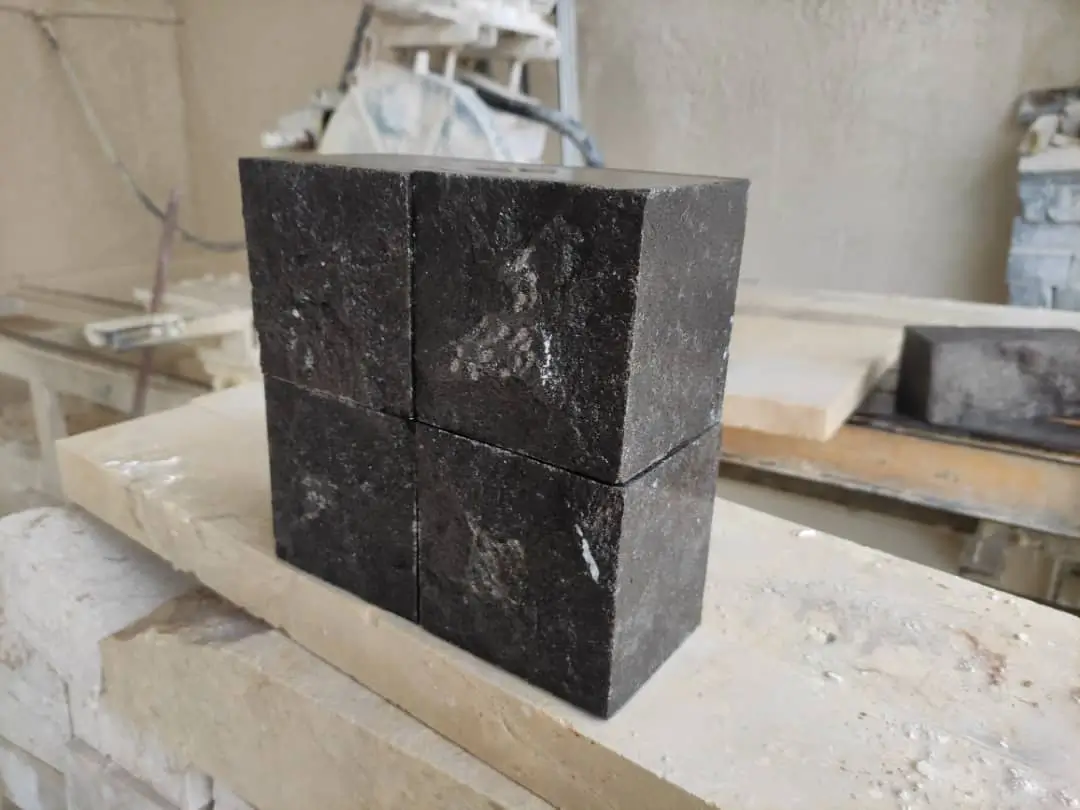
As you work through your granite sourcing strategy, the choice between supply models is worth mapping against your full project life cycle, not just the initial material cost. Related granite sourcing decisions — including wholesale versus retail channel selection — affect both unit pricing and supply reliability in ways that compound over a multi-phase project. For additional context on channel selection, granite wholesale versus retail sourcing covers the purchasing channel decision in depth. Choosing between cut-to-size and stock granite often comes down to lead time, and Citadel Stone tracks both closely for cobble orders.
Related reading: granite cobblestone suppliers.