

Why Sealer Selection Defines Your Results
Matching sealer chemistry to your stone’s actual absorption rate is the single variable that determines how well you seal white limestone pavers — not application technique, and not product price. White limestone is a high-porosity sedimentary material, and porosity varies meaningfully between honed, tumbled, and sawn finishes. A penetrating impregnator that works flawlessly on dense honed material can disappear into a tumbled surface in under 60 seconds, leaving patchy coverage and uneven protection. Knowing your stone’s finish and testing a small area first isn’t optional — it’s the foundation of everything else in this walkthrough.
Sealing natural stone for outdoor use also means accounting for what you’re sealing against. White limestone is calcium carbonate, which means it’s reactive to acids — citrus spills, bird droppings, pool water. A good impregnating sealer blocks moisture ingress and reduces staining without trapping vapour, which matters on installations over permeable bases. Film-forming sealers look impressive on the day of application but create a vapour barrier that causes spalling and delamination within a few years, especially where temperature swings are significant.
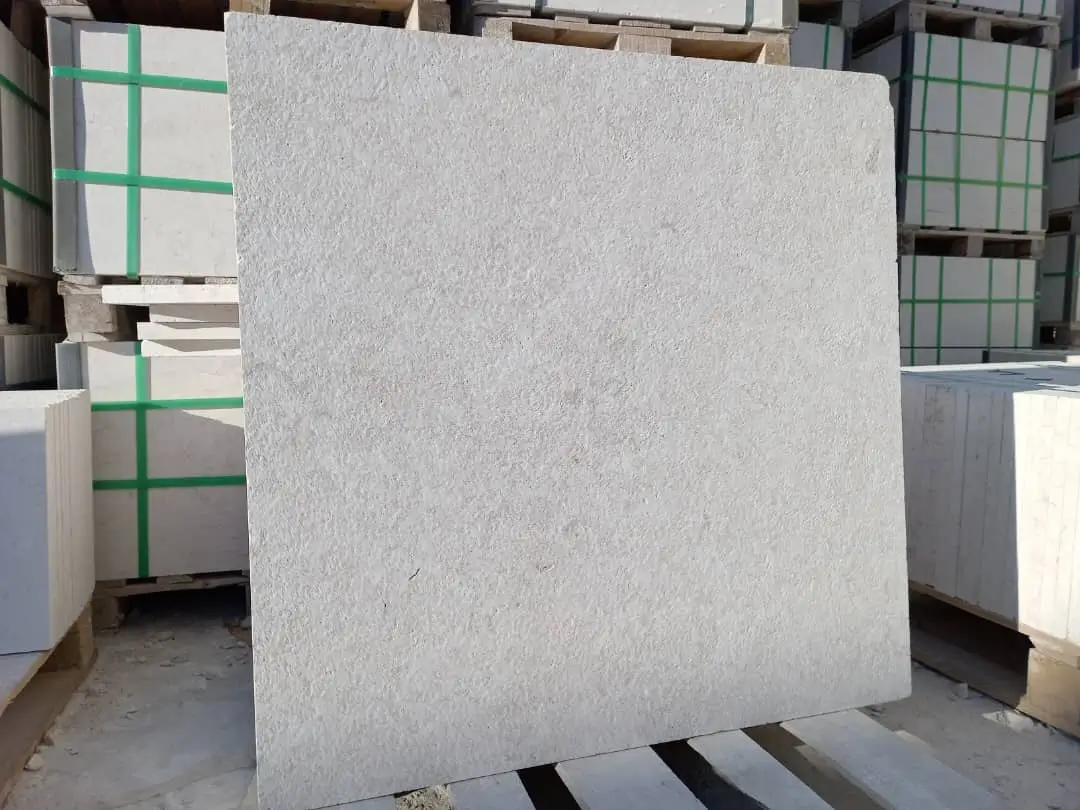
Surface Preparation Before Sealing
Your sealer is only as effective as the surface underneath it. Any sealer applied over contaminated, damp, or freshly installed stone will fail — not gradually, but almost immediately. The preparation phase is where most DIY and even some professional applications go wrong, and it’s entirely preventable.
- Allow new installations to cure for a minimum of 28 days before sealing — efflorescence from fresh mortar or setting bed material needs time to work its way out
- Clean the surface thoroughly using a pH-neutral stone cleaner, not a general-purpose cleaner that may leave a residue or etch the surface
- Remove any existing sealer with an appropriate stripper if you’re resealing — applying fresh product over degraded old sealer traps moisture and produces a milky haze
- Test surface moisture using a plastic sheet taped flat to the stone for 24 hours — condensation on the underside means the slab is still releasing moisture and is not ready
- Brush out any jointing sand that has crept onto the surface, and clear debris from all joints before you start
One detail that gets skipped too often: check the weather forecast for a 48-hour window after application. Rainfall within 12 hours of sealing, before the product fully cures, will cause blotching and may require a full strip-and-reseal. Morning dew counts — if your installation is exposed, a dry afternoon application with overnight temperatures above 50°F gives you the best curing window.
Choosing the Right Sealer for White Limestone Pavers
The sealer market is overwhelming, and the labelling often obscures more than it reveals. For white limestone specifically, you’re looking for a solvent-based or water-based impregnating sealer — one that penetrates the stone matrix and bonds below the surface rather than forming a coating on top. According to Natural Stone Institute limestone technical specifications, limestone’s calcium carbonate composition makes it particularly susceptible to acid attack and moisture-driven staining, which is why deep penetration protection outperforms surface coatings in long-term testing.
- Solvent-based impregnators penetrate more deeply in dense, lower-porosity limestone — they’re faster to cure and more tolerant of slightly elevated surface humidity
- Water-based impregnators perform well on higher-porosity or tumbled surfaces and are lower in VOCs — preferable for enclosed or partially sheltered installations
- Natural or colour-enhancing sealers deepen the stone’s tone — use these intentionally, as white limestone will shift to a richer cream or warm grey finish that you cannot fully reverse
- Topical film-forming sealers (polyurethane, acrylic gloss) are not recommended for outdoor limestone paver use — they trap moisture and wear unevenly underfoot
Your finish type directly controls how much product you’ll need and how quickly it absorbs. Honed white limestone pavers typically require one application with a light second coat on absorbent areas. Tumbled surfaces often need two full coats, with a careful assessment after the first coat has cured. At Citadel Stone, we test product absorption rates directly on material from our warehouse before making sealer recommendations, because absorption varies between quarry batches in ways that aren’t visible to the eye.
Limestone Paver Sealing Steps — The Full Process
These limestone paver sealing steps apply to both new installations and maintenance resealing. The sequence matters — skipping steps or reordering them produces inconsistent results that you won’t notice until the stone starts staining unevenly six months in.
- Step 1: Complete all surface preparation as described — clean, dry, free of debris and old sealer
- Step 2: Apply sealer using a low-pressure pump sprayer, a lambswool applicator pad, or a short-nap roller — avoid brushes, which apply inconsistently and leave streaks on flat surfaces
- Step 3: Work in small manageable sections (no more than 4–6 square feet at a time for high-porosity tumbled stone) to prevent the sealer from drying before you can spread it evenly
- Step 4: Allow the first coat to penetrate for the time specified by the manufacturer — typically 5–15 minutes — then wipe away any excess that hasn’t absorbed using a clean, dry cloth
- Step 5: Leaving excess sealer on the surface to dry creates a hazy residue that is extremely difficult to remove without stripping the product entirely
- Step 6: Allow the first coat to cure for the full recommended period (usually 4–6 hours minimum) before assessing whether a second coat is needed
- Step 7: Apply the second coat only if the first coat has been fully absorbed — if you can still see sheen from the first application, the stone does not need more product
- Step 8: Allow 24–48 hours of full curing before foot traffic, and 72 hours before furniture or heavy loads are placed on the surface
The most common mistake at Step 4 is working too large an area and allowing sealer to flash dry on the surface before you can wipe the excess. This is especially problematic in warm, dry conditions where evaporation is fast. Work smaller sections, move deliberately, and keep a stack of clean dry cloths within reach at all times.
Paver Sealer Application Tips for Sloped and Varied Terrain
Flat courtyard installations are forgiving — sealer sits where you put it and absorbs at a predictable rate. Sloped installations, hillside terraces, and elevated platforms introduce a variable that catches installers off guard: sealer migration. On any surface with more than a 2% grade, liquid sealer will begin to run toward the low end of each section almost immediately after application. This produces over-application at drainage edges and under-application near the high points — exactly the pattern where staining develops first.
Technique needs to adapt based on terrain. On graded surfaces, work from the high side of each section toward the low end, applying in the direction of slope so that any natural migration stays within your working section rather than running ahead of your applicator. Keep sections even shorter on grades — 3 square feet maximum on a surface sloped at 3% or more. The paver sealer application tips that work on flat ground still apply, but you’re working against gravity as a constant variable.
For installations on raised platforms or at significant elevation where wind exposure is higher than at grade, evaporation accelerates dramatically. You may find that sealer which would normally give you a 10-minute working window before it flashes dries in 4–5 minutes on a windswept elevated terrace. In those conditions, seal during the calmest part of the day, break your working sections even smaller, and consider a sealer with a longer open time. Drainage design on these installations is also critical — ensure joints remain clear of sealer pooling, which can create slippery micro-films over joint sand in sloped drainage channels.
Protecting Stone from Stains and Moisture Long-Term
A sealed white limestone surface is not immune — it’s protected with a defined service life. Understanding what a sealer actually does, and what it doesn’t do, sets realistic expectations and shapes your maintenance schedule. According to usgs.gov/publication/fs20083089″>USGS limestone composition and construction data, limestone’s calcium carbonate matrix is inherently reactive and porous at the microscopic level — sealing reduces surface porosity but cannot eliminate it entirely.
- Penetrating impregnators typically provide 3–5 years of active stain resistance under normal residential use before the product begins to break down in the pore structure
- Resealing every 2–3 years is recommended for high-traffic areas, pool surrounds, and installations in humid environments where organic growth is more aggressive
- Water bead testing is the most reliable maintenance indicator — pour a small amount of water on the surface, and if it absorbs immediately rather than beading, resealing is overdue
- Organic staining from leaves, bird droppings, and moss requires prompt cleaning — these are acid-forming and will begin etching the limestone surface even through a sealer that is partially degraded
- Protecting stone from stains and moisture also means addressing joint integrity — failed or missing joint sand allows water to migrate under the pavers, causing base movement that stresses the stone from below regardless of how well the surface is sealed
For installations near pools or water features, chlorine residue and pH imbalance in pool water are aggressive against both the stone and the sealer itself. Resealing on the shorter end of the maintenance cycle is advisable — every 2 years is a reliable standard for pool surround white limestone pavers. Keep pool water chemistry in balance as a first line of defence, and rinse the paver surface with fresh water after heavy backwash or chemical treatment events.
For deeper guidance on care schedules and compatible cleaning products, our limestone maintenance resources cover the full range of maintenance considerations for different finish types and installation environments.
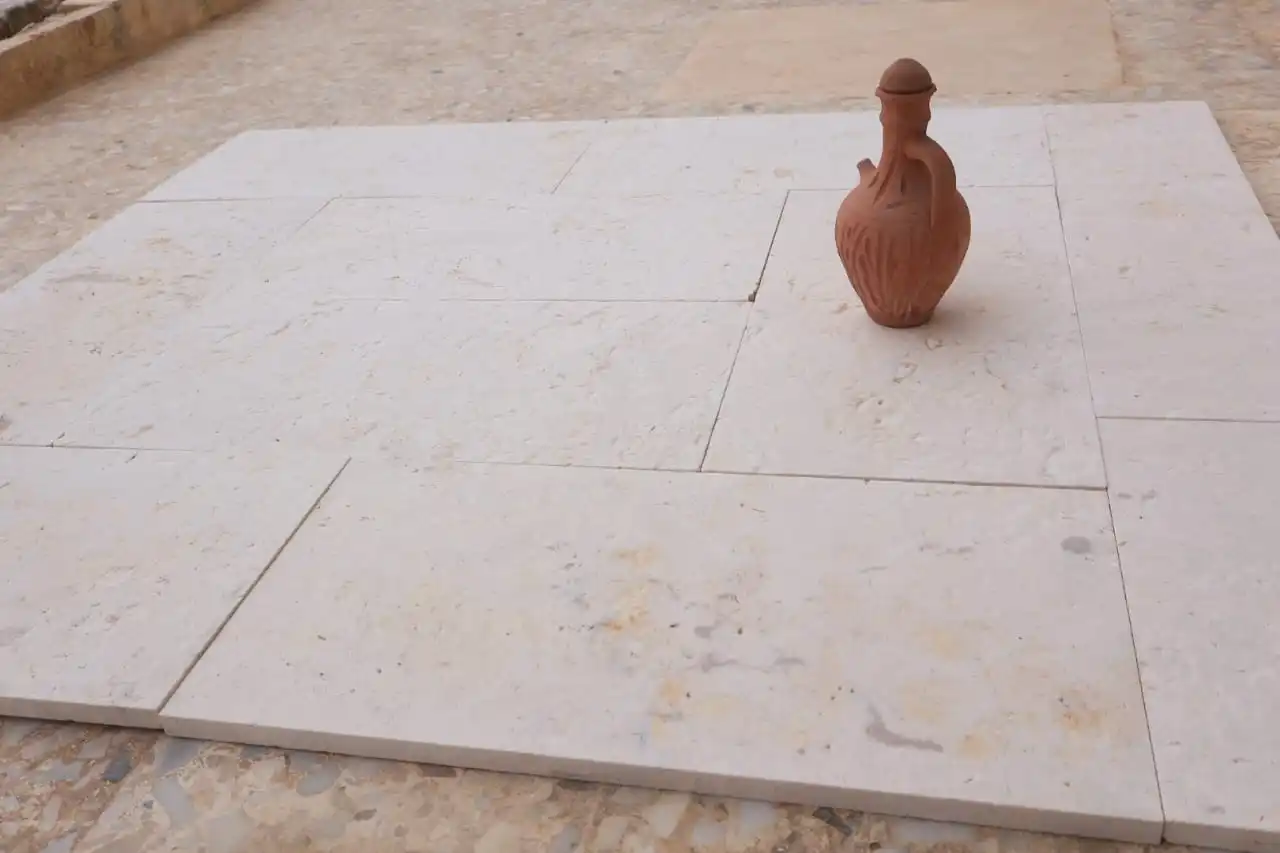
Resealing Schedule and Performance Indicators
The water bead test mentioned above is your most useful diagnostic tool, but there are additional performance signals worth monitoring between formal resealing cycles. These are particularly relevant for white limestone because its pale colour makes staining and sealer degradation more visually obvious than it would be on darker stone.
- Surface darkening or wet-look patches that don’t dry out evenly indicate areas where sealer has broken down and moisture is penetrating — these sections need priority treatment at the next resealing
- Efflorescence reappearing as white powdery deposits indicates moisture is moving through the base and up through the stone — address the drainage source before resealing, or you’ll be stripping and resealing again within six months
- Joint sand washout on sealed surfaces suggests the sealer may have migrated into joints during application and created a hydrophobic barrier that prevents joint sand from bonding to paver edges — flush joints with clean water and repack sand before resealing
- Yellowing of previously sealed white limestone is almost always a sign that a film-forming sealer was used, or that solvent-based impregnator was over-applied — neither is fixable without a full strip and restart
Resealing is significantly easier and faster than the original application because the stone is already protected at depth. The outer zone of penetration is being refreshed, not built from scratch. A single light application coat, applied with the same care as the original, is usually sufficient for maintenance resealing on a surface that hasn’t been neglected past the point of visible staining.
Ordering, Stock, and Project Planning
Your sealing timeline should be factored into your project schedule from the outset, not treated as an afterthought after installation is complete. The 28-day curing window before sealing means your overall project completion date is at least a month beyond the last paver being set. Staged installations — common on sloped or terraced sites where one level is completed before the next is graded — may require managing multiple sealing windows simultaneously.
Sealer coverage rates vary significantly by product and surface porosity. Manufacturer coverage estimates are generally based on moderate-porosity honed stone — tumbled white limestone can consume 20–30% more product per square foot than those estimates suggest. Order conservatively high, because running short mid-application and needing to wait for a second delivery introduces a visible line between application sessions that won’t fully blend even after the sealer cures. Citadel Stone carries warehouse stock on white limestone pavers nationally, which means your material delivery schedule can often be confirmed within a week rather than waiting on extended import lead times — but plan your sealer quantities independently and order that through your sealer supplier before material arrives on site.
Common Sealing Mistakes to Avoid
Troubleshooting sealed installations — particularly white limestone, which shows problems clearly — reveals the same failure patterns repeating across different projects. Most are avoidable with preparation and patience.
- Sealing too soon after installation — mortar moisture and efflorescence trapped under sealer create persistent haze and staining that requires full strip-and-reseal to correct
- Applying in direct midday sun — surface temperatures above 90°F cause solvent-based sealers to flash before they penetrate, leaving a patchy surface film instead of an impregnated matrix
- Over-applying product — more sealer is not better, it’s worse; excess product that doesn’t absorb dries as a residue that becomes slippery and difficult to remove
- Skipping the excess-removal step — wiping residual product at the correct window is non-negotiable; leaving it results in a hazy film that becomes more difficult to remove the longer it sits
- Using the wrong applicator — foam rollers and standard paint brushes apply unevenly and leave texture marks; use a lambswool pad or a low-pressure sprayer with an even fan pattern
- Neglecting to seal joints — open joints allow moisture and contaminants to penetrate the base from below; re-sanding and joint consolidation before sealing is part of the process
The one mistake that causes the most long-term damage is applying a film-forming topcoat over an impregnating sealer that’s already in the stone. The combination creates a vapour trap that causes spalling, delamination, and surface flaking — particularly on outdoor white limestone pavers where thermal cycling stresses the surface repeatedly. Always identify and use only one sealer type per application cycle, and if you’re resealing over an existing product, confirm compatibility or strip completely before proceeding.
Final Recommendations
Getting how to seal white limestone pavers right comes down to preparation, product matching, and patience — not technique. The application itself is straightforward once the surface is clean and dry, the right sealer is selected for your finish type, and you’re working in conditions that allow the product to penetrate rather than evaporate. Your biggest gains come from not rushing the curing window after installation, testing a small section before committing to the full surface, and building a 2–3 year resealing cycle into your maintenance plan from day one.
Terrain and site conditions are worth factoring into your sealing approach as a practical consideration — sloped installations need smaller working sections and directional application, elevated sites with wind exposure need faster hands and shorter curing windows. These aren’t obstacles, they’re variables you adjust for. For related guidance on installation quality that affects long-term sealing performance, it’s worth reviewing common stone paver installation errors before your next project begins — base failures and joint issues undermine even a perfect seal. Citadel Stone recommends consulting finish specifications before selecting a sealer, as honed and tumbled surfaces absorb product at different rates.
Related reading: more on polished white limestone uses and drawbacks · more on white limestone paver installation steps · more on white stone pavers for pool decks.