

Why Thermal Cycling Drives Tumbled Stone Paver Cost in Arizona
Tumbled stone paver cost in Arizona isn’t just a materials number — it’s an engineering calculation that starts with the desert’s temperature swing, not its peak heat. The Phoenix metro regularly sees a 40–55°F differential between pre-dawn lows and mid-afternoon highs on a single summer day, and that daily cycling generates cumulative micro-stress at every joint interface, mortar bed, and stone face. You’ll pay a premium for material graded to survive that stress, and understanding where that premium lives in the price stack helps you build a budget that doesn’t collapse two years after installation.
The thermal expansion coefficient for natural limestone and travertine — the two most common tumbled paver stones in the Southwest — runs between 4.4 × 10⁻⁶ and 5.8 × 10⁻⁶ per °F. Multiply that by a 50°F daily range over 10,000 square inches of paving, and you’re looking at measurable cumulative displacement. Material pricing reflects whether a stone was quarried and finished to tolerate that movement or simply rated for a temperate European climate and shipped here anyway.
Material Cost Ranges: What You’re Actually Comparing
The natural stone paving budget in Arizona for tumbled pavers spans a wider range than most homeowners expect — roughly $3.50 to $14.00 per square foot for material alone, before any installation labor touches your project. That gap isn’t arbitrary. It reflects three genuine performance differences: density, finish consistency, and thermal rating.
- Entry-level tumbled limestone: $3.50–$5.50 per sq ft, typically 1.25-inch nominal thickness, adequate for foot traffic patios in Phoenix suburbs
- Mid-grade tumbled travertine: $6.00–$9.00 per sq ft, 1.5-inch thickness, better density and more consistent void fill for Arizona desert-rated stone paving
- Premium tumbled basalt: $9.50–$14.00 per sq ft, higher mass, tighter thermal expansion tolerance, recommended for vehicular or high-thermal-stress applications
- Reclaimed tumbled cobble: $7.00–$11.00 per sq ft depending on source and consistency, variable thickness requires additional setting bed adjustment
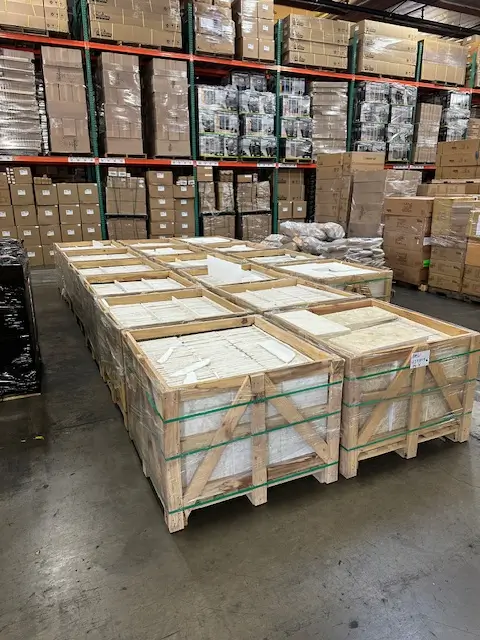
Those price brackets assume standard pallet quantities from warehouse stock. Specialty sizes, custom blends, or small-lot orders carry a 15–25% unit premium because the handling cost per piece rises steeply below full-pallet thresholds. Your project’s square footage directly affects which price bracket applies.
Freeze-Thaw Ratings and Their Direct Price Impact
Here’s what most specifiers miss when comparing tumbled paver pricing across Arizona: the freeze-thaw rating of a stone is not an academic detail — it determines whether you’re buying a 15-year product or a 25-year product, and that difference shows up in the unit cost.
Arizona’s low desert doesn’t freeze often, but even Peoria records sub-32°F nights multiple times per winter. Those brief freezing events combined with daytime temperatures climbing back into the 70s create exactly the micro-crack propagation pattern that voids manufacturer warranties on improperly rated stone. The ASTM C1353 and C880 test standards for absorption and flexural strength under thermal cycling exist precisely because of this failure mode.
- ASTM C1353-compliant stone costs $0.75–$1.50 more per square foot than non-rated equivalents
- Absorption rates below 3% dramatically reduce freeze-thaw spalling risk — this is the spec line worth paying for
- Stone with absorption above 6% should be considered only for covered patios or interior applications in Arizona climates
- Certification documentation from the quarry adds lead time but protects your warranty position
The cost difference between rated and unrated material is real, but the replacement cost of a failed installation — demo, disposal, new material, new labor — typically runs 2.5–3x the original project cost. Rated material is the cheaper option across any honest lifecycle calculation.
Installation Labor Costs and Why Arizona Pricing Differs
Labor for tumbled stone installation in Tempe and the broader metro area runs $8.00–$18.00 per square foot depending on application complexity, base system, and joint type. That range sounds wide, but the drivers are predictable once you understand what thermal cycling does to the installation process itself.
Arizona installers who understand the thermal environment set expansion joints every 12–15 feet rather than the 18–20 feet listed in temperate climate specifications. Tighter joint spacing adds roughly $1.20–$1.80 per square foot to the labor estimate but prevents the buckling and cracking that happens when cumulative thermal movement has nowhere to go. You’re not paying more for slower work — you’re paying for code-appropriate joint engineering that the tumbled stone paver cost in Arizona demands.
- Sand-set tumbled paver labor: $8.00–$11.00 per sq ft — allows thermal movement naturally but requires level base and periodic sand replenishment
- Mortar-set on concrete slab: $12.00–$16.00 per sq ft — rigid system demands proper expansion joint placement or cracking is likely within 3–5 years
- Pedestal-set elevated deck: $14.00–$18.00 per sq ft — premium cost but best thermal movement accommodation for rooftop or raised deck applications
- Pattern complexity (herringbone vs. running bond): adds $1.50–$2.50 per sq ft to any labor figure above
Base Preparation: The Hidden Line Item That Changes Everything
The cost of stone pavers AZ homeowners compare most often focuses on surface material. The base preparation budget is where projects either hold together or fall apart, and it’s consistently underestimated in Arizona because the native soil conditions create a variable that doesn’t exist in other regions.
Caliche — the calcium carbonate hardpan layer common across the Phoenix basin — sits anywhere from 8 inches to 36 inches below grade. Your base cost is entirely different depending on whether you’re excavating through caliche or benefiting from it. A project in a verified caliche zone might reduce aggregate base depth requirements by 30–40%, directly lowering material and labor costs. Conversely, encountering soft fill or expansive clay extends excavation and base depth, adding $2.00–$4.50 per square foot to your project before a single paver is laid.
- Standard desert compacted aggregate base (4-inch depth): $2.50–$3.50 per sq ft installed
- Deep excavation through caliche with disposal: $4.00–$7.00 per sq ft depending on equipment access
- Geotextile separation fabric (recommended for expansive soil zones): $0.35–$0.60 per sq ft
- Compaction testing (per lift): $150–$300 per test — often required on commercial work, wise on residential
Truck access to the site matters here too. Dump trucks removing excavated caliche need adequate turning radius and load-bearing surface access. Projects with tight truck access run higher per-unit excavation costs because smaller equipment with lower daily productivity replaces standard fleet machinery. A second truck mobilization to handle overflow material can add $350–$600 to project costs on constrained lots.
Joint Sand, Polymeric Fill, and Sealing Costs
Tumbled paver pricing across Arizona regularly omits joint sand and sealer from the initial quote — and that omission can represent $1.50–$3.50 per square foot of unbudgeted cost. The thermal cycling environment in Arizona makes both line items more critical here than in virtually any other region.
Polymeric sand outperforms standard bedding sand in high-thermal-swing environments because the polymer binders resist the micro-movement that erodes plain sand joints over successive daily cycles. The premium over basic joint sand runs about $0.40–$0.65 per square foot installed, but it meaningfully reduces annual maintenance costs. For tumbled stone specifically, where irregular edges create variable joint widths, the polymer binder maintains cohesion in joints wider than 3/8 inch where standard sand would wash out.
- Standard joint sand installation: $0.30–$0.50 per sq ft
- Polymeric joint sand: $0.70–$1.15 per sq ft — recommended for all Arizona outdoor tumbled paver applications
- Penetrating sealer (solvent-based, high-UV resistance): $0.80–$1.40 per sq ft first application
- Topical sealer (enhancing finish): $1.00–$1.80 per sq ft, requires reapplication every 2–3 years in Arizona UV conditions
- Long-term sealing budget: plan for resealing every 24–36 months under full Arizona sun exposure
Total Project Budget Ranges for Arizona Installations
Pulling all cost components together, your total installed tumbled stone paver cost in Arizona — material, base, labor, joints, and initial sealing — lands in these realistic ranges based on application type and material grade.
For a standard 400-square-foot patio using mid-grade tumbled travertine with sand-set installation and polymeric joints, expect $22–$32 per square foot all-in. That translates to $8,800–$12,800 total for a project of that scale. Upgrading to mortar-set on an existing slab with premium basalt pushes that figure to $32–$44 per square foot, or $12,800–$17,600 for the same area.
- Entry-level patio (sand-set limestone, standard base): $16–$22 per sq ft all-in
- Mid-grade patio (sand-set travertine, polymeric sand, penetrating sealer): $22–$32 per sq ft all-in
- High-performance installation (mortar-set basalt, concrete base, topical sealer): $34–$48 per sq ft all-in
- Pool deck application (slip-resistant rated, full drain integration): add $4–$8 per sq ft to base estimate
- Driveway application (vehicular-rated thickness, reinforced base): $38–$55 per sq ft all-in
At Citadel Stone, we recommend building a 10–12% contingency into any Arizona natural stone paving budget. Soil variability, weather windows during extreme heat, and material freight adjustments are all real variables that flatten out nicely with a contingency reserve built into the initial project number. For Arizona tumbled stone pavers Citadel Stone projects, that warehouse-to-site logistics factor is something our team accounts for from the first square footage estimate.
Where to Reduce Cost Without Sacrificing Performance
The tumbled stone paver cost in Arizona doesn’t have to hit the upper range of every bracket to deliver durable, attractive results. Three legitimate cost reduction strategies exist that don’t compromise the thermal performance requirements your installation depends on.
First, material sizing. Larger format pavers — 12×24 or 16×16 versus 4×8 — reduce the total piece count and cut labor hours meaningfully. The tradeoff is that larger pieces amplify individual cracking risk if the base isn’t perfectly consistent, so this strategy works best on sites with confirmed uniform subgrade. Second, limiting pattern complexity. Running bond or stack bond installations cost $1.50–$2.50 less per square foot in labor versus herringbone or diagonal patterns on the same material. Third, phasing the sealing. Initial penetrating sealer is non-negotiable, but if budget is tight, deferring the topical enhancing coat to year two is a defensible choice for covered or partially shaded areas.
- Choose larger format pavers to reduce labor hours on straightforward rectangular areas
- Use running bond pattern to minimize cut waste and reduce installer time
- Phase topical sealer to year two on shaded areas without sacrificing structural protection
- Source from warehouse stock rather than custom orders — lead times drop from weeks to days and small-lot premiums disappear
- Consolidate truck deliveries — splitting a project into multiple small deliveries adds $150–$350 per delivery in fuel and handling costs
Material Sourcing, Lead Times, and How They Affect Your Budget
Sourcing decisions affect tumbled paver pricing across Arizona in ways that don’t always show up in the initial material quote. Import stone cycling through distribution warehouses outside Arizona carries a 6–10 week lead time under normal freight conditions — and that lead time creates real cost exposure when project schedules compress or subcontractor windows close unexpectedly.
Projects in Phoenix and the broader metro area benefit when material is already staged in regional warehouse inventory, because that 6–8 week import cycle collapses to 1–2 weeks. That speed difference isn’t just logistical — it reduces the risk of price escalation between quote and delivery, which has been a real variable in natural stone markets over the past several years. Verifying warehouse stock levels before finalizing your project budget is worth the five-minute conversation.
Direct quarry sourcing relationships also change the cost structure at the material tier. When a supplier sources stone directly rather than through multiple distribution layers, the per-unit cost reflects fewer handling markups. That’s the difference between a $6.50 per square foot travertine quote and an $8.00 quote for the same material origin and specification — not stone quality, just supply chain length. This dynamic directly shapes the Arizona desert-rated stone paving expenses homeowners encounter when comparing bids from suppliers with different procurement models.
What Matters Most for Your Arizona Tumbled Stone Paver Budget
Tumbled stone paver cost in Arizona ultimately comes down to how honestly your budget accounts for the thermal cycling environment. Materials priced for temperate climates, base depths specified for forgiving soil, and joint systems designed for stable temperatures all underperform here — and the correction cost after failure dwarfs the upfront savings. You’ll make better decisions by pricing for Arizona conditions from the start rather than retrofitting specifications after the first winter-summer cycle reveals the gaps.
The cost components that separate long-performing installations from short ones are mostly in the $0.50–$2.00 per square foot range: rated material over unrated, polymeric sand over standard, proper joint spacing over generic guidelines. Those incremental investments are far smaller than the replacement and repair costs they prevent over a 20-year installation horizon. As you finalize your natural stone paving budget in Arizona, those line items deserve priority over superficial upgrades like premium finish options or decorative border kits. For complementary ideas on completing your Arizona hardscape project, 7 Walkway Border Design Ideas for Arizona Spaces offers practical design guidance that pairs well with a well-specified tumbled paver surface. Homeowners in Phoenix, Mesa, and Tucson working with Citadel Stone on tumbled stone paver projects benefit from direct quarry sourcing that removes middleman markups from the final material cost.