
Terrain is the variable most walkway border design ideas for Arizona skip entirely — and it’s the one that determines whether your border holds its line after the first monsoon season or ends up heaved, shifted, and buried in sediment. Arizona’s landscape shifts dramatically between flat Sonoran basin floors and canyon-edge residential lots where grades can run 8–12%, and the border detail that works perfectly on a level Chandler subdivision lot will fail within two seasons on a sloped Peoria hillside if you don’t account for drainage geometry and differential settlement. Getting the design right means starting with your grade conditions, not your stone catalog.
Why Terrain Drives Your Border Design Choices
Arizona isn’t one landscape — it’s a stacked series of elevation bands, each with distinct drainage behavior, soil composition, and frost exposure. You’re dealing with expansive desert clay in lower basin areas, caliche hardpan at varying depths, decomposed granite slopes in foothills zones, and the occasional frost-heave scenario once you push above 4,000 feet. Each of these terrain types imposes a different set of constraints on how your walkway border sits, drains, and ages.
The practical takeaway is this: before you choose a stone profile or a layout pattern, evaluate your cross-slope direction, your natural water shed path, and your base depth options. A border placed perpendicular to slope without a drainage break will act as a dam — and Arizona monsoon runoff doesn’t forgive that mistake. Your design decisions flow from grade management first, aesthetics second.
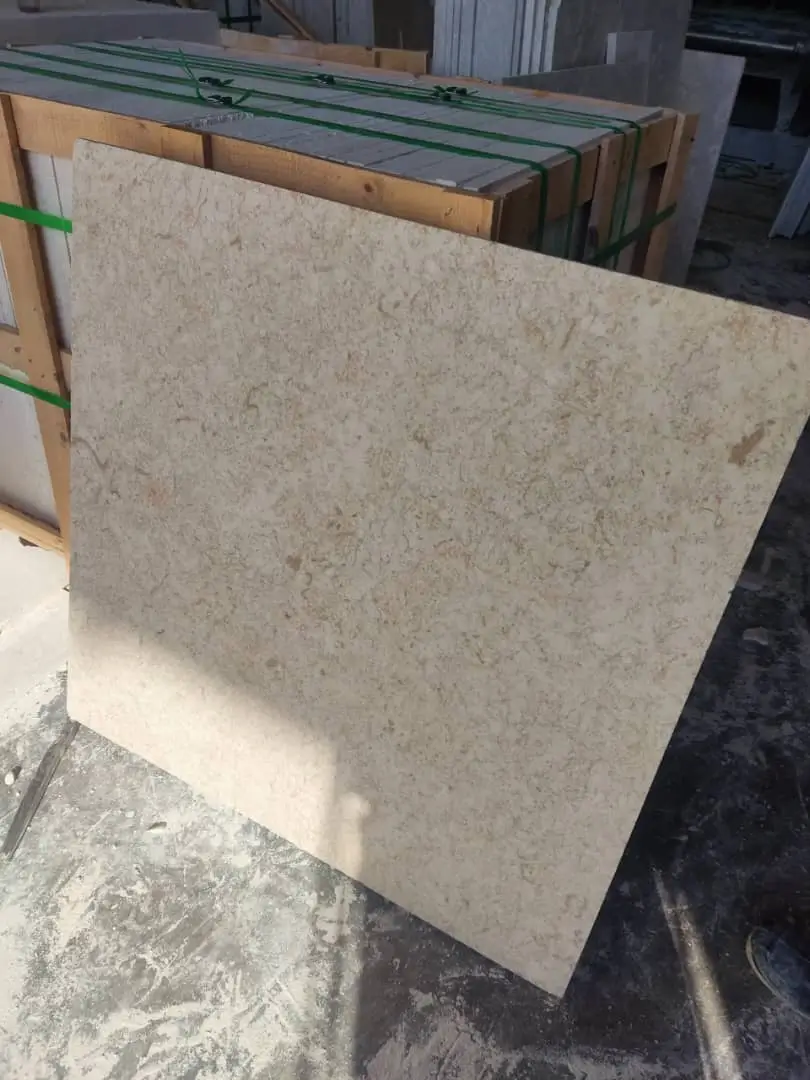
7 Walkway Border Design Ideas for Arizona Terrain
Idea 1: Single-Course Upright Stone Edging on Grade Transitions
For lots with modest grade changes — say 2–4% cross-slope — a single course of upright-set natural stone pavers gives you clean definition without interrupting sheet drainage. You set the stones on edge, 3–4 inches proud of the walkway surface, and they act as a visual channel guide rather than a dam. The key installation detail is keeping a 1/4-inch open joint between every third stone so water passes through at grade rather than pooling behind the border.
This approach works especially well with flagstone-profile material in 1.5–2-inch thickness. Thinner profiles crack under lateral soil pressure on sloped sites; thicker profiles create too much dam effect. That middle range hits the structural sweet spot for most residential terrain conditions in Arizona’s lower-elevation zones.
Idea 2: Staggered Two-Course Offset Borders for Moderate Slopes
On grades running 5–8%, a single-course border starts to lose the visual battle against erosion — the plane of the border looks fine at installation but reads as tilted and inconsistent within a year as the uphill soil face migrates. The staggered two-course offset pattern solves this by stepping the border down the slope in small increments, keeping each pair of stones level within their own module even as the overall border follows the grade.
- Set courses in 18–24 inch horizontal modules, dropping 1 inch per module on a 5% grade
- Use a compacted decomposed granite bed, minimum 4 inches, beneath each course pair
- Overlap the joints between courses by at least 4 inches to prevent lateral displacement
- Leave weep openings at the low corner of each module — this is the detail most installations miss
Natural stone boundary accents in this pattern photograph beautifully on hillside lots, and the stepped geometry actually reinforces the Southwestern architectural language common across Peoria‘s newer desert-modern neighborhoods.
Idea 3: Dry-Set Boulders as Organic Border Anchors
For steeply graded sites where engineered precision gives way to naturalistic terrain management, dry-set boulder edging is the most resilient creative walkway border layout you can specify in Arizona. You’re not fighting the grade — you’re working with it. Large fieldstone or quarried basalt pieces, set with 30–40% of their mass below grade, create anchored reference points that define the walkway edge while allowing water to route naturally around and between them.
The practical sizing threshold for this technique is 200–400 lb per stone. Below that weight, monsoon hydraulics will shift them. Above 400 lbs, you need equipment access for placement, which changes your logistics. Verify truck access routes early — sites with narrow gate clearances or steep approach grades may limit delivery vehicle options, and repositioning a 350-lb boulder by hand isn’t something your crew should discover on installation day.
Idea 4: Banded Contrast Borders on Flat Desert Floors
Not every Arizona project is fighting elevation. In the flat basin communities, your terrain challenge shifts from grade management to heat reflection and surface drainage across minimal slope. Here, decorative stone edging for garden borders in Arizona becomes primarily an aesthetic and thermal exercise. Banding two contrasting stone tones — a light limestone field edged with darker basalt banding — creates the visual definition that flat terrain denies you through topography.
Flat sites in basin-floor zones like Chandler often have caliche hardpan at 12–18 inches, which actually simplifies base preparation — once you break through and re-compact, you have a stable substrate that doesn’t shift seasonally. The banded border can sit on a 3-inch compacted base rather than the 5–6 inches you’d need on sandy or loamy profiles. That base depth difference is worth knowing before you quote a project.
Idea 5: Continuous Soldier Course with Drainage Relief Points
The soldier course — stones set end-to-end with their long axis perpendicular to the walkway — is one of the most classic Arizona desert garden stone border patterns, and it works particularly well when you engineer the drainage relief points deliberately rather than assuming the joints will handle it. On any site with more than 1% cross-grade, plan a relief point every 8–10 linear feet where the soldier course steps back 2 inches and allows a defined drainage channel to pass beneath.
- Use a minimum 2.25-inch nominal thickness for soldier course stones — thinner profiles chip at the exposed edge corners within a season
- Mortar the soldiers on flat sites; dry-set on grades above 3% to allow differential movement
- Relief channels should be filled with clean crushed stone, not soil — soil plugs within 6 months
- Match the soldier course height to your walkway surface ± 1/4 inch to prevent trip hazard and water retention
Idea 6: Terraced Planter Borders on Hillside Lots
Hillside lots in Arizona’s foothill communities present the most complex walkway border challenge — you’re simultaneously managing grade, plant root pressure, and the visual expectation that comes with premium view-lot real estate. Terraced planter borders use the walkway edge as a retaining element, stepping the grade down in 4–8-inch increments across the walkway’s full length. The border isn’t just decorative; it’s doing real structural work.
For this reason, terraced borders need to be spec’d like low retaining walls, not like decorative edging. You want 4-inch minimum stone thickness, a compacted aggregate base of at least 6 inches, and a geotextile fabric barrier between the retained soil and the stone to prevent migration. In the foothills around Tempe and extending into the Phoenix Mountain Preserve adjacent neighborhoods, expansive soil conditions add another layer of complexity — the retained face needs to breathe, which means you need weep holes every 4 linear feet minimum. Skipping those weep holes creates hydrostatic pressure that will displace even well-anchored border stones.
For project planning on terraced hillside borders, check our Arizona garden border stone options to see which thicknesses and profiles are held in warehouse stock for quick-turn projects.
Idea 7: Decomposed Granite Frame Borders with Stone Accent Courses
Arizona’s most site-adaptive walkway border design idea is also the most misused. Decomposed granite frame borders — where a wide DG band flanks the walkway and stone accent courses provide the hard edge definition — handle virtually any terrain condition because the DG component compresses and self-levels with grade changes. The stone accent courses ride on top of that flexible base and stay visually clean without the heave risk of fully mortared systems.
- DG base layer should be 3–4 inches compacted depth, stabilized with a polymer binder at 15-foot intervals on sloped sites
- Stone accent courses in this system work best in 1.5-inch split-face profiles — the texture grips the DG surface and resists lateral creep
- Allow a 1/8-inch per foot pitch in the DG toward the low side of the walkway to encourage drainage away from the path surface
- Monsoon runoff will erode unstabilized DG — the polymer binder step is not optional on sites with any appreciable grade
Matching Your Material to Your Terrain Profile
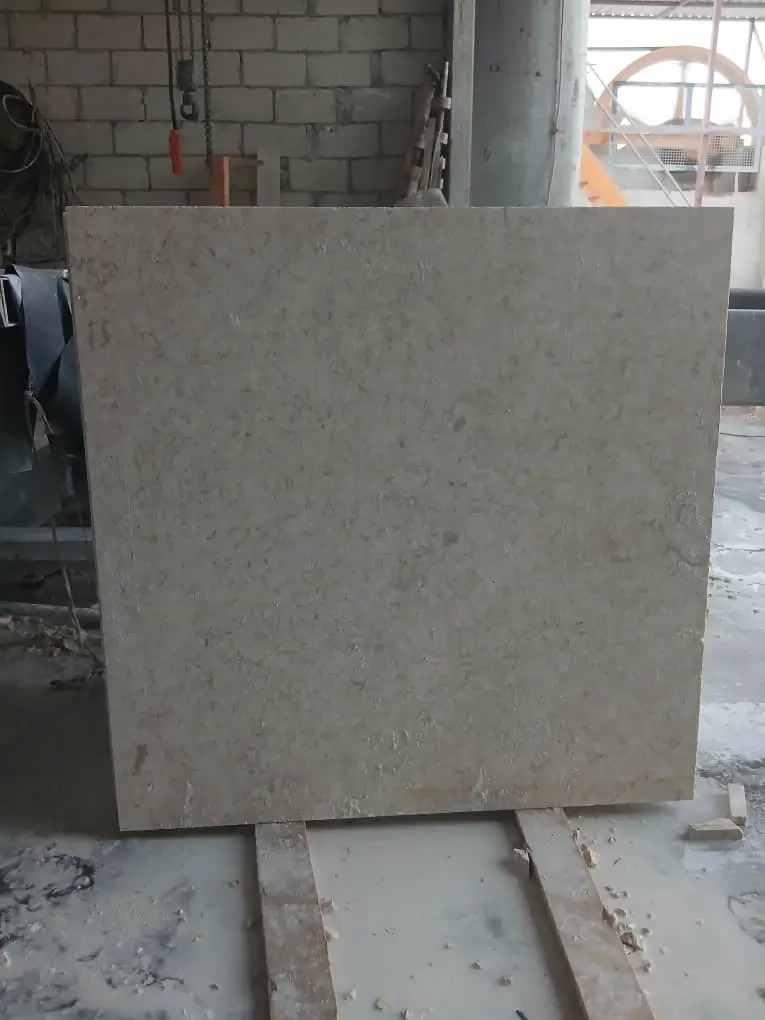
The design idea you choose narrows your material options considerably. For flat basin sites, you have the widest latitude — limestone, travertine, sandstone, and basalt all perform well when drainage is engineered properly. For sloped and hillside applications, your material needs to prioritize compressive strength and freeze-thaw resilience if you’re above 3,500 feet. Below that elevation, freeze-thaw isn’t a primary concern, but thermal expansion still matters — a walkway border in Arizona will cycle through 60°F+ temperature swings between winter nights and summer afternoons, and mortared joints need to be designed with that range in mind.
Split-face and cleft-finish profiles offer a practical advantage on sloped sites beyond aesthetics — the rougher surface provides better interlock with the aggregate base, and the textured face retains its visual definition even after repeated monsoon runoff exposure. Honed or polished finishes look exceptional at installation but show erosion marking and surface micro-pitting within 2–3 seasons on any site with active water movement. That trade-off is worth discussing with your client before the stone is ordered, not after it’s on the truck headed to the job site.
Base Preparation Requirements by Terrain Type
Your base preparation specification should be driven by your terrain classification, not by a generic regional default. Arizona’s soil variability means a one-size approach routinely fails — the same 4-inch base that performs perfectly in a caliche-underlain basin lot will settle unevenly in a sandy wash-adjacent profile within one monsoon season.
- Flat basin with caliche underlayment: 3–4 inches compacted Class II aggregate, no geotextile required if caliche is confirmed intact
- Flat basin with sandy or fill soil: 5–6 inches compacted aggregate plus a non-woven geotextile separator at the subgrade interface
- Sloped site 3–8% grade: 5–6 inches compacted aggregate, geotextile at subgrade, step-down weep points every 8 feet
- Hillside terraced site above 8% grade: Treat as retaining wall — 6-inch minimum base, drainage aggregate behind retained face, engineer review recommended above 18-inch retained height
- High-elevation sites above 4,500 feet: Add 1 inch base depth for frost-heave buffer, use flexible joint filler rather than rigid mortar
At Citadel Stone, we consistently find that projects where the base specification was driven by terrain conditions rather than budget compression are the installations that come back for second-phase work — expansions and additions — rather than callbacks and repairs. The base investment difference is typically $2–4 per linear foot, and it’s almost always worth it.
Ordering and Logistics Planning for Arizona Border Projects
Creative walkway border layouts across Arizona vary widely in material volume, but most residential projects in the 50–150 linear foot range consume 1–2 pallets of border stone. Warehouse lead times for natural stone border material typically run 1–2 weeks when standard profiles are in stock — the challenge comes when you’re working with custom dimensions or specialty finishes, where lead times can stretch to 4–6 weeks. Building that buffer into your project schedule is something to communicate with your client at scope sign-off, not mid-project.
Delivery logistics on sloped or hillside sites deserve specific attention. Truck access to upper-elevation residential lots is often constrained by road grade, clearance width, or HOA regulations that limit delivery vehicle hours. Confirming those access parameters before material is loaded saves rescheduling costs and protects your client relationship. Citadel Stone’s delivery team can advise on vehicle sizing options for sites with non-standard access — it’s a routine part of our project logistics conversations for complex terrain sites.
Specifying Walkway Border Design Ideas for Arizona With Confidence
Every strong walkway border installation in Arizona traces back to two decisions made before any stone is ordered: terrain classification and drainage path mapping. Your design idea — however visually compelling — will underperform if those two inputs aren’t resolved first. The seven approaches above cover the full range of Arizona terrain conditions you’re likely to encounter, from flat basin floors to active hillside grades, and each has a base preparation and stone profile strategy that matches the site demands.
As you finalize your specification, it’s also worth reviewing the broader cost picture for natural stone walkway projects — Natural Stone vs Concrete Walkway Cost in Arizona provides a useful reference point for client budget conversations and material trade-off decisions when selecting natural stone boundary accents for AZ landscape projects. Landscapers in Scottsdale, Chandler, and Flagstaff regularly specify Citadel Stone walkway border stones in split-face finishes because the textured profile holds its visual definition even after repeated exposure to Arizona monsoon runoff.