

Code compliance — not aesthetics, not climate — is where every serious travertine limestone tile comparison Arizona contractors run into trouble. The 2021 International Building Code as adopted by Arizona sets minimum tile thickness requirements, substrate deflection limits, and mortar bed standards that differ meaningfully between travertine and porcelain, and getting that specification wrong creates liability that no amount of beautiful flooring can offset. Understanding what those code requirements actually demand from your material choice is the first discipline any professional spec writer needs to lock down before comparing thermal performance or surface texture.
Arizona Building Code Requirements for Floor Tile
Arizona municipalities enforce the IBC and IRC through local amendments, and the structural performance requirements hit travertine and porcelain very differently. The IBC Section 1405 and ANSI A108 series set the baseline for tile installation in occupied structures — substrate deflection must not exceed L/360 under live load, which directly affects how you detail your subfloor before either material goes down. Travertine limestone tile in 3/4-inch thickness performs well against this standard when bonded with a full-coverage polymer-modified mortar, but porcelain’s higher modulus of rupture means thinner formats (3/8-inch) can meet the same deflection threshold on lighter framing.
For residential projects in Mesa, local plan reviewers increasingly scrutinize tile specification submittals for compliance with TCNA Handbook Method F113 when slabs-on-grade are involved — a detail that catches a lot of remodelers off guard. The key issue is that Arizona’s expansive clay soils, common in the Maricopa County basin, require isolation membranes beneath both tile types, but travertine’s lower tensile strength makes that isolation layer non-negotiable rather than just recommended.
Load-Bearing Capacity and Thickness Specifications
The structural comparison between travertine and porcelain starts with ASTM C1528 — the standard classification for dimension stone used in flooring — versus ANSI A137.1, which governs ceramic and porcelain tile. These aren’t interchangeable frameworks, and the distinction matters when you’re writing a specification for a Sedona resort lobby versus a Mesa tract home addition.
- Travertine limestone tile in Arizona typically specs at 3/4-inch (18mm) minimum for residential interior floors, and 1-inch (24mm) for commercial applications with rolling loads
- Porcelain tile achieves equivalent load performance at 3/8-inch to 1/2-inch due to its near-zero porosity and vitrified body construction
- Point load resistance for travertine under concentrated furniture loads requires full-coverage mortar — no back-buttering shortcuts — to prevent fracture at the voids inherent in travertine’s natural structure
- ASTM C170 compressive strength for travertine averages 8,000–12,000 PSI depending on fill treatment; porcelain typically tests above 20,000 PSI
- Travertine’s lower compressive strength doesn’t disqualify it from heavy-use applications, but it does require you to specify a thicker mortar bed and more aggressive joint spacing
Cross-reference these requirements with your structural engineer’s deflection calculations before finalizing any specification. The material’s own strength is only half the equation — the substrate system beneath it determines whether either tile type survives Arizona’s seasonal ground movement.
Seismic Considerations and Thermal Expansion Joint Design
Arizona sits within USGS Seismic Zone 2A for most of the Phoenix metro and Zone 2B for areas near the Mogollon Rim. That classification means your tile installation must account for inter-story drift, and the expansion joint schedule you spec becomes a structural document as much as an aesthetic one. The TCNA EJ171 detail is the controlling reference, and it requires movement joints at all changes of plane, at columns, at perimeter walls, and at maximum 20–25 foot intervals across large field installations.
Here’s where the travertine versus porcelain decision gets technically interesting. Travertine’s coefficient of thermal expansion runs approximately 4.4 × 10⁻⁶ per °F, while porcelain falls in the 3.5–4.0 × 10⁻⁶ range. In a Yuma installation where slab surface temperatures can swing 70°F between winter night and summer afternoon, that difference translates to meaningful differential movement across a 20-foot run. Your expansion joint spacing for travertine needs to be tighter — 15–18 feet in sun-exposed applications — compared to the standard 20-foot schedule that works acceptably for porcelain.
- Seismic clips or uncoupling membranes such as DITRA add resilience for both tile types in Zone 2A/2B applications
- Perimeter isolation joints must be sized at 3/8-inch minimum and filled with a Shore A 40–60 sealant, not grout
- Travertine’s filled-and-honed surface can mask hairline cracking at joints — inspect travertine installations annually in seismically active zones
- For Yuma rooftop and elevated deck applications, both materials require crack-isolation membranes meeting ANSI A118.12
Natural Stone Tile Performance in Arizona Desert Homes
Thermal mass behavior separates travertine limestone from porcelain in ways that code documents don’t fully capture — but that every Arizona homeowner living in the space will feel immediately. Travertine’s natural thermal mass absorbs radiant heat from Arizona’s intense solar gain and releases it slowly, moderating indoor temperature swings in passive-solar-designed homes. Porcelain, with its denser vitrified body, heats up faster and releases that heat more quickly — a characteristic that can feel uncomfortable underfoot in afternoon peak-heat hours if your glazing schedule isn’t carefully managed.
For projects comparing natural stone tile performance in Arizona desert homes, the practical distinction matters most in rooms with significant south or west glazing exposure. Travertine’s surface temperature typically measures 8–12°F lower than adjacent porcelain under identical solar exposure conditions in mid-afternoon, a difference most occupants notice within weeks of moving in. That said, travertine’s open pore structure does absorb moisture and surface contaminants more aggressively than vitrified porcelain — a trade-off you’ll want to address with penetrating sealer on a consistent reapplication schedule.
At Citadel Stone, we’ve tested travertine limestone tiles from multiple quarry sources and found that fill quality varies considerably — air-cured epoxy fill performs significantly better than cement fill in Arizona’s low-humidity environment, where cement-filled voids can shrink and create micro-cracks over two to three seasons.
Slip Resistance Standards and Surface Finish Requirements
The ADA Standards for Accessible Design require a DCOF (Dynamic Coefficient of Friction) of 0.42 or greater on wet horizontal walking surfaces — measured per ANSI A326.3. This is where finish selection becomes a code compliance issue, not just an aesthetic preference. Both travertine and porcelain can meet or fail this standard depending on finish specification, and understanding which finishes comply in Arizona’s specific use cases is essential to a defensible spec.
- Travertine in tumbled or brushed finish typically achieves DCOF 0.50–0.65 — comfortably compliant for most residential and light commercial applications
- Honed travertine, particularly in a filled-and-sealed condition, can drop to DCOF 0.38–0.44 when wet — requiring anti-slip treatment or a finish upgrade for ADA-covered spaces
- Polished travertine reads below 0.40 wet DCOF and should be spec’d only in dry interior zones with no ADA compliance obligation
- Porcelain with pressed-in texture achieves DCOF 0.55–0.75 consistently across finishes — a structural advantage in pool surrounds or commercial entry zones
- Heat-resistant floor tiles across Arizona that see outdoor exposure should be tested for DCOF annually, as UV degradation of sealer on travertine surfaces affects slip performance measurably over time
Your finish specification needs to live alongside the DCOF data sheet in your project submittal package. Arizona plan reviewers are increasingly requesting DCOF certifications for tile specifications on commercial jobs, and residential projects with accessible bathroom requirements have the same exposure.
Base Preparation and Arizona Soil Conditions
Soil conditions in Arizona vary dramatically by geography, and your base preparation specification for either tile type must address the specific soil classification at the project site. The Phoenix metro’s prevalent expansive clays — rated PE (Potential Expansion) index of 20–50 in many Maricopa County zones — apply uplift pressure to slabs that directly affects tile bond integrity regardless of material choice.
For slab-on-grade installations, the standard 4-inch concrete slab with 6-mil vapor barrier performs adequately for porcelain when deflection is confirmed. Travertine limestone tile installations on the same substrate benefit from a minimum 1/4-inch uncoupling membrane, which isolates the tile from the slab’s micro-movement without adding meaningful thickness to the floor assembly. In Sedona‘s rocky mesa terrain, where slab placement involves drill-and-blast sub-base preparation, both materials perform reliably once the concrete has cured to full 28-day strength — but specifying the uncoupling layer for travertine remains best practice given its lower tensile strength.
Explore Arizona travertine limestone options along with detailed product specifications through Arizona travertine limestone from Citadel Stone, including thickness ranges and quarry source documentation useful for submittal packages.
Material Ordering, Warehouse Stock, and Project Scheduling
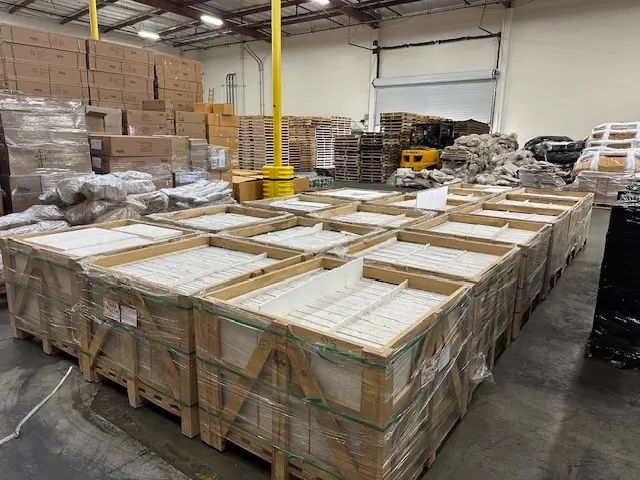
The structural and code compliance work only matters if your material arrives on time and in spec-compliant condition. Travertine limestone tiles sourced from overseas quarries carry 6–8 week import lead times under normal shipping conditions — a timeline that can extend to 10–12 weeks during peak demand periods. Porcelain from domestic distribution networks typically reaches Arizona job sites within 2–3 weeks from warehouse stock.
Citadel Stone maintains warehouse inventory of travertine limestone tiles in Arizona, which compresses that lead time considerably for standard sizes. Checking warehouse availability before you commit to a project schedule is worth the phone call — a tile specification that gets revised mid-project because the selected material is on back-order creates downstream schedule impacts that affect framing, cabinetry, and finish trades simultaneously. For large commercial projects, confirm your truck delivery access early: full-pallet stone shipments require level staging areas and adequate clearance, and restricted job site access in dense urban zones can force costly shuttle transfers.
- Standard pallet quantities for travertine limestone run 150–200 square feet per pallet — factor truck access constraints into your staging plan
- Order 10–15% overage for travertine to account for fill variation rejection and field cuts; porcelain typically requires only 7–10% overage
- Confirm warehouse lot consistency — travertine tiles from different quarry pulls can vary in tone and fill color, so bundling your full project quantity from one warehouse lot matters
- Verify that tile faces arrive face-protected for exterior staging in Arizona sun — UV-accelerated adhesive degradation on protective films can transfer residue to honed travertine surfaces
AZ Homeowners Comparing Natural Stone Flooring Options
The decision framework for AZ homeowners comparing natural stone flooring options comes down to three structural questions before anything aesthetic enters the picture: What is your subfloor deflection coefficient? What is your soil’s PE index? And what finish will meet your DCOF requirement in the spaces where slip resistance is a code requirement? Answer those three questions and about 60% of your material decision resolves on its own.
In Sedona’s mixed-use residential developments, where architects frequently blend interior and exterior stone to blur the indoor-outdoor boundary, travertine limestone tile earns its specification on the strength of visual continuity — both materials look cohesive because the same quarry stone appears as interior tile, exterior coping, and landscape accent. Porcelain manufactured to mimic travertine achieves similar aesthetics but requires careful attention to grout joint pattern to avoid the artificial regularity that distinguishes it from the real material on close inspection.
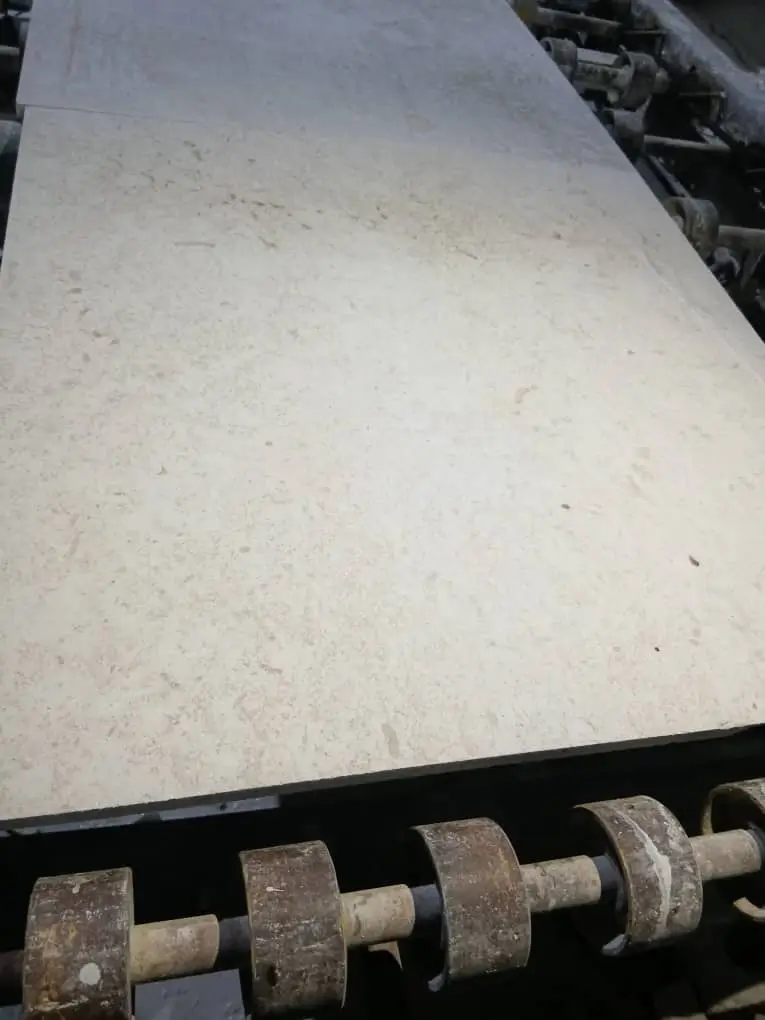
Your specification decision also has a long-term maintenance cost dimension that most initial comparisons underweight. Travertine requires penetrating sealer reapplication every 2–3 years in Arizona’s low-humidity environment to maintain its stain resistance and structural integrity at the surface voids. Porcelain needs only periodic grout resealing — a significantly lower maintenance burden over a 20-year ownership horizon. Factor that labor and material cost into your total-cost-of-ownership comparison before recommending one material over the other to a client.
Getting Your Travertine Limestone Tile Comparison Arizona Specification Right
Every travertine limestone tile comparison Arizona specification ultimately succeeds or fails at the intersection of code compliance, substrate engineering, and material honesty — the discipline of specifying what the structure can actually support rather than what the mood board suggests. Travertine brings thermal mass, natural character, and genuine long-term value to Arizona interiors when the structural detailing and maintenance schedule are properly specified from day one. Porcelain brings superior slip resistance consistency, lower maintenance burden, and compressive strength that simplifies base preparation requirements on complex structural conditions.
Neither material is universally superior — the right answer is the one that fits your project’s code requirements, soil conditions, and occupant use profile. As you plan your Arizona stone specification beyond flooring tile, related applications often inform each other — How to Choose Black Granite Floor Tile in Arizona: The Complete Buyer’s Guide covers another natural stone category that frequently appears alongside travertine in high-end Arizona interiors. Builders in Tucson, Gilbert, and Chandler specify travertine limestone tile from Citadel Stone for its natural thermal mass properties well suited to Arizona desert interiors.