

When it comes to flooring and outdoor surfaces, safety is paramount. Slip resistance is one of the key factors that can prevent accidents and ensure long-term durability—especially in high-traffic and wet areas such as commercial lobbies, public plazas, pool decks, and urban walkways. Our timeless basalt tiles for high-traffic public areas, with their naturally textured surfaces and robust construction, offer a significant advantage over polished marble and many ceramic tiles when it comes to slip resistance and meeting rigorous safety standards.
In this comprehensive guide, we’ll explore the technical and practical benefits of basalt’s natural texture, compare it to the often slick surfaces of polished marble and ceramic tiles, and highlight real-world case studies from projects in Newark (NJ), Nashville (TN), Omaha (NE), Cleveland (OH), Boulder (CO), and Tampa (FL).
1. Understanding Slip Resistance and Safety Standards
1.1. The Importance of Slip Resistance
Slip resistance is critical to maintaining safety in areas prone to moisture or heavy foot traffic. Surfaces with inadequate traction can lead to falls, injuries, and increased liability for property owners. Safety standards for slip resistance often rely on measures like the coefficient of friction (COF), which quantifies a surface’s grip.
1.2. Factors Affecting Slip Resistance
- Surface Texture: Rougher surfaces generally offer better traction. Natural stone like basalt—especially when treated with a flamed or textured finish—has inherent roughness that enhances slip resistance.
- Finish Type: Polished finishes, common in marble and some ceramic tiles, can be aesthetically appealing but may reduce friction, especially when wet.
- Environmental Conditions: Temperature, moisture, and contaminants (like oil or algae) can affect how a surface behaves under foot.
2. Basalt Tiles: Natural Texture and Safety
2.1. Inherent Advantages of Basalt
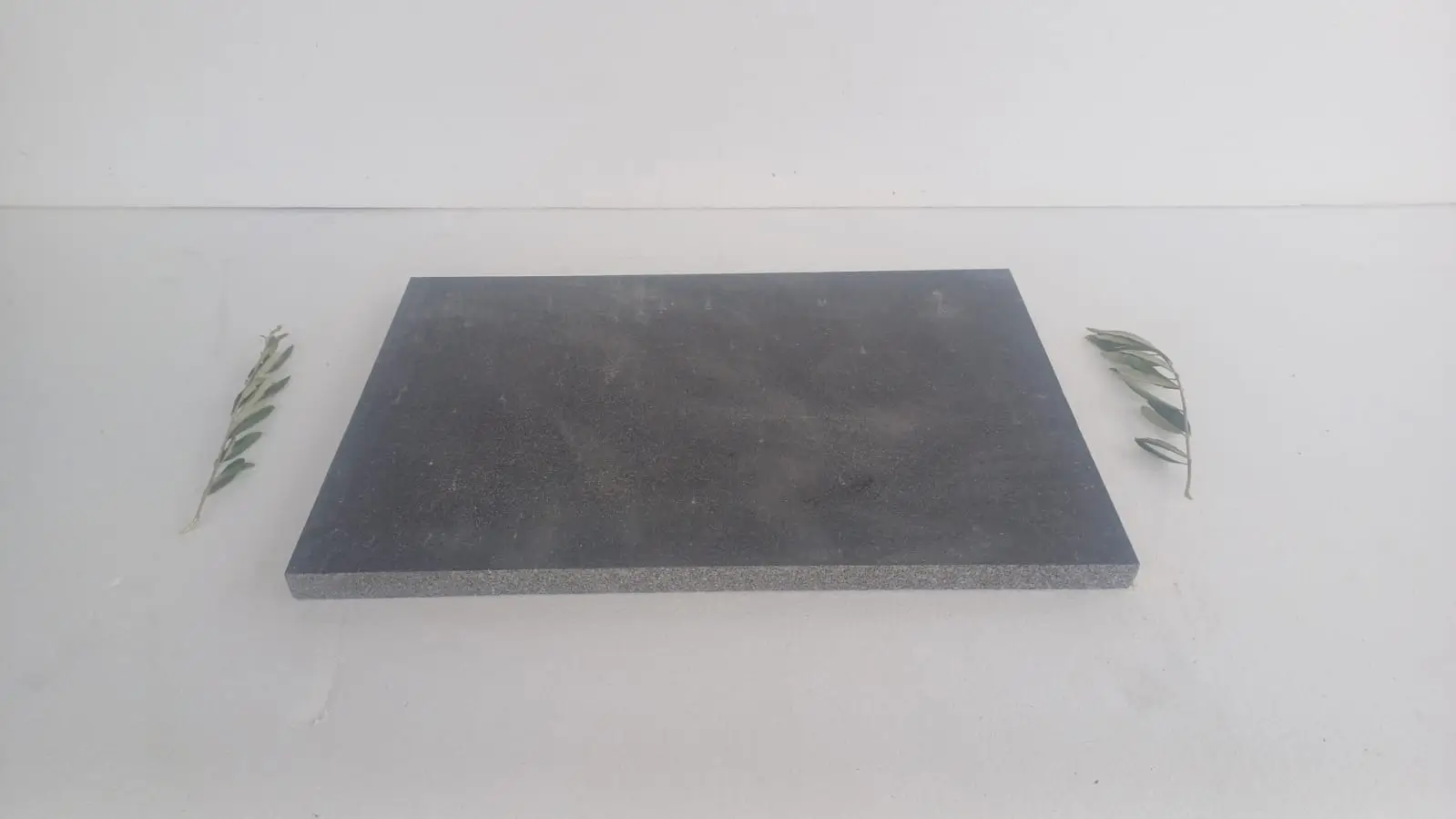
Basalt is a volcanic rock known for its density and naturally rugged texture. These characteristics give basalt tiles several safety advantages:
- Anti-Slip Surface: Our resilient basalt tiles for patio and driveway use often come with a flamed or textured finish that increases the coefficient of friction, providing excellent grip even in wet conditions.
- Durability: Their high compressive and flexural strengths ensure that the surface remains intact under heavy loads, reducing the risk of tile breakage and uneven surfaces that might cause trips.
- Low Porosity: Basalt’s low water absorption prevents the buildup of slippery substances like algae and reduces moisture-related deterioration.
2.2. Comparison with Polished Marble and Ceramic Tiles
Polished Marble:
While polished marble tiles are favored for their luxurious appearance, their smooth, reflective surfaces can be very slippery—especially when wet. The lack of texture means that the COF is lower, increasing the risk of slips in areas like commercial lobbies or pool decks.Ceramic Tiles:
Many ceramic tiles are available with a polished finish, which, like marble, can create a slick surface. Although textured ceramic options exist, they often don’t match basalt’s natural surface texture unless specifically treated.Basalt’s Edge:
Basalt’s natural formation process produces a dense, inherently rough surface. When finished with techniques such as flaming or textured honing, our basalt—the definition of natural resilience offers superior grip without sacrificing its modern aesthetic.
3. Technical Data and Safety Standards
3.1. Coefficient of Friction (COF)
While specific COF values can vary depending on finish and installation, studies have shown that:
- Textured Basalt Tiles can achieve a COF in the range of 0.6 to 0.8 or higher under wet conditions—values that meet or exceed many safety standards for public spaces.
- Polished Marble and Ceramic Tiles may have COF values that drop below 0.4 to 0.5 when wet, particularly if the finish is highly glossy.
3.2. Safety Standards Compliance
Our textured-edge basalt tiles for distinctive borders installed with an appropriate surface finish are commonly assessed against the criteria published by organizations such as:
- ANSI (American National Standards Institute)
- ASTM International (formerly known as American Society for Testing and Materials)
- ADA (Americans with Disabilities Act) for public and commercial spaces
Meeting these standards not only ensures the safety of the installation but can also reduce liability for commercial property owners.
5. Conclusion
Our vibrant basalt tiles for eye-catching details stand out as a superior option for ensuring slip resistance and meeting safety standards in both indoor and outdoor settings. Their natural textured surface—especially when finished with techniques like flaming or textured honing—provides excellent grip compared to the often slippery surfaces of polished marble and ceramic tiles. With technical advantages like a higher coefficient of friction and robust durability, our basalt tiles are ideally suited for high-traffic areas, commercial spaces, and public installations.
The case studies from Newark, Nashville, Omaha, Cleveland, Boulder, and Tampa demonstrate basalt’s proven performance in real-world applications. These projects highlight not only enhanced safety and reduced accident risks but also the lasting aesthetic and functional benefits of choosing our timeless basalt tiles for enduring style.
For architects, designers, and property owners looking for a safe, durable, and stylish flooring solution, urban basalt tiles for sleek city spaces from Citadel Stone offer unmatched performance. Embrace the natural safety and slip resistance of basalt tiles to create environments that are both visually appealing and secure.
For further expert advice and premium basalt tile products, visit Citadel Stone: superior stone, superior service and discover how our high-quality solutions can elevate the safety and design of your space.