
Base failure in side driveway paver installations almost always traces back to one variable that most contractors overlook — the cumulative stress from thermal cycling rather than any single temperature extreme. A proper side driveway paver installation Arizona guide doesn’t start with material selection or pattern layout; it starts with understanding how your pavers will move, expand, and contract through hundreds of day-night temperature swings every year before a single vehicle ever touches the surface.
Why Thermal Cycling Dominates Arizona Driveway Specs
Arizona’s thermal range is what separates its paver specifications from every other region in the country. You’re not dealing with a uniformly hot climate — you’re dealing with a climate that regularly swings 40°F to 50°F between a summer midnight and a summer afternoon, and can push 60°F swings in desert elevations during late fall and early spring. That’s not just heat stress; that’s fatigue loading applied to stone and jointing materials on a daily cycle.
Natural stone pavers expand at roughly 3.5 to 5.5 × 10⁻⁶ inches per inch per degree Fahrenheit depending on mineral density and crystalline structure. Across a 4-foot run of pavers with a 50°F daily swing, you’re looking at cumulative movement in the range of 0.008 to 0.013 inches per cycle. That sounds small, but multiply it by 300 annual cycles over a decade and you have joint degradation that no amount of surface sealing will fix after the fact. Your installation needs to be engineered for this movement from day one.
The problem compounds in side driveways specifically because of their geometry. Narrow linear runs constrain lateral expansion differently than open patio fields — the pavers have fewer directions to move, so they push harder against edge restraints and transmit more stress into the base layer below.
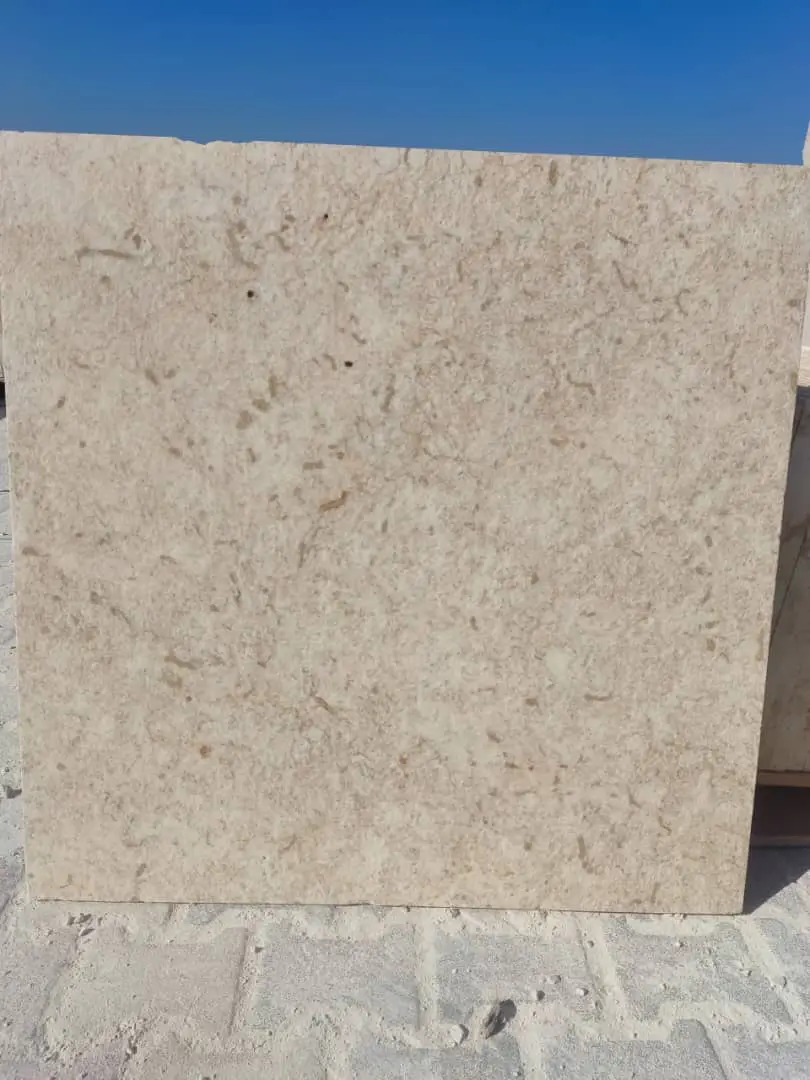
Driveway Stone Paving Preparation in Arizona
Driveway stone paving preparation in Arizona differs fundamentally from what you’d specify in the Midwest or Pacific Northwest. The combination of expansive clay soils, caliche layers, and the thermal cycling demands described above means your subgrade work is as important as your paver selection. Cutting corners here is what turns a 25-year installation into a 10-year replacement project.
Your excavation depth should be a minimum of 10 to 12 inches below finished grade for a side driveway handling standard passenger vehicle loads. That gives you room for a proper layered base system without compromising on any individual component. In Yuma, where soil moisture fluctuates dramatically between the dry season and the brief monsoon period, you’ll often encounter silty clay that expands 3 to 5 percent by volume when saturated — that sub-base variability has to be neutralized before your aggregate base goes down.
- Remove all organic material and loose soil to a minimum of 10 inches below finished paver grade
- Test for caliche hardpan — if you hit a solid layer, determine whether it’s stable or fractured before deciding whether to break through it or use it as a structural sub-base
- In expansive clay soils, consider a 4-inch compacted lime or cement-treated soil layer before your aggregate base
- Ensure subgrade compaction reaches 95% Modified Proctor density before any base material is placed
- Check cross-slope on the subgrade itself — drainage geometry at subgrade level sets the drainage geometry for everything above it
One detail most driveway stone paving preparation in Arizona guides miss entirely: the subgrade moisture content at time of compaction matters as much as the compaction effort. Compacting dry Arizona soil without pre-moistening it produces a surface that looks dense but rehydrates and swells during the first monsoon season.
Compacted Base Layer for Pavers in AZ Driveways
Your aggregate base is the structural workhorse of the entire system. For side driveway applications, the compacted base layer for pavers AZ driveways should be a minimum of 6 inches of 3/4-inch crushed aggregate — not road base, not decomposed granite, but angular crushed aggregate with sufficient void space to manage thermal expansion while maintaining structural integrity. Angular particles interlock under compaction in a way that rounded river gravel simply can’t replicate.
Compact in 3-inch lifts using a plate compactor with a minimum 3,500 lb centrifugal force rating. Each lift needs to reach 98% Modified Proctor before you add the next layer. Running one pass of a plate compactor over a 6-inch aggregate dump and calling it done is one of the most common field shortcuts — and it’s one of the most expensive mistakes you can make on a side driveway paver project.
- Use 3/4-inch crushed aggregate with angular fracture faces — minimum two fractured faces per ASTM D5821
- Compact in maximum 3-inch lifts, not full depth in a single pass
- Target 98% Modified Proctor density per lift before placing the next
- Maintain aggregate moisture at 2 to 3 percent above optimum for Arizona dry-season installs
- For the bedding layer, use coarse concrete sand (ASTM C33) at 1 inch nominal depth — not polymeric sand, not decomposed granite
- Screed bedding sand to ±1/8 inch over a 10-foot straightedge before any paver placement begins
Here’s what most installation guides won’t tell you about the bedding sand layer in Arizona’s thermal environment: screeding at 7 AM and setting pavers through a full day creates a progressive bedding depth inconsistency as the sand dries and compresses at different rates across the work area. On projects over 200 square feet, divide your installation into manageable working sections and re-screed each section immediately before setting pavers into it.
Expansion Joints and Edge Restraints for Thermal Movement
The joint system in your side driveway installation is the pressure-release valve for all that thermal movement described earlier. Rigid edge restraints placed without consideration for expansion create a closed system where stress has nowhere to go — and it will find somewhere to go, usually through cracked pavers or heaved sections at the midpoint of a long run.
For side driveways running parallel to a structure, place expansion joints at 12-foot intervals along the length of the run. This is more conservative than the 15 to 20 feet you’ll see in some generic specifications, but it accounts for the combined effect of Arizona’s thermal swing amplitude and the constrained geometry of a side driveway. The additional joint is far less expensive than the remediation cost when a run buckles at year six.
Edge restraints should be spiked steel or heavy-duty plastic rated for vehicular applications — not the light-duty plastic landscape edging that gets used on pedestrian applications. Drive spikes at 12-inch intervals in straight runs and 6-inch intervals at any curve or corner. In firm caliche soils, pre-drilling spike holes prevents spike deflection that leaves the restraint sitting proud of the subgrade.
- Expansion joints every 12 feet along the run length in Arizona thermal conditions
- Use EPDM or backer rod material in expansion joints — flexible enough to compress and recover through thermal cycles
- Never fill expansion joints with rigid mortar or polymeric sand that won’t accommodate movement
- Spike edge restraints at 12-inch intervals on straight runs, 6-inch at curves
- Keep edge restraints at or below finished paver grade to avoid creating a lip that catches vehicle tires
Drainage Solutions for Stone Driveways Across Arizona
Drainage solutions for stone driveways across Arizona require you to think about two distinct water events: the slow saturation that occurs during the brief monsoon season and the rapid runoff from intense short-duration storms. These create different failure mechanisms, and your drainage design has to address both simultaneously.
The cross-slope of your finished surface should be a minimum of 1.5 percent and a maximum of 3 percent, pitched away from any adjacent structure. That range keeps water moving without creating surface velocity that washes joint sand out over time. In projects around Sedona, where terrain grades can be significant and red clay soils shed water quickly, you’ll often need a channel drain at the low end of a side driveway to capture sheet flow before it undermines the base at the terminus of the installation.
Subsurface drainage matters as much as surface slope in Arizona. An 8 to 12 inch perforated pipe wrapped in filter fabric and set at the base of your aggregate layer, daylighting to a suitable outlet, provides the subsurface relief that prevents hydrostatic pressure from building under the paver system during monsoon saturation events. Aggregate bases without subsurface drainage solutions for stone driveways across Arizona’s clay soil regions saturate within 48 hours of a significant monsoon event and lose their load-bearing capacity temporarily.
- Minimum 1.5 percent cross-slope on finished paver surface, maximum 3 percent
- Install subsurface perforated pipe at base layer elevation in clay soil conditions
- Channel drains at grade transitions and terminus points where water accumulates
- Filter fabric on all perforated pipe and at the subgrade-aggregate interface to prevent fines migration
- Ensure all drainage outlets have adequate capacity for Arizona’s monsoon-intensity rainfall rates (design for 2-inch-per-hour events minimum)
Arizona Desert Driveway Paver Laying Steps
Your approach to the Arizona desert driveway paver laying steps needs to account for installation conditions that are as demanding as the long-term performance conditions. Installing pavers in 105°F direct sun means your bedding sand is losing moisture and stiffening faster than the concrete sand’s rated working window — this has direct implications for how you sequence your work and how long you can leave screeded areas before placing stone.
Start your installation from a defined control line, not from a wall or structure edge. Structures settle and move in Arizona’s expansive soils, and building off a wall transfers that movement directly into your paver pattern. A string line set from two fixed survey points gives you a reference that doesn’t change regardless of what the adjacent structure does over time. From that control line, work systematically across the driveway width, checking level and pattern alignment every 10 to 12 pavers.
Setting side driveway pavers in Arizona also means paying attention to the orientation of your installation pattern relative to the prevailing direction of thermal expansion. For long, narrow side driveways, running a herringbone pattern at 45 degrees to the run direction distributes thermal movement more evenly across the field than a running bond pattern, which tends to concentrate stress along its linear joint lines.
- Begin from a surveyed control line, not from an adjacent structure
- Work in sections no larger than 50 square feet when ambient temperatures exceed 100°F
- Check level every 10 to 12 pavers using a 4-foot straightedge — do not rely on surface eye-checking in Arizona’s glare conditions
- Seat each paver with a rubber mallet — three taps minimum, confirming full bedding contact with no hollow sound
- Leave a 3/16-inch nominal joint width for polymeric sand filling — wider than the 1/8-inch often specified in cooler climates to accommodate thermal expansion
- Do not compact installed sections until a minimum 200-square-foot area is complete — compacting small sections creates micro-grade differentials at the edges
For projects where you’re sourcing Citadel Stone side driveway pavers Arizona, warehouse stock levels should be confirmed before you finalize your installation schedule — Arizona’s summer project season creates periodic demand spikes that can affect lead times by two to three weeks if you’re drawing from a single distribution point.
Joint Sand and Sealing in High Thermal Swing Conditions
Joint sand selection in Arizona’s thermal cycling environment is not a detail to delegate to whoever is finishing the job. Polymeric sand rated for high-heat applications performs significantly differently from standard polymeric products — the binding agents in standard products can soften and lose their grip during the sustained heat periods that Arizona’s side driveways experience in June through August, then become brittle during the cold desert nights of January and February.
Use a polymeric sand with a rated activation temperature range that covers both extremes: look for products rated from 20°F minimum to 130°F maximum activation stability. Fill joints in two passes — first pass to 80% of depth, compact the paver field with a plate compactor fitted with a rubber pad, then complete the second pass to within 1/8 inch of the paver surface before activating with water. This two-pass protocol produces significantly better joint density than a single fill, which matters because dense joints resist the sand migration that thermal cycling causes over time.
For sealing, penetrating sealers outperform topical film-forming products in Arizona’s UV and thermal conditions. A penetrating silane-siloxane sealer applied six weeks after installation — once the polymeric sand has completed its curing cycle — provides moisture protection and stain resistance without creating a surface film that can delaminate under thermal stress.
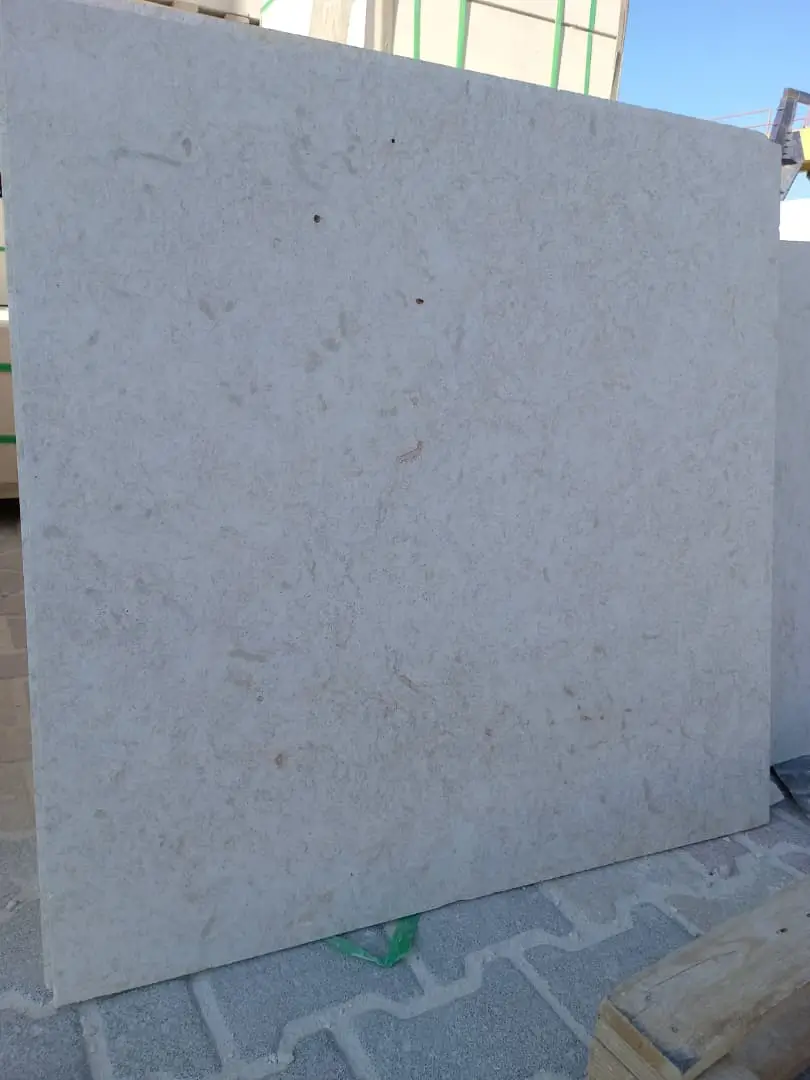
Material Selection and Thickness for Side Driveway Performance
Side driveway pavers in Arizona need to meet a minimum 2-inch nominal thickness for any application where vehicle overhang or tire contact is possible — and on most residential properties, vehicle positioning makes that contact a certainty rather than a possibility. Natural stone pavers in this thickness range, particularly dense limestone and basalt varieties, deliver compressive strengths above 8,000 PSI, which handles passenger vehicle point loads with significant safety margin.
The thermal expansion coefficient of your chosen stone matters in ways that go beyond simple expansion math. Dense basalt at roughly 3.1 × 10⁻⁶ per °F expands less per cycle than lighter-colored limestone at 4.2 × 10⁻⁶ per °F, but basalt also absorbs more heat and reaches higher surface temperatures, which means its absolute temperature swing is larger. In practice, for side driveways where surface temperature matters for tire contact and user comfort, lighter-colored stones are often the better specification even if their expansion coefficient is slightly higher, because their solar reflectance keeps them cooler through the day-night cycle.
In Mesa, where residential side driveways often run between structures with limited natural shade, specifying a light-colored natural stone with an albedo above 0.4 can reduce surface temperature by 15 to 25°F compared to darker materials under identical exposure. That temperature reduction directly reduces the thermal swing amplitude your joints and base must accommodate.
- Minimum 2-inch nominal thickness for any vehicle-accessible side driveway area
- Specify compressive strength minimum 8,000 PSI for passenger vehicle applications
- Choose stones with albedo above 0.4 for unshaded Arizona side driveways to reduce thermal cycling amplitude
- Verify that your selected stone meets ASTM C241 abrasion resistance requirements — softer stones degrade at joints under vehicle tire scuffing
- Confirm water absorption below 3 percent for any stone used in subsurface contact or low areas prone to standing water after monsoon events
At Citadel Stone, we evaluate stone samples from each quarry batch specifically for Arizona climate performance — surface absorption rates, thermal expansion coefficients, and freeze-thaw cycling resistance are all part of our material qualification process before product reaches our warehouse.
Engineering Your Side Driveway Paver Installation Arizona Spec from the Ground Up
A successful side driveway paver installation Arizona guide ultimately comes down to engineering the system for movement rather than trying to resist it. Every element in the specification stack — subgrade preparation, aggregate base depth, bedding sand protocol, joint width, expansion joint spacing, and sealer selection — needs to be calibrated for Arizona’s thermal cycling reality, not borrowed from a generic national specification. The installations that fail at year eight aren’t using inferior materials; they’re using materials and methods designed for a climate that doesn’t exist in Arizona.
Your material and base specifications should be finalized before you schedule truck delivery — sequencing errors where the truck arrives before the subgrade is compacted and verified are a common cause of rushed base work that compromises the entire installation. Confirm warehouse availability and schedule truck delivery to align with your installation readiness, not the other way around. The related resource How to Install Sidewalk Pavers in Arizona covers adjacent installation context that complements the driveway-specific guidance here, particularly on base preparation and desert climate jointing techniques that apply across multiple paver applications.
For Scottsdale, Tempe, and Flagstaff homeowners, Citadel Stone’s side driveway paver selection includes slab thicknesses suited to the compacted aggregate base depths Arizona’s expansive soils require.