
Terrain geometry is the variable that breaks more sidewalk paver installations in Arizona than any other single factor — and it’s the one most homeowners underestimate until they’re watching water pool against their foundation after the first monsoon. Installing sidewalk pavers in Arizona desert conditions isn’t just about picking heat-resistant material; it’s about reading your site’s elevation changes, slope transitions, and drainage paths before you pull a single string line. Get the grade wrong and you’ll be relaying sections within three seasons, regardless of how good your stone is.
Reading Your Terrain Before You Touch a Shovel
Arizona’s topography is genuinely complex in ways that surprise people who assume the state is just flat desert. You’re dealing with alluvial fans in the Phoenix basin, granite decomposition profiles in the Prescott highlands, caliche hardpan near Tucson, and basalt shelf intrusions in the central highlands — and each of these substrates behaves completely differently when you compact aggregate on top of it. The slope tolerance for a natural stone walkway installation in Arizona changes depending on which substrate you’re working with.
Your site survey needs to establish cross-slope and longitudinal grade independently. Cross-slope — the side-to-side tilt across the walkway — should sit between 1% and 2%. That’s enough to shed water without making the surface feel like you’re walking on a pitched roof. Longitudinal grade — the front-to-back run along the walkway — can go steeper, but anything over 6% starts demanding cut joints or step breaks to maintain footing. Here’s what most specifiers miss: these two grades interact, and the diagonal drainage vector they create has to discharge somewhere specific on your property.
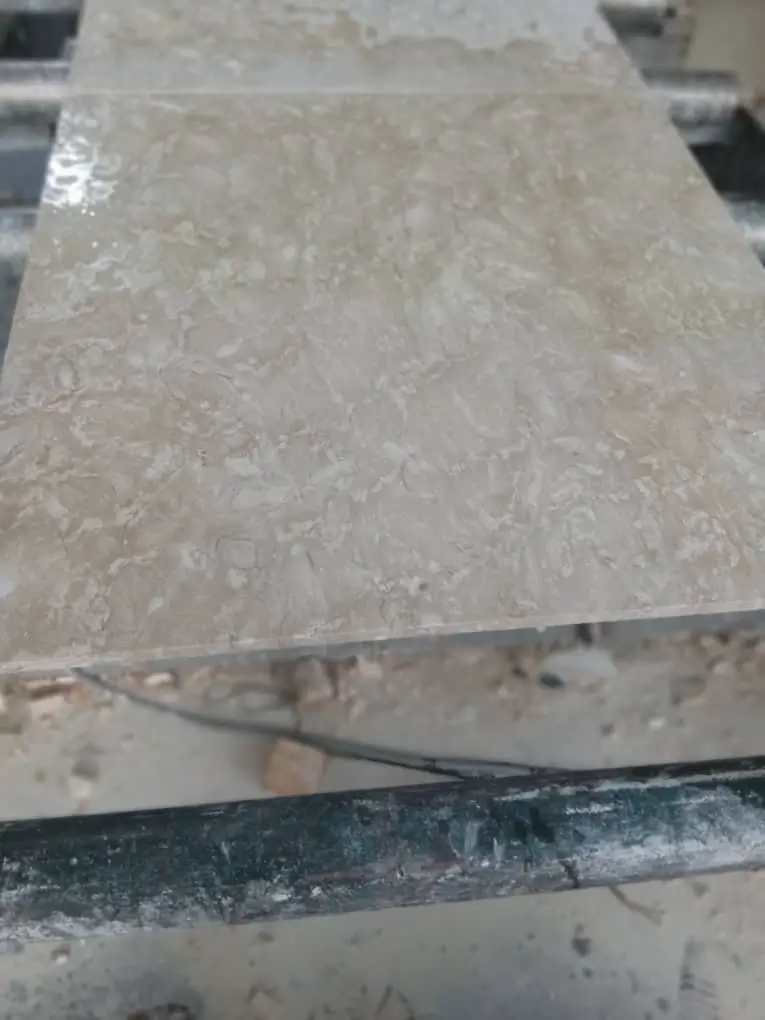
Base Preparation for Arizona’s Variable Terrain
The base is where grade management actually happens — not at the surface. You’re engineering the finish elevation through your compacted aggregate layer, which gives you fine-tuned control that you can’t achieve by trying to shim stone at the surface. For installing sidewalk pavers in Arizona desert conditions, your compacted base depth should run 6 inches minimum on stable native soils, and 8 to 10 inches anywhere you’ve encountered disturbed fill or expansive clay. Caliche layers complicate this math significantly.
- Break through caliche hardpan completely — partial penetration creates a perched water table that heaves your bedding sand seasonally
- Compact native soil to 95% modified Proctor density before placing aggregate base — skipping this step is the single most common cause of post-installation settlement
- Use 3/4-inch crushed angular aggregate, not river rock — the angular faces lock under compaction and resist lateral migration when the slope channels water
- Compact base in maximum 3-inch lifts — thicker lifts don’t compact uniformly and leave soft zones that show up as low spots within two years
- Check your finished base elevation with a 10-foot straightedge before placing bedding sand — tolerance should be within 3/8 inch
Bedding sand goes on last, screeded to 1-inch depth. On sloped installations, dry-pack mortar bedding is worth considering for grades above 4% — it locks the stone in place during the curing period before joint sand fully consolidates. Among the paver laying techniques AZ homeowners use most often, skipping this detail is one of the costliest, and it shows when stones shift on the first heavy rain.
Slope-Specific Drainage Design for Desert Sidewalks
Arizona’s monsoon season delivers rainfall at intensities that overwhelm systems designed for average annual precipitation. A 1-inch-per-hour design storm might be adequate in Ohio; in the Sonoran Desert, you need to plan for 2 to 3 inches per hour during peak July and August events. Your drainage geometry — specifically how your walkway grade directs that volume — determines whether your installation survives intact or channels water into problematic areas.
For hillside installations, the critical design decision is whether to run water across the walkway, along the walkway, or intercept it before it reaches the paved surface. Across-slope drainage using a shallow swale at the uphill edge is the most reliable option for residential applications because it intercepts sheet flow before it gets under your bedding layer. A properly detailed 4-inch channel drain positioned 12 to 18 inches uphill from your stone edge will handle the majority of Arizona terrain scenarios.
- Outlets for edge drains must discharge to daylight — never to a closed infiltration pit in expansive soil zones
- Use filter fabric beneath your aggregate base on any installation where uphill grade exceeds 8% — it prevents fine migration into your base layer
- On flat desert installations, the minimum 1% cross-slope is non-negotiable — without it, standing water etches joint sand and promotes efflorescence in natural stone
- Check local jurisdiction requirements — many Arizona municipalities require engineered drainage plans for walkway installations on lots with more than 10% average slope
Selecting Desert-Rated Walkway Pavers for Terrain Performance
Material selection for desert-rated sidewalk paving across Arizona should start with structural thickness, not just aesthetics. The paver has to span across bedding sand without flexing, because flexing under foot traffic pumps fine material out of your joints over time, and that process accelerates dramatically on any installation with grade. For natural stone in pedestrian applications, 1.25-inch nominal thickness handles residential foot traffic comfortably; bump to 1.5 inches if you’re anywhere near vehicle overhang or heavy recreational equipment.
Natural stone sidewalk pavers perform well in Arizona’s terrain because their mass and density resist the thermal cycling that causes lighter synthetic materials to fatigue at joint edges. Limestone and travertine are both solid choices — travertine’s interconnected pore structure provides natural slip resistance that becomes more important on any sloped section. You’ll want to confirm your material has a minimum compressive strength of 8,000 PSI; anything lower tends to spall at corners on sloped installations where point loading concentrates at the downhill edge of each paver.
At Citadel Stone, we recommend reviewing absorption rates alongside compressive strength for any Arizona terrain project — a stone with under 3% water absorption holds up better through the wet-dry cycling that monsoon season creates at slope transitions. These are the same standards that define Arizona heat-resistant walkway pavers for homes in demanding desert terrain. You can browse our Arizona desert walkway pavers to compare thickness options and surface finishes suited to your specific grade conditions.
High-Elevation Considerations for Northern Arizona Projects
Projects in Flagstaff operate in a genuinely different performance regime than the low desert — elevation around 6,900 feet brings meaningful freeze-thaw cycles that simply don’t factor into Scottsdale or Tucson specifications. Freeze-thaw cycling acts on your installation at two points simultaneously: it pressurizes water trapped in stone pores, and it works the bedding sand against the underside of your pavers. Both processes accelerate joint displacement if you haven’t addressed them in your spec.
- Specify stone with water absorption below 2% for Flagstaff installations — ASTM C97 absorption testing data should be available from your supplier
- Use polymeric joint sand rather than traditional dry-sand filling — it resists freeze-thaw washout and stays consolidated through thermal expansion and contraction cycles
- Extend your compacted base depth to 10 inches minimum to get below the local frost depth, which can reach 15 to 18 inches in hard winters
- Slope all drainage away from the paved surface at a minimum 2% rate — standing water that freezes beneath the installation will displace pavers far faster than traffic loading
The grade management principles don’t change between low and high desert, but the consequences of poor drainage are faster and more dramatic at elevation. A single freeze event can heave an improperly drained installation by half an inch in a single night. Selecting Arizona heat-resistant walkway pavers for homes at elevation means prioritizing low absorption and freeze-thaw ratings just as much as thermal durability.
Hillside Installation Techniques for High-Value Residential Projects
Hillside projects in Scottsdale — particularly in the McDowell Foothills area — require a fundamentally different installation sequence than flat-grade work. You’re building against gravity during installation, which means your bedding sand wants to migrate downhill before the stone is placed and compacted. The practical solution is to work in horizontal bands across the slope, placing stone row by row from the bottom up, so each completed row acts as a lateral restraint for the row above it.
Edge restraint on sloped natural stone walkway installations in Arizona deserves serious attention. Standard plastic edging performs poorly on grades above 3% because the compaction forces during installation flex the edging out of plane, and once it’s out of position, it can’t be corrected without pulling the adjacent stone. For any hillside project, use aluminum or steel edging with 12-inch spikes at 12-inch centers — not the standard 18-inch spacing the edging manufacturer prints on the box. On grades above 5%, consider a mortared concrete edge beam as your downhill restraint.
Managing Joint Sand and Thermal Expansion on Desert Grades
Thermal expansion in Arizona stone installations runs at roughly 5 to 7 × 10⁻⁶ per degree Fahrenheit for most natural stone — that’s measurable movement across even a 20-foot walkway run. The design challenge is that thermal movement and slope drainage work in opposite directions: tight joints help shed water cleanly on grades, but overly tight joints leave no room for expansion and you’ll see edge chipping within two summers. The right joint width for most desert-rated sidewalk paving across Arizona terrain is 3/16 to 1/4 inch — wide enough to accommodate expansion without becoming a debris trap.
- Install expansion joints every 12 to 15 linear feet on any run that changes direction or transitions from a sloped section to a flat landing
- Use closed-cell backer rod with a UV-stable sealant in expansion joints — open joints fill with debris and the debris prevents natural expansion, creating the same edge pressure as a closed joint
- Compact polymeric joint sand in three passes with a plate compactor — single-pass compaction leaves voids that wash out on the first significant rainfall
- Avoid applying joint sand during the hottest part of the day when stone surface temperatures exceed 130°F — the activation binder in polymeric sand cures too quickly and doesn’t penetrate the full joint depth
Field performance data shows that installations where joint sand is maintained at 90 to 95% fill capacity consistently outperform under-filled joints by a factor of two to three in terms of long-term stability on grade. Checking and refilling joint sand in the first autumn after installation — before monsoon season creates its worst erosion — is a maintenance step that adds years to your installation’s stable service life.
Ordering, Delivery Logistics, and Site Access Planning
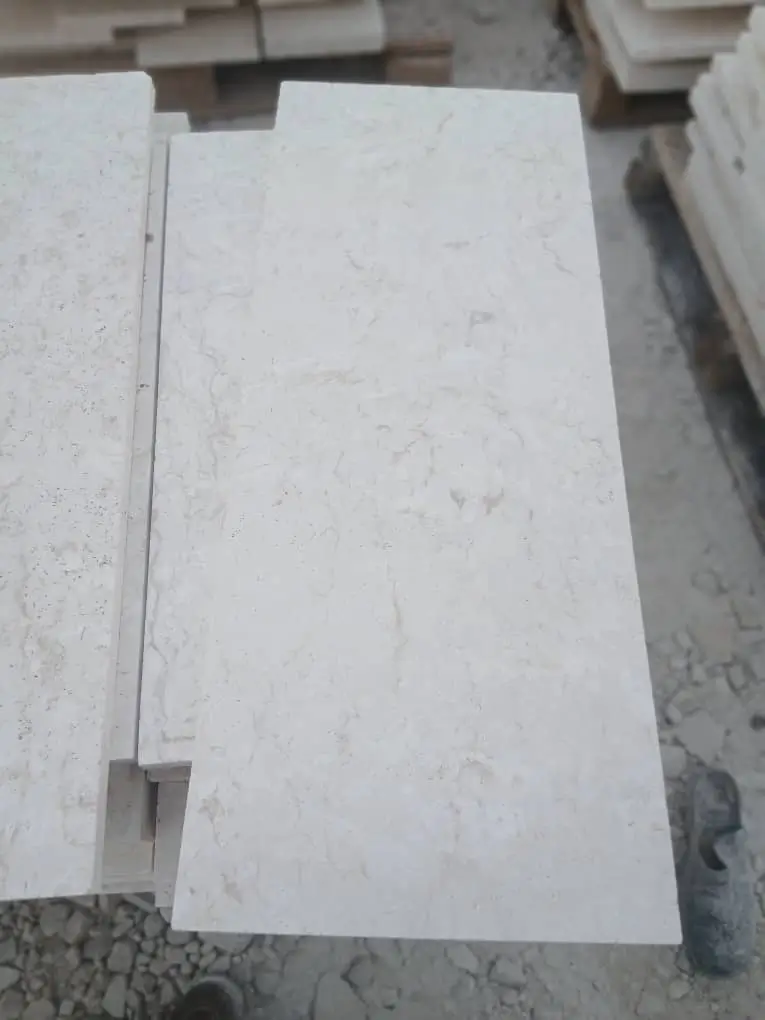
Site access planning for Arizona terrain projects matters more than most homeowners anticipate at the spec stage. Natural stone sidewalk pavers arrive on pallets weighing 2,000 to 3,500 pounds each, and getting those pallets to a hillside installation point often requires a smaller delivery vehicle than a standard flatbed truck. Confirming your driveway slope and overhead clearance before your delivery is scheduled saves the kind of logistics scramble that delays projects by a week or more. Citadel Stone’s delivery team can advise on vehicle options for restricted-access sites — it’s worth a quick conversation during the ordering process rather than a last-minute problem on delivery day.
Your warehouse lead time for natural stone in Arizona typically runs 1 to 2 weeks for stocked material, but verify current inventory levels before finalizing your project schedule. Material staged in a local warehouse ships faster and arrives in better condition than stone transiting directly from overseas quarries, which can take 6 to 8 weeks on a container shipment. For terrain projects where installation sequencing is precise, that lead time difference is genuinely significant — you want your material on site and acclimated before your crew starts pulling string lines.
- Order 10% overage minimum for hillside projects — cut waste runs higher on sloped installations because more pieces need compound angle cuts at the uphill edge
- Stage material as close to the installation area as truck access allows — carrying 1.5-inch stone any distance on a slope is hard work that slows installation and increases breakage risk
- Inspect pallets on delivery for corner damage and edge chipping — freight damage claims are easier to resolve before the truck leaves your site
Parting Guidance on Installing Sidewalk Pavers in Arizona Desert Terrain
The planning phase determines the outcome more definitively than the installation phase when installing sidewalk pavers in Arizona desert environments. Your grade reading, drainage path mapping, and base depth decisions set the structural reality that every subsequent step either supports or fights against. Stone selection and surface finish matter, but they’re secondary variables — a beautiful material on a poorly graded, under-prepared base will fail as reliably as any cheap alternative.
The performance difference between a 12-year installation and a 25-year installation almost always traces back to two decisions made before the first paver was placed: whether the drainage geometry was properly resolved for the site’s specific elevation profile, and whether the base was compacted to the right depth for the native soil conditions. These aren’t details you can correct after the fact without a full reinstallation. Get them right in the planning stage and your stone will handle Arizona’s terrain, thermal cycling, and monsoon intensity without chronic maintenance issues. Among the paver laying techniques AZ homeowners use most successfully, early attention to base depth and drainage geometry is the one that pays off across every subsequent season. As you plan ongoing stone maintenance, How to Maintain Stone Square Pavers in Arizona’s Climate offers a complementary look at protecting your Arizona stone investment across seasonal conditions.
Homeowners in Scottsdale, Chandler, and Flagstaff rely on Citadel Stone sidewalk pavers known for resisting joint displacement through repeated expansion and contraction across Arizona’s desert seasons.