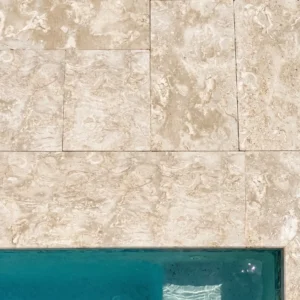
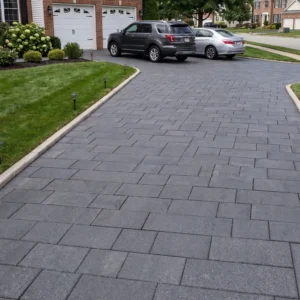
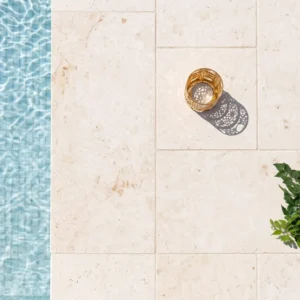
Sealing flagstone pavers outdoors sounds straightforward until you realise that the decision — to seal or not — depends on variables most guides completely ignore: the specific stone type sitting on your patio, its measured absorption rate, and the finish you’re trying to maintain over a 15- to 20-year horizon. Not all flagstone behaves the same way under a sealer, and applying the wrong product to the wrong stone is one of the most common and expensive mistakes in residential hardscape maintenance.
What Sealing Actually Does to Flagstone
A sealer doesn’t simply coat the surface — it either fills the pore structure partially or bridges it entirely, depending on whether you’re using a penetrating impregnator or a topical film-forming product. Penetrating sealers, typically silane-siloxane or fluoropolymer based, migrate into the stone matrix and bond chemically to the mineral surfaces without closing off the pore network. Topical sealers — acrylics, epoxies, urethanes — sit on top and create a physical barrier. For outdoor flagstone pavers, the distinction matters enormously because trapped moisture beneath a film-forming sealer causes more damage than no sealer at all.
Natural flagstone is sedimentary by origin, meaning its internal structure is layered and porous in ways that vary dramatically between species. According to flagstone sedimentary characteristics and paving use, the cleavage planes that make flagstone split cleanly for paving also create micro-fissures where moisture enters and where freeze-thaw pressures build. Your choice of sealer type needs to account for this geometry — a film-forming product that seems to perform well through summer often begins delaminating at those cleavage planes as temperatures drop.
Unsealed vs Sealed Flagstone: Real Performance Differences
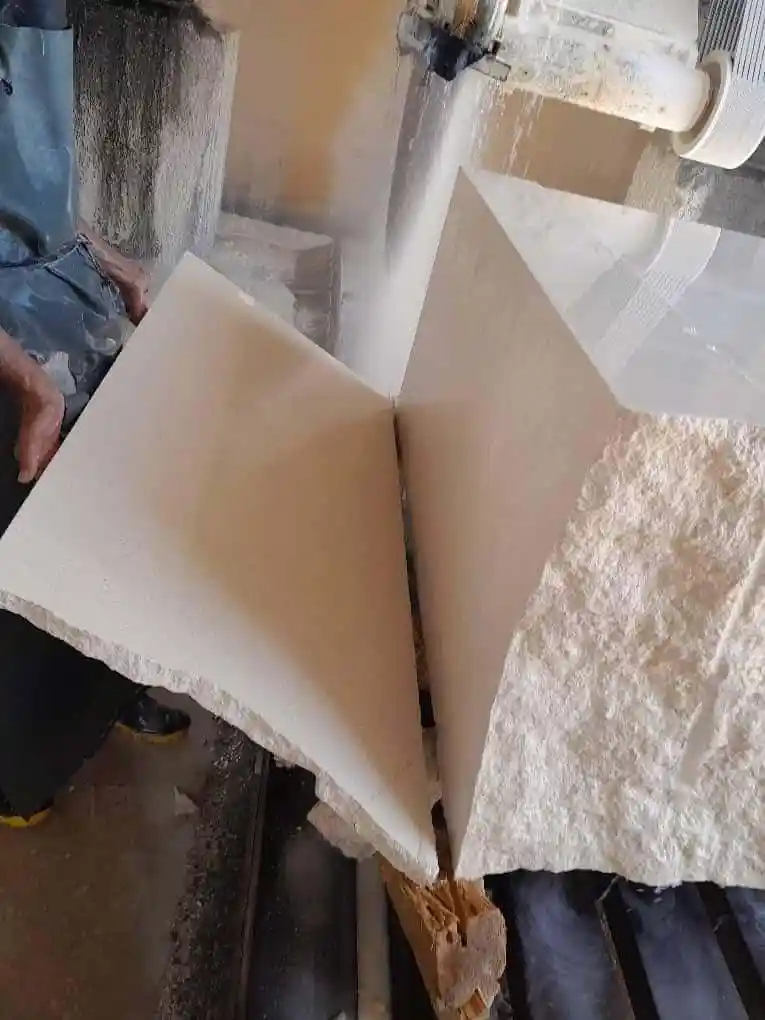
The unsealed vs sealed flagstone performance gap is real, but it runs in both directions. Unsealed flagstone pavers outdoors develop a natural patina that many designers actively prefer — the surface darkens unevenly with weathering, organic material settles into joints, and the stone takes on an aged character that’s difficult to replicate artificially. For projects where that aesthetic is the goal, sealing works against you. For projects where consistent colour, reduced staining risk, and lower long-term maintenance are the priority, a quality penetrating sealer earns its cost.
Unsealed flagstone in high-traffic zones — entry paths, outdoor kitchen surrounds, poolside — absorbs oils, tannins from leaves, and rust from metal furniture at a rate that penetrating sealers reduce by 60 to 80 percent. That’s not a trivial difference when you’re looking at a 300-square-foot patio. The trade-off is that sealed stone requires periodic re-application, and if you don’t maintain that schedule, you end up with uneven sealer coverage that actually looks worse than a fully natural surface.
- Unsealed flagstone patinas naturally but absorbs staining compounds readily
- Penetrating sealers reduce oil and tannin absorption without trapping moisture below the surface
- Film-forming topical sealers create gloss but risk delamination in freeze-thaw zones
- Sealed stone requires a reapplication schedule — skipping it creates worse results than never sealing
- Colour-enhancing sealers deepen the stone’s natural tone, which suits some aesthetics and clashes with others
When to Seal Natural Stone Pavers — and When to Wait
Timing your sealing application is as important as the product you choose. Freshly laid flagstone pavers need a full cure period before any sealer touches them — for mortar-set installations, that’s a minimum of 28 days, though many experienced installers extend this to six weeks in cooler conditions where hydration slows. Sand-set flagstone pavers can technically be sealed sooner, but the joint sand needs to be fully settled and dry, which takes at least two weeks of dry weather after installation.
Knowing when to seal natural stone pavers also has a seasonal dimension. Sealer application requires ambient and surface temperatures between 50°F and 85°F for most penetrating silane-siloxane products. Early spring and early fall represent the optimal application windows in most parts of the country — temperatures are moderate, UV intensity is lower (which helps the sealer penetrate before surface evaporation pulls it prematurely), and there’s less risk of afternoon thunderstorms interrupting the 24-hour cure window most quality sealers require. Scheduling your application for a morning start gives you the full working day before temperatures shift.
- Allow 28 days minimum after mortar-set installation before applying any sealer
- Sand-set flagstone needs fully settled, dry joints — at least two weeks of dry weather
- Target ambient temperatures between 50°F and 85°F at application time
- Morning application maximises working time and allows full same-day cure
- Avoid application if rain is forecast within 24 hours
- Spring and early fall offer the most consistent application conditions
Flagstone Sealer Benefits and Drawbacks Worth Knowing
The flagstone sealer benefits and drawbacks conversation has more nuance than most product datasheets acknowledge. On the benefit side, a well-chosen penetrating sealer significantly reduces the absorption of contaminants, simplifies routine cleaning, and in freeze-thaw regions, reduces the moisture saturation that leads to spalling. These aren’t minor advantages — a flagstone patio that’s properly sealed and maintained typically outperforms an unsealed equivalent by a decade in harsh freeze-thaw conditions.
The drawbacks are real, though. Topical sealers alter the surface texture, which can reduce slip resistance on already-smooth flagstone finishes. Some colour-enhancing products produce a wet-look sheen that photographs beautifully but feels visually heavy in natural settings. And any sealer that isn’t fully compatible with the specific mineralogy of your flagstone — particularly with iron-rich sandstone or mica-heavy quartzitic flagstone — can cause surface whitening, cloudiness, or what installers call “blush,” which is nearly impossible to reverse without abrasive treatment. According to USGS flagstone and dimension stone paving data, the absorption and density characteristics of dimension stone vary considerably across quarry sources, which is why a sealer that performs flawlessly on one flagstone variety can fail on another.
How Often to Seal Your Flagstone Patio
How often to seal a flagstone patio depends on three factors: the porosity of your specific stone, the sealer type used, and the exposure level of the installation. A high-traffic entry path in full sun breaks down sealer faster than a shaded garden walkway with minimal foot traffic. As a general baseline, penetrating sealers on moderately porous flagstone — which covers most slate, sandstone, and bluestone varieties — require reapplication every two to three years. Lower-porosity quartzitic flagstone can extend to four to five years between treatments.
The practical test is simple: drop water on the sealed surface. If it beads and rolls off within a few seconds, the sealer is still active. If it absorbs within 15 to 30 seconds, the sealer has degraded and reapplication is overdue. Don’t wait for visible staining to trigger maintenance — by the time contamination shows, the stone has already absorbed material that will require extra effort to remove before resealing. For detailed guidance on flagstone maintenance schedules and product selection, Citadel Stone flagstone maintenance advice covers the specifics by stone type and application context.
Which Flagstone Types Need Sealing Most
Not every flagstone variety has equal sealing urgency. Limestone-based flagstone pavers — including many of the popular buff, gold, and charcoal varieties — have absorption rates typically ranging from 3 to 8 percent by weight, which puts them in the high-priority category for sealing flagstone pavers outdoors. Sandstone flagstone falls in a similar range. Quartzite and some dense slate varieties absorb considerably less, sometimes under 1 percent, which makes their sealing decision more about stain resistance than structural protection.
Slate flagstone is an interesting case — its natural cleavage creates micro-fissures that can trap moisture even when surface absorption appears low, making penetrating sealer application more important in freeze-thaw regions than the absorption numbers alone suggest. Bluestone flagstone pavers, which are technically a dense sandstone or basalt depending on the source, are generally less porous but benefit from sealing in high-use outdoor applications where organic staining is likely.
- Limestone flagstone: high absorption rate (3–8%), sealing strongly recommended
- Sandstone flagstone: similar porosity to limestone, benefits significantly from penetrating sealers
- Quartzite: low absorption (often under 1%), sealing is optional but extends stain resistance
- Slate: variable absorption with internal fissure risk — sealing is advisable in freeze-thaw regions
- Bluestone: moderate porosity, sealing recommended for high-traffic outdoor applications
Application Technique That Determines Outcomes
The most common sealer failure isn’t product selection — it’s application technique. Sealing flagstone pavers outdoors correctly requires a clean, dry surface as the non-negotiable starting point. Any residual moisture in the stone drives the sealer back out during application, preventing proper penetration. Surface pH also matters: newly cut or acid-washed flagstone can have elevated acidity that interferes with silane-siloxane chemistry, requiring neutralisation before sealing.
Apply penetrating sealers in thin, even coats rather than flooding the surface. Excess product that pools on the surface and isn’t removed within 15 to 20 minutes will leave a patchy residue that’s difficult to remove without solvent treatment. Two thin coats applied 30 to 60 minutes apart outperform one heavy coat every time. Use a low-pressure pump sprayer for large areas and a short-nap roller or natural-bristle brush for working the product into textured or irregular surfaces. The ASLA natural stone and flagstone outdoor paving guidance also emphasises surface prep and drainage compatibility as foundational to long-term paving performance — sealer longevity depends on how well water moves away from the stone, not just what’s on top of it.
- Clean the surface thoroughly and allow complete drying — 48 hours minimum in humid conditions
- Neutralise pH on newly cut or acid-washed stone before sealing
- Apply in thin coats — never flood the surface
- Remove any excess product within 15 to 20 minutes to prevent residue
- Two thin coats spaced 30 to 60 minutes apart outperform one heavy application
- Work in the morning to avoid peak UV and afternoon temperature spikes that accelerate surface evaporation
Ordering and Planning Your Sealing Project
Sealer coverage rates vary by product and stone porosity — a standard penetrating sealer typically covers 150 to 250 square feet per litre on moderate-porosity flagstone, but highly porous limestone flagstone pavers outdoors can consume product at nearly double that rate on the first coat. Calculate your area, confirm the stone’s absorption class with your supplier, and add 15 percent to your coverage estimate to avoid running short mid-application. Running out of sealer mid-job and restarting the next day creates visible lap lines that don’t blend.
Citadel Stone maintains warehouse stock of complementary maintenance products for the flagstone varieties we supply, which means you can confirm product compatibility before your patio is even laid rather than sourcing sealers independently after installation. Lead times from the warehouse are typically shorter than ordering through specialty distributors, and our technical team can advise on which sealer class suits the specific flagstone you’ve specified. Truck delivery scheduling to your site is straightforward for bulk sealer orders, particularly if you’re coordinating a large patio or multi-zone project where timing the sealer arrival with the installation completion matters.
Getting Your Flagstone Sealing Specification Right
Sealing flagstone pavers outdoors isn’t a universal requirement — but for most flagstone varieties in most outdoor applications, the protection it provides is well worth the two- to three-year maintenance cycle. The decision hinges on your specific stone’s absorption rate, your aesthetic goals, and how much cleaning effort you want to invest long-term. Get the stone type right, choose a sealer class matched to the mineral chemistry, apply it correctly in the right temperature window, and you’ll be looking at a flagstone patio that holds its character for decades. As you continue planning your natural stone project, it’s worth exploring how different stone types perform in related hardscape applications — polished white limestone performance and uses covers another dimension of natural stone specification that may be relevant to your broader project scope. Flagstone pavers from Citadel Stone are known for their natural absorption rates, which inform how frequently sealing is typically recommended by installers.
Related reading: flagstone pavers vs concrete pavers · flagstone pavers cost per square foot · cost of flagstone vs pavers.