
Subgrade failure is the leading cause of premature tile deterioration on Arizona outdoor projects — not heat, not UV exposure, not material quality. The ground underneath your natural outdoor tiles in Arizona determines whether your installation looks pristine at year fifteen or develops lippage, cracking, and joint failure well before year five. Understanding what’s happening beneath the surface layer is where every successful specification in this state begins, and natural tile installation factors across Arizona regions start with soil assessment, not material selection.
Why Arizona Soil Conditions Define Your Tile Selection
Arizona’s subsurface environment presents challenges that specifiers from other regions genuinely don’t anticipate. The most significant is caliche — a calcium carbonate hardpan layer that sits anywhere from six inches to several feet below grade across Phoenix, Peoria, and much of the low desert. Caliche doesn’t drain. It doesn’t compress uniformly. And when water pools above it, the saturated soil layer immediately above the hardpan expands with enough force to heave a tile installation that looked perfectly stable during dry conditions.
You’ll encounter caliche in varying degrees of density. Soft caliche behaves almost like compactable soil and can be broken up with a carbide-tipped blade on a skid steer. Hard caliche — the type common in older residential lots throughout Peoria — requires pneumatic breaking or chemical treatment before you can achieve the base depth your specification demands. Skipping this step and relying on a shallow aggregate base over intact caliche is the single most common installation error on Arizona residential projects.
- Caliche hardpan creates perched water tables that destabilize compacted aggregate bases during monsoon season
- Uneven caliche depth across a single installation area produces differential settlement between tile sections
- Chemical caliche treatment (acidified water injection) softens the layer but requires 48–72 hours dwell time before excavation
- Depth to caliche should be confirmed with a tile rod probe at minimum five test points per 100 square feet before any base work begins
Base Preparation That Actually Holds in Arizona Ground
The standard compacted aggregate base specification published in most generic tile guidelines — typically four inches of class II base — is underpowered for Arizona soil conditions. For natural outdoor tiles in Arizona installed over native desert soil, the minimum performing base is six inches of compacted 3/4-inch minus crushed aggregate, with a geotextile fabric layer between the native subgrade and the base material. This fabric layer isn’t optional in caliche-adjacent soil profiles; it prevents fine-particle migration upward into your aggregate under repeated wet-dry cycling.
Soil expansion and contraction in Arizona’s low desert follows a predictable seasonal pattern, but the magnitude surprises people unfamiliar with the region. Expansive alluvial soils in the Tempe and east Phoenix corridor can shift vertically by a measurable 0.3 to 0.8 inches between wet and dry seasons. That movement will telegraph directly through a rigid mortar bed into your tile if you haven’t accounted for it in your joint design. According to NSI stone tile specifications, movement joints at a maximum of twelve-foot intervals are the standard for exterior stone tile in variable-temperature climates — in Arizona soil conditions, reducing that to ten-foot intervals is the more defensible approach.
- Use a minimum 95% Standard Proctor compaction on all base layers — verify with a nuclear densometer, not visual inspection
- Install geotextile fabric with a minimum 12-inch overlap at seams, oriented perpendicular to drainage flow direction
- Allow 72 hours for compacted base to settle before laying setting bed material
- Specify a polymer-modified mortar bed rated for exterior freeze-thaw cycling, even in Phoenix — elevation variation in project scope can bring unexpected temperature dips
Matching Natural Tile Type to Arizona Soil Zones
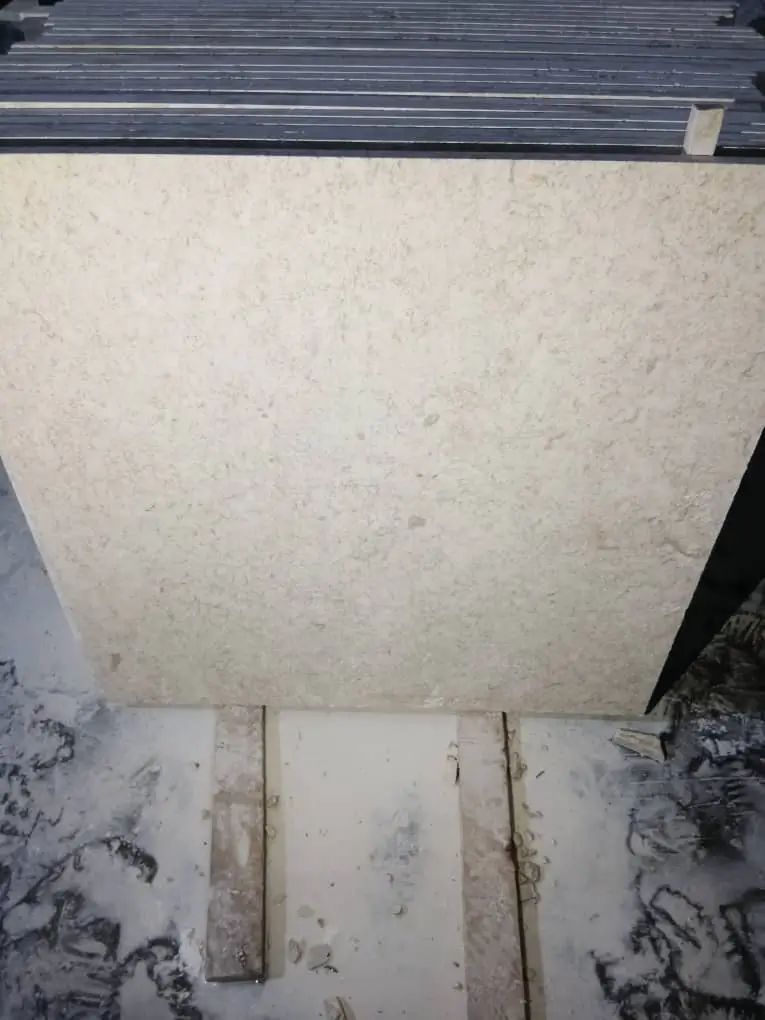
Not all natural outdoor tiles in Arizona perform equally well over problematic subgrades. Tile thickness and flexural strength become critical variables when your base has any residual movement potential. A 3/4-inch travertine tile over a marginally prepared base in expansive-soil territory will crack at the center span between support points. A 1.25-inch limestone tile in the same scenario has enough mass and flexural resistance to bridge minor differential movement without visible cracking.
Travertine remains the most commonly specified natural tile for Arizona residential outdoor use, and the performance data supports that reputation — but only in certain configurations. Its open-pore structure moderates surface temperature effectively, which matters when tiles are adjacent to pool areas. The ASTM C1527 travertine standard establishes minimum absorption and flexural strength requirements that directly predict how a given travertine product handles the soil-movement stresses specific to Arizona low desert installations. Always request third-party test certificates against this standard before accepting a travertine shipment for an Arizona project.
Limestone performs well in Arizona’s central and northern soil zones, particularly where caliche is consistent in depth and the base can be properly engineered. Thicker limestone formats — 1.5 inches and above — provide the structural mass to resist point-load cracking from patio furniture and foot traffic concentrated at movement joint locations. For our Arizona climate outdoor tile resource, the limestone and travertine options are documented with specific thickness and finish recommendations organized by application type.
How Elevation and Regional Climate Zones Shift Your Specification
Climate zone tile selection in Arizona operates on a wider range than most states. You’re working across USDA hardiness zones 5b through 11a within a single state boundary — from Flagstaff’s freezing winters down to Yuma’s essentially frost-free subtropical conditions. This matters for your subgrade assessment because freeze-thaw cycling in northern Arizona soils causes entirely different base movement patterns than the wet-dry expansion common in Phoenix basin soils. Natural tile installation factors across Arizona regions change substantially once elevation enters the equation.
At elevations above 4,500 feet, saturated soil that freezes overnight can heave a tile installation by 0.5 to 1.5 inches in a single freeze event. Your base depth needs to extend below the frost line — approximately 18 inches in northern Arizona zones — and your setting mortar needs a freeze-thaw rating confirmed to at least 100 cycles without bond failure. Down in the Phoenix basin and westward toward Yuma, the freeze risk disappears, but the monsoon saturation risk over caliche makes drainage geometry the controlling design variable instead.
- For elevations above 4,500 feet: specify a minimum 18-inch total base depth with 3/4-inch clean crushed aggregate in the lower 8 inches for drainage capacity
- For Phoenix basin elevations: slope all setting beds at a minimum 1/8-inch per foot toward drainage outlets to prevent water perching above caliche
- Natural tile absorption rates above 0.75% by weight require penetrating sealer application before monsoon season in all Arizona zones
- Thermal expansion coefficients for natural stone range from 3.5 to 7.0 × 10⁻⁶ per °F — this range requires you to calculate joint width for the local temperature delta, not a national average
Reading Substrate Conditions Before You Specify
Substrate conditions for outdoor tiles in Arizona require field assessment before any material is ordered. The worst-case scenario is discovering expansive clay pockets beneath a site after the tile is already on-site — a situation that forces either costly subgrade replacement or specification changes under time pressure. Conducting a percolation test and a basic soil classification at five to seven points across the installation area costs less than $300 in most Arizona markets and can prevent five-figure remediation later.
Tempe and the east Valley in general have significant areas of alluvial fan deposits with varying clay content. These deposits can test as stable compacted soil during the dry season and then display 2–4% volumetric expansion during monsoon saturation. Specifying a flexible-format natural tile — smaller unit sizes reduce individual tile span and bridging demands — mitigates movement risk more effectively than increasing base depth alone in high-clay substrate zones. According to TCNA installation standards, uncoupling membranes installed between the setting bed and substrate are a recognized strategy for exterior tile over substrates with documented movement potential, and Arizona clay pockets qualify. Tracking substrate conditions for outdoor tiles in Arizona across the full site footprint, rather than a single test point, is what separates durable installations from early-failure projects.
- Request a soil classification report from a licensed geotechnical firm for any installation exceeding 500 square feet
- Identify the plasticity index of native soil — PI above 15 indicates significant expansion risk and requires base depth increase or uncoupling membrane
- Sandy desert soil profiles typical of west Phoenix drain well but provide minimal lateral restraint — edge restraint systems become more critical in sandy substrate zones
- Document existing drainage patterns across the site before excavation — redirected surface flow during construction can introduce water to subgrade areas that were previously dry
Finish Selection for Arizona Outdoor Performance
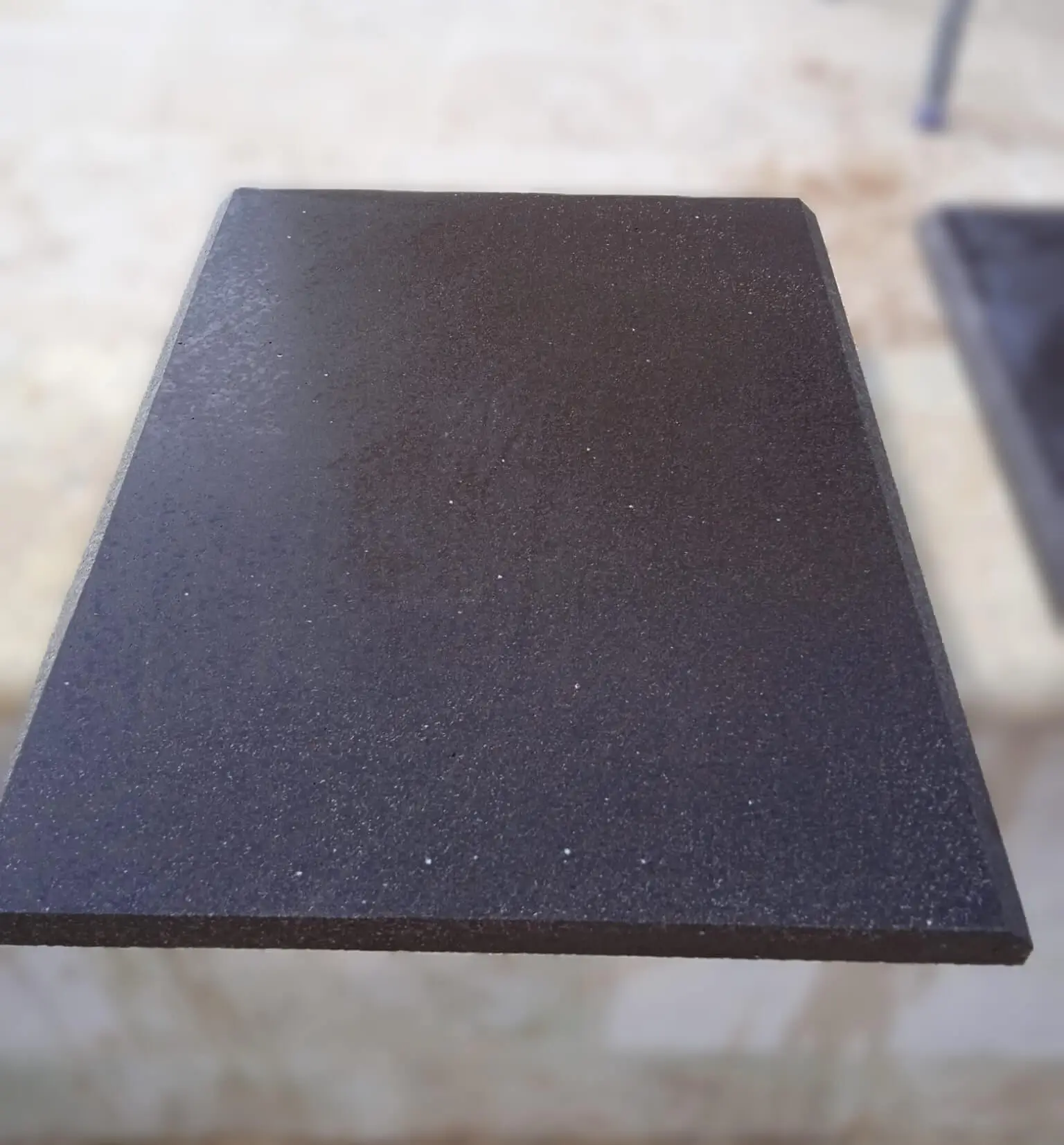
Surface finish affects slip resistance, heat retention, and maintenance burden simultaneously — and getting this decision wrong creates problems that no amount of sealing or cleaning will fix. For outdoor natural stone tile in Arizona, honed and brushed finishes consistently outperform polished finishes in both wet-grip performance and thermal comfort. A polished travertine surface in direct Phoenix sun can reach surface temperatures above 140°F in mid-summer. The same tile in a brushed finish runs 12–18°F cooler because the micro-textured surface interrupts the thermal boundary layer that concentrates radiant heat.
Tumbled finishes deserve mention for Arizona projects because their rounded edges tolerate the minor differential movement that Arizona soil conditions will inevitably introduce. A sharp-edged tile with lippage developing from subgrade movement creates a trip hazard and an aesthetic problem simultaneously. Tumbled edges, by contrast, allow up to 1/16-inch differential movement between adjacent tiles before the installation reads as defective — useful tolerance when you’re working over mixed caliche soil profiles in areas like Chandler, where alluvial soil variability across a single lot is common. The rounded geometry also supports climate zone tile selection in Arizona by accommodating the thermal expansion differential between stone formats used at varying elevations.
Ordering, Lead Times, and Delivery Logistics for Arizona Sites
Natural tile installation factors across Arizona regions include supply chain timing, which has a direct relationship to installation quality. If your tile delivery arrives during the hottest window of the Arizona summer — typically July through mid-August — mortar setting times accelerate significantly, which compresses your open time and increases the risk of skinning before full tile contact is achieved. Coordinating your warehouse order to deliver material in spring (March–May) or fall (September–November) gives you installation conditions that align with printed product specifications rather than requiring constant on-site adjustments.
At Citadel Stone, we maintain warehouse inventory of core Arizona-performing tile formats so that lead times for standard specifications run one to two weeks rather than the six-to-eight week import cycle that affects project-specific orders. This matters most when a subgrade assessment forces a specification change mid-project — having an alternative material available in the warehouse means you’re not holding a project open waiting on an overseas order to clear customs. Confirm warehouse stock levels for your chosen material and thickness before you finalize your installation schedule, and build a minimum five percent overage into your truck delivery quantity for cut waste and breakage allowance on caliche-heavy sites where cut lines sometimes need field adjustment.
Sealing and Maintenance Protocols for Desert Soil Conditions
Arizona’s alkaline soil chemistry affects natural tile through a mechanism most specifiers don’t anticipate: efflorescence from mineral-laden groundwater migrating through porous tile during monsoon saturation cycles. Travertine and limestone are particularly vulnerable because their calcium carbonate composition reacts with the alkaline mineral load in Arizona groundwater, producing persistent white surface deposits that standard cleaning won’t remove. The solution is not more aggressive cleaning — it’s proper sealer selection before the first monsoon season and biennial reapplication.
Specify a penetrating silane-siloxane sealer with a minimum 10-year rated performance for outdoor stone in arid climates. This formulation penetrates the pore structure deeply enough to block capillary rise of mineral-laden water from below, which is the primary migration pathway in Arizona soil conditions. A topical sealer applied to the surface only is insufficient — Arizona’s subsurface moisture pressure during monsoon season can push mineral deposits upward through the tile body regardless of what’s coating the top surface. Your maintenance specification should include annual inspection for joint sand erosion, as depleted joint sand is the gateway for subgrade moisture intrusion in any Arizona installation.
- Apply penetrating sealer within 72 hours of installation completion, before any rain or irrigation exposure
- Reapply sealer every 18–24 months in zones with active monsoon moisture exposure
- Inspect movement joints annually and refill with flexible sealant rated for 35% movement to accommodate Arizona’s soil expansion cycles
- Use pH-neutral cleaners exclusively — acidic cleaners attack limestone and travertine calcium carbonate binders and accelerate pore structure degradation
Specification Decisions That Determine Arizona Outdoor Tile Longevity
The soil profile beneath your installation controls performance outcomes more decisively than any other variable in Arizona outdoor tile projects. Caliche assessment, base depth engineering, and joint design calibrated to local soil movement potential are the three specification decisions that separate installations lasting twenty-plus years from those showing distress before their first decade is complete. Natural outdoor tiles in Arizona deliver excellent long-term value, but only when the subgrade work is done correctly — no material, regardless of quality, compensates for a compromised base in expansive or caliche-affected soil.
For projects that extend into custom format or bespoke stone selections, exploring custom stone tile design options in Arizona adds another dimension to your specification toolkit, particularly when irregular site conditions call for non-standard tile dimensions that better manage the span and support geometry over problem soil. Every project benefits from starting with the ground and working upward — material selection is the final step, not the first. Stone for Arizona projects varies significantly by elevation and soil composition, and Citadel Stone provides natural outdoor tile options selected for performance across Yuma, Peoria, and Chandler climate zones.