
Thermal cycling is the specification variable that separates bespoke stone tile installations that age gracefully from ones that begin failing within three to five years — and Arizona’s temperature range makes it the defining factor in every material choice you’ll make. Phoenix regularly swings 40°F between predawn lows and midday highs, while Tucson and the higher desert elevations can see even wider daily bands with genuine freeze risk in winter. Your bespoke stone tile selection has to accommodate those cycles structurally, not just aesthetically, and that calculus starts before you open a sample book.
Why Thermal Cycling Defines Bespoke Stone in Arizona
Most homeowners and even some designers focus almost entirely on the visual language of bespoke tile — the finish, the format, the veining. The thermal performance conversation gets deferred until installation, which is exactly the wrong sequence. Natural stone moves with temperature. Every material has a coefficient of thermal expansion, and in Arizona’s climate, that coefficient gets exercised daily, not just seasonally.
Dense stones like granite and basalt expand at roughly 4–5 × 10⁻⁶ per °F. More porous limestone and travertine run slightly lower but carry a different risk — moisture absorption during monsoon season followed by rapid thermal cycling creates micro-fractures at grain boundaries over time. For NSI stone tile specifications, absorption rate and thermal expansion are treated as paired variables precisely because their interaction determines long-term joint integrity. Your bespoke stone tile spec needs to account for both.
The practical implication: expansion joint spacing that works in a coastal California installation won’t hold in Phoenix. Generic tile installation guides specify movement joints every 20 to 24 feet. In Arizona’s thermal environment, you’ll want them every 12 to 15 feet for large-format stone, and never more than 20 feet even for modular formats. That’s a decision you lock in during the design phase, not during installation.
Understanding Stone Formats for Arizona Thermal Performance
Format selection isn’t purely an aesthetic decision — it’s a thermal engineering decision. Larger tiles accumulate more dimensional change per piece across a given temperature swing. A 24-inch square tile experiencing a 40°F day-night swing will move roughly 50% more linearly than a 16-inch tile of the same material. Multiply that across a 600-square-foot floor and you’re dealing with a cumulative stress picture that your setting bed and grout joints have to absorb.
- Large-format tiles (18 inches and above) require full mortar coverage — a minimum 95% back-coverage confirmed during installation — because any hollow spot becomes a stress concentrator under thermal loading
- Modular formats (3-piece, 4-piece, versailles patterns) distribute thermal stress more evenly because smaller individual pieces mean shorter thermal expansion runs between joints
- Custom-sized natural stone tiles in Arizona that exceed 24 inches in any dimension need a dedicated engineer’s review of the substrate system before specification
- Thin-format stone (under ¾ inch) is acceptable for interior wall applications but carries genuine risk in Arizona exterior conditions where surface temperatures routinely exceed 150°F
- Thickness at 1¼ to 1½ inches represents the sweet spot for most exterior bespoke applications in the state’s climate zones
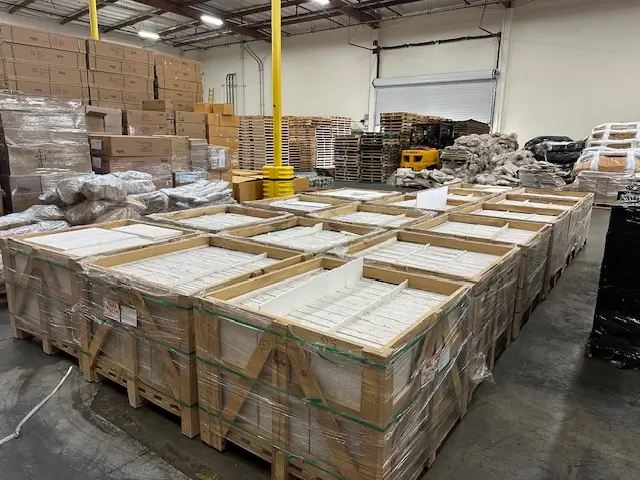
Format also affects delivery and handling. Truck transport of large-format stone panels requires A-frame racking and careful tie-down to prevent edge chipping — something worth confirming with your supplier before you commit to an unusual size. At Citadel Stone, we’ve seen more large-format pieces arrive damaged from suppliers who don’t A-frame their loads than from any other cause.
Material Selection: Stone Types and Thermal Cycle Resistance
The material choice drives almost everything else in your bespoke stone tile specification. Each stone type responds differently to Arizona’s freeze-thaw and thermal cycling conditions, and the performance gap between the best and worst choices is significant.
Limestone and Travertine
Limestone and travertine dominate Arizona’s bespoke tile market for good reason — their warm tonality suits the regional palette, and their thermal mass characteristics moderate surface temperature swings effectively. The tradeoff is absorption. Limestone with water absorption above 3% (tested per ASTM C97) becomes vulnerable in Scottsdale-area installations where monsoon moisture is followed by rapid thermal cycling the following morning. Honed and filled travertine with absorption under 0.75% after sealing performs reliably, but you need to verify that spec with your supplier before it leaves the warehouse.
Granite and Basalt
Granite and basalt represent the highest thermal cycle resistance in the natural stone family. Compressive strengths above 19,000 PSI and absorption rates below 0.4% mean these materials handle daily thermal swings without the micro-fracture risk that affects more porous stones. According to ASTM C615 granite dimension stone standards, the minimum modulus of rupture requirement for exterior granite is 1,500 PSI — a benchmark that high-quality bespoke granite tile exceeds by a factor of three or more. The engineering case for granite in Arizona exteriors is strong. The design limitation is that its color palette is narrower than limestone, which matters for luxury bespoke tile finishes where aesthetic specificity is the whole point.
Marble and Quartzite
Marble in exterior Arizona applications is a specification risk that experienced designers typically avoid. Its recrystallized calcium carbonate structure is sensitive to the combination of UV exposure, moisture cycling, and thermal movement — a combination Arizona delivers year-round. Quartzite is the stronger alternative when you want marble’s visual refinement with meaningfully better thermal cycle resistance. Verify the quartzite’s true composition: some material labeled as quartzite in the trade is actually a metamorphic limestone, and the performance difference is significant. For hand-crafted stone tile selections across Arizona that prioritize both visual refinement and long-term durability, quartzite warrants serious evaluation alongside granite as a primary exterior candidate.
Finish Selection and Its Impact on Thermal Performance
The finish you choose affects more than aesthetics — it directly influences how the stone manages thermal stress and surface moisture across Arizona’s climate cycles. Hand-crafted stone tile selections with textured finishes generally outperform polished surfaces in exterior applications for two reasons: texture increases slip resistance in wet conditions and provides micro-relief that accommodates minor surface movement without telegraphing stress cracks.
- Polished finishes concentrate thermal stress at the surface layer and show hairline movement cracks more visibly than honed or brushed alternatives
- Honed finishes (400 to 800 grit) offer the best balance between cleanability and thermal stress tolerance for Arizona interiors and covered exterior spaces
- Brushed and leathered finishes hide minor surface movement effectively and maintain their appearance through repeated thermal cycling
- Tumbled finishes provide excellent edge treatment for thermal expansion because their naturally rounded edges don’t create the sharp stress concentration points that cut edges produce
- Sandblasted finishes increase surface porosity, which can be a liability in monsoon-prone areas without rigorous sealing protocols
For floor applications in Tucson’s climate — where winter nights can drop below 28°F in elevated neighborhoods and afternoons hit 95°F in spring — the finish decision is also a safety decision. A coefficient of friction (COF) above 0.6 dynamic is the minimum for exterior horizontal surfaces, per ASTM C1028. Polished stone routinely falls below 0.4 when wet. That’s a meaningful liability consideration for bespoke residential installations, not just commercial ones.
Joint Sizing and Setting Systems for Arizona Thermal Movement
Here’s what most specifiers get wrong on Arizona high-end bespoke stone surfaces in exterior applications: they size joints for aesthetics and then try to make the setting system compensate for insufficient movement allowance. That sequence produces failures. The joint system should be sized for the thermal movement budget first, then refined for appearance within that structural constraint.
A minimum 3/16-inch joint filled with ANSI A118.12 polymer-modified grout provides the necessary flexibility for exterior applications. For large-format tiles exceeding 18 inches, 1/4-inch joints filled with an elastomeric sealant (ASTM C920 Type S, Grade NS) at movement joint locations — typically every 8 to 10 feet in Arizona exterior conditions — will prevent the grout crack-through that appears within two to three years on under-jointed installations.
The setting mortar selection matters equally. Unmodified portland cement mortars have a relatively low shear bond strength at elevated temperatures — and Arizona substrate surfaces can exceed 160°F in summer. Medium-bed large-format tile mortars with polymer modification (ANSI A118.15 classification) maintain shear bond through the thermal range your installation will experience. Reviewing the mortar manufacturer’s published temperature performance data is worth doing before the tile truck arrives on site.
Substrate Preparation for Thermal Cycle Resilience
The substrate is where thermal cycle performance either gets built in or left out. In Arizona’s residential construction, you’ll encounter concrete slabs, concrete block walls, and wood-framed substrates — each with different thermal movement characteristics that interact with your bespoke stone tile differently.
Concrete slabs in Phoenix-area construction move seasonally due to both thermal cycling and the expansive clay soils common in the valley. A crack isolation membrane (ANSI A118.12) between the slab and tile assembly is not optional in these conditions — it’s the single most important substrate decision you’ll make. The membrane decouples the tile from slab movement, allowing each to expand and contract independently. TCNA installation standards address this specifically for large-format natural stone over concrete substrates, and their guidance aligns with what field performance actually demands in high-thermal-cycling climates.
- Flatness tolerance of 1/8 inch in 10 feet (1/16 inch in 2 feet for grout joints under 1/4 inch) is the minimum before large-format bespoke tile installation can proceed
- Substrate moisture testing is essential before interior installation — a calcium chloride test reading above 5 lbs per 1,000 sq ft per 24 hours indicates moisture vapor emission levels that will compromise adhesive bond over time
- Deflection under load must not exceed L/720 for stone tile — stiffer than the L/360 standard for ceramic tile — because stone doesn’t flex before it fractures
- Concrete cure time of 28 days minimum before direct application of mortar-set stone is a standard that gets compressed on job sites more often than it should be
For outdoor installations, proper slope and drainage geometry is equally critical. Standing water under even a well-sealed stone surface accelerates freeze-thaw damage in Arizona’s higher elevations, where nighttime temperatures drop below freezing on 20 to 40 nights per year in communities above 4,000 feet. A minimum 1/8 inch per foot slope away from structures isn’t just a code requirement — it’s what keeps your installation intact through decade three.
Sealing Protocols for Bespoke Stone in Desert Climates
Sealing bespoke stone tile in Arizona’s climate involves tradeoffs that most generic maintenance guides don’t address. The desert’s UV intensity degrades topical sealers faster than in temperate climates — a product rated for a 5-year reapplication interval in the Midwest may require reapplication every 2 to 3 years in full Arizona sun exposure.
Penetrating sealers (impregnating fluoropolymer or silicone-based) generally outperform topical sealers for Arizona exteriors because they don’t create a surface film that can blister under intense UV or spall during thermal cycling. For bespoke Arizona stone from Citadel Stone, our technical team recommends penetrating sealer application at 6-month intervals for the first two years on exterior installations — particularly for limestone and travertine exposed to direct western sun — then annually thereafter. That schedule sounds aggressive, but it’s what actually maintains the protection layer in Arizona’s UV and thermal environment.
For interior applications in high-humidity areas like wet rooms and pool surrounds, solvent-based penetrating sealers penetrate more deeply and provide better moisture resistance than water-based alternatives. Apply two coats with a 30-minute interval rather than one heavy coat — absorption is more uniform and you avoid the surface pooling that creates uneven sheen on finished stone. Luxury bespoke tile finishes are particularly sensitive to sealer application technique, since uneven sheen on polished or honed surfaces is immediately visible at raking light angles.
Planning Lead Times and Sourcing for Bespoke Projects
Bespoke stone tile in Arizona operates on a different timeline than standard tile, and project schedules that don’t account for that reality typically experience costly delays. Custom-fabricated stone — particular formats, exclusive finishes, matched material runs — often involves quarry reservation, overseas fabrication, and ocean freight before the material reaches a domestic warehouse. That supply chain runs 12 to 20 weeks in typical conditions, and longer when specific quarry blocks need to be reserved for color-consistent large-format production.
Domestic warehouse availability is the variable worth understanding early. For bespoke stone tile projects with standard format requirements, Citadel Stone maintains Arizona warehouse stock that can reduce fulfillment to 1 to 3 weeks for available material. For truly custom runs — matched veining across 24-inch panels, exclusive color families, or material tied to specific quarry extraction — the timeline requires advance planning, ideally 16 to 20 weeks before your installation date.
- Confirm warehouse stock availability before finalizing your project timeline, not after design approval
- Order 10 to 12% overage on bespoke material — future matching of the same quarry run is often impossible, and cuts and waste on large-format stone are higher than standard tile
- Request material samples from the actual warehouse lot you’re purchasing, not display samples, to confirm color and finish consistency
- Verify truck delivery access at your project site — large-format stone requires flatbed delivery, and some Scottsdale residential sites have access constraints that affect scheduling and unloading logistics
- Stage material on-site 72 hours before installation so it acclimates to the ambient temperature — setting material that’s warehouse-cold against a 110°F substrate creates temporary differential expansion that can affect initial bond
Mesa and Chandler projects with tight site access present their own truck delivery considerations — confirming clearance heights, turn radii, and unloading zones before the delivery date prevents the schedule disruptions that come from a flatbed arriving at a site it can’t access. Custom-sized natural stone tiles in Arizona at large format compound these logistics, since off-loading equipment requirements differ from standard pallet deliveries.
Decision Points for Bespoke Stone Tile in Arizona
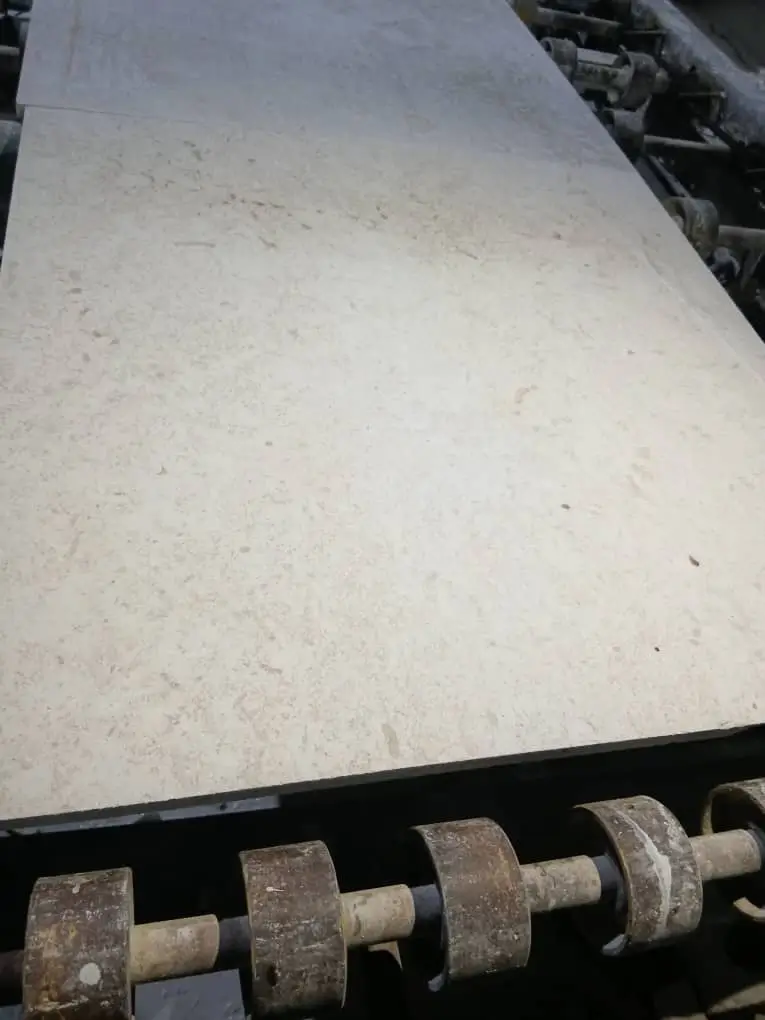
The specification decisions that define bespoke stone tile performance in Arizona converge on one underlying principle: thermal cycling is the design condition, not an afterthought. Material selection, format, finish, joint sizing, substrate system, and sealing protocol all feed into how well your installation manages the daily and seasonal temperature range that Arizona’s climate delivers without exception.
Start with your thermal movement budget — calculate the expansion per tile format for your specific material’s coefficient, set your joint spacing to absorb it, and then select the setting system that maintains bond across the full temperature range. Work backward from performance to aesthetics, not the other way around. The hand-crafted stone tile selections across Arizona that define a space’s character are fully achievable within those engineering constraints — the art of bespoke specification is doing both simultaneously.
Beyond the thermal engineering, the sourcing and logistics questions deserve early attention. Confirming warehouse availability, verifying truck access for large-format delivery, and building realistic lead times into your project schedule are the practical details that separate on-time bespoke installations from expensive delays. The specification work and the procurement work have to run in parallel — waiting until design is complete to start sourcing is a schedule risk you don’t need to take. For a closer look at how material value stacks up against installation investment across Arizona stone projects, stone tile cost versus long-term value in Arizona provides a useful framework for that conversation. Projects across Phoenix, Chandler, and Mesa use Citadel Stone hand-finished bespoke stone tile panels in formats up to 24 inches wide, matched to exclusive material runs unavailable through standard distributors.