
Stone tile cost in Arizona rarely tells the full story on its own — the real question is how your material selection integrates with the landscape aesthetic you’re building toward, and whether that selection holds its value over a decade of Phoenix-area heat cycles. The gap between a $4-per-square-foot tile and a $14-per-square-foot tile isn’t always what you’d expect when you factor in replacement frequency, maintenance demands, and how each material reads against desert plantings, warm stucco tones, and the earthy palette that defines Southwest architecture. Before you lock in a budget, understanding what drives Arizona stone tile project cost breakdown — and where the value equation tips — is essential groundwork for any serious specification.
Design First: Why Aesthetics Drive Stone Selection in Arizona
Arizona’s residential landscape design doesn’t follow a single style, but it does follow a clear logic: materials need to belong. Whether you’re working with a desert xeriscaping plan in Chandler or a contemporary minimalist courtyard in a newer Tempe development, your stone tile selection signals tone before it signals price. Warm-toned travertine in ivory or walnut shades reads effortlessly against desert-adapted plantings — agave, brittlebush, palo verde — because those colors share the same geological origin as the soil they grow in.
The design integration challenge in Arizona is subtler than most homeowners expect. You’re not just matching stone to a house color — you’re matching it to a landscape palette that changes seasonally, a light quality that’s fundamentally different from coastal states, and an architectural vocabulary that blends Spanish Colonial Revival, Mid-Century Modern, and contemporary Sonoran styles within a single neighborhood. A cool-toned gray limestone tile that photographs beautifully in Oregon can look flat and disconnected in Arizona’s high-UV afternoon light. The material’s undertone matters as much as its price per square foot.
Arizona Stone Tile Pricing Tiers: What Each Level Buys You
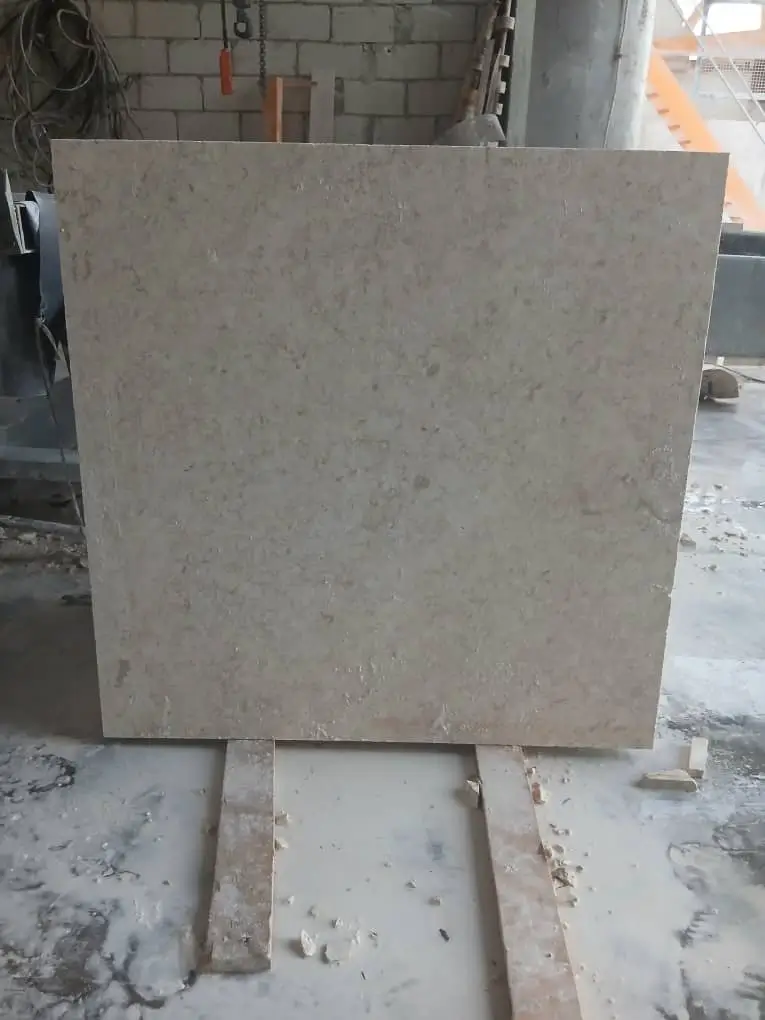
For Arizona homeowners working through a natural stone tile pricing guide in Arizona, it helps to think in three broad tiers rather than individual product prices. Each tier reflects not just material cost but finish quality, dimensional consistency, and the labor investment required to install correctly.
- Entry tier ($3–$6/sq ft): Tumbled travertine, standard-grade limestone, and basic slate — expect some dimensional variation and surface irregularity that requires more skilled installation labor to compensate
- Mid tier ($7–$11/sq ft): Honed travertine in consistent fills, calibrated limestone in larger formats, and basalt tile — dimensional tolerances tighten considerably, reducing installation labor offset
- Premium tier ($12–$18/sq ft): Polished marble-look limestone, bookmatched travertine, large-format basalt — requires experienced fabricators and precise substrate prep, but delivers 25+ year service life when installed correctly
What Arizona stone tile project cost breakdowns often undercount is the installation multiplier. In extreme heat climates, setting materials cure faster, expansion joint spacing must be reduced, and you need additional bond breaker membranes in full-sun exterior applications. That can add $2–$4 per square foot to your installed cost regardless of material tier. The tile price tag is only part of the full equation.
Which Stone Materials Deliver Real Value in Arizona Heat
Field performance across Arizona’s diverse climate zones — from the low-desert valleys to the higher-elevation communities north of Phoenix — shows clear patterns in which materials hold value and which require more maintenance intervention than their price suggests.
Travertine performs remarkably well in exterior applications when you specify filled-and-honed rather than open-pore finishes. The thermal mass of travertine absorbs morning heat progressively rather than spiking, which makes it more comfortable underfoot in late-morning conditions than dense granite alternatives. According to the Natural Stone Institute ASTM tile stone specifications, travertine’s absorption coefficient directly influences its performance in freeze-thaw and high-UV environments — a specification detail that separates a well-chosen tile from a maintenance headache.
Limestone in the tan-to-cream color range reflects a meaningful portion of solar radiation while holding the warm aesthetic that integrates naturally with Arizona’s landscaping traditions. The practical limitation is surface hardness — limestone in high-traffic exterior corridors will show wear at 10–15 years without periodic honing, whereas premium basalt tile under the same conditions holds its finish for 20+ years with only standard cleaning. For projects where aesthetic longevity matters as much as initial cost, that durability gap justifies the price premium at every tier.
Stone Flooring Budget Comparison for Arizona Homeowners
Running a genuine stone flooring budget comparison for AZ homeowners means accounting for the full lifecycle, not just the purchase price. Here’s how the most commonly specified materials compare when you factor in installation, sealing, and realistic maintenance cycles over 15 years in Arizona conditions:
- Travertine (tumbled, exterior): Low purchase cost, but budget for sand joint maintenance every 3–4 years and resealing every 2 years in full-sun exposures — total 15-year cost per square foot typically runs 40–55% higher than purchase price alone
- Honed limestone (interior/covered exterior): Moderate purchase cost, biennial sealing required, low repair frequency — one of the best total-value performers in Arizona when kept out of standing water zones
- Basalt tile (honed or bush-hammered): Higher purchase cost, but virtually zero resealing demand and exceptional abrasion resistance — total 15-year cost often matches or beats mid-tier limestone
- Polished marble (interior only): Premium purchase cost, high maintenance sensitivity — reflective finish degrades quickly in Arizona’s hard water conditions without quarterly professional maintenance
- Slate (exterior use): Moderate cost, excellent thermal performance, but delamination risk in extreme heat exposure without proper bed adhesive selection — a risk many standard specifications miss
The Tile Council of North America installation standards provide baseline guidance on adhesive selection and joint sizing for natural stone in high-temperature climates — your Arizona project should be referencing TCNA Handbook details specifically, not generic installation guides written for temperate conditions.
How Landscape Integration Changes Your Stone Tile Selection
Desert xeriscaping has shifted dramatically in Arizona over the past decade. Mature xeriscaping designs now use stone tile as a primary design element — not just as functional ground cover — and that shift means the visual relationship between your tile and the plant palette carries real weight. Peoria’s newer master-planned communities, for example, have embraced a layered approach where stone tile transitions from interior flooring to covered patio to open courtyard without a material change, creating visual continuity that makes smaller outdoor spaces read larger.
That continuous-run approach requires your stone tile to perform in both conditioned and unconditioned environments, which narrows the field considerably. You need a material with consistent dimensional stability across a 60-degree temperature swing (common between interior AC and full-sun exterior in Arizona summers), low enough absorption to resist the brief but intense monsoon saturation events, and a finish that doesn’t create glare in the intense Arizona light. Warm-toned, honed limestone or filled travertine in 12×24 or 16×16 formats tends to hit all three requirements while also integrating naturally with the ochre, sage, and terracotta tones typical of Southwestern landscape design.
At Citadel Stone, we regularly work with landscape architects who are coordinating stone selection across indoor-outdoor transitions — and the most common adjustment we recommend is shifting one shade warmer than the digital swatch suggests. Arizona light reads materials about half a tone cooler than indoor showroom conditions, so a tile that looks perfectly balanced inside often reads slightly cold against desert landscaping once installed.
Affordable Stone Tile Materials Across Arizona: Where to Find Value
The search for affordable stone tile materials across Arizona most often leads buyers toward tumbled travertine and standard limestone — and for good reason. These materials offer genuine visual warmth, reasonable dimensional consistency in the mid-grade range, and a price point that allows larger format installations without budget overrun. The trade-off you accept at the lower price tier is surface variation and fill quality in travertine, and slightly reduced hardness in limestone.
Here’s what actually drives material cost in the Arizona market, beyond the stone type itself:
- Format size: Large-format tiles (24×24 and above) command a 25–40% premium over equivalent 12×12 material, but reduce installation labor time considerably — the net cost difference is often smaller than the material price gap suggests
- Finish type: Polished surfaces carry a processing premium of $2–$4 per square foot over honed or tumbled equivalents from the same quarry
- Calibration tolerance: Tightly calibrated tiles (±1mm) reduce lippage risk dramatically in large-format installations but cost more to produce
- Country of origin: Turkish travertine typically runs 15–20% less than equivalent Italian-grade material, with comparable performance in most exterior Arizona applications
- Warehouse availability: In-stock material eliminates the 6–8 week import lead time and protects you from mid-project price fluctuations
Citadel Stone maintains warehouse inventory in Arizona specifically to reduce that lead-time exposure — for most common formats and finishes, you’re looking at 1–2 week fulfillment rather than the import cycle that can stall a project mid-phase.
For a detailed breakdown of how to approach material selection without overextending your budget, Citadel Stone tile costs Arizona walks through current pricing and material tier comparisons specific to the Arizona market.
Installation Variables That Shift Your Cost and Value Equation
Your stone tile’s cost-to-value ratio in Arizona is determined as much by what happens below the tile as by the tile itself. Base preparation in Arizona’s expansive clay soils — particularly in areas around older Tempe neighborhoods, where caliche layers create drainage interference — requires additional attention to substrate stability. That trapped moisture beneath tile during monsoon season leads to bond failure that has nothing to do with tile quality or the natural stone tile pricing guide in Arizona you used to spec the material.
- Substrate must achieve minimum 85% compaction before any setting bed is applied — Arizona’s summer heat accelerates curing but doesn’t compensate for inadequate compaction
- Expansion joints at 10–12 foot intervals (not the 15-foot standard written for cooler climates) are essential for exterior stone tile in full-sun Arizona exposures
- Modified thinset rated for high-temperature applications should be specified over standard thinset — the bond strength difference is measurable and the cost differential is minor
- Waterproof membranes under exterior tile in shaded areas where condensation can accumulate add $1.50–$2.50 per square foot but prevent the most common bond-failure scenario in Arizona covered patios
The ASTM natural stone tile absorption, strength, and slip resistance testing standards provide the technical thresholds your specification should reference — particularly the absorption rate benchmarks that determine which tiles are appropriate for Arizona’s periodic wet-dry cycling during monsoon season.
Sealing, Maintenance, and Long-Term Value Protection
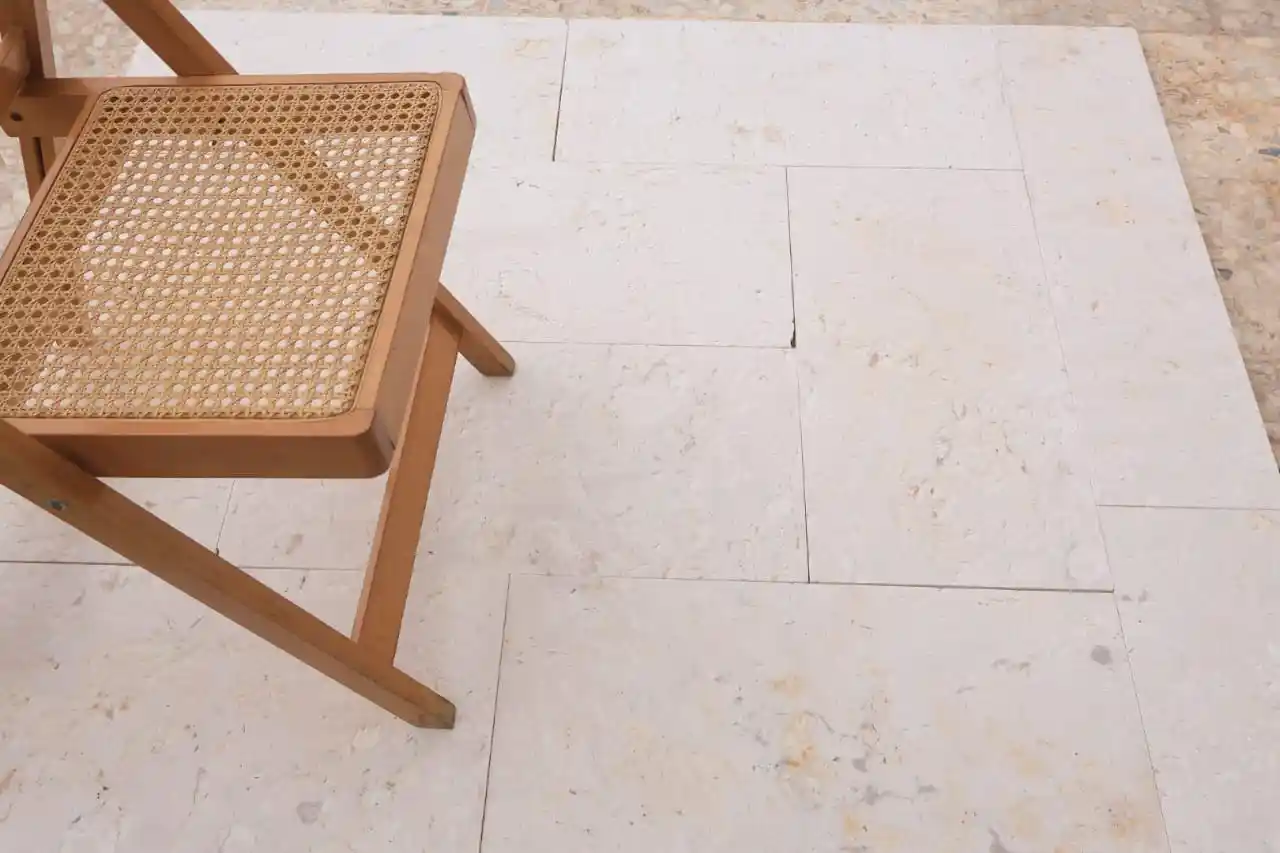
Long-term value in Arizona stone tile installations depends heavily on sealing protocol — and the right protocol varies significantly by material, finish, and exposure. A penetrating impregnator sealer applied to honed limestone in an interior application might last 4–5 years before reapplication is warranted. That same sealer on a full-sun exterior travertine installation in Arizona’s intense UV environment will need renewal every 18–24 months.
The mistake that most accelerates tile degradation in Arizona is applying a topical coating sealer to exterior stone in high-heat areas. Topical sealers trap heat beneath the coating surface, which eventually causes micro-blistering and adhesion failure. Penetrating impregnators allow vapor transmission while blocking liquid penetration — that’s the specification you want for any Arizona exterior stone tile application.
- Limestone and travertine: Penetrating impregnator, reapply every 18–24 months for exterior full-sun, 36–48 months for shaded exterior or interior
- Basalt: Low absorption rate means minimal sealing demand — an initial sealer application and annual inspection is generally sufficient
- Slate: Sealing depends heavily on slate variety — some dense Welsh slate needs minimal treatment, while softer slate varieties require aggressive sealing protocols in wet environments
- Marble (interior): Penetrating sealer plus pH-neutral-only cleaning — Arizona’s hard water creates calcium deposit buildup that acidic cleaners accelerate rather than remove
Material-specific absorption coefficients should guide sealing frequency decisions across any stone flooring budget comparison for AZ homeowners — a detail worth reviewing before finalizing your maintenance specification for any Arizona stone tile project.
Expert Summary
The cost-versus-value question for stone tile in Arizona resolves differently depending on whether you’re optimizing for initial budget, 15-year lifecycle cost, or aesthetic integration with your landscape design. Entry-tier materials can deliver genuine value in the right application — a tumbled travertine courtyard in a xeriscape setting reads as authentically as premium limestone at a fraction of the cost, provided the installation base and sealing protocol are properly specified. The installations that underdeliver on value almost always trace back to cutting corners on substrate preparation or choosing materials that work in other climates but don’t account for Arizona’s specific thermal cycling and UV intensity.
Your stone tile specification should start with the landscape design intent and work backward to the material — not the other way around. The palette you’re building toward, the finish that integrates with your architecture, and the maintenance commitment you can realistically sustain over ten years: those three factors narrow the field more accurately than price alone. For homeowners exploring affordable stone tile materials across Arizona on a tighter budget, stone tile flooring options on a budget covers additional specification guidance for cost-conscious Arizona projects. Builders in Phoenix, Yuma, and Gilbert use Citadel Stone’s material tiers to align stone tile installation budgets with long-term value expectations on renovation projects across Arizona.