

Red granite suppliers vary more than most buyers expect — and the gap between a good shade match and a costly misorder often comes down to how you read a sample versus how the full pallet actually delivers. Shade consistency in red granite is notoriously difficult to predict from a single tile or photograph, because the mineral composition — specifically the ratio of orthoclase feldspar, quartz, and hornblende — shifts between quarry blocks even within the same extraction site. Understanding how these variables interact before you commit to a volume order is the real starting point for any successful red granite specification.
What Makes Red Granite Shade Vary
The red coloration in granite originates almost entirely from potassium feldspar content. Higher feldspar concentrations push the stone toward deep burgundy and brick tones, while lower concentrations yield a muted salmon or pale rose. Your shade selection isn’t just an aesthetic call — it determines how the stone will age, how it responds to sealing, and how visible surface variation will be across a large installed area.
Red granite also contains magnetite and biotite mica in varying percentages, and these dark minerals create the fleck pattern that gives each variant its character. A granite with heavy black flecking reads dramatically different at 50 feet than it does in a hand sample under showroom lighting. Always evaluate large slab mockups or quarry photos alongside your sample tiles before finalizing.
Reading Shade Ranges from Reputable Red Granite Suppliers
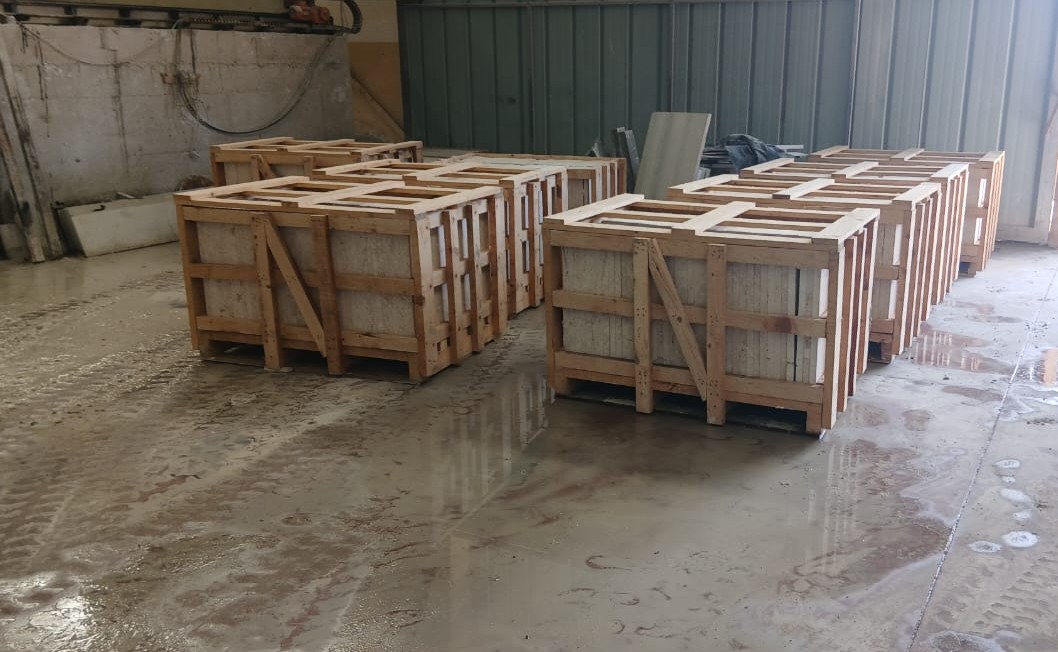
Reputable red granite suppliers don’t just show you a single swatch — they provide shade range documentation that captures the lightest and darkest tiles produced from a given batch. When reviewing supplier materials, ask specifically for the full shade range card, not just the nominal sample. A supplier who can only show you one representative piece is likely working from limited stock or inconsistent sourcing.
- Request minimum three samples from different areas of the same quarry block to assess natural variation
- Ask for batch numbers — reputable suppliers track production lots so you can re-order matching material
- Confirm whether the shade range applies to the specific finish you need: honed, polished, and flamed granite all read differently in the same base color
- Verify that warehouse inventory photographs match the physical samples — lighting in stone yards can shift apparent warmth by 15–20%
- Check lead times against your project schedule, because popular red shades can deplete quickly from warehouse stock between restocking cycles
According to NSI granite durability specifications, granite’s crystalline structure makes it one of the most dimensionally stable natural stones available — but that stability doesn’t prevent shade variation between production runs. Treat each major order as a separate shade event.
Finish Selection and Its Effect on Shade Perception
Your finish choice does more than affect texture — it fundamentally changes how the red reads in your installation. A polished finish amplifies the warm, saturated tones and makes the stone appear darker and more intense. A honed or bush-hammered finish scatters light across the surface and pulls the color toward a drier, more muted version of the same base shade.
For exterior installations where the stone faces direct sun exposure, finish choice also affects long-term appearance. UV radiation doesn’t fade granite the way it fades sedimentary stone, but it does oxidize surface minerals over time — particularly the iron-bearing compounds that create red coloration. A polished surface is more susceptible to visible oxidation streaking because the reflective finish makes surface changes immediately apparent. A honed or flamed finish distributes that oxidation effect more evenly and tends to age more gracefully in high-UV environments.
- Polished: richest color, highest gloss, shows oxidation and weathering most prominently
- Honed: matte surface, softer color reading, more forgiving in full-sun applications
- Flamed: textured, slip-resistant surface, excellent UV performance, cooler apparent tone
- Bush-hammered: rugged texture, ideal for high-traffic exterior use, understated color range
For exterior red granite pavers in sun-exposed settings, applying a penetrating sealer rated for UV inhibition extends the life of the surface finish and slows the oxidation process. Plan your sealing schedule on a 2–3 year cycle for high-exposure installations, and use a color-enhancing sealer if maintaining the original saturated tone is a priority.
Shade Families in Red Granite
The red granite category spans a wider tonal range than most buyers anticipate. Breaking it into distinct shade families before you start sourcing makes supplier conversations far more productive. You’ll spend less time back-and-forth over samples when you can specify a shade family upfront.
- Burgundy-red: deep, wine-toned stones with minimal variation; sourced primarily from Scandinavian and Brazilian quarries
- Imperial red: bright, saturated crimson with moderate black flecking; one of the most commonly available red granite varieties
- Salmon-pink: warm, lighter tones that read as blush in indirect light; often called “rose granite” in supplier catalogues
- Multicolor red: complex blends of burgundy, cream, and grey with dramatic movement; highly variable by slab
- Dark ruby: near-black base with intense red mineral deposits; a dramatic option but difficult to shade-match across orders
The ASTM C615 granite dimension stone standard provides classification criteria for granite quality grades, which matters when you’re comparing products across red granite suppliers — a Grade A classification confirms the material meets minimum structural and absorption requirements regardless of shade category.
Ordering Strategy to Protect Shade Consistency
Shade consistency across a large project is where ordering strategy pays off. The single most common mistake is ordering in multiple smaller shipments without locking in a batch hold on the initial warehouse stock. By the time your second truck arrives with supplemental material, the supplier may have rotated to a new production batch — and even 5% shade variation becomes visible once both batches are installed side by side.
Your ordering strategy should account for a 10–15% overage on your calculated square footage specifically to hold back matching material for repairs and future phase work. This surplus stock keeps in a climate-controlled warehouse without degradation, and it eliminates the scenario where a broken paver years later forces you back into the market for an impossible shade match. At Citadel Stone, we recommend calculating total overage before the first truck is dispatched — mid-project corrections cost far more than the initial buffer stock.
- Secure a batch hold confirmation in writing before any deposit is placed
- Request a pre-shipment sample from the confirmed batch for final shade approval
- Specify delivery sequence if phasing the project — first truck should carry field material, final truck your buffer stock
- Document the batch number on every invoice for future reference
UV Exposure and Long-Term Color Retention
Granite’s igneous structure makes it significantly more UV-resistant than limestone or travertine, but extended sun exposure does create visible changes — particularly in red varieties where iron oxide compounds contribute to coloration. In full-sun installations, expect the surface to develop a slightly warmer, more amber undertone over 5–10 years as iron minerals at the surface oxidize further. This isn’t structural degradation — it’s a cosmetic shift that you can manage through sealing.

Penetrating impregnating sealers slow the rate of mineral oxidation by limiting moisture and oxygen ingress at the surface level. For red granite pavers in open, sun-exposed settings, a high-quality impregnating sealer applied every 2–3 years provides meaningful color protection. Topical film-forming sealers aren’t recommended for exterior granite — they trap moisture, peel under UV load, and create a maintenance burden that outweighs any color benefit. The USGS dimension stone production data confirms granite’s structural durability across diverse exposure conditions, supporting its classification as a premier long-term exterior material when properly maintained.
For the Citadel Stone color library, reviewing documented shade ranges across multiple red granite families gives you a reference benchmark for comparing supplier samples against known production standards.
What to Verify Before Placing a Volume Order with Red Granite Suppliers
Before any significant volume commitment to a red granite supplier, run through this verification checklist. It’s a straightforward process that protects your project timeline and avoids the most common sourcing failures in natural stone procurement.
- Confirm current warehouse stock levels against your total required quantity plus overage buffer
- Ask whether the available stock is from a single production run or consolidated from multiple batches
- Request absorption rate data — red granite for exterior use should meet ASTM C615 requirements for water absorption below 0.40%
- Verify that thickness tolerances are within ±1/16 inch for uniform installation across your specified depth
- Check truck access requirements for your delivery site — material delivered on standard flatbeds needs at least 14 feet of clearance height and firm surface access for unloading
- Confirm the supplier’s return or exchange policy for shade-rejected material before signing off on delivery
Decision Points
Getting red granite right for your project ultimately comes down to decisions you make before the order is placed, not after the material arrives. Shade family, finish type, batch consistency, overage strategy, and sealing protocol are all variables you control at the specification stage — and each one directly affects how the installation looks on day one and how it holds its appearance over the next decade.
Choosing between red granite suppliers isn’t simply a price comparison. It’s an assessment of their ability to deliver consistent shade, document their sourcing, and support your project timeline with reliable warehouse stock and coordinated truck delivery. The suppliers worth working with treat shade documentation as a standard service, not a special request. As you finalize your specification, reviewing related maintenance requirements gives you the full picture — granite paver care fundamentals covers the ongoing steps that protect your investment after installation. Stone for nationwide projects, Citadel Stone red granite holds its deep hue well in hot, dry climates and full sun.
Related reading: granite cobblestone suppliers · granite cut to size suppliers · granite curbing suppliers.