
Budget miscalculations are the leading cause of stalled paver projects in Arizona — and they almost always trace back to sourcing decisions made before a single block is specified. Your paver block tile guide Arizona planning starts not with material aesthetics, but with understanding how freight distance, local stock availability, and labor market dynamics in this state will shape your total project cost before installation even begins. Getting these variables right from the start separates a project that finishes on budget from one that bleeds contingency funds in the final two weeks.
How Arizona’s Regional Market Shapes Your Paver Budget
Arizona’s geography creates a split market that most out-of-state contractors don’t anticipate. The Phoenix metro and Scottsdale corridor sit within reach of multiple regional distribution points, which keeps freight costs competitive. Move to the northern or eastern edges of the state, and the equation shifts — truck delivery surcharges can add $200–$600 per load depending on haul distance from the nearest warehouse, which meaningfully affects your cost-per-square-foot calculation on residential paver tile jobs.
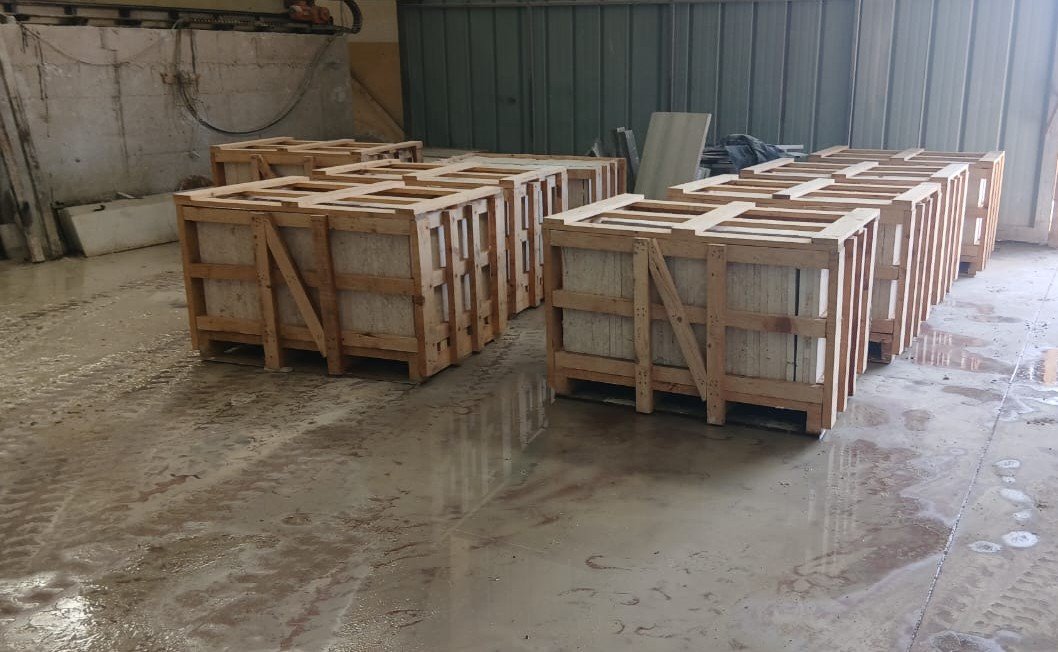
Choosing paver tiles from Arizona manufacturers or regional distributors with in-state warehouse inventory substantially reduces that freight exposure. The difference between sourcing from a warehouse with Arizona stock versus waiting on an import shipment isn’t just cost — it’s 6–8 weeks of lead time that can collapse project schedules, especially on contractor-managed jobs with fixed completion dates. Confirm available warehouse stock before locking in your timeline with the homeowner or general contractor.
Material-to-labor cost ratios in Arizona also run differently than the national average. Skilled masonry labor in the Phoenix and Scottsdale markets commands premium rates, particularly for intricate layout patterns. This makes material efficiency a high-priority variable — cut waste directly translates into additional labor hours, which is where standardized block paver sizing options in Arizona become a specification decision, not just an aesthetic one. Tiles that arrive in consistent dimensional batches reduce the frequency of field cuts, keeping your labor hours predictable.
Understanding Block Paver Sizing Options for Arizona Projects
Sizing selection is where the paver block tile guide Arizona conversation gets technical in ways that matter to your bottom line. The most common residential formats — 12×12, 16×16, 18×18, and 24×24 — each carry different cut-waste profiles depending on your layout area’s dimensions. Rectangular formats like 12×24 introduce directional complexity that can push cut waste above 15% on irregularly shaped patios, while square formats in modular sizes tend to hold waste below 8–10% on standard rectangular installations.
- 12×12 format: highest versatility for curved or irregular areas, lowest individual unit cost, higher labor intensity due to unit count
- 16×16 and 18×18 formats: strong balance of coverage speed and cut manageability, popular in mid-range Scottsdale residential projects
- 24×24 format: fastest coverage on large flat areas, but requires precise substrate flatness — tolerance errors become visible at this scale
- Mixed-format patterns: aesthetically compelling but demand more planning time; material ordering complexity increases and waste percentages are harder to predict without a layout drawing
- Thickness matters as much as face dimension — 1.25-inch tiles suit pedestrian-only patios, while driveways and vehicle-accessible areas require a minimum 2-inch nominal thickness
For residential paver tile selection, AZ homeowners trust the guidance that thickness and format should be decided together, not in sequence. Specifying a thin tile in a large format on a substrate with minor undulation creates lippage that becomes a tripping hazard and an aesthetic problem simultaneously. Your substrate prep standard needs to be set before format selection is finalized.
Value Engineering: Where Material Cost and Project Value Intersect
Value engineering on paver projects in Arizona isn’t about choosing the cheapest tile — it’s about finding the specification point where material performance, longevity, and installation efficiency produce the lowest total cost of ownership. A $4.50/sq ft paver that requires resealing every two years and shows surface wear at year eight costs more over a 20-year period than a $7.00/sq ft tile that holds its surface integrity for 18–22 years with biennial maintenance.
The calculation gets more specific when you factor in Arizona’s UV exposure. Surface degradation accelerates here compared to moderate climates — a paver block tile guide Arizona specification that ignores UV-resistance ratings is missing one of the biggest long-term cost drivers in this state. Look for tiles with a hardness rating of 6+ on the Mohs scale and surface absorption rates below 3% to maintain color stability and reduce cleaning frequency over time.
- Lower absorption rates reduce efflorescence risk, which is elevated in Arizona’s alkaline soil environments
- Higher surface hardness resists abrasive desert sand particulate, which acts like low-grade sandpaper on softer tile surfaces over time
- Thermal stability ratings affect joint movement — tiles with lower thermal expansion coefficients require less frequent joint sand replenishment
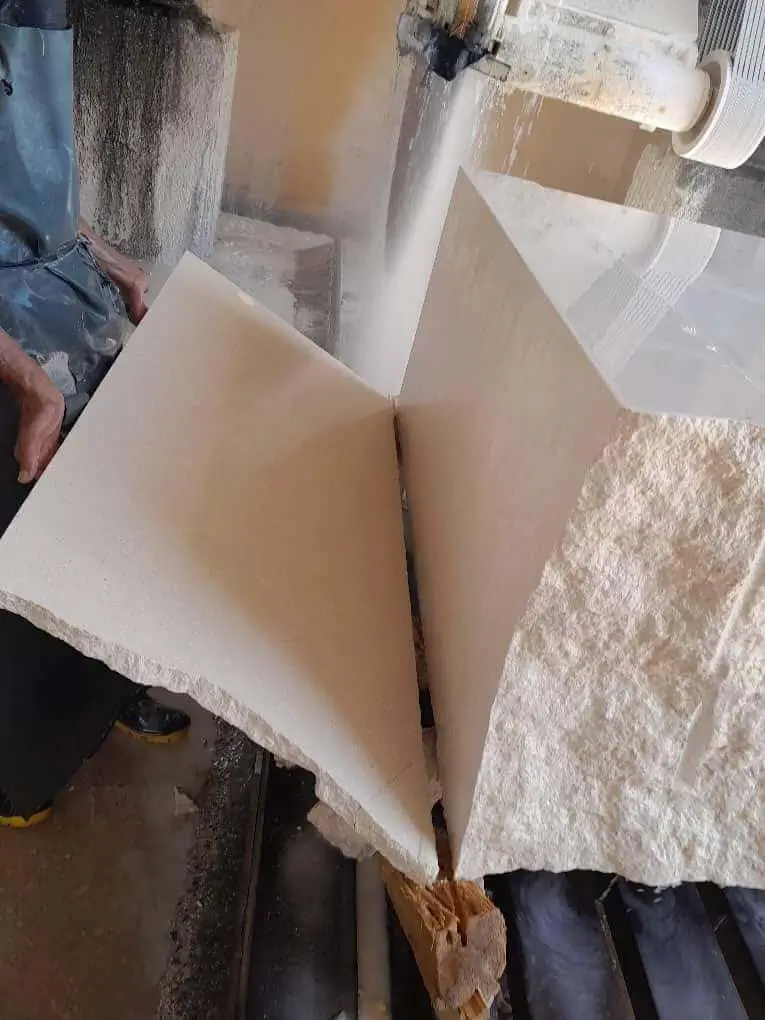
- Factory-calibrated thickness reduces grinding time during installation, directly cutting labor hours on larger residential projects
At Citadel Stone, we evaluate these performance metrics before any product enters our Arizona inventory — not after customer feedback identifies a field problem. That upstream quality check means you’re not discovering absorption or thickness variance issues when the tile is already on site.
Freight, Logistics, and Lead Time Planning in Arizona
Here’s what most specifiers underestimate: the freight structure for paver tiles in Arizona is not uniform, and treating it as a flat cost is where project budgets get damaged. Pallet weight, truck access constraints at residential sites, lift gate requirements, and delivery distance from the nearest stocking warehouse all affect your landed cost per square foot. On a 1,200 square foot patio project, the difference between optimized and unoptimized freight can run $400–$900 — enough to meaningfully shift your material-to-labor ratio.
Your truck access assessment should happen before you finalize the order quantity. Narrow driveways, overhead clearances below 13.5 feet, or sites without a concrete pad near the unloading point will require additional equipment or smaller truck configurations, both of which carry cost premiums. In established neighborhoods in Tucson, where lot sizes are compact and street widths constrain delivery vehicles, this variable catches unprepared contractors regularly. Confirm site access specifics with your supplier before scheduling the delivery window.
Lead time planning requires you to understand whether your supplier is pulling from in-state warehouse stock or coordinating an import order. In-state warehouse availability typically translates to 1–2 week lead times. Import orders — even from suppliers with strong logistics networks — run 6–10 weeks from order confirmation to site delivery. For Arizona’s active residential construction seasons (October through April), warehouse stock often tightens, and contractors who haven’t confirmed allocation early find themselves pushing project start dates or substituting materials at higher cost.
For a complete product overview and current availability, the Arizona paver block guide Citadel Stone provides detailed specifications and stocking information relevant to your project planning.
Climate Performance Factors That Affect Long-Term Specification Costs
Arizona’s desert environment accelerates the wear mechanisms that temperate-climate specifications don’t fully account for. Surface temperatures on dark-format paver tiles in Phoenix-area installations have been measured above 160°F during peak summer exposure — a thermal loading condition that stresses joint sand, causes dimensional movement in lower-quality tiles, and degrades some sealant chemistries within two to three seasons. Your material specification needs to account for this thermal environment, not because it’s the primary budget driver, but because premature maintenance cycles are a real cost that belongs in your total ownership analysis.
- Light-colored tiles reduce surface temperature by 25–40°F compared to dark formats under direct Arizona sun exposure — a meaningful comfort and longevity factor for barefoot-use patios
- Thermal expansion in concrete-based pavers runs approximately 5.5–6.5 × 10⁻⁶ per °F — spec your expansion joints accordingly, with placement every 10–12 feet in direct-sun exposures rather than the 15-foot standard used in milder climates
- Joint sand stabilized with polymeric binders holds better through Arizona’s monsoon wash cycles than standard sand, reducing the annual replenishment cost that unsuspecting homeowners often absorb
- Freeze-thaw is not uniformly absent across Arizona — Flagstaff sits above 7,000 feet elevation and experiences genuine winter freeze cycles that require pavers rated for freeze-thaw durability per ASTM C1262
In Flagstaff, the freeze-thaw specification requirement creates a product selection fork that doesn’t apply to low-desert projects. Tiles that perform well in Scottsdale may not carry the freeze-thaw durability rating needed for a Flagstaff installation — and using the wrong spec produces spalling within two to three winters, creating a warranty and replacement cost that wipes out any initial material savings.
Base Preparation and Substrate Requirements in Arizona Soils
The substrate beneath your paver block tiles is where Arizona’s unique geology creates specification variables you won’t find in standard installation guides written for national audiences. Caliche — the calcium carbonate hardpan layer common across much of Arizona — presents both a challenge and an advantage depending on its depth and composition. When it appears at 18–24 inches and is properly prepared, it functions as a near-ideal sub-base layer. When it appears at 4–6 inches and is left unprepared, it creates drainage restrictions that cause joint failure and tile settlement.
Your base preparation specification should call for a minimum 4-inch compacted aggregate base for pedestrian applications and 6–8 inches for vehicular traffic areas — but those numbers assume properly draining native soil. In expansive clay zones, which appear in isolated pockets across the state, add a geotextile separation layer between native soil and your aggregate base to prevent clay migration into the base course over time. This step costs $0.30–$0.50 per square foot during installation and prevents the kind of progressive settlement that leads to tile replacement costs a decade later.
- Compact aggregate base to 95% Proctor density — do not accept anything less on Arizona projects where thermal cycling creates movement stress at every seasonal transition
- Use angular crushed aggregate rather than rounded river rock for base material — angular particles interlock under compaction and resist lateral migration from heavy point loads
- Install a 1-inch bedding sand layer above the compacted base — do not use limestone screenings as a bedding layer substitute in areas with high moisture fluctuation, as screenings can harden into a rigid mass that limits drainage
- Slope all paved surfaces a minimum of 1/8 inch per foot away from structures — Arizona’s monsoon intensity can overwhelm improperly sloped surfaces quickly
How Sourcing Decisions Shape Total Project Cost in the Arizona Paver Market
The Arizona desert-rated paver block dimensions discussion connects directly to sourcing strategy — because not every format is stocked in every supply channel. When you specify a non-standard dimension through a supplier who needs to import it, you’re adding 6–8 weeks of lead time and absorbing full import freight on a single-project quantity. That’s a very different cost profile than pulling the same square footage from a warehouse that already stocks the format in your specified thickness.
Choosing paver tiles from Arizona manufacturers with warehouse operations gives you three tangible advantages: faster lead times that keep project schedules intact, the ability to order supplemental quantities for field adjustments without a second import cycle, and direct access to technical staff who understand the regional installation conditions rather than working from national averages. At Citadel Stone, our warehouse team does dimensional verification on incoming stock before it ships to job sites — catching calibration variance at the warehouse rather than at the tile saw on site saves your crew hours of field adjustment time.
- Confirm that your supplier’s stocking quantity covers your project quantity plus a 10% overage for cuts and breakage — ordering a second batch weeks later often means a different lot number with slight color or calibration variance
- Request a sample from the actual warehouse batch, not a manufacturer showroom sample — warehouse stock can vary from display samples in color, finish, and calibration
- Verify that the supplier’s truck delivery network covers your specific site location, including any rural or semi-rural Arizona addresses where standard delivery routes may not apply
- Ask about pallet configuration — suppliers who pack consistent quantities per pallet simplify your inventory count and reduce the chance of material shortfall on installation day
Sealing and Maintenance Cost Planning for Arizona Paver Tiles
Maintenance costs belong in your initial project budget conversation — not as an afterthought delivered post-installation. Arizona’s UV intensity and temperature extremes accelerate sealant breakdown in ways that significantly compress maintenance intervals compared to the manufacturer’s standard guidance, which is typically written for temperate conditions. Solvent-based acrylic sealers generally require reapplication every 18–24 months in direct-sun Arizona exposures, versus the 3-year cycle the same product label recommends for moderate climates.
Water-based penetrating sealers perform differently in Arizona’s alkaline environment. They don’t form the surface film that acrylic sealers do, which makes them more durable against UV degradation — but they require more careful surface preparation because the alkalinity of Arizona soil water can interfere with sealer penetration on freshly installed tiles. Allow a minimum 28-day cure period after installation before applying any sealer, and test water absorption with a small water drop on the surface first — if the water absorbs within 30 seconds, the tile is ready.
- First sealing application: 28–60 days post-installation, once any efflorescence from the bedding layer has been cleaned and the tile surface has fully dried
- Resealing interval: 18–24 months for direct-sun desert exposures, 24–36 months for shaded or covered applications
- Joint sand inspection: check annually after monsoon season — joint sand loss from high-intensity rainfall is common and should be addressed before it allows lateral tile movement
- Surface cleaning: avoid pressure washing above 1,200 PSI on natural stone paver tiles — higher pressures can open surface pores and accelerate future staining
Building a maintenance schedule into your project proposal — with realistic Arizona-adjusted intervals — positions you as a knowledgeable contractor rather than one who hands over a job and disappears. Homeowners who understand ongoing maintenance costs upfront are significantly less likely to feel misled when resealing comes due.
Final Perspective on Paver Block Tile Specification in Arizona
Pulling together a successful paver block tile project in Arizona requires thinking in total cost terms from the first specification conversation. Material selection, sizing decisions, sourcing strategy, freight logistics, substrate preparation, and maintenance planning all connect to each other — and all of them affect the final number the homeowner or project owner sees. The contractors who consistently deliver profitable, on-schedule Arizona paver projects are the ones who’ve built a specification framework that accounts for regional market dynamics, not just material aesthetics.
Sizing format, tile thickness, and sourcing channel should be decided together, not independently. A tile that’s correctly specified for Arizona’s thermal and UV environment, sourced from a warehouse with confirmed in-state stock, and installed on a properly prepared base will perform for 20–25 years with standard maintenance — delivering real value relative to the initial investment. That’s the benchmark worth engineering toward, and it starts with the sourcing and specification decisions covered in this guide. Block paver sizing options in Arizona vary widely across supply channels, so confirming dimensional consistency before ordering protects your installation timeline and labor budget. As you evaluate format options for different project scales and applications, 36×36 vs Small Format Pavers: Which Is Better for Arizona? explores how large-format versus smaller tile dimensions perform across specific Arizona project types — a useful reference as you finalize your sizing strategy. Contractors in Tucson, Peoria, and Scottsdale rely on Citadel Stone for paver block tiles that arrive in standardized sizing batches, reducing cut waste on residential driveways and patios across Arizona.