The Midday Test Nothing in a Brochure Passes
Stand on a finished terrace at one o’clock in the afternoon with your shoes off. That is the only test of a pale paving stone that matters to the people who will actually use it. Everything else, the photographs, the swatch board, the lyrical description of the quarry, is settled or unsettled in about four seconds of bare skin on hot stone. On a villa terrace above Jolly Harbour or a pool deck outside Falmouth Harbour, the difference between a surface people cross barefoot and one they hop across in sandals is a design outcome, not a footnote.
Why Pale Stone Runs Cooler
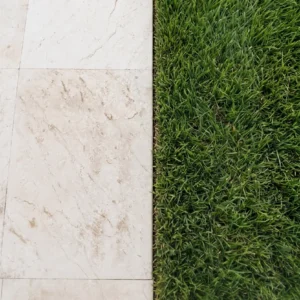
A pale surface reflects more of the sunlight that lands on it and absorbs less, so less of that energy is stored as heat inside the stone. Darker stone does the opposite; it takes in more of the spectrum and gives it back into the air above the deck and into the soles of your feet. That is why pale limestone became the instinctive choice for hot, bright places long before anyone thought to measure it. The trade is worth stating plainly, because pale surfaces also show marks that a dark surface hides.
Color Is Only Half the Answer
Tone takes the credit, but several other properties decide how a deck behaves through the afternoon.
- Surface texture: a broken, open face scatters light and puts less flat area against bare skin.
- Thickness and mass: heavier stone heats more slowly and holds warmth later into the evening.
- Bedding: a unit on a ventilated pedestal behaves differently from one on a solid bond.
- Joint width and material: dark, wide joints work as small heat strips across a pale field.
- Shade timing: a surface baked from ten until four is a different animal from one shaded at noon.
Where the Heat Actually Bites
Not every square foot needs the coolest stone in the range. Spend the budget where feet land.
- The two or three strides between the pool edge and the nearest lounger.
- Step treads, where people pause and stand still on hot stone.
- The route from a door to shade, usually crossed many times a day.
- Coping, which is gripped by hands and elbows as well as walked on.
Layout Choices That Lower Surface Heat
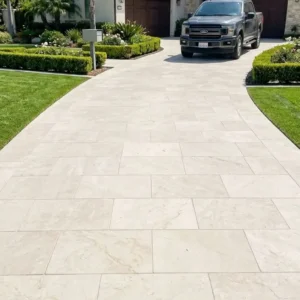
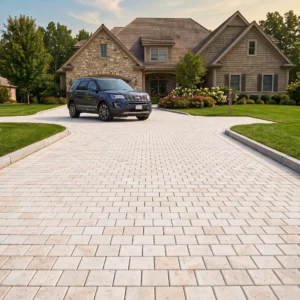
A hardscape drawing can cut peak surface temperature before anyone has selected a stone. Run the barefoot routes through planted or built shade, keep the widest unbroken expanses of paving away from the main circulation, and break large fields with planting beds that also take runoff. Our cooler pale limestone for pool decks works hardest when the layout is doing its share of the job.
- Place loungers where afternoon shade lands, not only where the morning view is best.
- Use a shaded threshold strip at every door so nobody steps straight onto blazing stone.
- Keep planted margins along the sunniest edges to cool the air moving across the deck.
- Consider a lighter joint sand so the whole field reads pale rather than striped.
Pale Does Not Mean Fragile
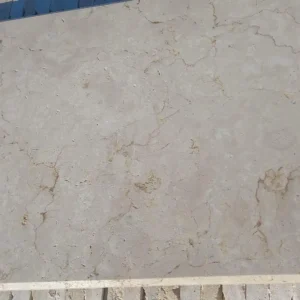
There is a lingering suspicion that a pale stone must be a soft stone. It is not a rule. What decides durability on this coast is pore structure and density, not tone, and a tight pale limestone will shrug off salt aerosol and driving rain that a loose dark stone would soak up. Freeze-thaw performance, the usual proxy for toughness in northern catalogs, means nothing in Antigua and Barbuda; ask instead about absorption, density and how the stone was tested. On a windward elevation, bed and bond the units rather than laying them loose, because in a severe event anything unfixed becomes a projectile. Hurricane Irma made that lesson permanent in September 2017, when Barbuda lost around ninety-five percent of its structures and the island was evacuated.
Keeping Pale Stone Pale
Maintenance on a pale deck is mostly a question of what you keep off it, and on most properties the paving is part of the rainwater catchment, so the cleaning routine has to respect the cistern. The surface finishes and their texture depth you choose also affect how easily marks lift again.
- Rinse salt and pool splash off regularly rather than waiting for a visible bloom.
- Skip harsh chemical cleaners on any surface that drains toward stored water.
- Deal with leaf and blossom staining quickly, since organic marks show on pale stone fastest.
- Keep planters on feet so trapped damp does not leave dark rings behind.
Judging It on Site Before You Order
Small samples travel easily and settle arguments that photographs never will. Lay a piece out in full sun on the actual terrace, leave it from mid-morning to mid-afternoon, then put a bare foot on it and do the same with the shortlisted alternative alongside. Compare them wet as well, because splash changes both the color and the grip. Then check the freight and clearance side: Deep Water Harbour at St John’s takes direct sailings from the Port of Palm Beach, Antigua and Barbuda Sales Tax has stood at seventeen percent since 1 January 2024 on landed value plus duty and other government charges, and a broker is required once a shipment passes EC$5,000 or six lines. The stone that wins the barefoot test at one o’clock is the stone to buy.