Start With Exposure, Not Preference
The limestone or basalt question is usually asked as a matter of taste and answered with a photograph. On a property in Antigua and Barbuda it is far better answered as a map. Draw the site, mark where salt aerosol lands, where vehicles turn, where bare feet go, where the shade sits and where water collects, and the stone selection largely writes itself. Almost every villa here ends up wanting both materials, in different places, for reasons that have nothing to do with which one is nicer to look at.
What Each Stone Is Good At
Strip away the styling and the two materials have distinct working characters.
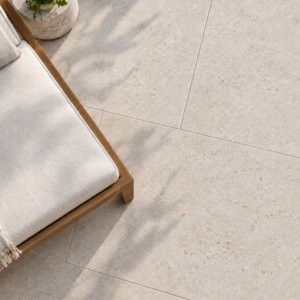
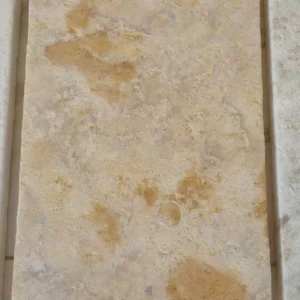
- Limestone: pale, cooler underfoot in strong sun, easy to work and to match across formats.
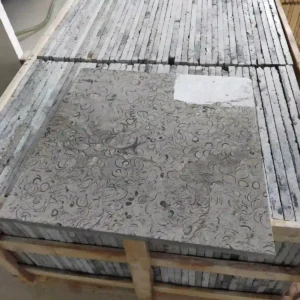
- Basalt: dark, dense volcanic rock, hard-wearing, and visually quiet against bright water.
- Limestone takes a wide range of finishes, so grip and comfort can be tuned area by area.
- Basalt hides tire marks and traffic soiling that show up quickly on a pale field.
- Both need low absorption and non-ferrous fixings to last on this coast.
Neither list makes one material better. They describe two tools, and a property with a windward boundary, a pool, a drive and a shaded courtyard is asking four different questions that no single stone answers well.
The Windward Coast
Exposed north and west edges take a steady load of salt aerosol whether or not there is a storm in the forecast. Here the deciding property is pore structure rather than material family: the tightest stone available in either material will outlast a loose one, and the fixings matter as much as the paving. Bed and bond everything on an exposed terrace. In a severe event loose-laid units become projectiles, a point Hurricane Irma made in September 2017 when Barbuda lost about ninety-five percent of its structures and the whole island was evacuated for roughly three weeks. Freeze-thaw resistance, whatever a northern data sheet claims, is meaningless on this coast.
Pool Decks and Terraces
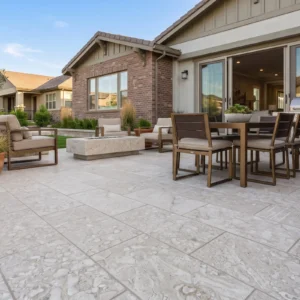
Around water, comfort and grip beat every other consideration, and pale stone has the clear advantage at midday. For most sites pale limestone across terrace and poolside is the sensible default, with basalt held back for places where its darkness is an asset.
- Pale limestone runs cooler underfoot than dark stone in direct afternoon sun.
- A textured face is essential wherever splash lands and shade lingers into the day.
- Use dark stone as a border or inlay rather than as the main barefoot field.
- Keep absorption low, since pool water carries salt or chloride into the pores.
Driveways and Service Routes
Vehicle areas are decided by density and thickness, not by tone. Where the traffic is heavy, basalt units for hard-worked driveways earn their place on the drawing.
- Specify the thicker unit for any route a delivery or service vehicle will use.
- Prefer dense stone, which resists dishing and corner damage under point loads.
- Consider dark stone where tire marks and oil spotting would be obvious on pale paving.
- Get the base right first, because most driveway failures are base failures wearing a stone hat.
- Keep falls positive, since standing water under a unit pushes salt up into it.
Marina and Waterfront Hardscape
Falmouth Harbour, English Harbour and Jolly Harbour bring conditions of their own: constant salt, heavy foot traffic in hard-soled shoes, trolley and dock cart wheels, and spilled fuel and oil. Density and staining behavior lead the specification there, and a darker stone often makes maintenance easier to live with. Note that English Harbour and Falmouth Harbour sit within or beside a designated World Heritage area, so paving there is heritage-controlled and the approval route runs longer than it does for a private terrace inland. Build that extra time into the schedule before an order is ever placed.
Mixing the Two Without a Mess
Using both materials on one property is normal here, and it reads as deliberate rather than indecisive when a few rules hold from the first sketch onward.
- Let a change of material follow a change of use, never a change of mood.
- Keep the format and the joint width consistent across the boundary between them.
- Use the darker stone for edges, thresholds and vehicle zones so it reads as structure.
- Match the finish family across both so the texture feels continuous underfoot.
Exposure Zones on One Drawing
Put the zones on a single sheet before pricing anything: windward, poolside, vehicular, waterfront and sheltered. Assign a material, a thickness and a finish to each one. Then handle the import side, which is unusually straightforward here. Deep Water Harbour at St John’s takes direct sailings from the Port of Palm Beach, duty follows the CARICOM Common External Tariff with stone from outside the region paying the full rate, and sales tax has stood at seventeen percent since 1 January 2024 on landed value plus duty and other government charges. A Revenue Recovery Charge and levies including a Throughput Levy and solid-waste and environmental levies also apply, so confirm the current rates with your broker; a broker is required in any case once a shipment passes EC$5,000 or six lines. Barbuda deliveries travel on a separate small-vessel leg to River Wharf, where there is no container crane. Let the exposure map choose the stone and both materials will look inevitable.