

Finish selection is where most limestone tile specifications either lock in long-term performance or quietly set up future problems — and nowhere is this truer than in Arizona, where surface texture directly affects maintenance frequency, slip liability, and the rate at which sealers degrade under UV exposure. A solid limestone tile finishes Arizona comparison has to start not with aesthetics, but with how each finish interacts with the specific cost and sourcing realities of the Arizona market. Freight distances from ports of entry, regional labor rates, and the availability of skilled stone setters all feed directly into which finish is actually the right value decision for your project.
The Cost Reality of Limestone Finish Selection in Arizona
Material cost is only one line item. The finish you choose directly influences labor hours, sealer consumption, long-term maintenance scheduling, and even truck delivery logistics — all of which compound differently in Arizona than in coastal markets where stone suppliers cluster near major ports. Freight from the Phoenix warehouse to job sites in outlying areas adds a variable that specifiers in Los Angeles or Houston rarely have to calculate as carefully.
Honed and brushed finishes typically carry a modest premium over polished options at the quarry level, but that gap closes or reverses once you factor in Arizona labor rates for grinding and leveling polished tile after thermal cycling causes lippage. The finish that looks cheaper on the invoice can easily become the more expensive installation choice across a full project lifecycle. For large-format tiles — particularly 12 x 24 limestone tile in Arizona applications — finish selection affects how much rectification grinding your installer will charge per square foot, and those rates in Scottsdale run noticeably higher than in mid-market metros.
Honed vs Brushed Limestone Tile in Arizona: Where the Value Lies
Honed limestone delivers a smooth, matte surface with a consistent light reflectance that reads elegantly in interior spaces. For honed vs brushed limestone tile in Arizona projects, the practical difference comes down to maintenance cost over time. Honed surfaces seal with fewer product passes because the pore structure is partially closed during the honing process, reducing sealer consumption by roughly 20–30% compared to a fully open brushed surface.
Brushed finishes, by contrast, expose more of the limestone’s natural texture through wire or abrasive brushing that opens the surface grain. More sealer is required per square foot, and in Arizona’s UV-intense environment, budgeting for resealing on an 18-month cycle rather than the 24-month interval that works fine in cooler climates is the prudent approach. That difference in sealer cost and labor for resealing adds up quickly on projects over 500 square feet.
- Honed finish: lower sealer consumption, easier routine cleaning, better value for high-traffic interior corridors
- Brushed finish: superior grip underfoot, better camouflage of mineral variation, preferred for exterior transition zones
- Both finishes require penetrating sealer application within 48 hours of installation in Arizona summer conditions to prevent thermal-shock staining at grout joints
- Brushed surfaces are more forgiving of minor lippage, reducing labor time for large-format rectification on uneven substrates
Tumbled Limestone Surface Options and Their Place in Arizona Projects
Tumbled limestone occupies a different value tier in the limestone tile finishes Arizona comparison — one that makes sense for specific applications but gets over-specified in others. The tumbling process rounds edges and softens the surface, creating a weathered aesthetic that works particularly well in Tucson‘s territorial and Spanish Colonial architectural contexts where the material blends into the regional palette naturally.
From a sourcing standpoint, tumbled limestone typically arrives in smaller format sizes (4×4, 6×6, 4×8), which changes your truck freight calculation. Smaller format pieces mean more square footage per pallet, but they also mean significantly higher labor costs per square foot during installation because of the increased number of individual pieces to set, level, and joint. In Arizona’s labor market, that additional installation time can add $3–5 per square foot to your total installed cost compared to a large-format honed or brushed alternative.
Tumbled limestone surface options AZ projects use most successfully are pool surrounds, informal garden pathways, and accent borders rather than primary floor fields. Specifying tumbled as your primary surface across a 2,000-square-foot indoor living area will cost considerably more in labor than the per-unit material savings might suggest.
Freight, Sourcing, and How Finish Choice Affects Your Arizona Budget
Arizona’s inland geography means that stone arriving from Turkish and Middle Eastern quarries — where much of the premium limestone supply originates — travels through either Los Angeles or Houston before reaching warehouse inventory. The freight differential between a finish that ships at standard container density and one that requires specialty packaging or increased fragility handling during transport is real money on large orders.
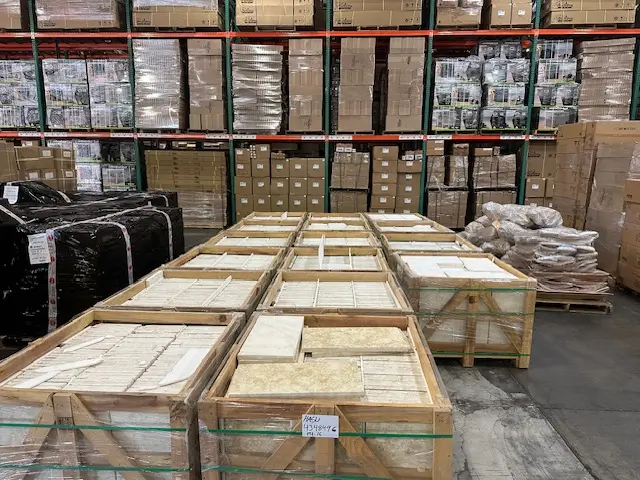
Polished limestone requires significantly more protective packaging per pallet to prevent edge chipping during the extended truck haul from port to Arizona distribution points. Honed and brushed surfaces are considerably more forgiving during transport, which is why better availability and tighter lead times on those finishes are typical through Arizona-based suppliers. At Citadel Stone, we source directly from premium quarries and stage inventory in our warehouse specifically sized for Arizona project demand cycles, which typically means honed and brushed finishes ship within one to two weeks versus the longer lead times for specialty polished or leathered options.
- Polished limestone: higher packaging cost, greater breakage risk on long inland freight routes, tighter delivery windows
- Honed and brushed: more resilient in transit, better warehouse stock availability, shorter lead times for Arizona delivery
- Tumbled: compact pallet density reduces freight cost per square foot, but labor offset typically eliminates the saving
- Always verify warehouse stock levels before committing to project timelines — Arizona summer demand cycles can deplete popular honed finishes in 3×24 and 4×24 formats within two to three weeks
Choosing the Best Limestone Tile Texture for Arizona Outdoor Spaces
Outdoor finish selection in Arizona isn’t just an aesthetic decision — it’s a liability and maintenance calculation. The best limestone tile texture for Arizona outdoor spaces needs to deliver a wet dynamic coefficient of friction (DCOF) above 0.42 per ANSI A326.3 for any surface exposed to irrigation overspray, pool splash, or monsoon rainfall. Polished limestone is the least textured option and generally needs supplemental slip treatment for wet exterior use. Honed limestone varies by lot and finishing depth, which means verifying COF test data for the specific slab lot — not just the finish category — is essential.
Brushed and flamed finishes carry the most surface texture, which is why specifiers working on outdoor terraces and pool decks in Scottsdale have largely standardized on brushed limestone for primary walking surfaces. The texture also handles Arizona’s thermal cycling better — the micro-relief created by brushing provides mechanical relief for the minor dimensional movement that occurs when surface temperatures swing from 55°F at dawn to 140°F+ on exposed pavers by mid-afternoon in July.
For limestone finish selection for Arizona interiors, the calculus shifts. Indoor spaces don’t face the same slip liability or UV degradation, which opens up honed and even lightly polished options where design intent supports them. The key variable becomes how much foot traffic the space carries and whether pets or hard-soled footwear are part of the daily use pattern, since both accelerate surface wear on softer limestone varieties. Reviewing the best limestone tile texture for Arizona outdoor spaces alongside interior choices ensures your specification covers both environments consistently.
Large-Format Limestone Finish Considerations for Arizona Projects
The format size specified intersects with finish in ways that aren’t obvious until you’re on site. For 12 x 24 limestone tile in Arizona installations, a brushed or honed finish is significantly more forgiving during layout because the surface texture draws the eye away from minor grout joint width variation. Polished large-format tile amplifies every imperfection — a grout joint that’s 1mm off-width reads like a fault line under raking afternoon light in an east-facing Arizona room.
Explore our Arizona limestone surface options to compare available finishes across the full format range, including thickness specifications and color consistency grades for each surface treatment. The documentation available there covers material data that matters when you’re writing specifications rather than just browsing samples.
Large-format tiles also demand a flatter substrate than smaller format pieces, which adds to your base preparation cost regardless of finish. In Flagstaff, where freeze-thaw cycles introduce seasonal substrate movement, the combination of large format and polished finish creates a compound risk: substrate flex at freeze-thaw boundaries generates lippage, and polished surfaces show that lippage dramatically. Honed or brushed finishes on large formats are a more defensible specification in any Arizona climate zone that sees temperatures below 28°F for extended periods.
Value Engineering Your Limestone Finish Specification
Value engineering on limestone finish isn’t about buying cheaper — it’s about aligning finish cost, labor cost, maintenance cost, and design intent into a specification that performs for 20+ years without unexpected budget events. The limestone tile finishes Arizona comparison exercise should produce a decision matrix, not just a preference ranking.
Material-to-labor cost ratios shift significantly by finish type. Across typical Arizona residential projects, honed limestone sits at roughly a 40/60 material-to-labor split for standard field areas. Polished tile shifts that toward 50/50 because of the additional substrate prep and lippage management labor. Tumbled formats push toward 30/70 in labor’s favor on complex layouts. Understanding which finish creates the best value given your specific labor market — and labor rates vary between Tucson and metro Phoenix by 12–18% for experienced stone setters — is the real specification skill.
- Honed: best overall value for most Arizona interior and covered exterior applications, predictable sealer and maintenance costs
- Brushed: slightly higher material cost, but lower lifetime maintenance cost on exterior surfaces due to texture durability
- Polished: highest material and installation cost, shortest maintenance cycle in Arizona UV conditions, not recommended for exterior use without supplemental slip treatment
- Tumbled: competitive material cost but high labor offset, best value only in small accent applications or where the aesthetic is non-negotiable
- Always request finish-specific COF test certificates from your supplier before finalizing the specification for any exterior or wet-area application
Ordering and Delivery Logistics for Limestone Finishes in Arizona
Lead time discipline separates smooth Arizona stone projects from the chaotic ones. Brushed and honed finishes in standard formats typically ship from warehouse stock within five to ten business days for most Arizona destinations. Specialty finishes — leathered, flamed, or antiqued — often require a four to six week import cycle if they’re not stocked regionally, and that’s before factoring in truck scheduling to your job site.
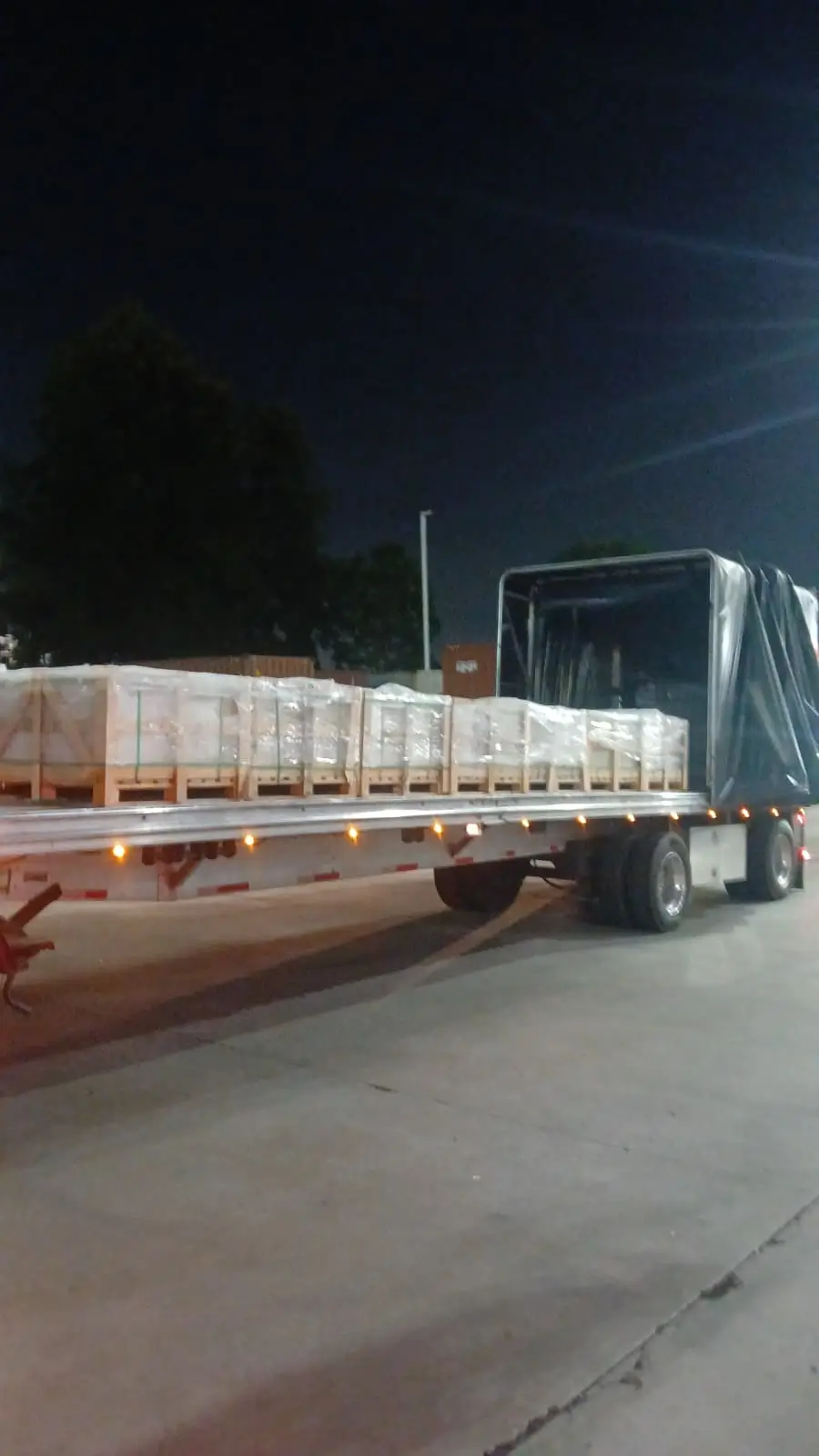
Your project’s truck access constraints matter more than most clients realize. A full pallet of 12×24 limestone tile weighs approximately 2,200–2,500 lbs depending on thickness, and most residential driveways in Arizona’s newer subdivisions weren’t engineered for the repeated axle loads of stone delivery vehicles. Coordinating delivery staging, specifying a liftgate truck versus a flatbed with forklift access, and confirming site access width before the delivery date are logistics steps that directly affect whether your material arrives intact and on schedule.
Our technical team advises ordering a minimum 10% overage on any finish for Arizona projects — not because waste is high, but because re-ordering a single finish lot six months after installation is genuinely difficult. Dye lot consistency in natural limestone means a reorder from a different quarry pull will read differently under Arizona’s direct-sun interior lighting conditions, and that mismatch is visible to any client who walks the space.
Your Action Plan for Limestone Finish Selection
The limestone tile finishes Arizona comparison ultimately comes down to three decisions made in sequence: first, confirm the application’s slip and UV exposure requirements, which eliminates polished finishes from most exterior specs; second, calculate total installed cost across material, labor, and a 10-year maintenance projection, not just the per-square-foot material price; third, verify availability and lead time from a supplier with Arizona warehouse inventory before committing the finish to the specification documents. Reversing that order is where projects get into trouble.
Reviewing How to Maintain 12×24 Limestone Tile in Arizona’s Climate alongside this finish selection guidance is a logical next step — the two decisions are connected, because the maintenance protocol required over the life of the installation is largely determined by the finish specified today. A brushed exterior surface and a honed interior surface carry different sealer types, different reapplication intervals, and different cleaning chemistry, so your maintenance budget should be finish-specific from the start. Projects across Phoenix, Chandler, and Yuma benefit from Citadel Stone’s curated finish range, sourced from premium quarries in Turkey and the broader Middle East region to suit both indoor and outdoor Arizona applications.