Two Materials, One Property
Walk any Anguillian villa from the beach side to the back gate and you cross several different worlds. Full salt blast at the front, reflected pool glare in the middle, hot sun on the drive, deep shade beside the service door. Asking one paving material to handle all of that is how projects end up compromising everywhere at once.
Neither material is exotic here. The island is limestone from shore to shore, and volcanic rock underlies it, surfacing in two small outcrops of tilted tuffs and basalt. Crushed volcanic aggregate also moves around the northern Leewards by barge, so basalt is a familiar sight in construction. The question is simply where each one belongs, and the answer changes as you cross the plot.
The Windward Frontage
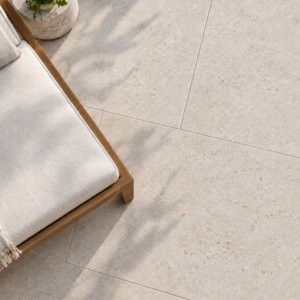
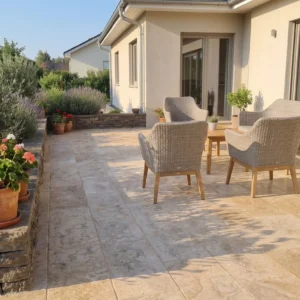
Frontage decks take constant salt aerosol and long unshaded sun. This is the zone where low absorption matters most, because salt dissolves in a shower and recrystallizes through the following dry week. Pale limestone is the traditional and sensible answer: it stays cooler underfoot, it hides the light salt bloom that darker stone shows, and it belongs visually to an island built of the same rock.
- Absorption is the first specification line, ahead of tone or format
- Rinse points near the frontage make routine salt removal realistic
- Joints and edge details should let wind-blown grit be swept clear
- Thicker units cope better with an exposed, wind-scoured position
- Fixings and restraints deserve corrosion-resistant selection throughout
Frontage is also the zone that gets photographed, so the finish has to survive weather and scrutiny in equal measure.
The Pool Terrace
Around water, comfort and grip outrank everything else. Bare feet, wet skin and long afternoons of direct sun push the specification firmly toward a pale, textured surface. Dark basalt gets genuinely hot in open sun and is hard to justify as a main sunbathing deck, though it can be excellent as a contrast band, a step nosing or a border where nobody stands for long. Working through matching limestone to each aspect is easier once the pool zone is settled first.
Settle it first because it is the least flexible area on the plot. Comfort underfoot, grip when wet and glare in full afternoon sun all have to be satisfied at once, and once that surface is chosen the rest of the palette can be arranged around it rather than fighting it.
The Drive and Turning Court
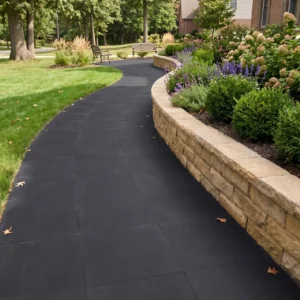
Vehicle areas invert the priorities. Nobody walks here barefoot, appearance under tire marks matters more than tone, and the loads are of a different order entirely. A delivery truck, a service van and a guest car all turn on the same square of paving, and that repeated turning is harder on a surface than any amount of straight-line traffic.
- Traffic loading sets the thickness and the format before anything else
- Smaller units cope better with turning and point loads than large slabs
- Darker tones hide tire scuffing, oil spotting and general service wear
- Edge restraint keeps a trafficked field from creeping outward over time
- Falls have to clear a heavy October burst without ponding at the threshold
Heat, Glare and Bare Feet
Surface temperature is the clearest split between the two materials, and it settles most zoning arguments on its own.
- Pale limestone reflects more sun and starts from a cooler baseline
- Dark basalt absorbs more and holds warmth well into the evening
- Texture on either material cuts contact area and softens what skin feels
- Shaded basalt behaves nothing like basalt in open afternoon sun
Wear, Weight and Traffic
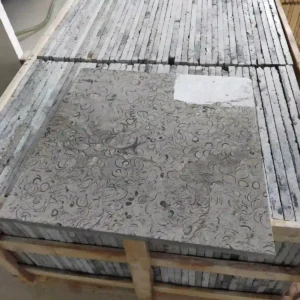
Where feet are shod and vehicles turn, hardness and edge retention start to matter more than comfort, and this is where dense volcanic stone comes into its own. Formats and thickness deserve as much attention as material, since a well-chosen small unit in a trafficked field outlives a thin large slab every time. If a drive or a service court is part of the brief, basalt paving where traffic is heaviest is worth pricing alongside limestone for the softer zones.
Weight is worth a thought too. Consignments commonly arrive across the Anguilla Channel on a feeder leg into Road Bay after a call at a hub port, so a heavy dense material in a thick format costs more to land than the same area in a lighter one. Thickness should follow the traffic, not habit.
Mixing Without Making a Patchwork
A two-material property works when the logic is visible and the junctions are designed. It fails when materials change for no reason a visitor can read.
- Let each material own whole zones rather than alternating in small patches
- Use the darker stone as edging, banding or thresholds to tie the palette
- Keep joint widths and laying patterns consistent across the change
- Change material at a real boundary: a step, a gate or a planting line
Choosing by Aspect, Not by Fashion
Since Hurricane Irma crossed the island on 6 September 2017, specification here has been careful and evidence-led, and that is a good thing. Work outward from how each area is used, how much salt and sun it takes, and what will roll or walk across it. The material choice then falls out of the analysis instead of driving it. Done in that order, a two-material scheme costs no more than a single-material one, because each zone is buying only the performance it actually needs and nothing it does not. Let each zone earn its stone on exposure, use and traffic.