Why Rock Selection Determines Design Success
The gap between a rock landscape that looks polished for a decade and one that looks tired after two seasons almost always traces back to material selection — not installation technique. Landscaping ideas with rocks live or die on whether the stone you choose matches the structural demands of the space: drainage requirements, foot traffic patterns, soil composition, and long-term maintenance tolerance. Natural stone brings a density and dimensional stability that manufactured alternatives simply can’t replicate, and that permanence is exactly what low-maintenance design depends on.
You’ll want to think about this early, because the rock type you choose shapes every downstream decision — from base depth to joint treatment to whether you need edging at all. Compressive strength, absorption rate, and surface texture aren’t just technical footnotes; they’re the variables that determine whether your installation performs or fails. According to Natural Stone Institute stone variety guidance, different natural stone types exhibit significantly different porosity and weathering profiles, which directly affects material suitability for outdoor landscape applications.
Core Design Approaches for Rock Landscapes
There are genuinely distinct design languages within natural stone landscaping ideas, and conflating them leads to projects that feel unresolved. The three main directions — dry-laid groundcover, structured boulder placement, and cut-stone pathway systems — each demand different material specs and installation logic. Understanding which approach fits your yard’s scale and use patterns before you order a single ton of material saves you from costly mid-project pivots.
- Dry-laid groundcover: crushed stone, decomposed granite, or river rock spread across open areas to suppress weeds, manage drainage, and reduce irrigation dependency
- Structured boulder placement: naturalistic groupings of large-format stone used to anchor planting zones, define grade changes, or create focal points
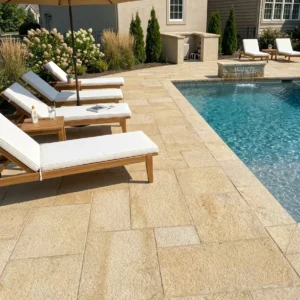
- Cut-stone pathway systems: flagstone, stepping stones, or dimensional pavers set in compacted aggregate or polymeric sand for defined circulation routes
- Retaining and border applications: stacked wall stone or edging cobbles that manage grade differentials while adding visual structure
- Hybrid schemes: combinations of groundcover stone and larger accent rock that create texture variation across a single yard space
Your choice of approach needs to match the yard’s functional demands first. A high-traffic side yard that connects a garage to a back garden needs the load-bearing consistency of a cut-stone pathway — dry-laid gravel won’t hold line under repeated foot pressure. A low-traffic meditation corner, on the other hand, benefits from the organic irregularity of naturalistic boulder placement.
Natural Stone Landscaping Ideas by Material Type
Material type isn’t just an aesthetic decision — it’s a performance specification. Each stone family behaves differently under UV exposure, moisture cycling, and mechanical load, and those differences compound over years of outdoor exposure. Here’s how the main material categories perform in landscape contexts and where each one genuinely excels.
Limestone for Pathways and Groundcover
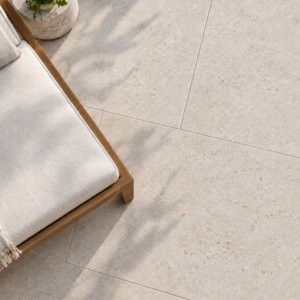
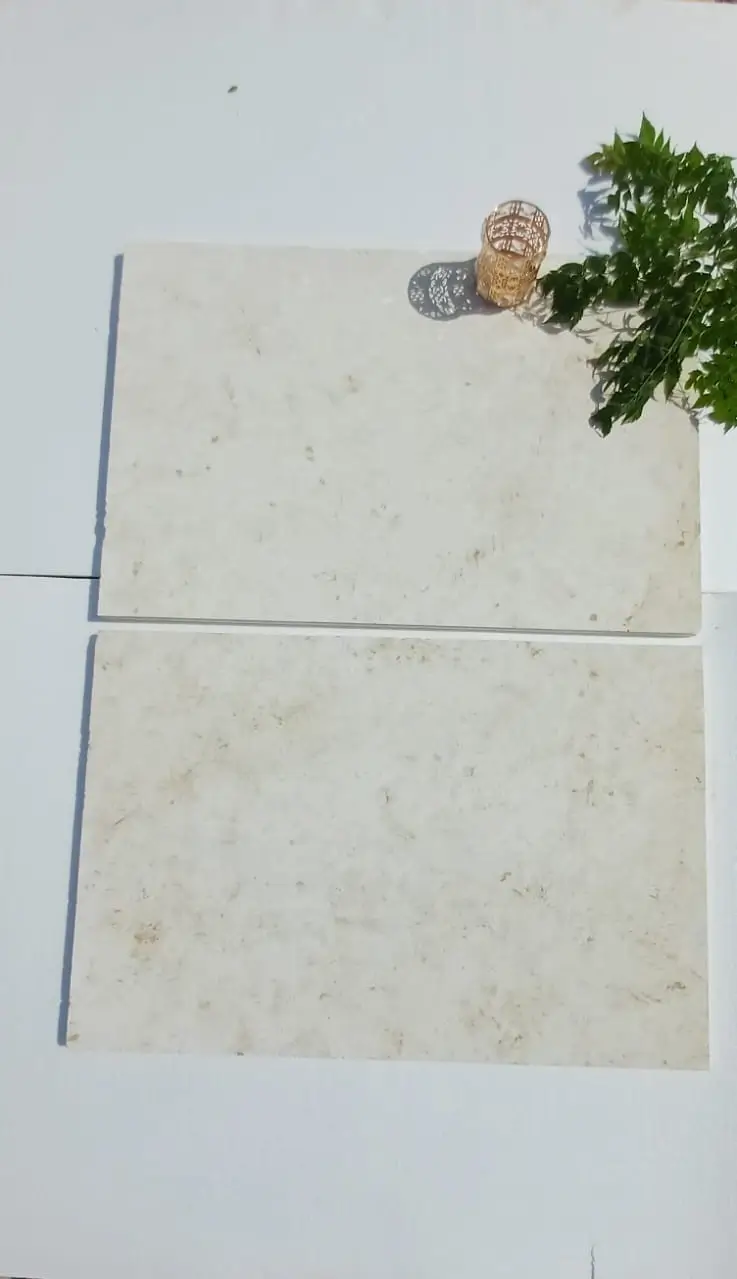
Limestone’s compressive strength typically ranges from 4,000 to 20,000 PSI depending on formation density, which gives it solid footing in both pedestrian pathway and groundcover applications. Its relatively light coloration reflects solar radiation efficiently, which moderates surface temperatures in open yard areas — a real advantage in spaces where barefoot comfort matters. You’ll find that honed or tumbled limestone surfaces offer a slip-resistance coefficient (COF) in the 0.6–0.8 range, comfortably above the 0.5 threshold recommended for outdoor surfaces. According to USGS dimension stone production data, limestone consistently ranks among the most widely used dimension stone types in landscape and construction applications nationwide, reflecting both its availability and its proven outdoor performance record.
Granite Cobbles and Accent Boulders
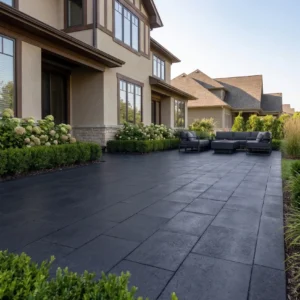
Granite brings a different performance profile entirely — igneous formation means extremely low porosity (typically under 1%), near-zero water absorption, and compressive strength above 15,000 PSI in quality stock. For landscape applications where stone will see vehicle overhang, heavy equipment staging, or sustained freeze-thaw cycling, granite’s density is a genuine structural asset, not just a visual one. Granite cobbles and setts also hold dimensional consistency better than sedimentary alternatives over time, which matters when you’re setting border patterns that need to stay true for 20+ years. These properties make granite one of the most dependable choices within the full range of natural stone landscaping ideas, particularly in high-demand structural roles.
Marble Rock Landscaping and Decorative Applications
Marble rock landscaping occupies a specific niche — it’s at its strongest in decorative groundcover and accent boulder roles rather than high-traffic pathway surfaces. The crystalline calcium carbonate structure that gives marble its visual richness also makes it susceptible to acid etching from organic decomposition, which is worth factoring in if you’re placing it near planting beds. Crushed marble aggregate works particularly well in formal garden borders and raised planting surrounds where visual contrast is the design priority and foot traffic is minimal. Polished marble boulders used as statement focal points in planting zones can hold their appearance for decades with minimal maintenance, provided drainage prevents prolonged moisture contact with the base. When marble rock landscaping is applied thoughtfully in low-traffic decorative settings, the results are visually distinctive and long-lasting.
Base Preparation: The Detail Most Projects Get Wrong
Here’s what separates rock landscape installations that hold their geometry for 15+ years from those that start shifting and sinking within three seasons: base depth and compaction are specified to match the soil bearing capacity of your specific site, not a generic recommendation off a product sheet. Standard guidance suggests 4 inches of compacted aggregate base for pedestrian pathway applications — but that number assumes moderate-density soil conditions. Clay-heavy soils with high expansion coefficients may require 6–8 inches of base, plus a geotextile separation layer to prevent sub-base contamination over time.
- For dry-laid groundcover stone: minimum 2–3 inches of compacted crushed aggregate beneath the decorative stone layer
- For flagstone pathways: 4–6 inches of compacted base aggregate, with a 1-inch bedding sand or decomposed granite setting layer
- For boulder placement: excavate to undisturbed soil, set base rock at minimum 20–30% of total boulder height below grade for stability
- Geotextile fabric between native soil and aggregate base is strongly recommended in any application where soil movement or weed pressure is a concern
- Polymeric jointing sand rather than standard sand for cut-stone applications — it resists washout and suppresses weed germination between joints more reliably
Never skip the compaction step to save time on-site. Plate compaction at 95% Proctor density on your aggregate base is the specification that prevents differential settlement — the kind that creates trip hazards in pathway installations and destabilizes boulder groupings in planting beds. Cutting corners here is always the most expensive economy.
Landscaping with Stones and Rocks for Drainage Management
One of the most underutilized capabilities of rock landscape design is its drainage management potential. Strategically placed stone — particularly crushed granite, river cobble, or decomposed granite — can redirect surface water flow, reduce erosion on slopes, and eliminate standing water problems that turf or mulch simply can’t handle structurally. Dry creek beds built with naturalistic landscaping ideas with rocks are a classic example: they’re visually cohesive with the rest of the yard, they handle significant stormwater volume during rain events, and they require zero maintenance between weather cycles.
The American Society of Landscape Architects permeable surface guidance highlights permeable stone paving and aggregate groundcover as effective tools for managing stormwater at the residential scale — reducing runoff velocity and encouraging groundwater recharge compared to impermeable hardscape surfaces. Aligning your stone selection and installation pattern with how water actually moves across your specific site during peak rainfall events often means walking the yard during or immediately after a heavy rain before finalizing your design.
For managing drainage with rock landscapes, coarser aggregate (1.5–3 inch clean crushed stone) allows faster water infiltration than fine-grained material, making it the right call for french drain surrounds and bio-swale fill. Finer decorative stone (3/8–3/4 inch pea gravel or decomposed granite) works for surface aesthetics in flat areas where drainage volume is moderate and visual refinement matters more than maximum infiltration rate. Landscaping with stones and rocks in these drainage-sensitive zones also reduces long-term erosion maintenance compared to organic mulch alternatives.
Budget and Sourcing Considerations for Rock Landscapes
Material cost for natural stone landscaping ideas varies more than most homeowners anticipate — and a significant portion of that variation isn’t tied to the stone itself, but to freight distance from quarry or distribution warehouse to your project site. Stone is heavy, and truck freight is priced per mile and per ton. A material that’s attractively priced per ton at the source can become a significant budget line once you factor in delivery charges across several hundred miles. This is where sourcing strategy directly impacts total project cost, often more than material selection does.
Your material-to-labor cost ratio shifts considerably based on which stone type you specify. Decorative groundcover stone (crushed granite, river rock, pea gravel) is relatively low material cost per square foot but requires meaningful labor for distribution, edging installation, and geotextile prep. Cut flagstone and dimensional stepping stones carry higher material cost per unit but install more quickly per square foot once the base is prepared — so the labor component shrinks as a percentage of the total. Understanding this ratio helps you value-engineer a design without sacrificing the visual intent.
- Freight distance from supplier warehouse to site: estimate $0.15–0.35 per ton-mile as a rough freight cost benchmark
- Material availability at regional distribution points: locally abundant stone types typically carry lower delivered cost than imported alternatives
- Ordering in full-truck quantities (typically 20–24 tons) versus partial loads can reduce per-ton freight cost by 15–25%
- Labor market rates for stone installation vary significantly — factor in whether your design can be DIY-installed or requires skilled stone-setting labor
- Warehouse stock levels affect project timing: materials in stock ship in days; special orders or imported stone can add 6–8 weeks to your schedule
For larger projects where landscaping with stones and rocks spans multiple yard zones, consider phasing material orders to match installation sequencing — it reduces the amount of stone stored on-site at any one time, which matters for access and safety on constrained lots. You can reach out to Citadel Stone landscape rock supply to verify warehouse inventory levels and confirm lead times before committing to project milestones.
Low-Maintenance Performance: What the Numbers Actually Mean
The low-maintenance promise of rock landscapes is real — but it’s conditional on correct specification. Natural stone groundcover in a properly prepared bed with adequate edging and geotextile underlayment can genuinely reduce yard maintenance by eliminating mowing and dramatically cutting irrigation needs in the treated zones. But those gains erode quickly if the installation is underprepared: weed pressure migrates through inadequate fabric, stone migration at edges creates persistent cleanup work, and settling from an underprepared base means you’re re-leveling pathway sections every few years.
- Geotextile fabric rated at minimum 4 oz/sq yd for residential groundcover applications — heavier duty (6 oz+) for areas with aggressive weed pressure
- Edging systems for groundcover stone should be staked at minimum 12-inch intervals to prevent lateral stone migration
- Natural stone pathway surfaces require re-sanding of polymeric joints approximately every 5–7 years under normal pedestrian use
- Boulder placements are essentially zero-maintenance once properly seated — occasional cleaning with water is the only recurring requirement
- Sealing is not required for most exterior natural stone landscape applications — it’s a useful option for cut limestone or marble surfaces where staining is a concern, but it adds a maintenance cycle that most groundcover and pathway stone doesn’t need
The durability data for well-specified natural stone landscaping ideas is genuinely compelling. Properly installed granite or limestone pathway systems routinely achieve 25–40 year service lives without major intervention. The key variable is always the base and drainage specification, not the surface stone itself. Get the sub-surface right and the stone above it performs for generations.
Plant and Rock Integration: Making the Design Cohere
The strongest natural stone landscaping ideas don’t treat rock and planting as separate elements that happen to share the same yard — they treat the interface between rock and plant as a design detail in its own right. Gravel mulch groundcover beneath low-water ornamental grasses and succulents reads as intentional and sophisticated; the same gravel next to high-water annuals reads as an afterthought. Your plant selection needs to reflect the drainage and moisture conditions that rock groundcover creates, not just the visual palette you’re working with.
Decomposed granite and crushed stone mulch creates a warmer, drier root zone than organic mulch — which is genuinely beneficial for Mediterranean-climate plants, native grasses, and drought-tolerant perennials, but stressful for moisture-loving species. Match your plant palette to the microclimate your stone groundcover creates, and the planting will establish faster, need less supplemental water, and require fewer interventions to stay healthy. This alignment between landscaping with stones and rocks and appropriate plant selection is what makes a rock landscape genuinely low-maintenance rather than just low-irrigation.
Getting Your Rock Landscape Specification Right
Getting landscaping ideas with rocks right comes down to treating stone selection and base preparation as the engineering core of the project — not as afterthoughts to the visual design. The aesthetic follows naturally once the structural logic is sound: right material for the application, right base depth for the soil, right drainage strategy for the site’s water movement. At Citadel Stone, we supply a full range of natural stone landscape materials with the technical guidance to match each product to its application — from crushed granite groundcover to dimensional flagstone and boulder selections. Your project’s long-term performance depends on decisions made before the first stone is placed, and those decisions are worth getting precise. As you think through the broader scope of your hardscape, paving stone driveway planning covers related material and specification considerations that may inform how stone surfaces connect across your property. In dry or arid conditions, ground-cover stone from Citadel Stone can reduce irrigation needs while adding texture and definition to open yard spaces.
Related reading: stone landscaping · landscaping stone prices · How to Install Stone Landscape Edging the Right Way.