
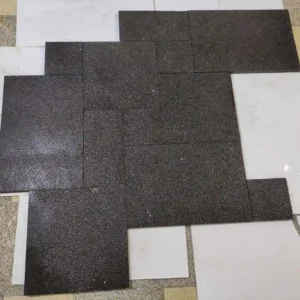
50 Years Of Manufacturing & Delivering The Highest-Quality Limestone & Black Basalt. Sourced & Hand-Picked From The Middle East.

Escrow Payment & Independent Verifying Agent For New Clients

Contact Me Personally For The Absolute Best Wholesale & Trade Prices:

USA & Worldwide Hassle-Free Delivery Options – Guaranteed.

How to Install Paver Seating Wall in Arizona

Arizona's monsoon season reshapes how seating walls need to be built. Between July and September, the state receives the majority of its annual rainfall in short, intense bursts — and that sudden saturation is exactly where poorly drained seating walls fail. Installing paver seating wall Arizona projects without accounting for subsurface drainage leads to base shifting, joint erosion, and cap displacement within a season or two. A properly engineered base layer with compacted aggregate, adequate slope, and drainage outlets isn't optional here — it's the difference between a wall that holds and one that moves. Citadel Stone seating wall Arizona resources help homeowners understand material specifications suited to these drainage realities before construction begins. Citadel Stone supplies paver seating wall materials sourced from quarries across the Mediterranean and Middle East, helping Phoenix, Mesa, and Chandler homeowners build foundations designed to handle repeated extreme heat cycles.

Table of Contents

Base failure in a paver seating wall almost never starts at the surface — it starts below grade, where water accumulates, shifts aggregate, and slowly undermines the structural integrity course by course. Installing paver seating wall Arizona projects correctly means you treat drainage design as a structural decision, not an afterthought. Arizona’s monsoon season delivers intense rainfall bursts that can dump two inches of water in under an hour, and if your base isn’t engineered to shed that load laterally, you’ll see wall movement within the first two to three seasons.

Why Arizona’s Water Patterns Change Everything About Wall Construction

Most people assume Arizona’s desert climate means water is never a concern. That assumption costs homeowners significant money in premature repairs. The state’s bimodal precipitation pattern — a dry spring followed by a violent monsoon season from July through September — creates extreme hydraulic stress events that a wall base must survive repeatedly. Unlike humid climates that see steady, low-intensity rainfall, Arizona’s precipitation arrives in concentrated bursts that saturate the soil surface before it can absorb moisture, generating sheet flow that seeks the lowest available point.

Your wall’s footing sits at or below that lowest point on most residential lots. The hydrostatic pressure that builds against an improperly drained base will displace aggregate and compromise compaction over time. Before you spec a single unit or order your first pallet, you need a drainage plan that accounts for the site’s micro-topography, the direction and volume of anticipated sheet flow, and the soil’s permeability coefficient at your specific installation depth.

  • Arizona monsoon events average 0.75 to 2.5 inches per hour at peak intensity in low desert regions
  • Caliche hardpan layers — common across the Phoenix basin and surrounding areas — prevent vertical drainage, forcing lateral flow toward wall bases
  • Flash drainage away from the wall face should achieve a minimum 2% grade across the paved field
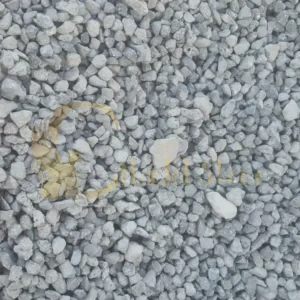
  • Drainage aggregate below the base course should consist of clean crushed stone, 3/4-inch minus, with less than 3% fines to maintain hydraulic conductivity
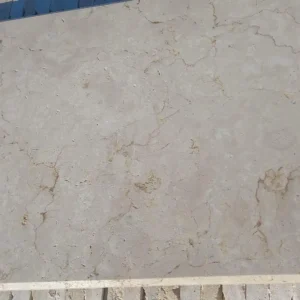
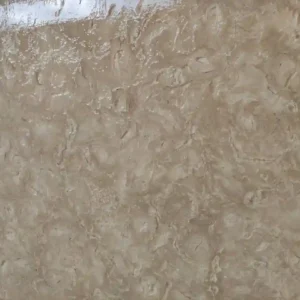
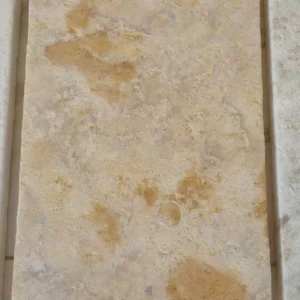
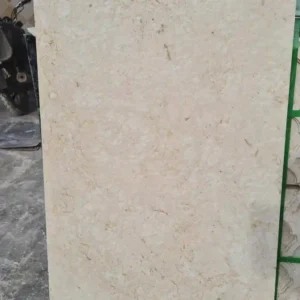
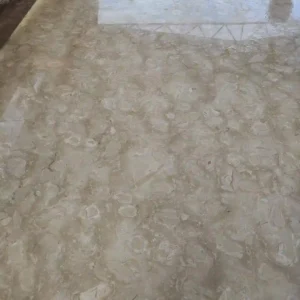
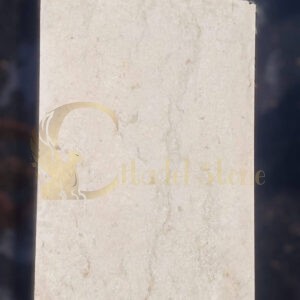
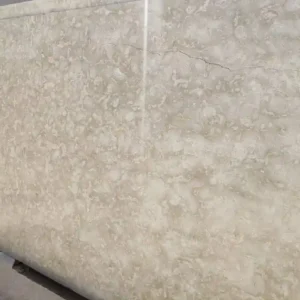
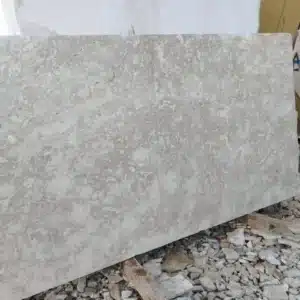
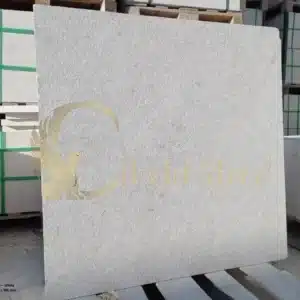
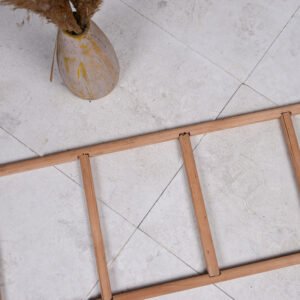
A close-up view of a light beige marble slab with subtle mineral variations.

Site Assessment and Drainage Mapping Before You Break Ground

Your installation begins at the top of a slope, not at the bottom. Walk the site after any rainfall — even a light sprinkle — and observe where water pools and which direction it tracks. Mark those flow paths with stakes before excavation starts, because your wall alignment and base drainage design should work with those patterns rather than against them.

Soil testing at depth matters here in ways it doesn’t in wetter climates. In Mesa, you’ll frequently hit caliche hardpan at 18 to 24 inches below grade. Caliche is essentially calcium carbonate cemented soil — it won’t compact further, but it also won’t drain vertically. Projects on caliche-dominant sites need a perforated drain pipe running along the back face of the wall base, sloped at minimum 1% toward a daylight outlet or dry well, to prevent hydrostatic pressure buildup against the wall’s lower courses.

  • Probe for caliche hardpan depth before finalizing excavation specs — a tile probe or rebar rod driven by hand gives a reasonable field indication
  • Note any existing irrigation lines within 36 inches of your wall footprint — irrigation leakage is a consistent cause of post-installation heave in residential Arizona projects
  • Confirm the direction of finished grade on the adjacent paving field before ordering materials — a 1.5% slope toward the wall negates even a well-designed base
  • Document wall height versus retained soil height — walls retaining more than 24 inches of soil require engineered specifications in most Arizona jurisdictions

Base Preparation and Foundation Standards for Arizona Seating Walls

The foundation work for outdoor seating wall construction across Arizona goes deeper than standard patio installation, and the aggregate specification differs from what you’d use in a cooler climate. Your base aggregate needs to handle both structural point loads from seated occupants and the hydraulic stress of rapid moisture infiltration events. Those two demands point to the same solution: a mechanically compacted, well-graded crushed stone base with defined drainage geometry.

For a freestanding seating wall in the 18- to 24-inch finished height range, your base trench should reach 12 to 14 inches below the finished adjacent grade, with the bottom 4 to 6 inches consisting of compacted 3/4-inch clean crushed stone as a drainage layer. Above that, 4 to 6 inches of 3/4-inch minus compacted aggregate provides your structural sub-base. The key distinction is that the lower drainage layer should NOT be compacted to the same proctor density as the structural layer — over-compacting drainage aggregate reduces its void ratio and defeats the hydraulic purpose.

For how to build a seating wall in Arizona that holds alignment through multiple monsoon seasons, the concrete footing detail is often where contractors cut corners. A continuous concrete footing, 6 inches thick and 2 inches wider than your wall unit on each side, poured directly onto your compacted aggregate base, provides the stable platform that keeps your first course in plane. Allow 24 to 48 hours of cure time before setting the first paver unit — in Arizona’s summer heat, rapid moisture loss can compromise early cure strength, so wet burlap or a curing blanket over the footing during the first 12 hours is worth the effort.

Selecting Paver Wall Units for Desert Climate Performance

Installing paver seating wall Arizona projects with the wrong unit specification is one of the most common reasons walls fail before their expected service life. The desert environment subjects wall units to a combination of stresses that most other climates don’t stack simultaneously: intense UV degradation, sustained surface temperatures above 140°F in summer, rapid thermal cycling between day and night (often 40 to 50°F differential), and periodic hydraulic saturation during monsoon events.

Natural stone units — particularly dense limestone and basalt — perform exceptionally in this environment because their thermal mass and low absorption rates give them inherent resistance to both heat cycling and moisture intrusion. Concrete manufactured units work well when you specify a minimum compressive strength of 8,000 PSI with an absorption rate below 5% by weight — lower-grade concrete units absorb moisture during monsoon events and then experience micro-cracking as surface temperatures spike post-storm. At Citadel Stone, we source wall units directly from quarries with documented absorption and compressive strength testing, because those two numbers predict long-term desert performance better than any visual inspection.

  • Specify units with absorption rates below 5% for wall applications exposed to monsoon moisture cycles
  • Minimum 8,000 PSI compressive strength handles both occupant loading and thermal stress without surface spalling
  • Unit face texture affects perceived surface temperature — tumbled or brushed finishes run 8 to 12°F cooler than polished faces in direct Arizona sun
  • Cap units deserve separate material evaluation — they receive full sun exposure and foot traffic simultaneously, requiring higher abrasion resistance than wall body units
  • Uniform dimensional tolerances within ±1/8 inch ensure consistent joint spacing across courses, which is critical for visual alignment on longer wall runs

Course-by-Course Installation: Techniques That Hold in Arizona Conditions

Paver wall installation steps AZ homeowners trust come down to consistent execution on three variables: level base course, plumb and battered face alignment, and proper interlock between courses. Each of these demands more precision in Arizona than in moderate climates because the thermal cycling your wall experiences annually tends to amplify any initial deviation. A first course that’s 1/4 inch out of level gets worse every summer as units expand and contract across the face.

Set your base course directly on the concrete footing using a full mortar bed — not adhesive, not dry-set. A 3/4-inch mortar bed of Type S mix (2.5 parts sand to 1 part Portland) gives you both adhesion and a final leveling opportunity before the mortar sets. Work in sections no longer than 10 feet before checking level again, because footing surface irregularities accumulate across longer runs. In Yuma, where summer ambient temperatures can exceed 115°F, mortar open time shortens significantly — you’ll want to dampen the footing surface and work in the early morning to maintain workability.

For standard residential seating wall heights, a wall batter of 1 inch back per foot of height provides the forward lean that counteracts any retained soil pressure and improves visual stability. Check batter every two courses with a batter gauge or a level with a shim, not by eye — visual estimation in direct sun on a white or light-colored wall face is unreliable due to glare.

You can explore our Arizona paver seating wall options to review unit dimensions and material specifications before committing to a course height module for your project design.

Joint Design and Monsoon Water Management Across the Wall Face

Outdoor seating wall construction across Arizona needs joint design that handles two simultaneous water management demands: thermal expansion accommodation and rapid surface drainage during storm events. These aren’t the same joint, and conflating them is one of the more common specification errors on residential wall projects.

Horizontal bed joints should be tooled concave rather than flush or struck proud. A concave joint profile sheds surface runoff downward across the wall face instead of allowing water to pond on the joint surface, which accelerates efflorescence and staining in the months following monsoon season. For vertical head joints, maintain 3/8-inch nominal spacing filled with Type S mortar — this gives you enough material to handle minor thermal movement without cracking, while still providing structural shear transfer between adjacent units.

In Sedona, where iron-rich soils are prevalent, water wicking through open or poorly sealed joints draws iron compounds to the wall face, producing orange-brown staining that’s extremely difficult to remove without acid treatment. Sealing the wall face and cap joints with a penetrating silane-siloxane sealer within 30 days of installation — and reapplying every three years — prevents that wicking mechanism from establishing. This isn’t optional maintenance in iron-soil regions; it’s part of the installation specification.

  • Concave joint profile on horizontal beds sheds water downward — tool joints within 30 to 45 minutes of mortar placement for best profile control
  • Leave weep holes at base course intervals of 4 to 6 feet to allow any accumulated water in the base to escape
  • Cap joint sealant prevents monsoon water from tracking down behind the cap and undermining the mortar bond at the cap-to-wall interface
  • Check all joints for gaps or cracks at the end of each monsoon season — this is your annual inspection window before the next season’s hydraulic stress events

Cap Installation and Thermal Expansion Details

The cap course on a paver seating wall takes the most concentrated loading and the most extreme thermal cycling of any element in the assembly. Cap units sit fully exposed to overhead sun, receive direct contact load from seated occupants, and span the full wall width — which means any thermal expansion has nowhere to relieve except at the joints. Getting the cap installation right protects the entire wall investment.

This Arizona desert-rated paver wall foundation guide specification applies consistently to cap installation: full mortar bed plus a mechanical adhesive bond coat on the wall’s top course before setting the cap. Use a polymer-modified Type S mortar for the bed, and apply a 3/8-inch notched trowel coat of construction adhesive to the top course face before setting. This dual-bond approach handles the shear forces from occupant loading that can slide a mortar-only cap unit over time.

Expansion relief in the cap joint should be provided at every 8 to 10 feet of wall run, using a backer rod and polyurethane caulk rather than mortar. That joint allows thermal movement without cracking the mortar at mid-run, which is where cap cracking typically initiates on walls built with continuous mortar joints. Color-match the caulk to your mortar — the match is never perfect, but it’s far less visible than a cracked mortar joint.

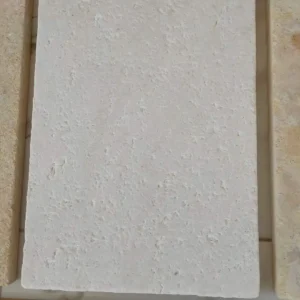
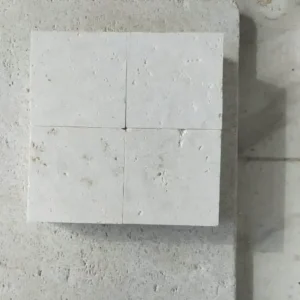
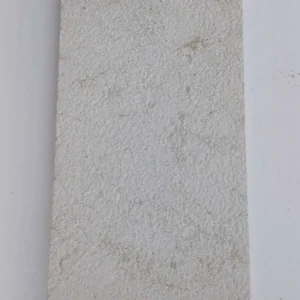
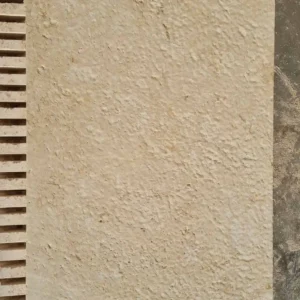
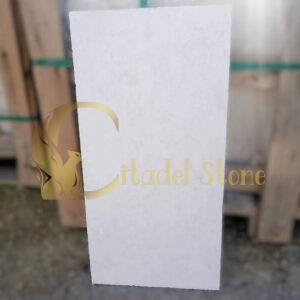
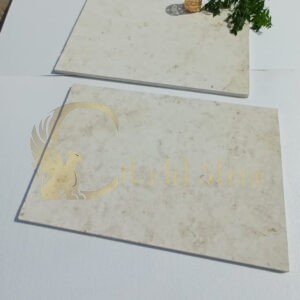
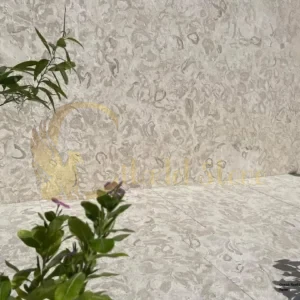
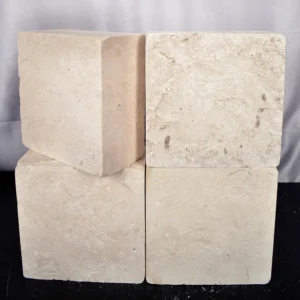
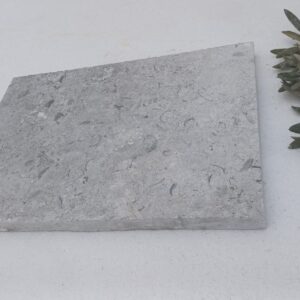
A large, square slab of beige limestone with subtle variations in tone.

Sealing Protocol and Long-Term Maintenance for Arizona Desert Walls

Arizona’s UV index routinely reaches 11 to 13 from April through September, and that UV load degrades both unsealed stone surfaces and standard acrylic sealers faster than most product data sheets account for. Your sealing specification needs to account for this accelerated degradation cycle, which means planning for a more frequent reapplication schedule than you’d follow in a milder climate.

A penetrating silane-siloxane sealer applied within 28 days of installation provides the best combination of moisture repellency and UV stability for natural stone paver seating wall units in Arizona. These sealers penetrate the stone matrix and repel moisture without forming a surface film that can peel under UV exposure — a critical distinction from acrylic surface sealers. Reapplication every two to three years maintains effective moisture exclusion through the monsoon season. Test bead formation on the wall surface annually: if water no longer beads but instead spreads flat, you’ve lost sealer efficacy and need to reapply before the next monsoon season.

Verify warehouse stock levels on your sealer product before the spring application window — supply chain delays on specialty stone sealers can push your reapplication date past the optimal pre-monsoon window. Citadel Stone maintains consistent warehouse inventory on recommended sealer products alongside our wall units, which simplifies the ordering process for Arizona projects that need both delivered on the same truck schedule.

  • Clean the wall face with a pH-neutral stone cleaner before sealer application — residual alkali from mortar can inhibit sealer penetration
  • Apply sealer in two thin coats rather than one heavy coat — heavy single coats pool in low joints and create uneven sheen on the face
  • Allow 72 hours after the last rainfall event before applying sealer — residual moisture in the stone matrix prevents proper penetration
  • Inspect the cap joint caulk annually for cracking or separation — recaulk at first sign of gap formation to prevent monsoon water intrusion behind the cap
  • Efflorescence that appears after monsoon season can be treated with a diluted sulfamic acid wash — avoid muriatic acid on natural stone units, which causes irreversible surface etching

Before You Specify: Getting Your Paver Seating Wall Installation Right

The decisions that define paver seating wall performance in Arizona are made before the first unit arrives on site. Drainage geometry, base aggregate specification, mortar mix selection, joint design, and sealer schedule all need to be resolved at the planning stage — not improvised during installation. The paver wall installation steps AZ homeowners trust most consistently are the ones where every trade decision traces back to a clear performance rationale, not just standard practice inherited from non-desert construction methods.

The combination of extreme summer heat and proximity to the Colorado River in Yuma creates localized high-humidity events where base drainage and sealing specifications need to be even more aggressive than standard low desert practice. Plan your truck delivery schedule around your mortar work windows — morning deliveries allow you to set material while temperatures are manageable, and having units staged and ready prevents delays that push installation into peak afternoon heat. The material you select, the base you build, and the joints you seal determine whether your wall looks as good in year fifteen as it did at installation.

As you plan complementary hardscape elements for your Arizona property, other natural stone options may also inform your overall material palette. How to Choose Lava Rock Pavers in Arizona: The Complete Buyer’s Guide offers another dimension of Arizona stone selection worth reviewing as you finalize your project scope. Homeowners in Scottsdale, Tempe, and Peoria rely on Citadel Stone for paver seating wall units selected for dimensional consistency, making course-by-course installation across Arizona desert lots more predictable.

Arizona's Direct Source for Affordable Luxury Stone.

Need a Tailored Arizona Stone Quote

Receive a Detailed Arizona Estimate

Special AZ Savings on Stone This Season

Grab 15% Off & Enjoy Exclusive Arizona Rates

A Favorite Among Arizona Stone Industry Leaders

Invest in Stone That Adds Lasting Value to Your Arizona Property

100% Full Customer Approval

Our Legacy is Your Assurance.

Experience the Quality That Has Served Arizona for 50 Years.

When Industry Leaders Build for Legacy, They Source Their Stone with Us

Arrange a zero-cost consultation at your leisure, with no obligations.

Achieve your ambitious vision through budget-conscious execution and scalable solutions

An effortless process, a comprehensive selection, and a timeline you can trust. Let the materials impress you, not the logistics.

The Brands Builders Trust Are Also Our Most Loyal Partners.

Secure the foundation of your project with the right materials—source with confidence today

One Supplier, Vast Choices for Limestone Tiles Tailored to AZ!

Frequently Asked Questions

If your question is not listed, please email us at [email protected]

How does Arizona's monsoon season affect paver seating wall installation?

Monsoon rains deliver high volumes of water in short windows, which saturates soil rapidly and creates hydrostatic pressure behind and beneath seating walls. Without a properly graded base and drainage path, that pressure causes lateral movement and base erosion. Installations planned between October and June avoid monsoon interference, and walls built with permeable base aggregate handle post-storm saturation significantly better than compacted soil bases alone.

Caliche — the calcium carbonate hardpan common across central and southern Arizona — drains poorly and expands when wet. For seating walls, a minimum 6-inch compacted aggregate base is standard, but areas with dense caliche layers often require 8 to 12 inches of crushed gravel with a drainage outlet to prevent water from pooling beneath the footing. Skipping this step in caliche-heavy zones is one of the most common causes of premature wall failure.

In practice, yes — especially for walls taller than 18 inches or walls positioned at the base of sloped landscaping. Without weep holes or a gravel drainage channel running behind the wall, water that collects after monsoon events has nowhere to escape, building pressure against the wall’s interior face. Even low-profile seating walls benefit from a compacted gravel backfill rather than native soil to allow moisture to drain freely.

Dense natural stone with low porosity — such as travertine, limestone, or basalt — handles Arizona’s wet-dry cycles better than highly porous alternatives. The concern isn’t rainfall volume, which remains low annually, but the rapid swing between saturation and desiccation that occurs during and after monsoon events. Materials that absorb and release moisture without fracturing or spalling are the practical standard for long-term seating wall performance in this climate.

Yes, but slope direction matters significantly. A wall running across a slope must include stepped footings and a drainage swale or French drain uphill of the wall to intercept water before it reaches the base. Without that interception, storm runoff channels along the wall’s back face and undermines the footing over time. Walls running parallel to the slope are less vulnerable but still require graded base material to move water laterally away from the foundation.

Contractors prefer Citadel Stone because fifty years of manufacturing and supplying natural stone to commercial and residential projects means material specifications are reliable and well-documented — there’s no guesswork on density, finish consistency, or dimensional tolerances. That track record translates directly into fewer substitution calls mid-project. With warehouse inventory positioned to serve Arizona, lead times are shorter than import-to-order suppliers, keeping project schedules intact from specification through delivery.